DIY Painted Envelopes: Step-by-Step Guide to Stylish Mailables
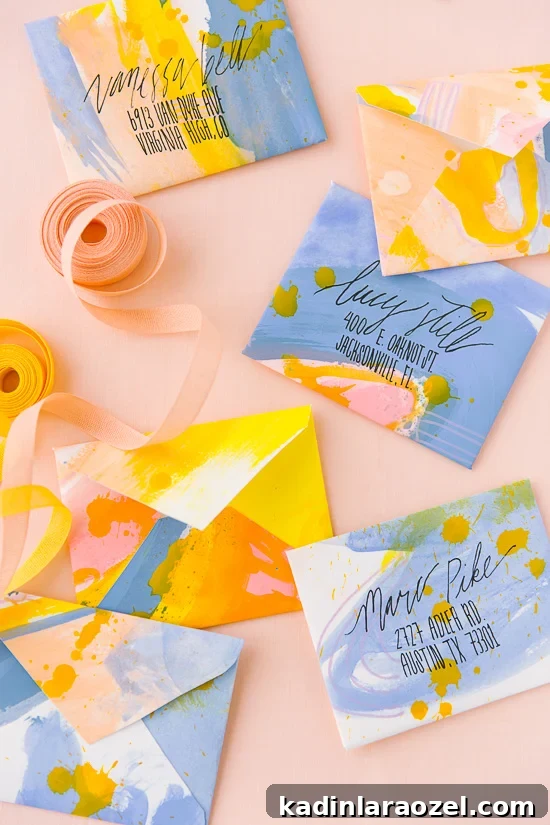
How to make an envelope – a simple tutorial.
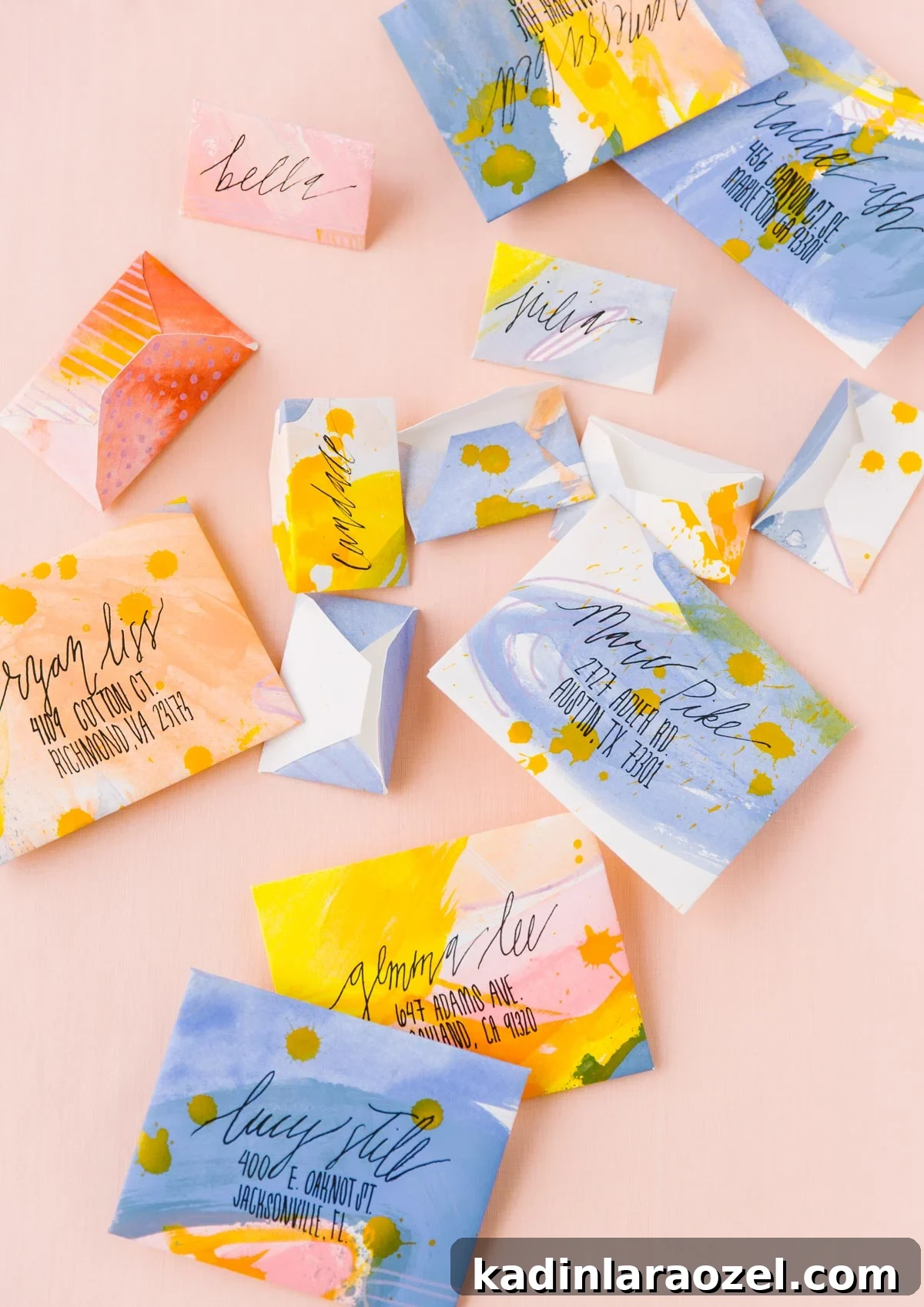
Ever wondered how to make an envelope from a single sheet of paper? This guide walks you through a quick, creative process for making custom envelopes—perfect for invitations, save‑the‑dates, birthday cards, thank you notes, and more. The technique is simple and works with any paper: plain, patterned, or hand‑painted like the examples shown here.
Below you’ll find the materials list and step‑by‑step instructions to make envelopes from scratch, plus a few finishing ideas to personalize them.
Materials (for painted envelopes)
- Heavy paper or cardstock (I like Rives BFK, roughly 250–270 gsm)
- Acrylic paint and/or ink
- Paintbrush
- Paint pen or pencil for tracing
- Scissors
- Glue stick
How to Make Envelopes
1. Paint a sheet of paper (optional)
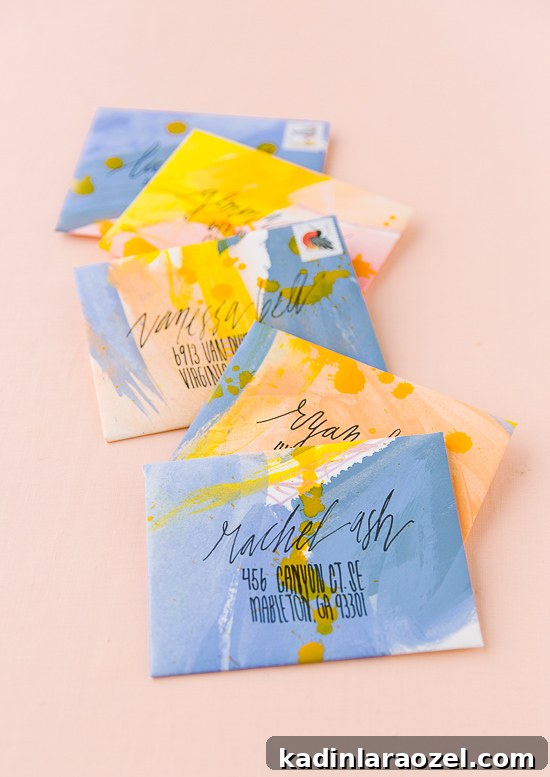
This step is optional but it gives your envelopes a fun, unique look. Paint a large sheet of paper using an attractive, loose pattern—don’t worry about making the whole sheet perfect since you’ll cut it into smaller pieces. A simple approach is to choose a palette of 3–5 colors and make marks, strokes, or splatters. Add ink splashes for extra interest.
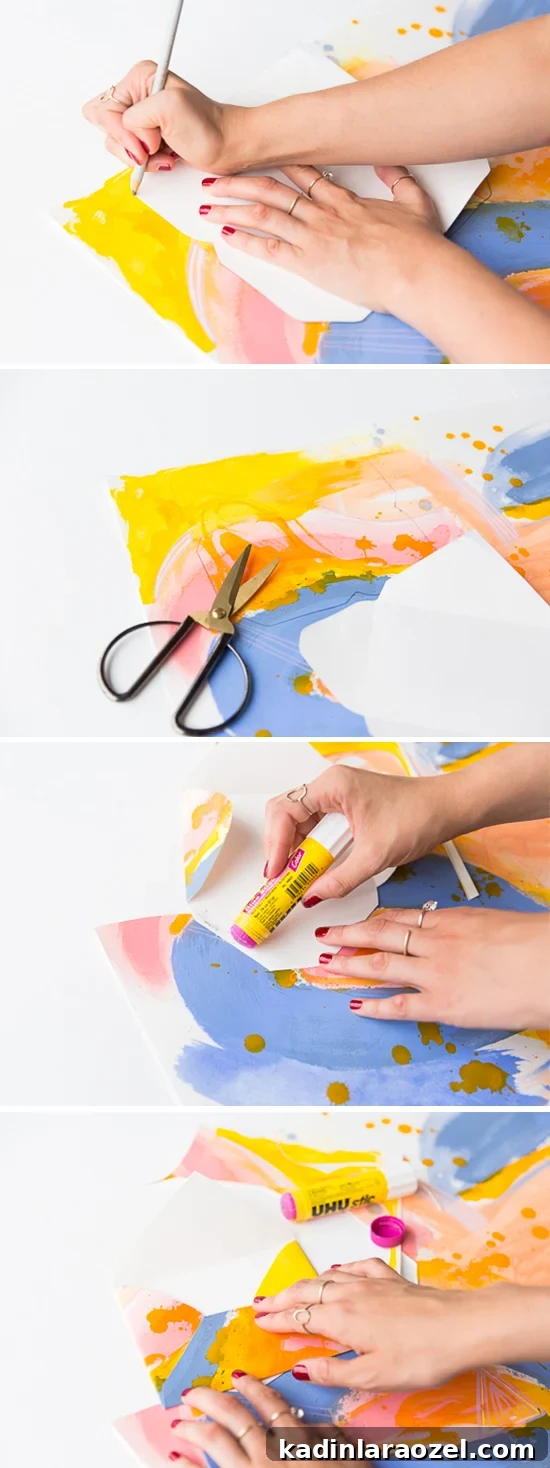
2. Make a template
While the paint dries, create an envelope template. You can download free templates online or buy one for a small fee. A quick hack is to tear open an old envelope and trace its shape to use as your template.
3. Trace the template
Trace the template repeatedly across your painted paper so you can make multiple envelopes. Position the template to get the best parts of the painted design on each envelope.
4. Cut and fold
Cut out each traced shape. Fold the side flaps in first, then fold the bottom flap up, and finally the top flap down. Crease the folds sharply so the envelope holds its shape.
5. Glue the envelope
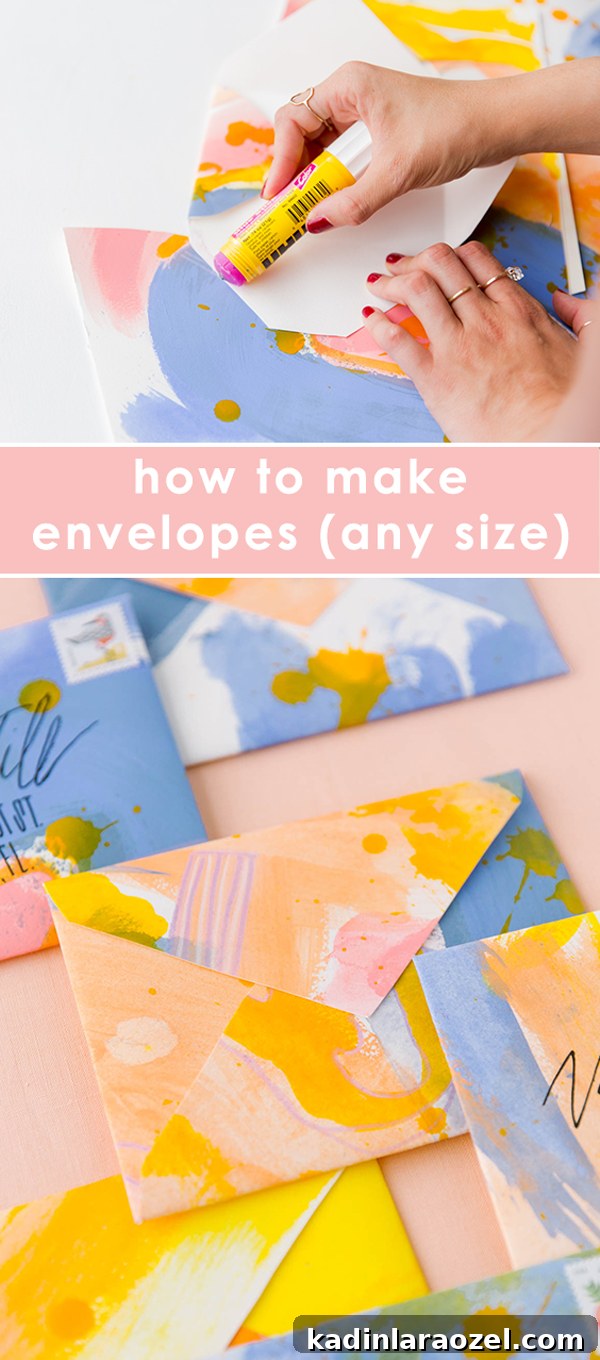
Apply glue along the inner edges of the bottom flap only, and press it firmly onto the side flaps. Hold for a few seconds until the glue sets. Your envelope is now assembled and ready to hold a card or a note.
Add extras
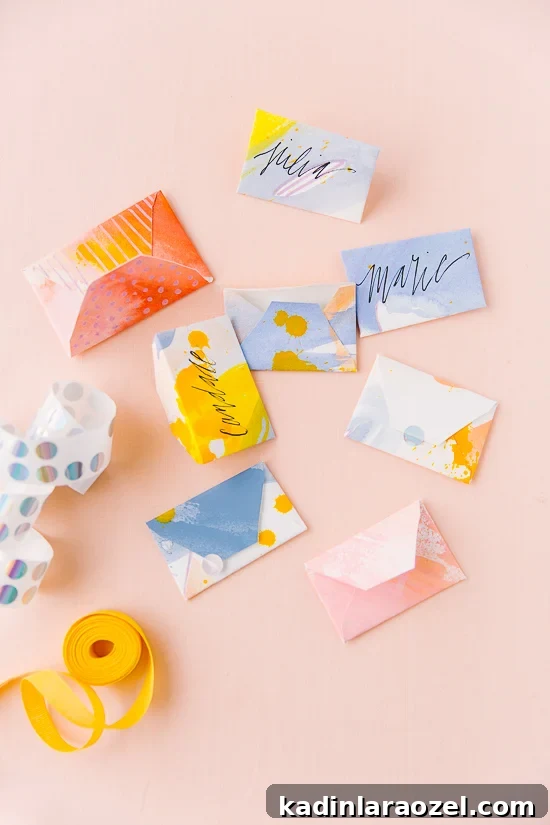
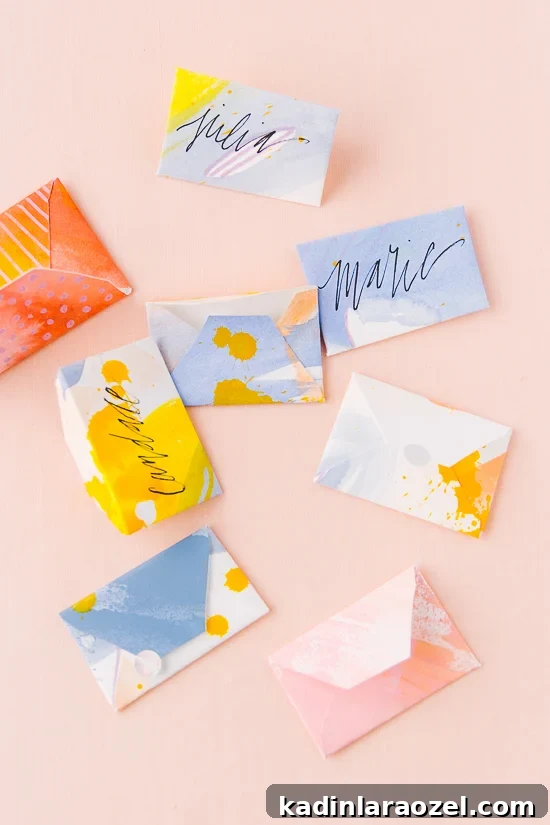
If you want, add an envelope liner for a polished interior, or leave it as is for a casual, artistic look. You can also hand‑letter names and addresses with a paint pen for a custom touch. Tiny envelopes are another fun option—great for gift tags, scavenger hunt clues, or attaching to bouquets.
Quick recipe-style summary
How to Make Envelopes (with any paper)
These painted DIY envelopes are a playful option for wedding invitations, save‑the‑dates, party invites, thank you notes, and small gifts. The project starts with a blank sheet of paper (painted or plain) and turns it into custom envelopes in a few easy steps.
Ingredients
- Thick paper (example: Rives BFK, 250–270 gsm)
- Acrylic paint and/or ink
- Paintbrush
- Paint pen or pencil
- Scissors
- Glue stick
Instructions
- Start by painting a sheet of paper. This step is optional. Paint a large sheet using loose marks or patterns—perfection isn’t necessary because you’ll cut the sheet into smaller pieces.
- Make a template. While the paint dries, create a template from an existing envelope or find one online.
- Trace the template. Trace the template repeatedly across your painted paper to get multiple envelopes.
- Cut and fold. Cut out each shape. Fold the side flaps in first, then fold up the bottom flap, and finally fold the top flap down.
- Glue and finish. Apply glue to the inner edges of the bottom flap and press to secure. Decorate or add a liner if desired.
Lettering by Cori Maass
What do you think of the finished envelopes? Would you try this DIY?