DIY Large-Scale Patchwork Rug: Step-by-Step Guide for Home Makers
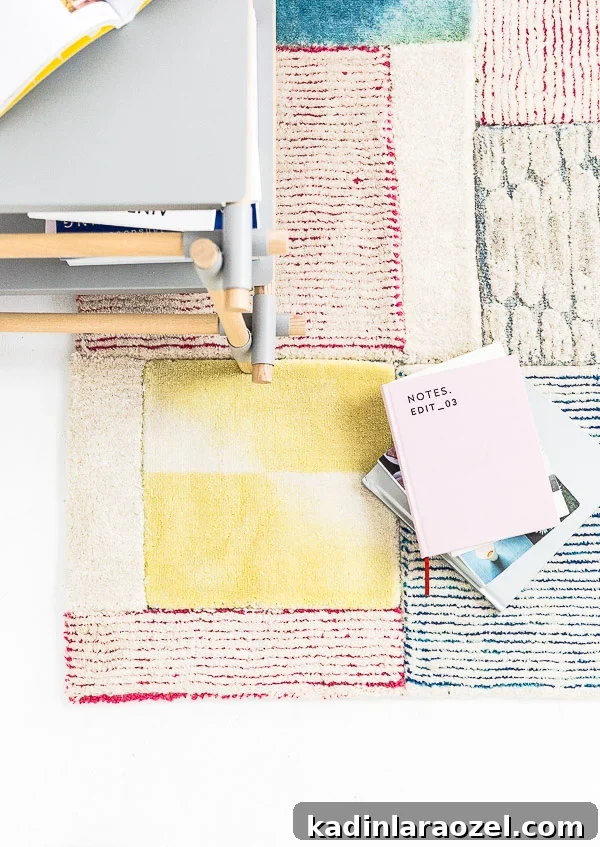
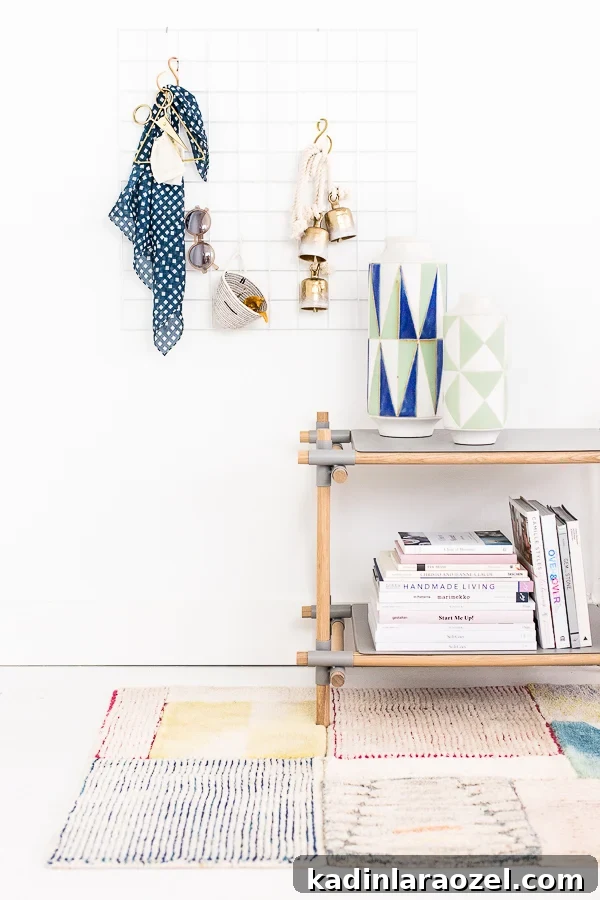
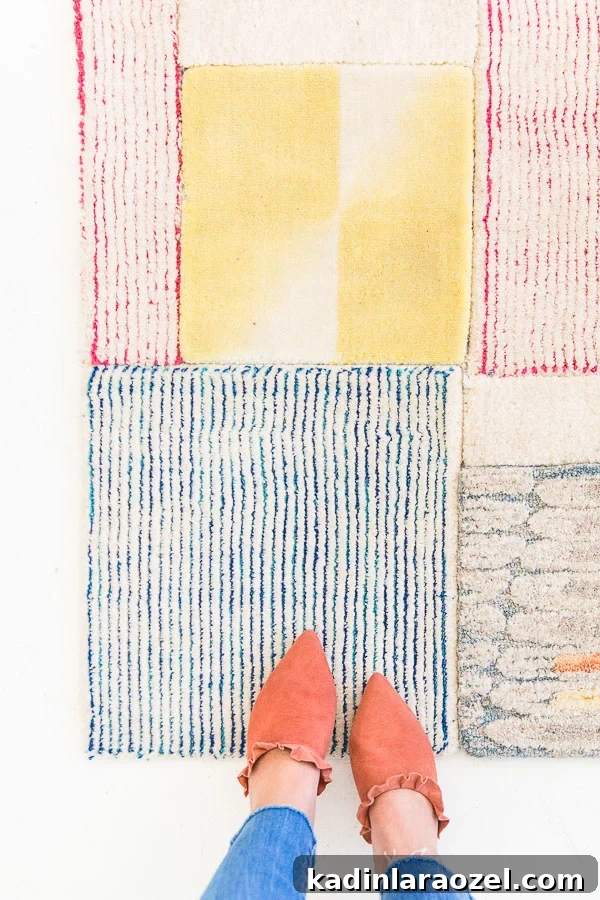
After my previous DIY rug post — which became my most popular project to date — I decided to try another large-scale rug. This version is very different: it’s a patchwork rug made from small rug samples. It’s much quicker to make than my last all-from-scratch rug, so if you want a big custom rug without a multi-day project, this is a great option.
It’s large-scale and bold, so if you love big rugs, read on to see how I made it.
Over the last year I collected rug and carpet samples on clearance (many stores mark discontinued samples down to inexpensive prices). Those small pieces are perfect for a patchwork rug. I saved a variety of designs and colors and eventually arranged them into a cohesive layout for a larger rug.
This patchwork method is substantially faster than my previous rug project. I completed the whole thing in about three to four hours instead of several days. If you’d like to make one, here’s what to buy and how to do it.
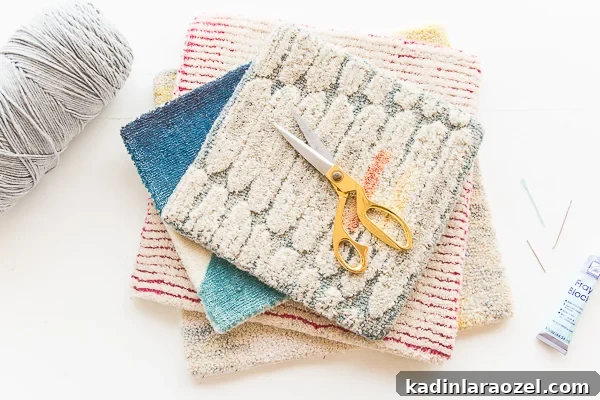
Materials and Tools
- Rug or carpet samples (look for pieces that are the same or similar thickness)
- Very sharp scissors or a box cutter
- Fray-block product to seal cut edges
- Yarn in a neutral color or one that matches your samples
- Yarn needle or an upholstery needle (large-eye needle works well)
Tip: Choose samples with similar pile height so the final rug lies flat and looks unified. The number of samples required depends on desired finished size and the dimensions of each sample. Carpet samples tend to be solid colors; rug samples may offer more pattern choices.
Step-by-step Instructions
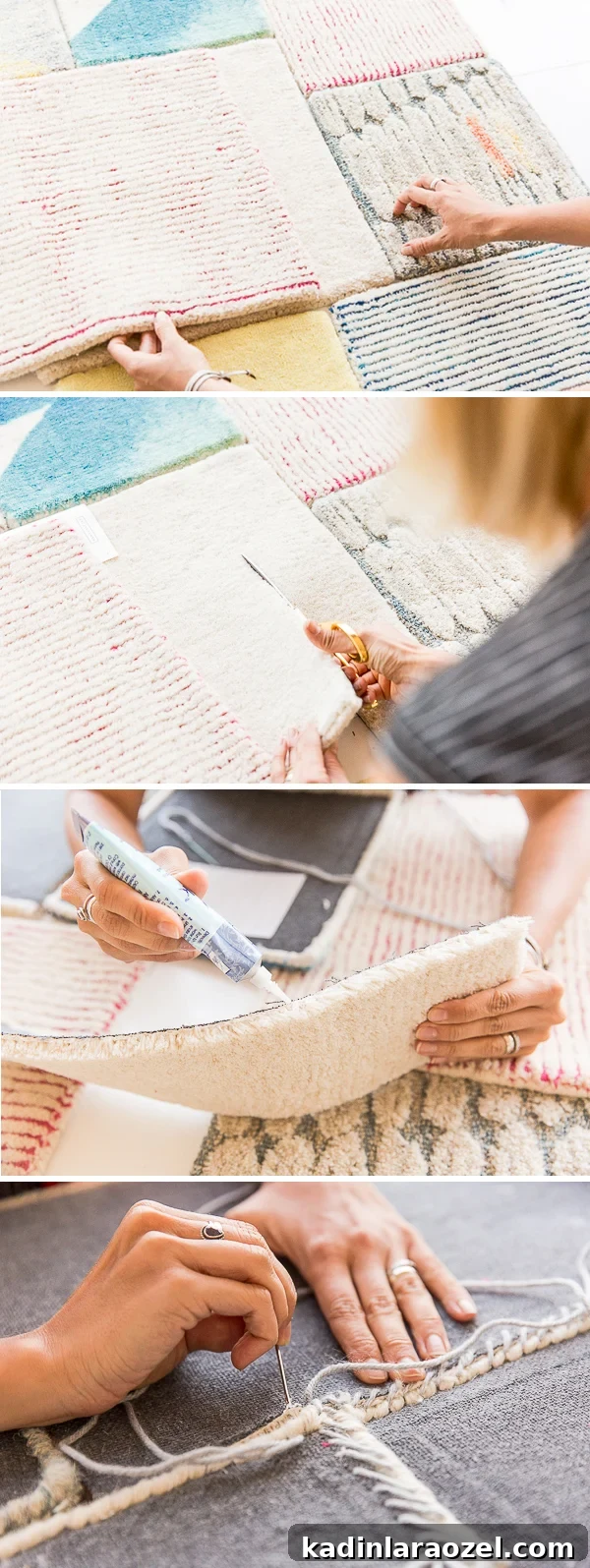
1. Lay out your samples on the floor and experiment with arrangements. Find a balance of color and pattern by moving pieces around — distribute colors so the composition feels even (for example, if you have blue near the top, add blue in other areas too).
When planning, overlap pieces to determine where to cut smaller sections and to make sure the pieces will align like puzzle pieces when stitched together.
2. Decide whether to keep the samples whole or cut them to create a patchwork with varied shapes and sizes. I liked mixing different-sized patches for visual interest.
To cut pieces, measure and mark the dimensions you want, then cut from the back using a box cutter or very sharp scissors. Cutting from the back helps preserve the woven front, but cutting from the front is possible if needed.
3. After cutting, remove loose threads from the edges and apply fray block to any freshly cut sides to seal them. Let the product dry completely, then re-lay the pieces to confirm everything still fits together properly.
4. Stitch the pieces together using yarn and a yarn or upholstery needle. Work from the back: flip pieces over and start whip-stitching adjacent edges. You can stitch two pieces at a time to avoid flipping the entire assembly.
Use a double knot at the start and finish for security. Keep stitching close to the edges so stitches are hidden from the front. With a neutral yarn and careful placement, the stitching won’t be visible once the rug is flipped and finished.
Finished care: You can vacuum and clean this rug like other rugs, but be gentle because it’s sewn from separate pieces. The yarn joins are durable, so the rug is sturdy when stitched well.
Budget example: A 4×6 patchwork rug cost me roughly $75–$100 in materials. Your total will vary depending on how cheaply you find samples and how large you make the rug.
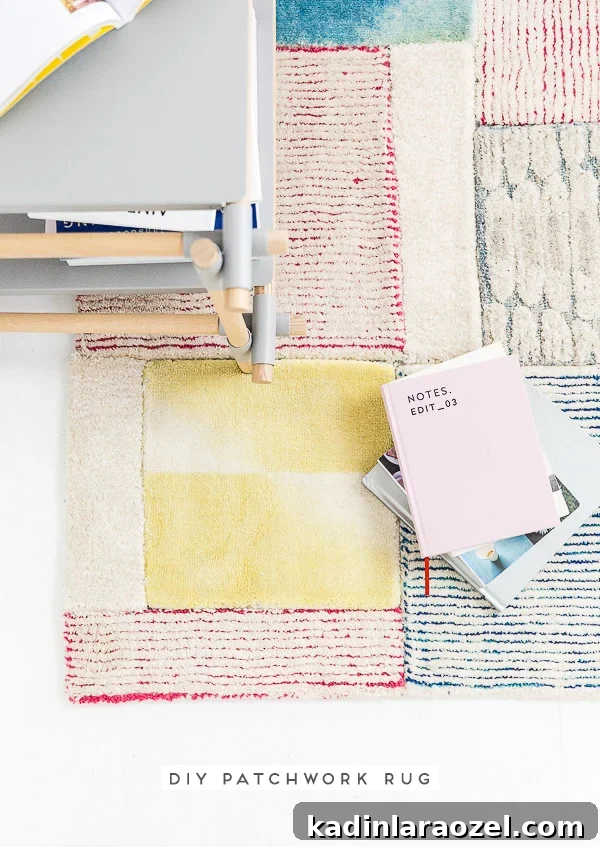
Do you like the patchwork rug look? Have you spotted inexpensive rug samples at stores near you that would be perfect for this project?