10-Minute IKEA Hack: Make House-Shaped & Geometric Cutting Boards
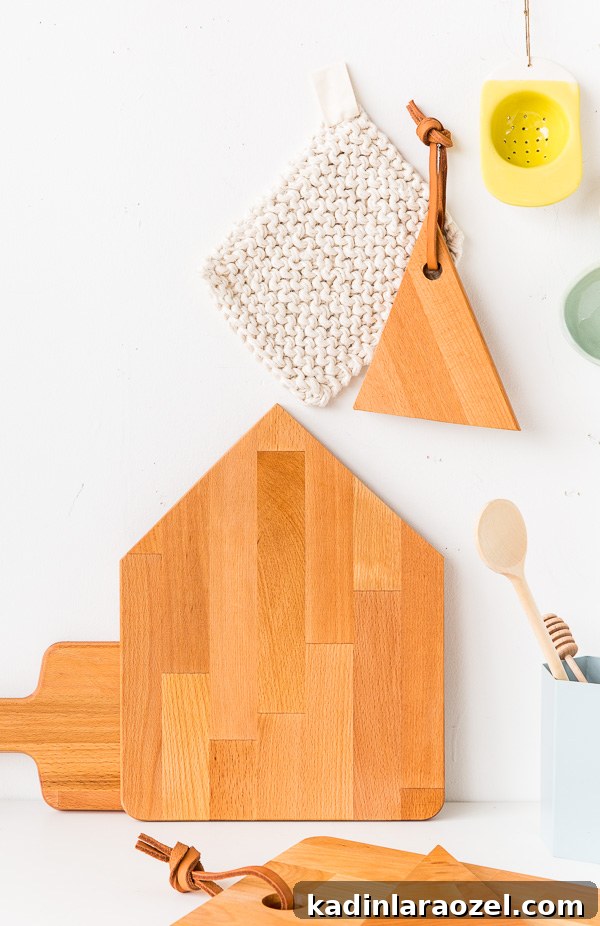
During a stay in London we rented a lovely home owned by a designer who filled the space with small, clever DIY pieces. One of those items inspired this project: geometric and house-shaped cutting boards that are easy to make yourself—an Ikea hack that only takes about ten minutes of hands-on work.
The homeowner used house-shaped boards for serving bread and snacks. When I tried to track down the same boards I discovered they were no longer available, so I took a quick photo and decided to recreate them at home. This tutorial explains how to transform a basic Ikea cutting board into a custom-shaped piece that adds personality to your kitchen.
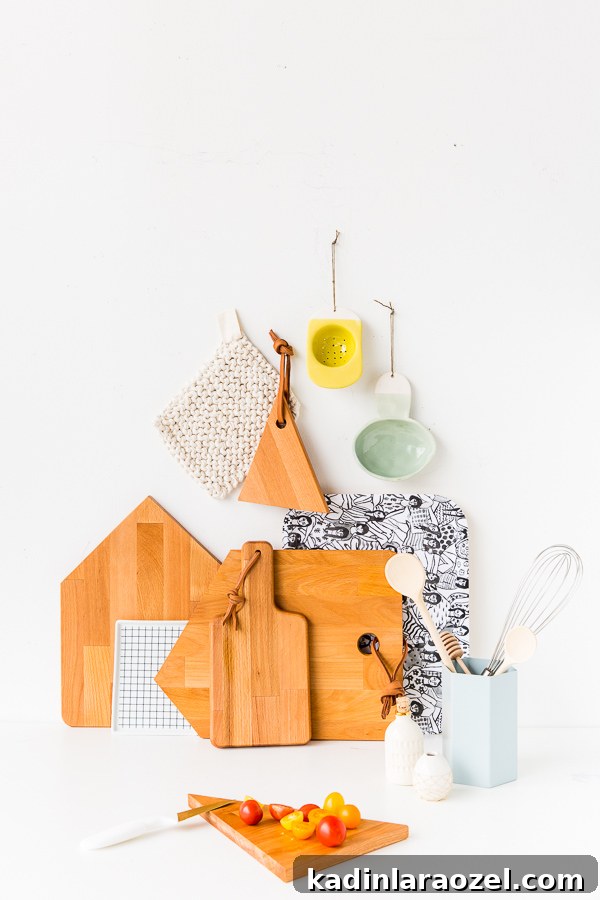
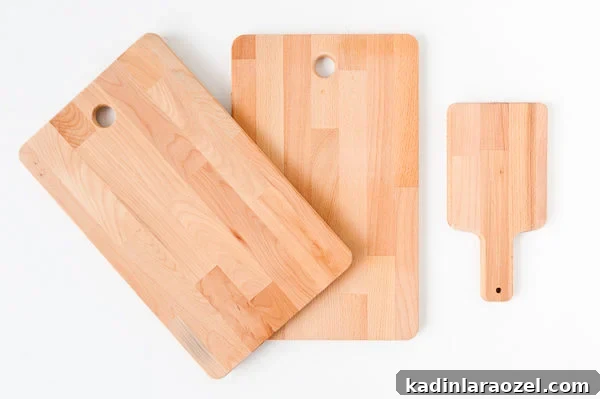
Below are the materials and step-by-step instructions for making your own geometric or house-shaped cutting boards from a simple Ikea board in about ten minutes of cutting and finishing time.
Materials
- Ikea cutting board
- Compact circular saw (or a regular circular saw)
- Table clamps
- Painter’s tape or washi tape (optional)
- Pencil
- Power sander or sandpaper
- Food-safe mineral oil (must be food-safe)
You can use a compact circular saw for better control and comfort; a regular circular saw works too. If you have a jigsaw, it’s a great option for curved shapes like circles, arches, or waves.
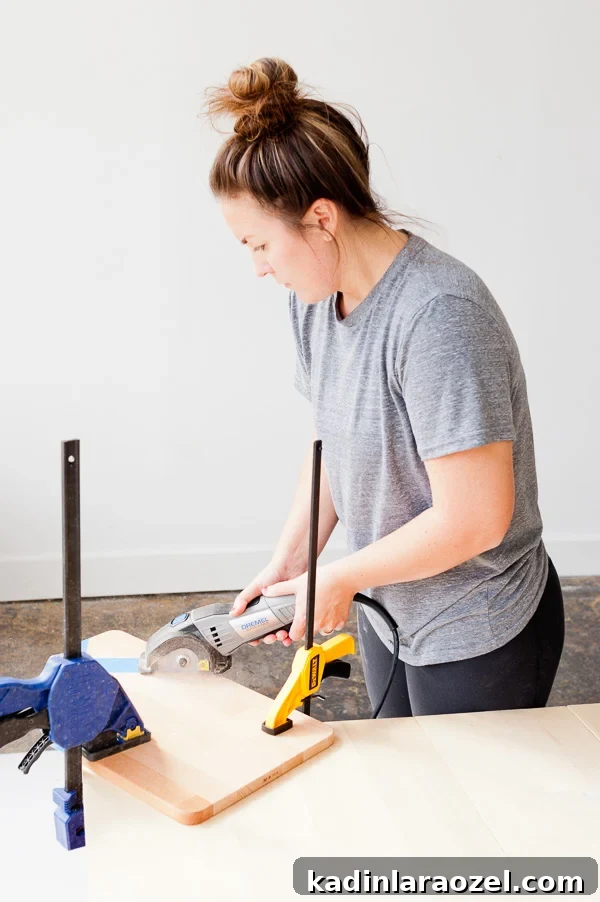
Instructions
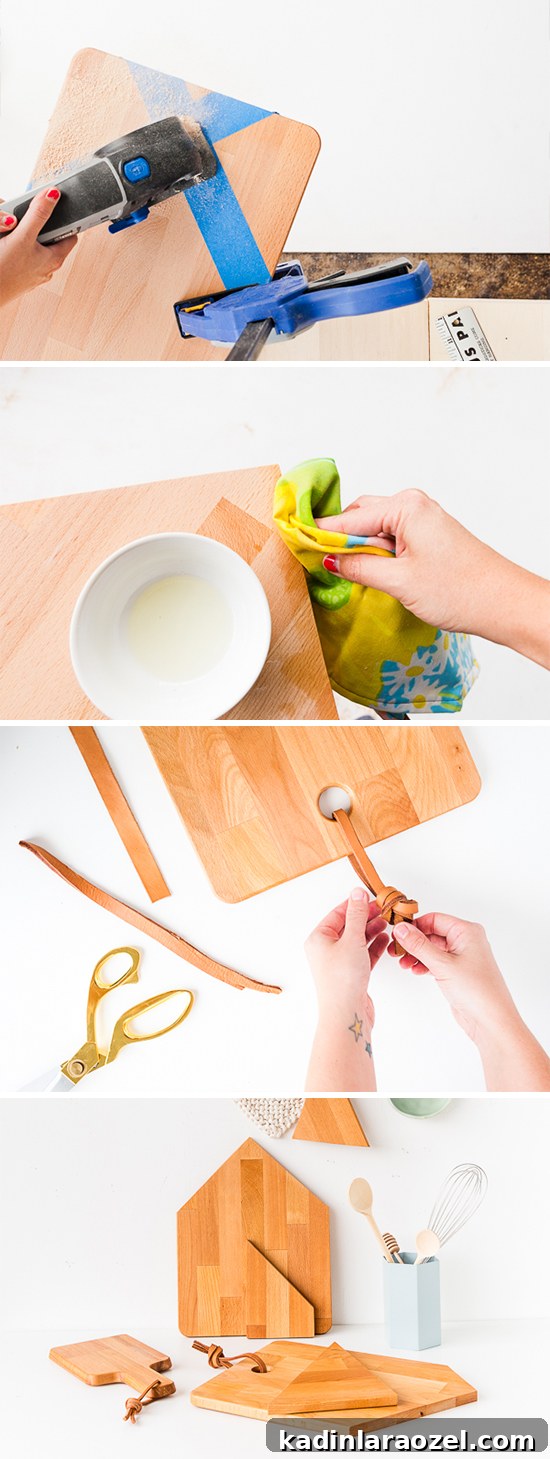
1. Decide on your shape. For a house-shaped board, begin by finding and marking the top center of the board with a pencil. From that center mark a line down to each side to form the “roof” angle. Measure how far down the board the first line reaches and replicate that distance on the opposite side to keep the roof symmetrical.
If you prefer an asymmetrical geometric shape, freehand the lines you like—measurements aren’t required for random angles.
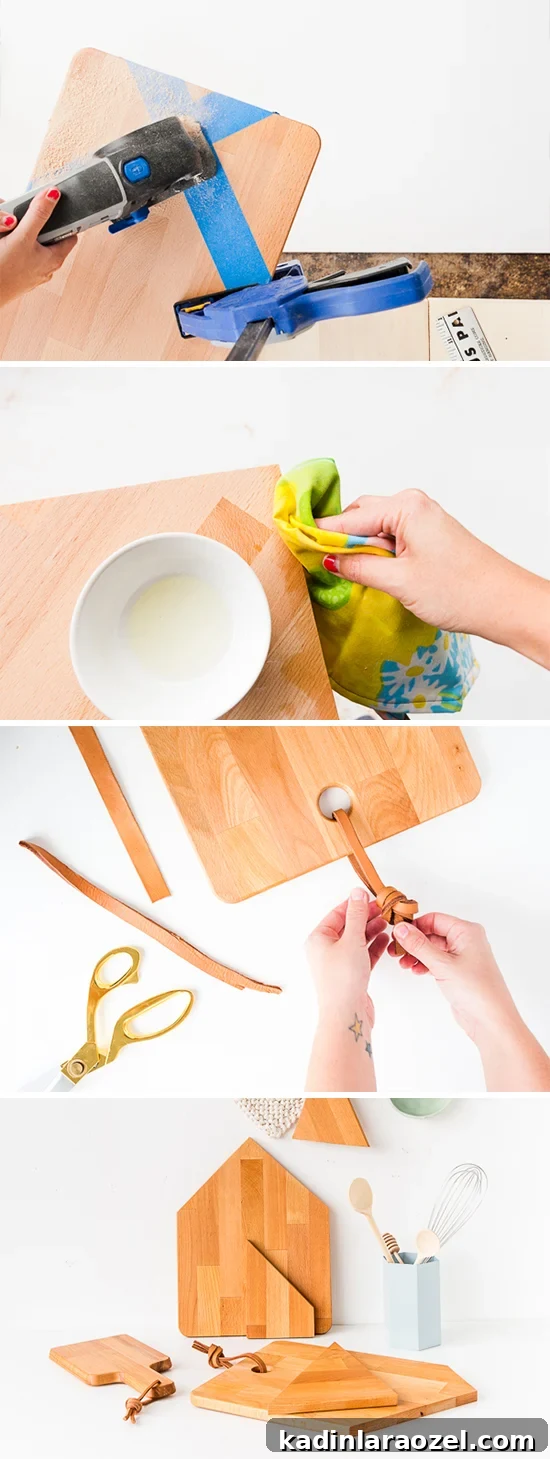
2. Apply painter’s tape along your pencil lines if you want a clearer cutting guide. Tape is optional but can help you see and follow the cut path more accurately.
3. Secure the cutting board with table clamps so it won’t move while you cut. Make sure the area you are cutting hangs free and will not contact the work surface as the saw blade passes through.
4. Cut along the marked lines with your saw. After cutting, remove the tape and sand all cut edges until they’re smooth and comfortable to handle.
5. Finish the board by applying a food-safe mineral oil to the entire surface—front, back, and sides—using a clean cloth. Let the oil sit for a few minutes, then wipe off any excess. Reapply periodically to maintain the board’s finish and protect the wood from moisture.
6. Optional: add a hanging strap. If your board doesn’t already have a hole, you can drill one using a spade bit and thread a leather strap through it. Soak the leather strap briefly to make it pliable for knotting; it will stiffen again as it dries.
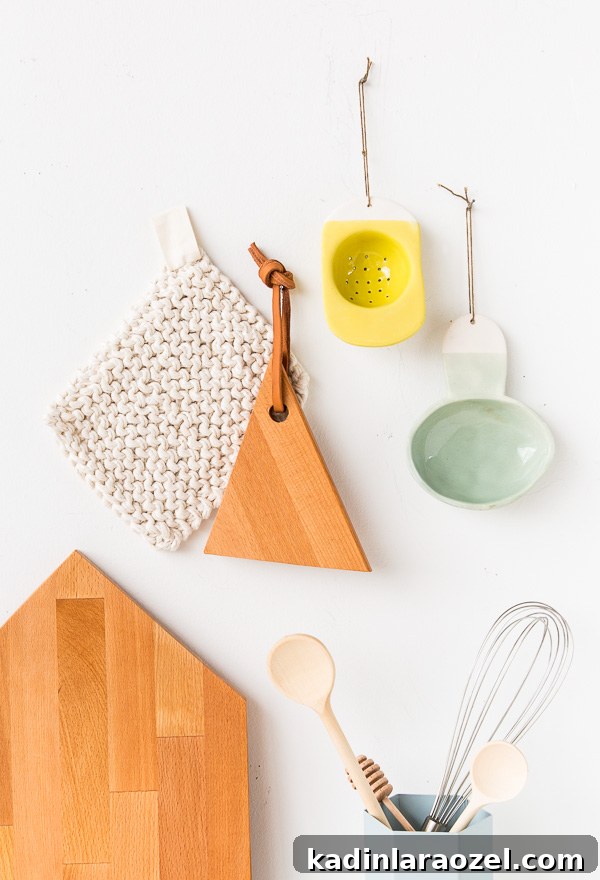
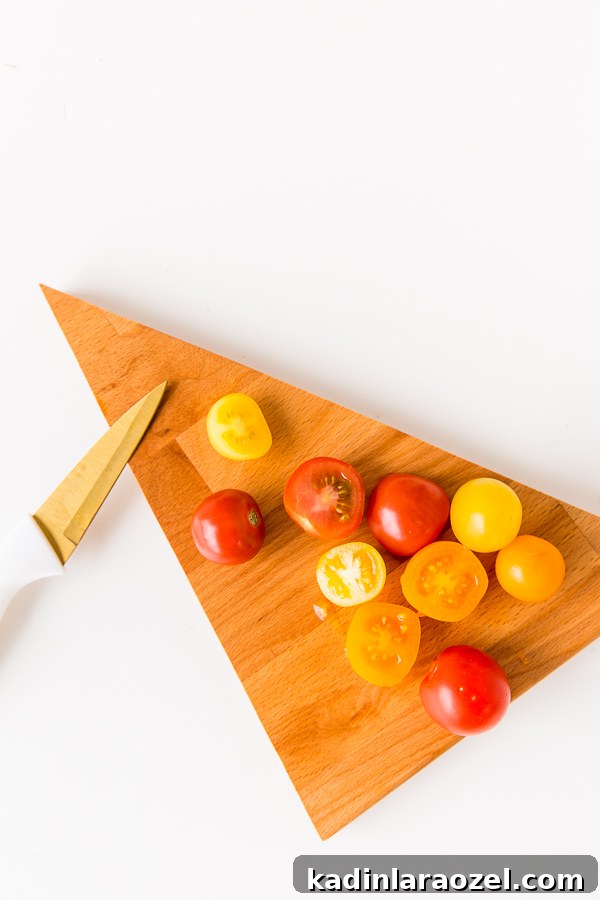
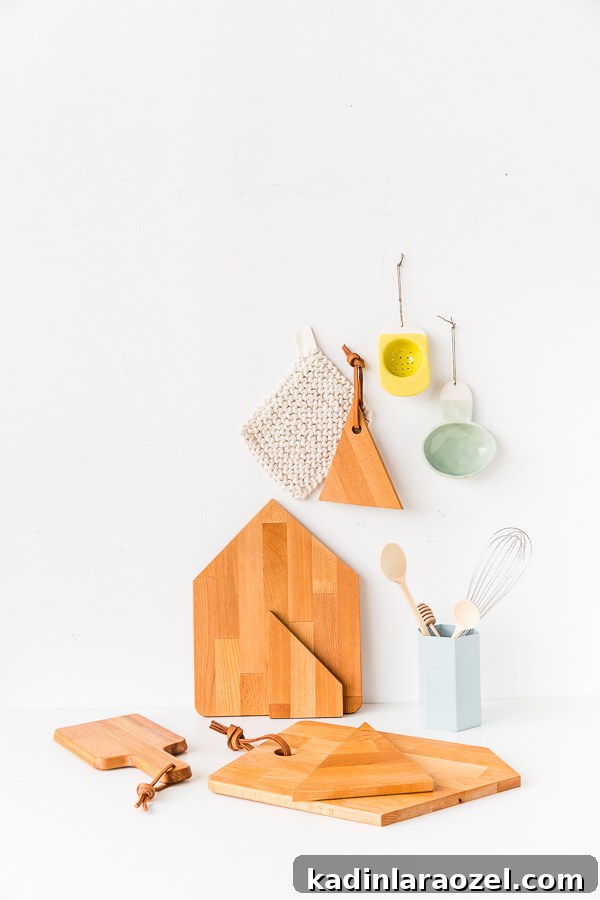
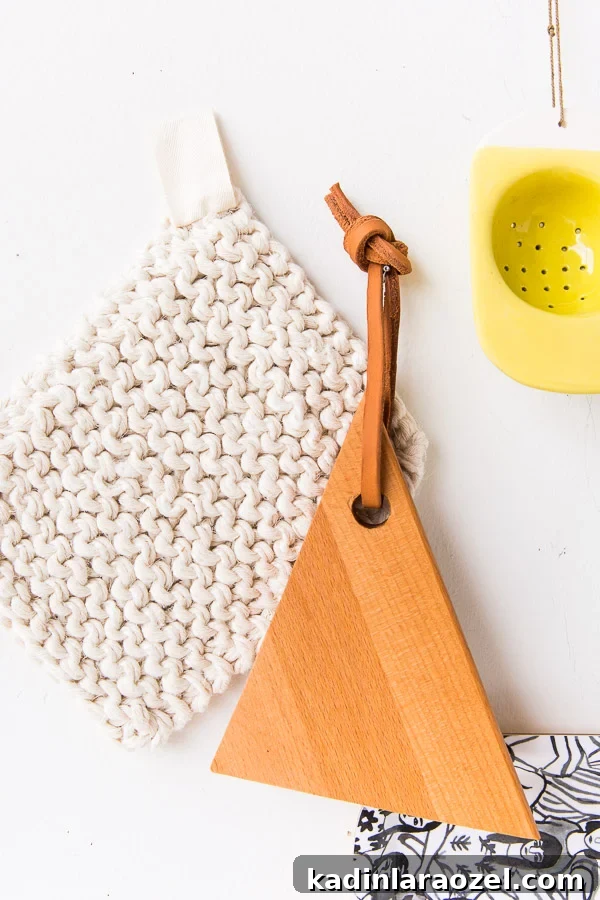
Photography by Amelia Tatnall and Brittni Mehlhoff
Styling by Brittni Mehlhoff
These simple steps let you create attractive, functional cutting boards with geometric or playful shapes that reflect your style. Consider experimenting with different silhouettes—rounded corners, tapered edges, hexagons, or even abstract outlines—to suit your kitchen decor or gift them as handmade, practical presents.