Studio Makeover: Half-Painted Accent Wall Progress Update
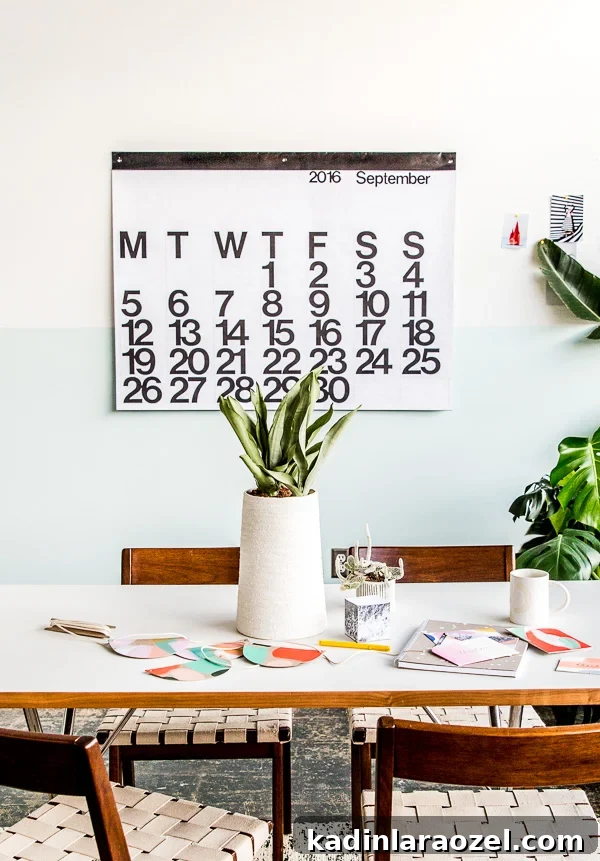
I’m a big fan of painted half walls. Whether it’s a full-height wall painted with a bright geometric mural upstairs or a wall painted only partway up to introduce a bold accent, a half wall can add an unexpected and effective design element.
For my latest project with 3M, featuring their ScotchBlue™ Pre-Taped Painter’s Plastic, I refreshed the studio with a minty half wall that completely changed the room’s feel. It’s simple but dramatic, and I’m excited with how it turned out.
Here’s what the wall looked like before the update…
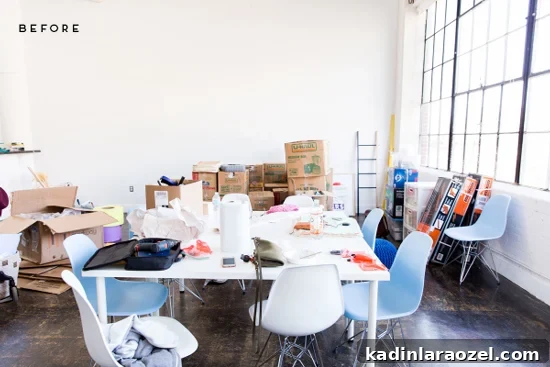
It wasn’t bad, but the space needed a little something extra. Sometimes the smallest, simplest changes—like adding color to one portion of a wall—make the biggest difference.
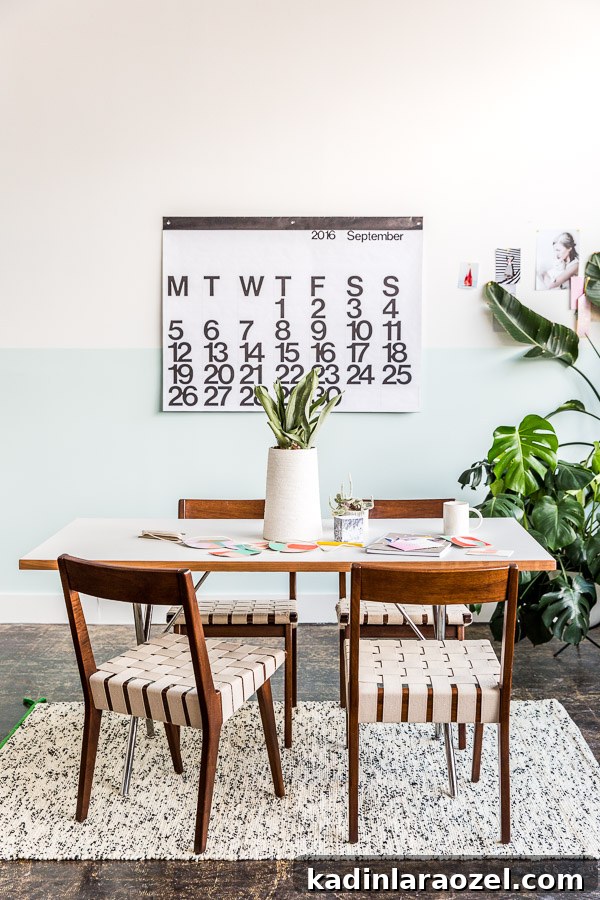
If you’re considering trying this at home, know that the result is easy to achieve—provided you take the time to prepare properly. Good prep work is the key to a clean, professional-looking half wall.
Supplies you’ll need for a painted half wall:
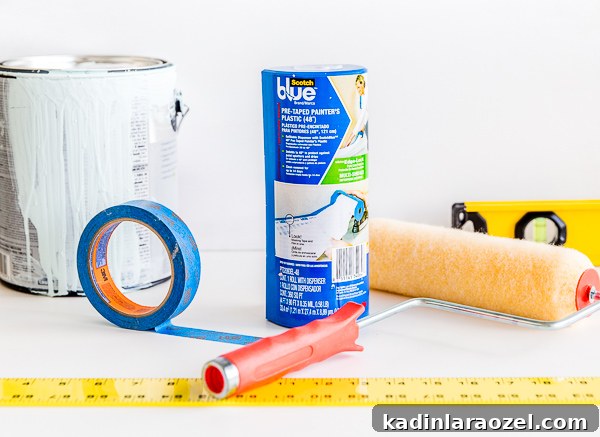
Materials
- ScotchBlue™ Pre-Taped Painter’s Plastic to protect baseboards and floors from splatters and drips
- ScotchBlue™ Delicate Surfaces Painter’s Tape for masking the top edge of the half wall
- Damp cloth for cleaning baseboards and adjacent walls, if needed
- Screwdriver for removing outlet covers, if necessary
- Paint roller and a brush (I like a 2-inch short-handle brush for trim)
- Flat interior paint in your chosen color
- Straight edge to mark a consistent height
- Level and pencil for accurate layout
Note: Follow all package instructions for ScotchBlue™ Painter’s Plastic regarding surface cleaning, adhesion, and removal.
Step-by-step instructions
1. Begin by wiping down the baseboards and adjacent walls with a damp cloth to remove dust and debris. Remove outlet covers as needed.
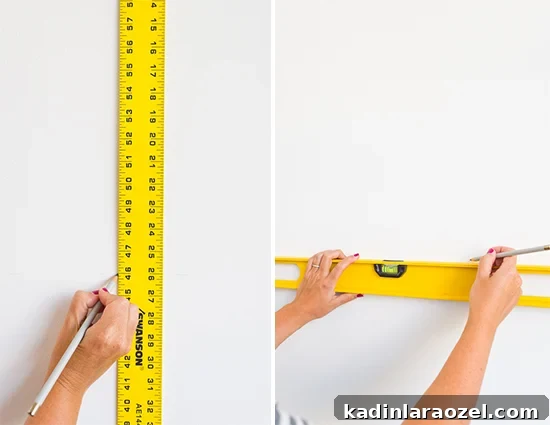
2. Decide how tall you want the painted section to be and mark that height across the wall. I used a 72-inch straight edge to make small dashed marks along the height and then connected them with a level to ensure the line was perfectly straight.
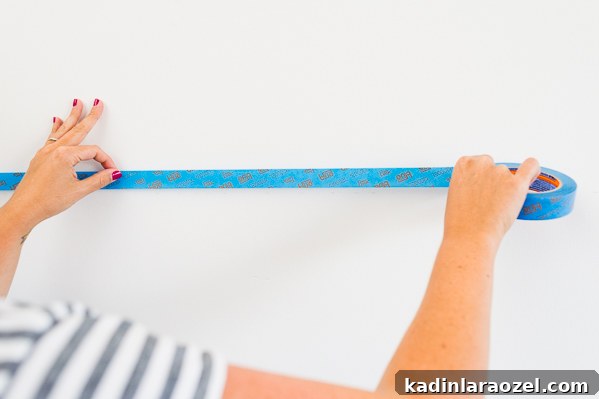
3. Apply ScotchBlue™ Delicate Surfaces Painter’s Tape along the dashed line across the wall to define the top edge of the painted area. Press the tape firmly to ensure good adhesion. Tape the adjacent side walls where needed to prevent stray paint.
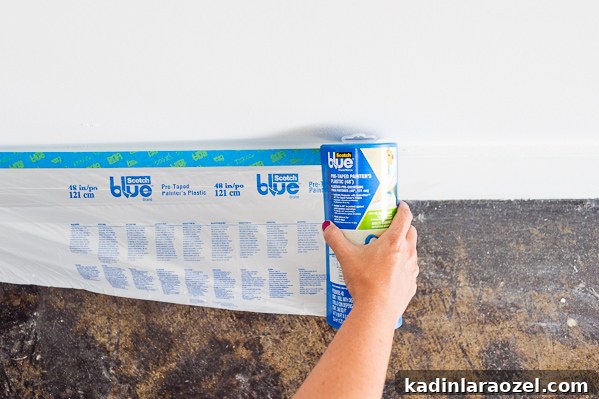
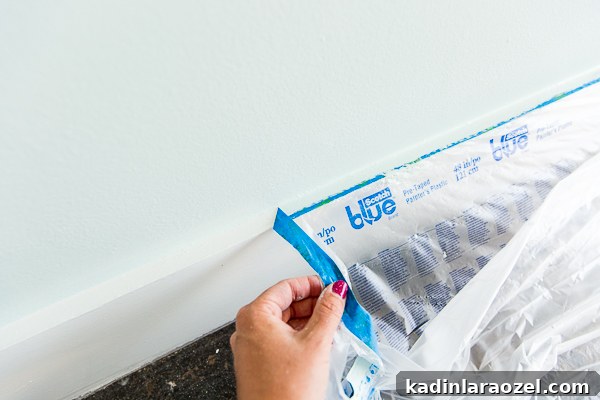
4. Next, apply the ScotchBlue™ Pre-Taped Painter’s Plastic along the baseboards to protect both the trim and the floor. Align the product where the baseboard meets the wall, press firmly over the tape edge, cut to length, then unfold the plastic to cover the baseboards and flooring.
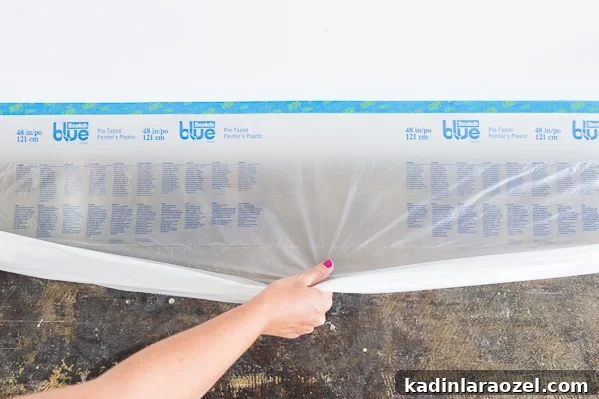
Note: I’m particularly careful with the studio’s original floors, which are nearly a century old. The Pre-Taped Painter’s Plastic makes it easy to protect both baseboards and floors without an extra drop cloth, giving peace of mind against accidental splatters.
For additional masking tips, consult the “How to Mask for Painting” resources from ScotchBlue.
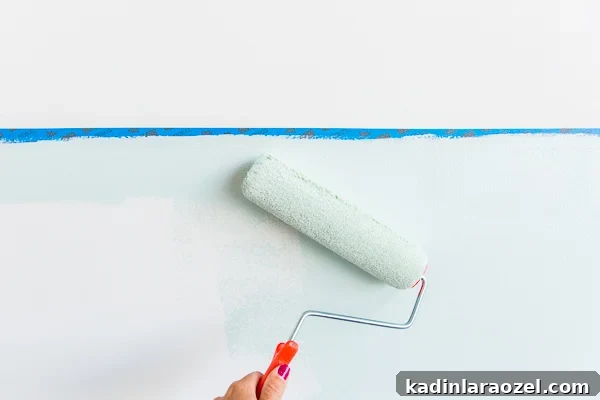
5. Paint the marked area using a roller for the main surface and a brush for the edges and trim. Apply a second coat if the coverage requires it.
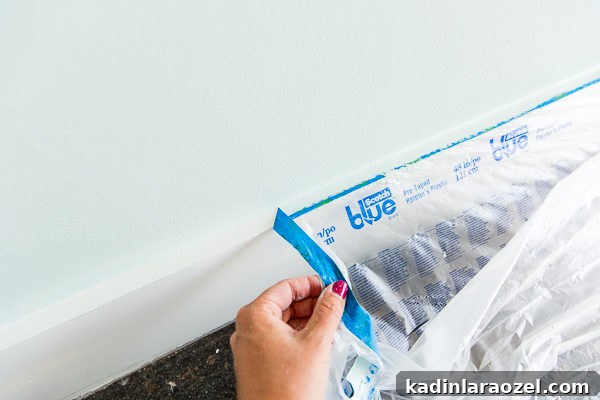
6. After the paint is fully dry, remove the painter’s plastic and tape. For the best result, remove tape slowly at a 45° angle, pulling the tape back onto itself. Do the same with the painter’s tape to reveal a crisp, clean line.
I was thrilled with how sharp the edge turned out—this was probably the cleanest line I’ve achieved.
7. Reattach outlet covers and enjoy your refreshed space.
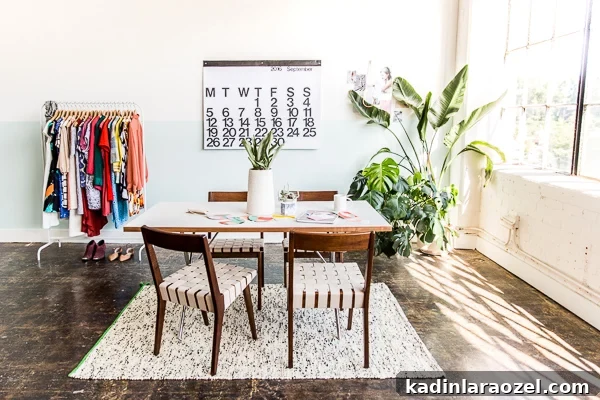
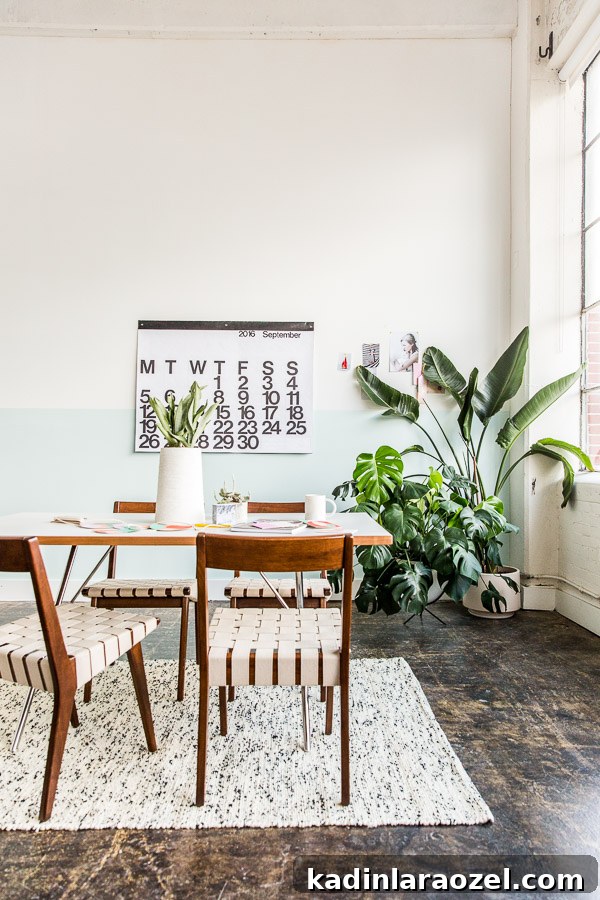
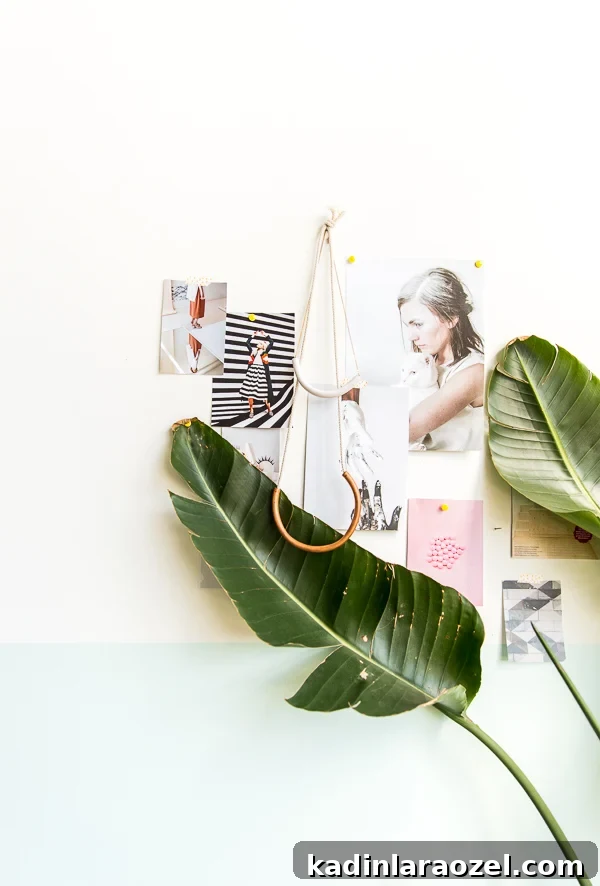
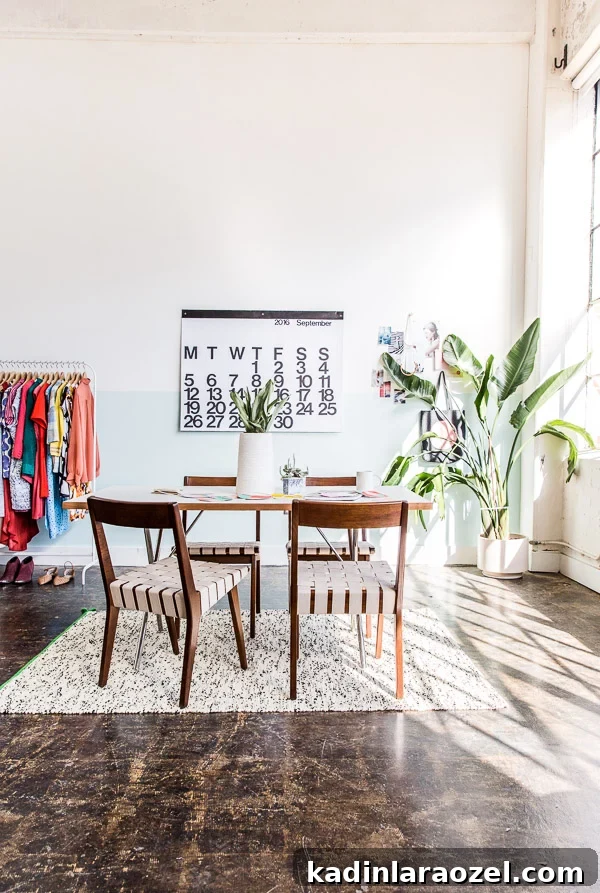
Photography by Amelia Tatnall Lawrence and Brittni Mehlhoff
What do you think—are you a fan of painted half walls? Would you try this technique at home? I’d love to hear your thoughts.
—
This post is in partnership with 3M. All opinions are my own; additional products used were chosen by me. Thanks for supporting the brands that help keep Paper & Stitch running.