Printable Embroidered Easter Basket Tags for Personalized Gifts
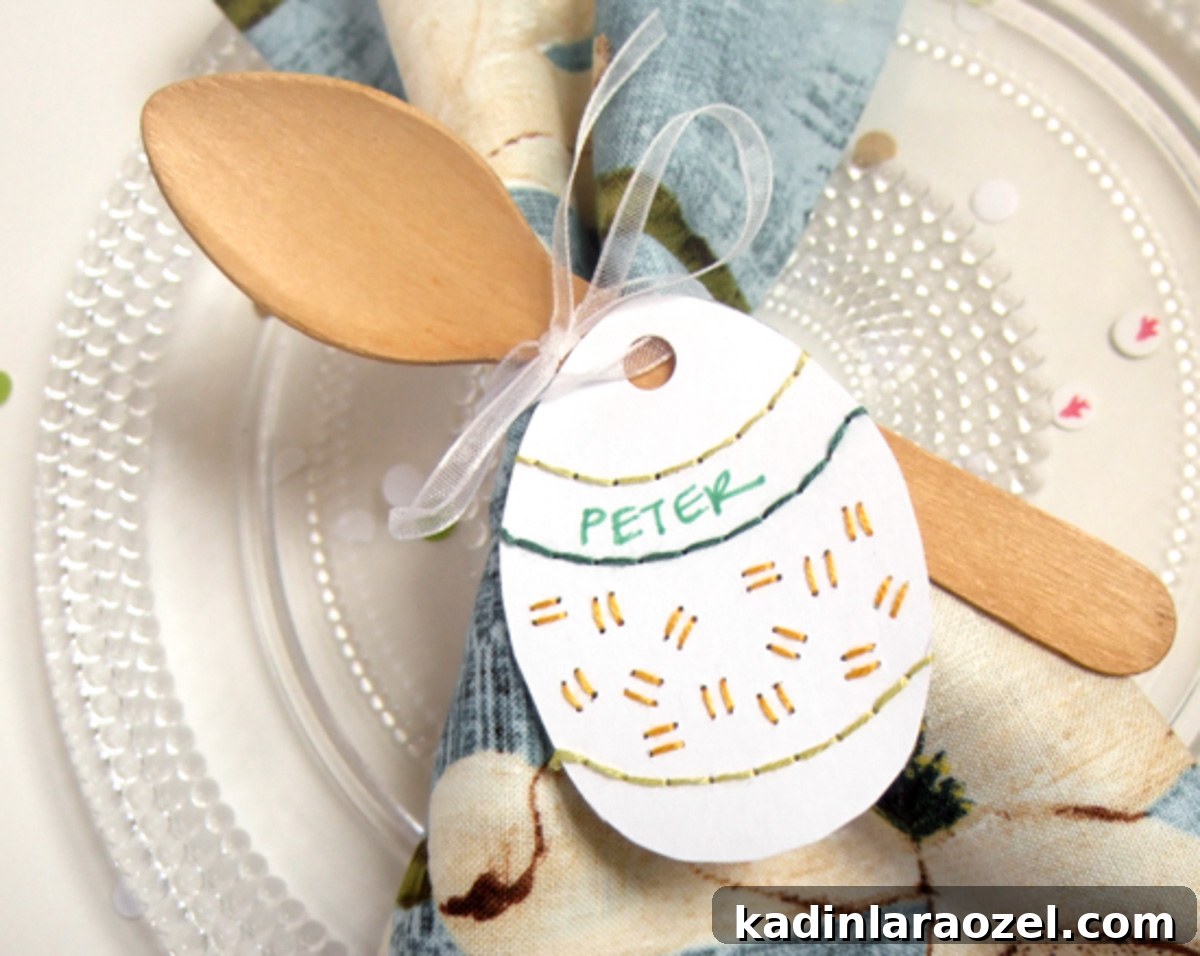
These embroidered Easter basket tags are charming and add a handmade, personalized touch to any basket or table setting. They’re simple to make, look delicate and special, and are a lovely way to elevate your egg hunt or Easter brunch.
One of the best Easter traditions is the egg hunt, especially when you add small, customized touches. A few thoughtfully hidden, extra-special eggs — perhaps with little prizes — make the hunt more exciting, and simple handmade details help involve everyone in the celebration.
Personalized Easter baskets are a must for many families, and these embroidered tags were inspired by that idea. They’re quick to assemble, but the hand-stitched embroidery gives them a sweet, artisanal feel.
If egg hunts or candy-filled baskets aren’t your thing, these tags work beautifully as place cards for an Easter brunch, or you can leave them nameless and hang a cluster from a flowering branch for a festive display.
*Guest post by Zoe of A Quick Study*
Supplies
- Easter Tags PDF template (download the free template)
- Printer
- Card stock (colored or white)
- Various colors of thread or embroidery floss
- Scissors and a needle
- Ribbon for hanging
- (Optional) an awl or other pointy tool (thumbtacks work well)
- (Optional) hole punch
How to Make Easter Basket Tags
Step 1: Print, cut, and prepare.
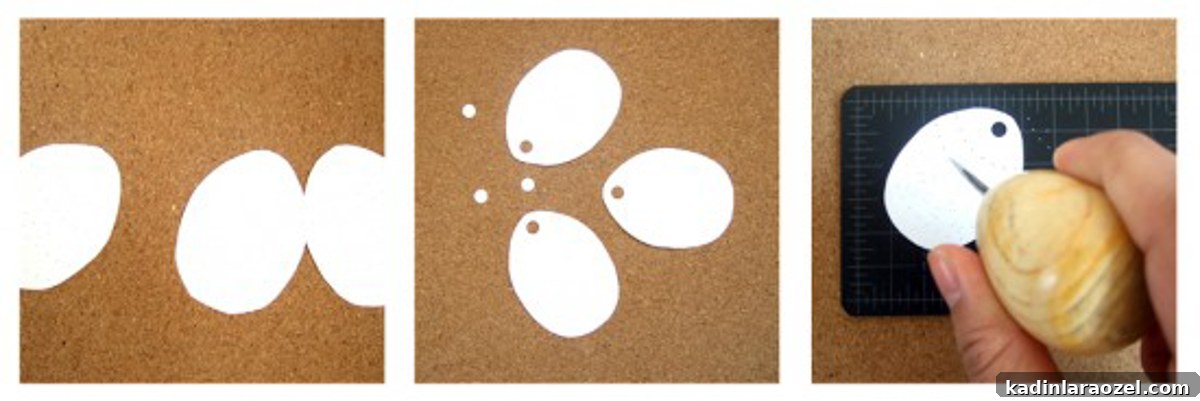
Print the template onto card stock and cut out the egg shapes. Use a hole punch or scissors to make the ribbon hole where marked on the template. Then use an awl, thumbtack, or other pointy tool to poke holes through every dot on each egg. Pre-punching these holes prevents tearing and makes stitching much easier and neater.
Step 2: Embroider the egg designs.
Most of the designs are stitched using the back stitch. Begin by knotting your thread. Choose a line on the egg to start and bring the needle up through the hole closest to one edge. Loop the thread around the outer edge of the egg so the design looks continuous around the shape, then insert the needle back down through the second hole in the line from front to back. Because you’ll be working a back stitch, you’ll then come back up through the first hole from back to front and pull the thread through to complete the stitch.
Continue by coming up through the next hole, stitching back toward the starting side, and repeating until you reach the end of the line. Loop around the outer edge again, tie a small knot on the back as close to the paper as possible, and trim the thread. Use this same back-stitch method for all linear elements of the design, including the zigzags.
Tip: When looping around an angled outer edge, a tiny slit or indentation in the paper can help keep the loop in place while you stitch.
Step 3: Stitch the flowers.
For the floral details, use a detached chain stitch. Bring the needle up through the base of the flower, then insert it back down through the same hole while leaving a loop of thread on the surface (wrap the thread around a finger or the needle to hold the loop). Bring the needle back up through the tip of a petal and through the loop, then pull gently to form the petal — don’t pull too tight, or the petal will lose its shape. To secure the petal, insert the needle back down through the hole at the petal tip on the outside of the loop. Repeat this process for each petal, returning to the center base for each new stitch, until the flower is complete.
Step 4: Finish and hang.
Once all embroidery is complete, thread ribbon through the pre-punched hole to create a hanger. Trim and secure any loose threads on the back. Experiment with color combinations — for instance, white thread on bright paper can look very striking — and enjoy customizing sets for each person or table setting.
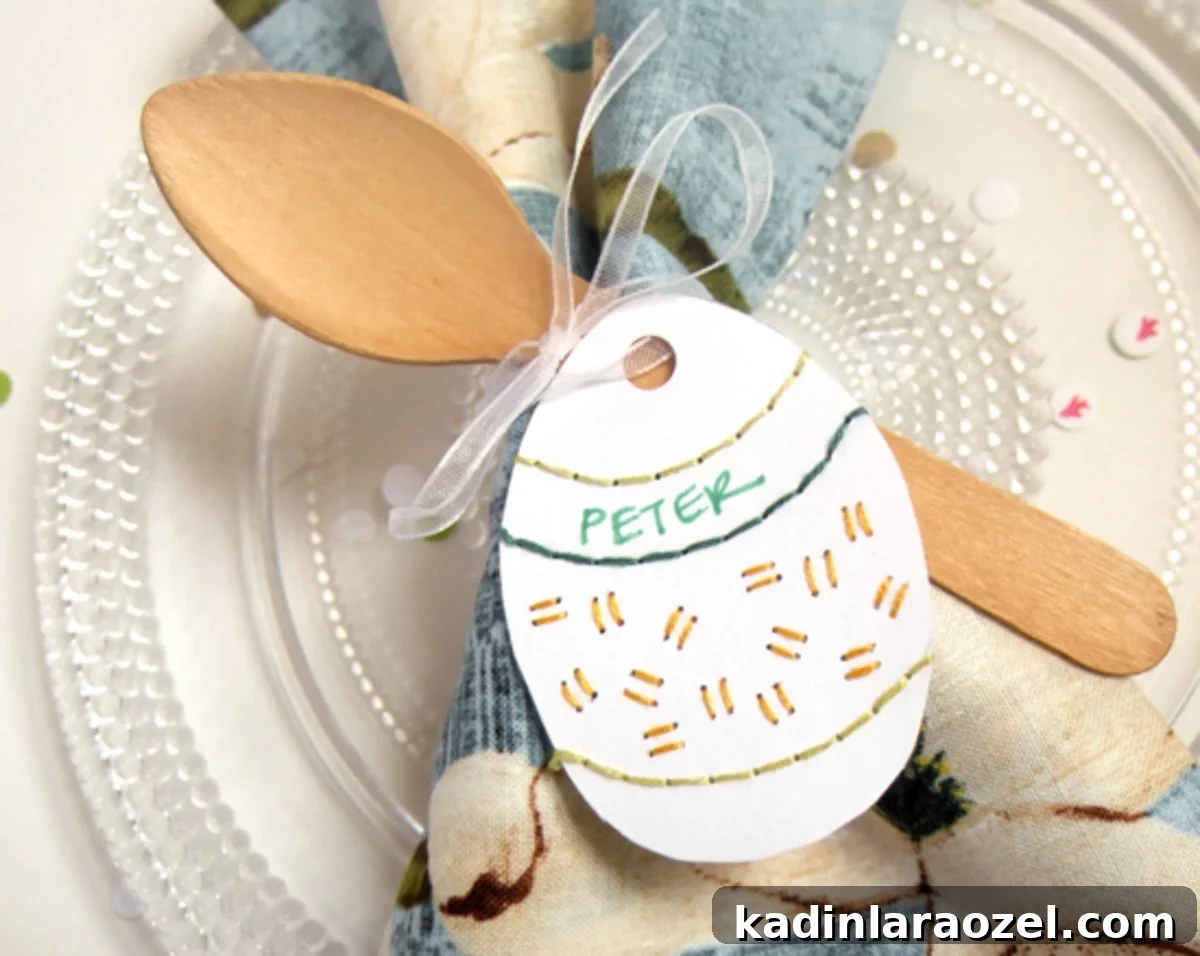
If you try these tags, share photos of your color choices or creative uses—seeing different takes on the design is always inspiring.
Download the free Easter tag template today and make your own embroidered tags.
About the author: Zoe works in many mediums — metal sculpture, painting, sewing, digital illustration — but she’s currently most drawn to hand-embroidered paper goods. She also writes about organization and planning and enjoys life with her husband and two sons, sharing her projects and ideas on her blog.