DIY Rug from Scratch: Step-by-Step Guide to Weaving Your Own Rug

I made a large DIY rug (5×8) from scratch using only a few simple supplies. You can make one too in whatever size you want.

After completing my weaving project, I wanted another challenge. I needed a new rug and couldn’t find one I loved at a reasonable price, so I decided to make my own from cotton piping.
Making a giant rug by hand is a labor of love, but the result is wonderfully cozy—soft and plush, like walking on clouds. It’s perfect for the cooler months and adds a warm, tactile layer to my seating area.

How to Make a DIY Cotton Piping Rug
This technique works for runners, bath mats, small kitchen rugs, or larger area rugs like the 5×8 I made. Below are clear, step-by-step instructions so you can create a similar soft, textured rug.
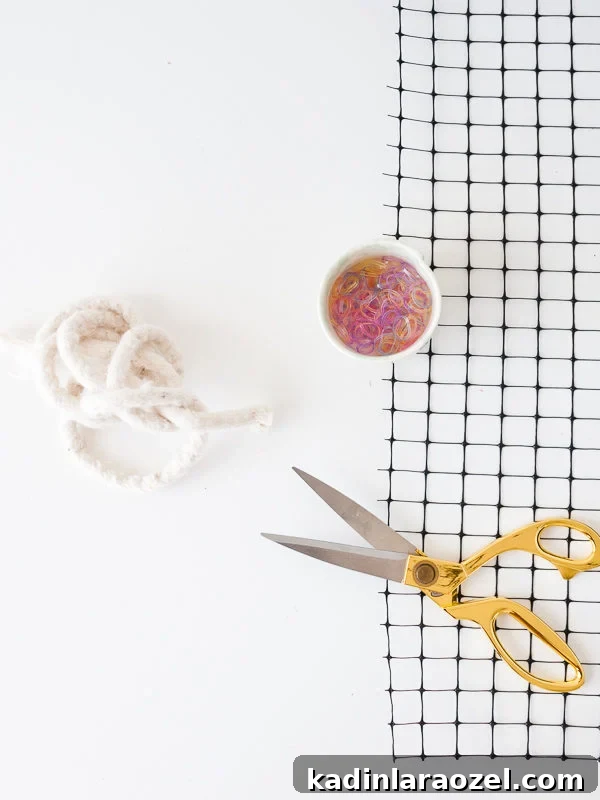
Materials
- Multi-use netting (mesh grid)
- Cotton piping (available by the yard at fabric or craft stores)
- Small rubber bands (hair elastics work well)
- Sharp scissors
Cotton piping comes in many thicknesses—from about 1/4″ up to 1″ or more. All sizes will work; thicker piping speeds the process and uses fewer yards. My favorites are 1/2″ and 11/16″, but try samples to find the look and feel you prefer.
Step-by-Step Instructions
1. Decide rug size and cut the netting
Determine the dimensions you want. For a 5×8 rug, I needed three strips of netting eight feet long because my netting roll is two feet wide. Measure, mark, and cut the netting pieces with scissors.
2. Cut the piping into short pieces
Cut the cotton piping into pieces about 3–4 inches long. Keeping most pieces similar in length produces an even, handmade texture—some variation adds character. Expect to use a large quantity of piping: for a 5×8 rug I used over 200 yards. Even so, piping is relatively affordable compared to ready-made thick handmade rugs—the total material cost for my 5×8 was roughly $300–$350.
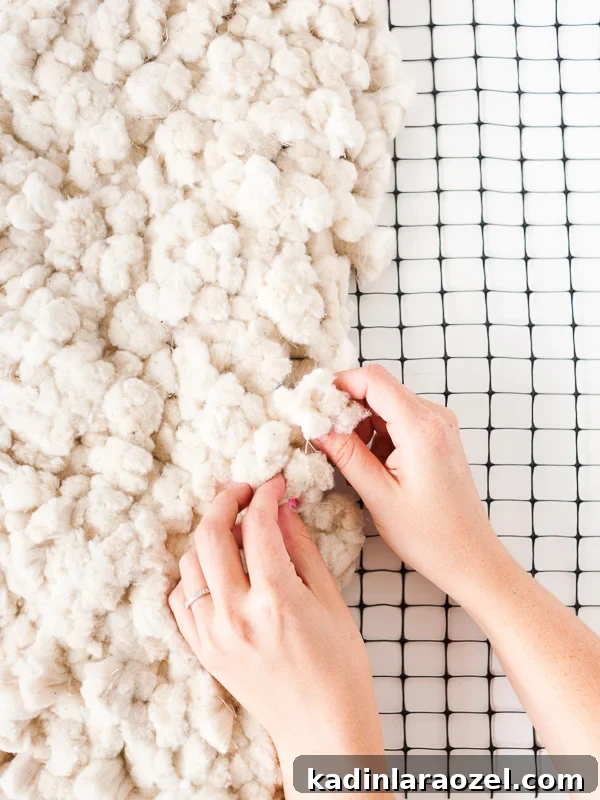
3. Weave the piping into the mesh
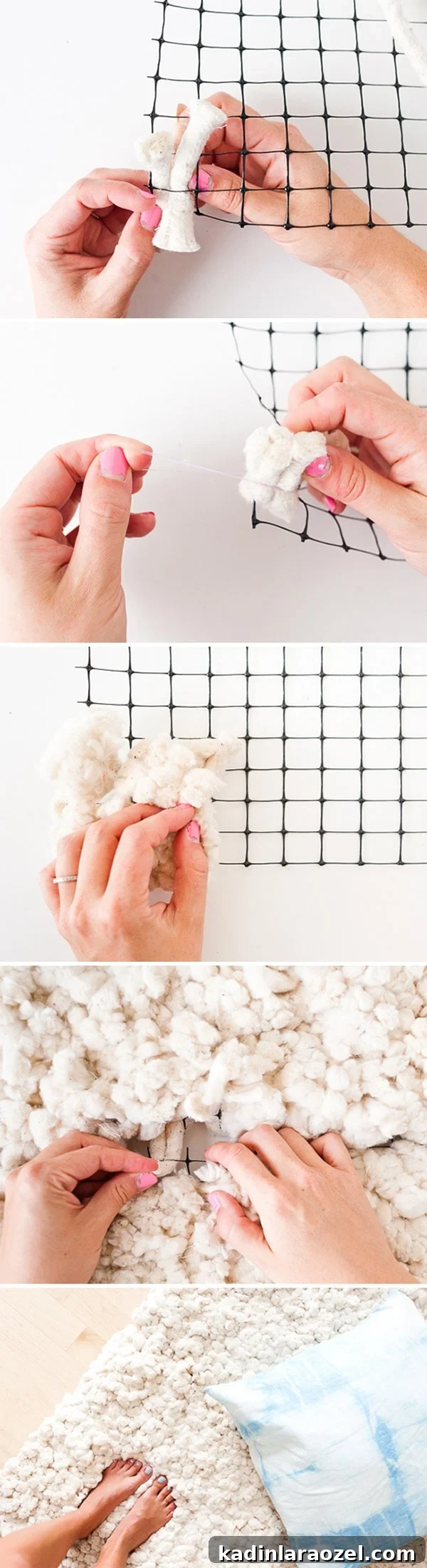
Insert each cut piping segment into the holes of the netting grid. Pull the ends up through the mesh and gather them together to form a short tuft; secure each tuft with a small rubber band. After securing, tease and fluff the piping pieces to make them look like fuzzy pom-poms.
4. Continue filling the mesh
Repeat cutting and inserting piping until the entire netting piece is filled.
5. Join multiple sections
If your rug requires several mesh strips, assemble them by weaving piping through the adjacent edges and securing tufts to connect the pieces into a single rug. Work along the seams so the joins are continuous and natural-looking.
6. Finish all seams
Complete the joining process around every section that needs to be connected until the rug is one unified piece.
7. Trim and even out the surface
Trim any stray or overly long piping fibers with sharp scissors. I trim around the outer edges for a cleaner silhouette and occasionally tidy interior tufts that stand out. This step gives the rug a polished, cohesive appearance.
Notes on Piping Size
Smaller piping requires more pieces to achieve the same plushness. For very thin piping you may want to double up strands in each mesh hole. Thicker piping (1/2″ or greater) will give you a fuller result with fewer pieces. Test a few lengths and thicknesses—buy a small amount of different sizes first to see what you like.
You can buy piping by the yard at craft stores in the upholstery section, or order online. Compare prices once you choose a preferred thickness.
Alternatives to Rubber Bands
Rubber bands are fast and effective, but they can deteriorate over many years. If you prefer a longer-lasting option, use thin elastic string or cord to wrap and knot each tuft. Pull tight, double-knot, and trim excess. This takes longer than rubber bands, but it’s a durable option. In my experience, small rubber bands have held up well, but it’s good to know alternatives.
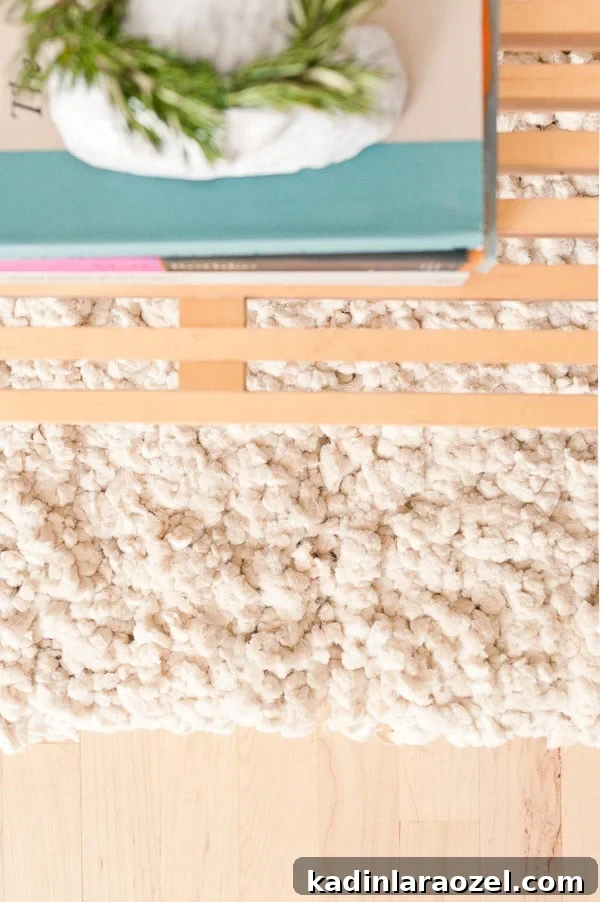
The process is time-consuming but straightforward. Anyone can do it with patience—treat it like knitting: a few evening sessions while watching a show will add up, and you’ll finish with a handmade rug you can be proud of.
Care and Maintenance
Spot clean spills with a gentle cleaner suitable for cotton. Dab the area—don’t rub—to lift stains. If a section becomes stained beyond repair, you can remove the affected piping tufts and replace them using the same method.
Shedding
The rug may shed slightly at first, like many new rugs. Shedding diminishes over time with normal use.
How This Compares to Latch Hook
The technique resembles latch hook in appearance, but differs in two ways: the cotton piping tufts aren’t secured with a knot the same way latch hook yarn is, and you don’t need any specialized tools. The required supplies are minimal and easy to find.
Make Any Size
You can make rugs in any size. I also made a 2×5 runner using the same method. Others have made small bath-mat–size rugs (around 2×3) in an afternoon or over a weekend. There’s no size limit—just scale the amount of mesh and piping to your space.

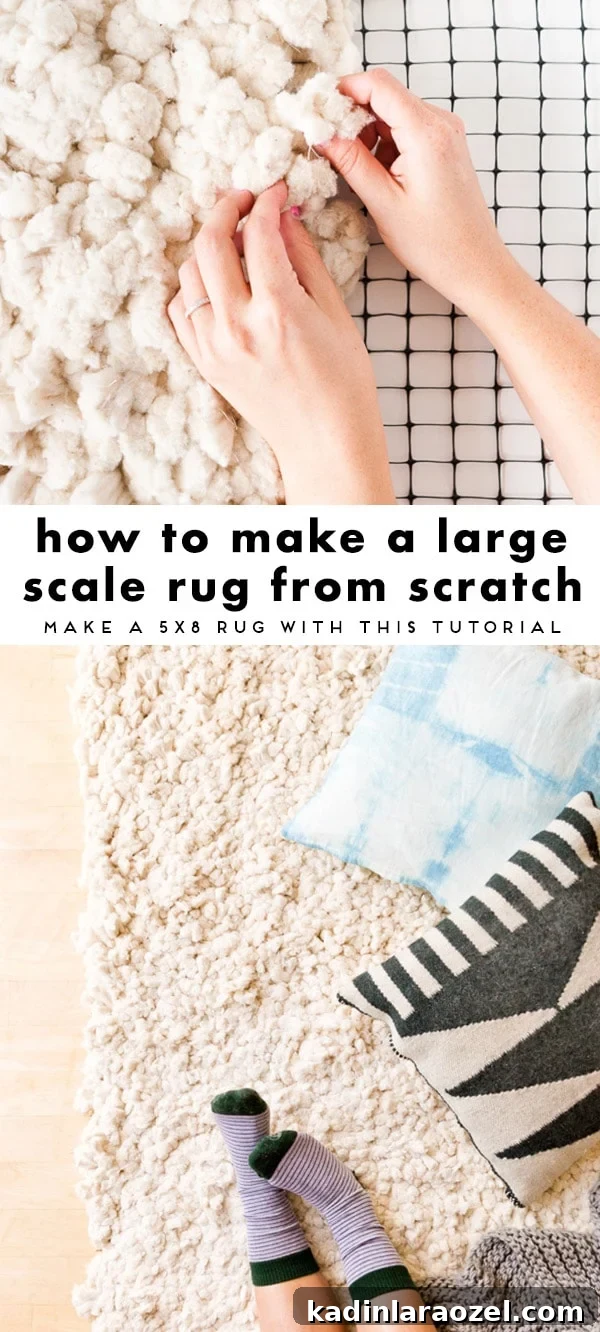



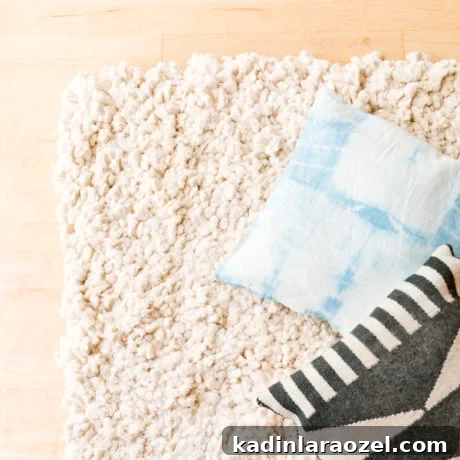
DIY Rug: Cotton Piping (Large Scale)
Materials
- Multi-use netting
- Cotton piping
- Small rubber bands
- Scissors
Instructions
- Determine the rug size and cut the netting pieces to match.
- Cut piping into 3–4″ segments. Thicker pieces give more height; thinner pieces may need to be doubled up.
- Weave piping through the mesh grid, pull ends up, and secure each tuft with a rubber band. Fluff each tuft into a pom-pom shape.
- Repeat until the mesh is fully covered.
- Join mesh pieces by weaving and securing piping at the seams to create one continuous rug.
- Trim the outer edges and any overly long interior tufts for an even finish.
Notes
Piping size
Smaller piping requires more yardage; thicker piping creates a fuller rug with less work. Test small samples before buying large quantities.
Securing tufts
Rubber bands are quick and effective. For a more durable option, use elastic string and double-knot each tuft—this takes longer but can last longer than bands.
Photography: Amelia Tatnall Lawrence
Styling and crafting: Brittni Mehlhoff
Questions and Additional Resources
If you still have questions, I created a detailed Instagram highlight that walks through the process and answers common questions, including a couple of time-saving tips for larger rugs. If you don’t find your answer there, leave a comment and I’ll do my best to help.
If you make a rug using this method, I’d love to see it—please share your results!
– Brittni