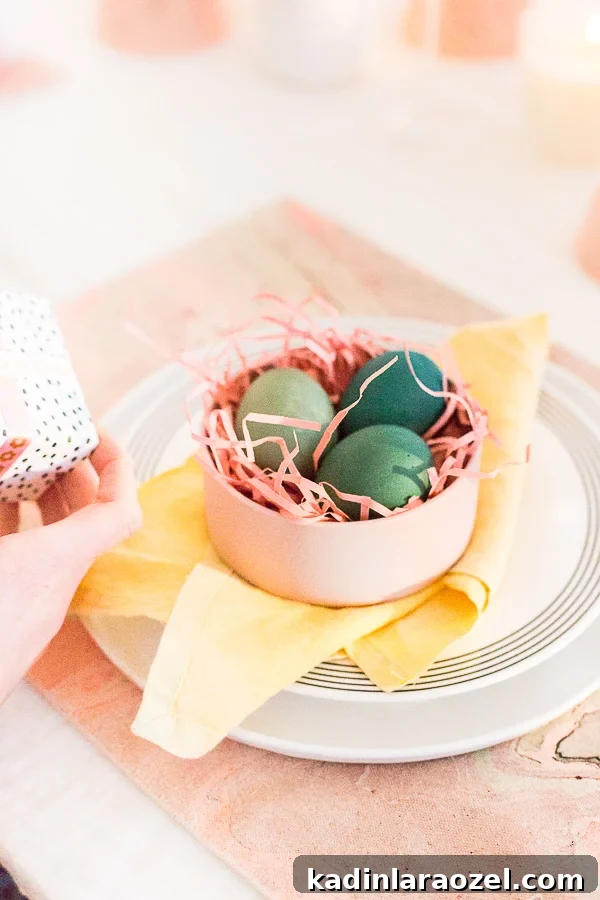
DIY egg designs to try before Easter comes and goes.
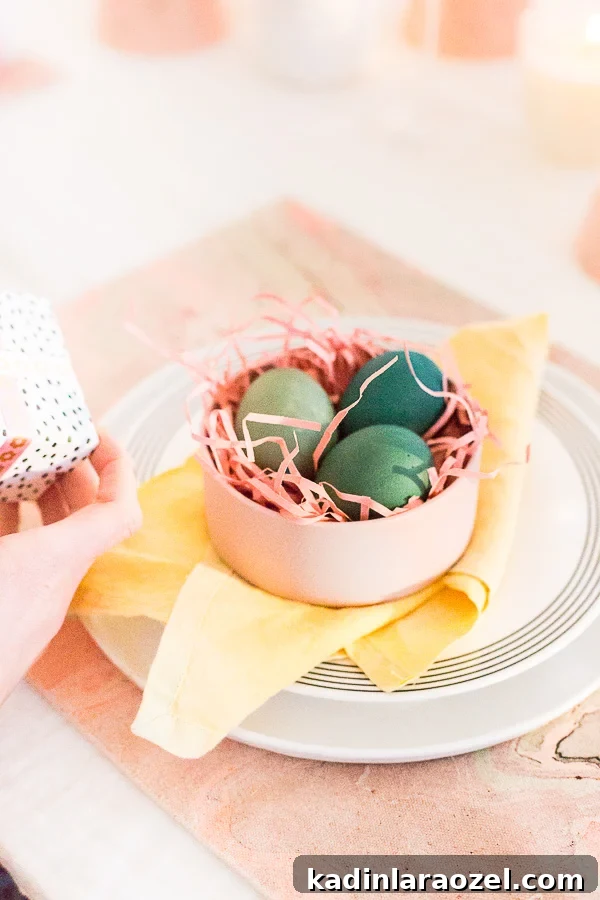
Easter is approaching quickly. After sharing tutorials on making your own Easter basket, creative items to fill baskets with, and tips for Easter entertaining, it felt like the right time to gather my favorite Easter egg DIY ideas so you can try them before the holiday arrives.
Egg decorating is one of those seasonal crafts that many of us do at the last minute, but fortunately there’s still time to experiment and find a few new favorites. Below are 42 unique and creative Easter egg ideas—techniques and styles that range from simple and natural to bold and artistic. Each idea includes a short description so you can decide which ones to try this year.
Here are 42 unique DIY Easter egg ideas to try…
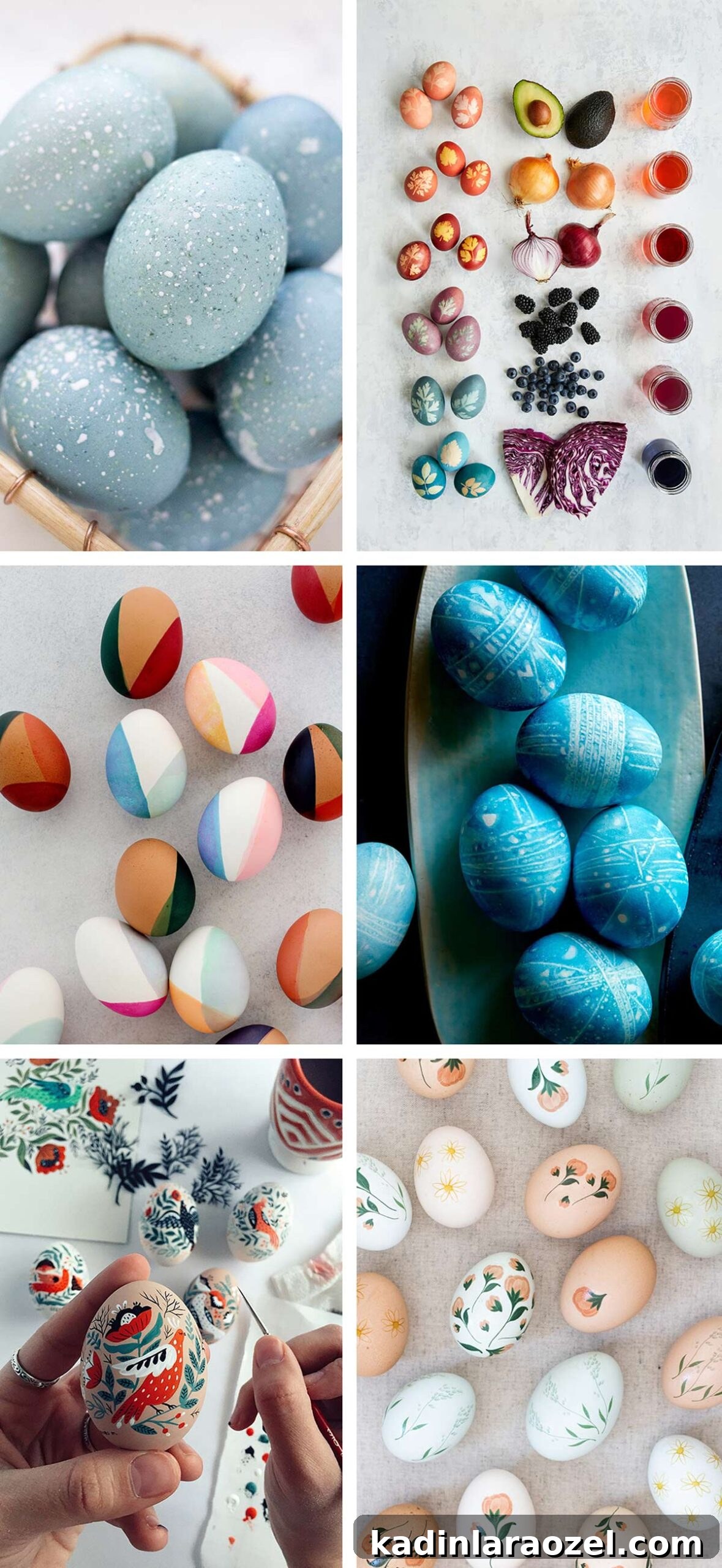
1. Dye eggs with blueberries for a natural blue tone—an easy, food-based method that gives soft, organic color.
2. Follow a detailed natural-dye guide to use ingredients like onion skins, turmeric, and beets for earthy hues.
3. Try modern color-blocked eggs for layered, geometric looks—bold contrasts and clean shapes make a strong visual impact.
4. Shibori-inspired eggs use folding and binding techniques to create indigo-like patterns; inventive tutorials even use coffee filters for resist effects.
5. Hand-painted folk-art eggs are miniature canvases—intricate, detailed designs turn eggs into tiny works of art.
6. Apply temporary tattoos to eggs for quick, precise designs without the need for steady brushes or drawing skills.
7. Create crescent moon or celestial-themed eggs—simple stencils or masking techniques let you paint moons, stars, and other shapes.
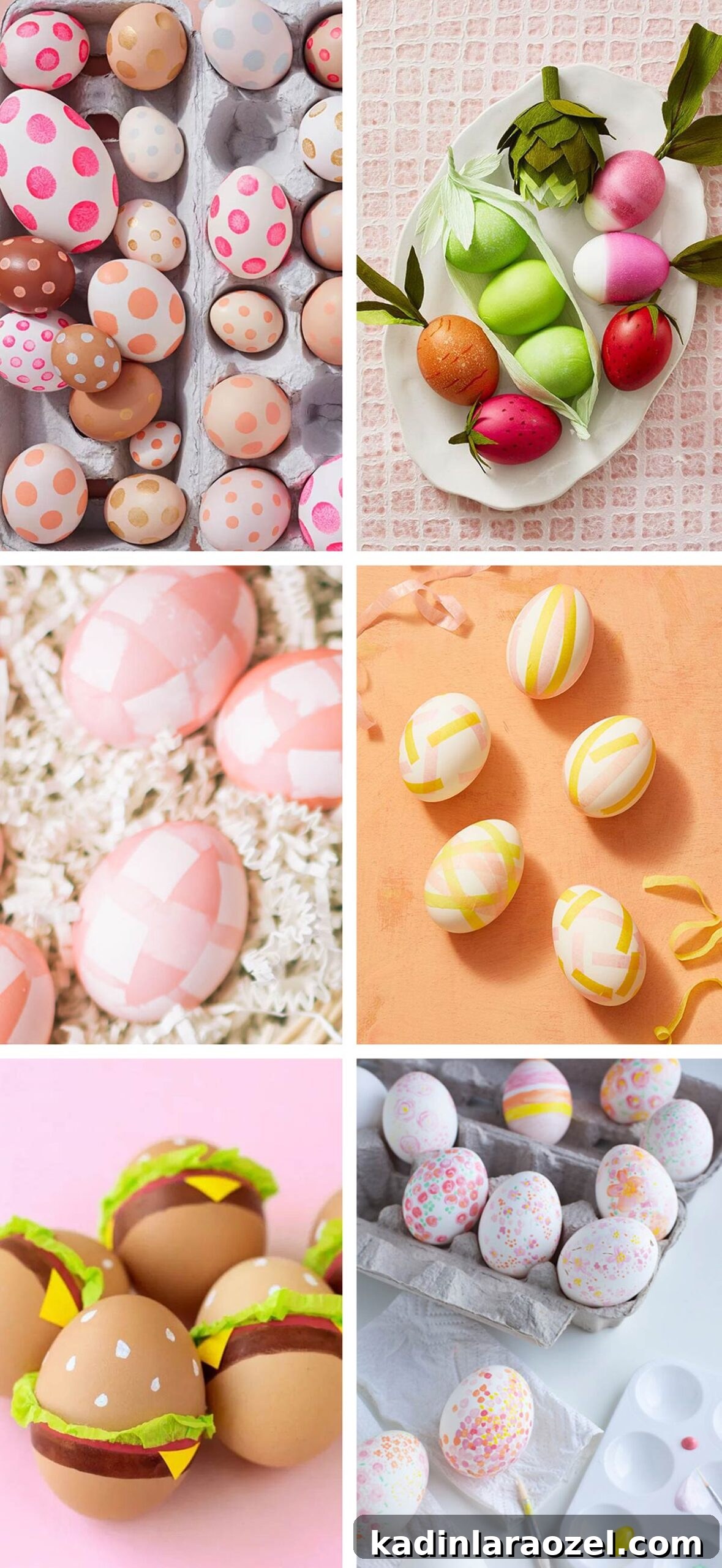
8. Polka dots never go out of style; use a brush end or a dotting tool for perfectly round dots across your eggs.
9. Vegetable-stamped eggs use sliced veggies (think okra, potatoes, or peppers) to print playful patterns and textures.
10. Gingham-patterned eggs mimic classic fabric checks—surprisingly approachable with simple resist and dye steps.
11. Tissue-paper eggs offer translucent, layered color and patterns that are easy to apply and fun to customize.
12. Novelty food-themed eggs, like hamburger-inspired designs, are whimsical and great for kids’ craft sessions.
13. Painterly floral eggs capture loose, hand-painted blossoms and petals—soft, romantic, and artistic.
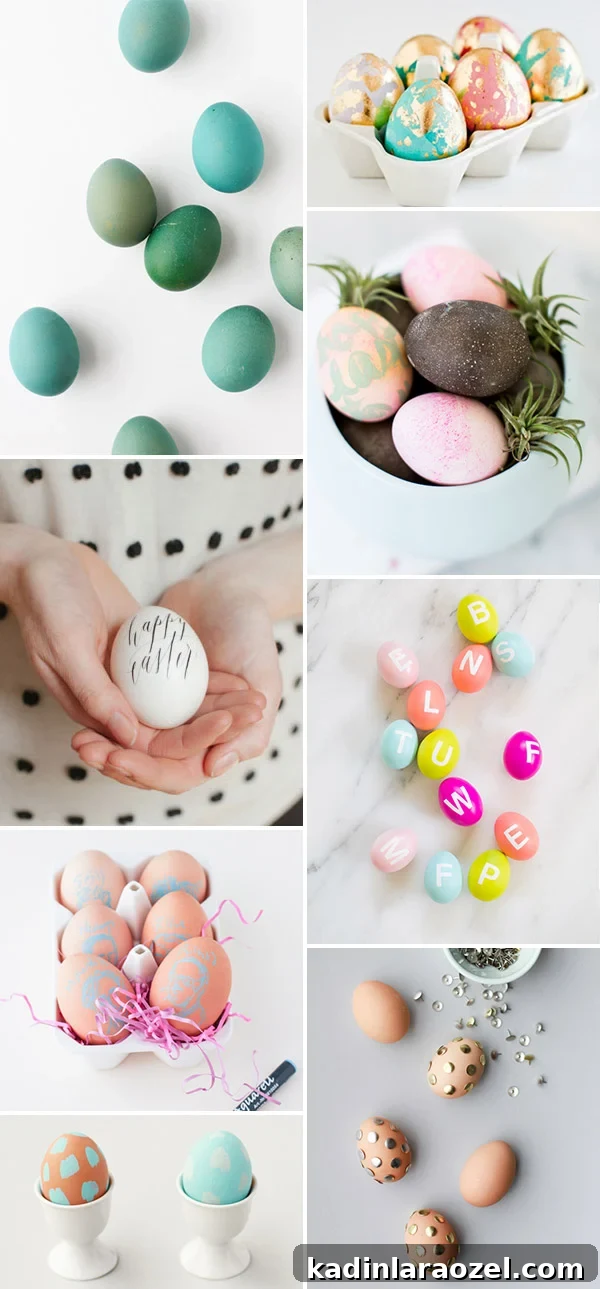
14. An egg-dyeing hack shows how to achieve vibrant color on brown eggs so you don’t have to limit yourself to white shells.
15. Golden eggs use metallic paints or gilding techniques for luxe, shimmering accents that elevate any display.
16. Calligraphy or hand-lettered eggs personalize your designs with names, messages, or decorative script.
17. Kool-Aid dyeing is a colorful, kid-friendly option that comes in a variety of bright scents and shades.
18. Artist portrait eggs—miniature drawings of famous painters or creative characters—are playful and clever conversation pieces.
19. Alphabet eggs use letters and typography to create educational or monogrammed patterns for children or place settings.
20. Painterly pastel eggs explore soft brushstrokes and blended washes for an elegant, understated result.
21. Try a thumbtack or similar unusual tool to create a polka-dot effect—an unexpected material can produce charming texture.
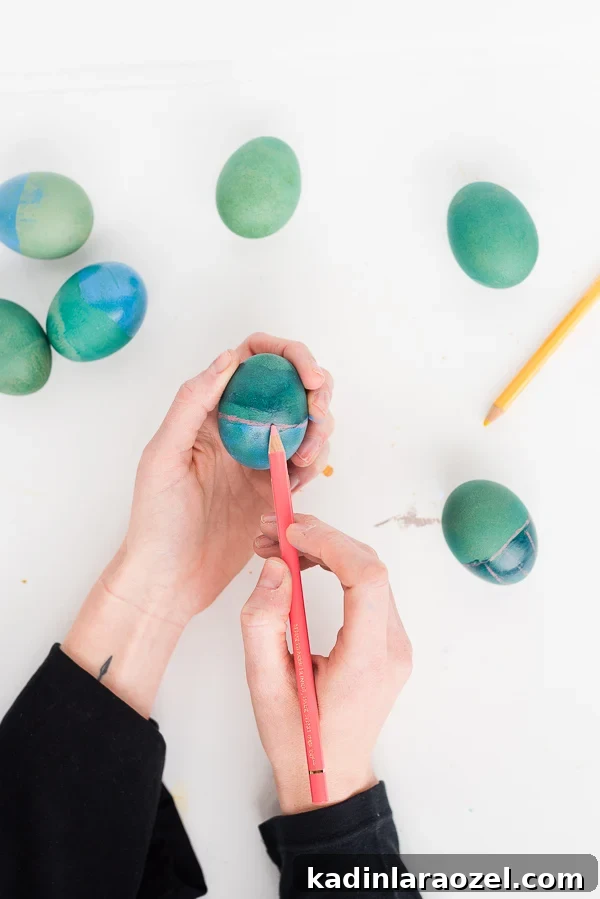
22. Rothko-inspired eggs channel abstract color blocks and gradients—nail polish and art supplies can help recreate those painterly fields.
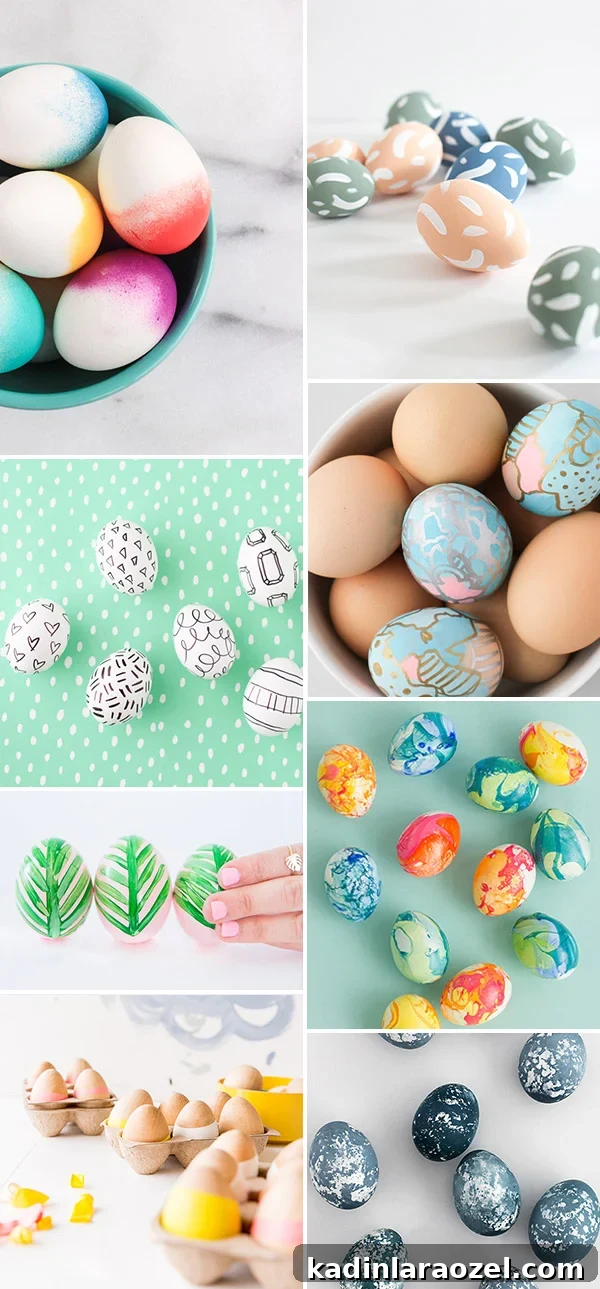
23. Classic ombré eggs blend a single hue from dark to light for a subtle, polished finish.
24. Brushstroke eggs celebrate visible paint marks and quick, expressive strokes that read as modern and artistic.
25. Sharpie doodle eggs are fast and accessible—hand-drawn sketches, patterns, and faces are perfect for last-minute decorating.
26. Graffiti-inspired eggs use bold lines, splatters, and lettering for an urban, energetic aesthetic.
27. Palm-frond or botanical-stamped eggs bring tropical leaf shapes and organic silhouettes into your collection.
28. Colorful marbled eggs use swirling pigments for vibrant, fluid patterns—each egg becomes one-of-a-kind.
29. Balloon-dipped eggs are a playful technique that creates soft, layered color and unusual textures through dipping and masking tricks.
30. Naturally speckled eggs made with cabbage and other kitchen scraps produce subtle, mottled surfaces with an organic feel.
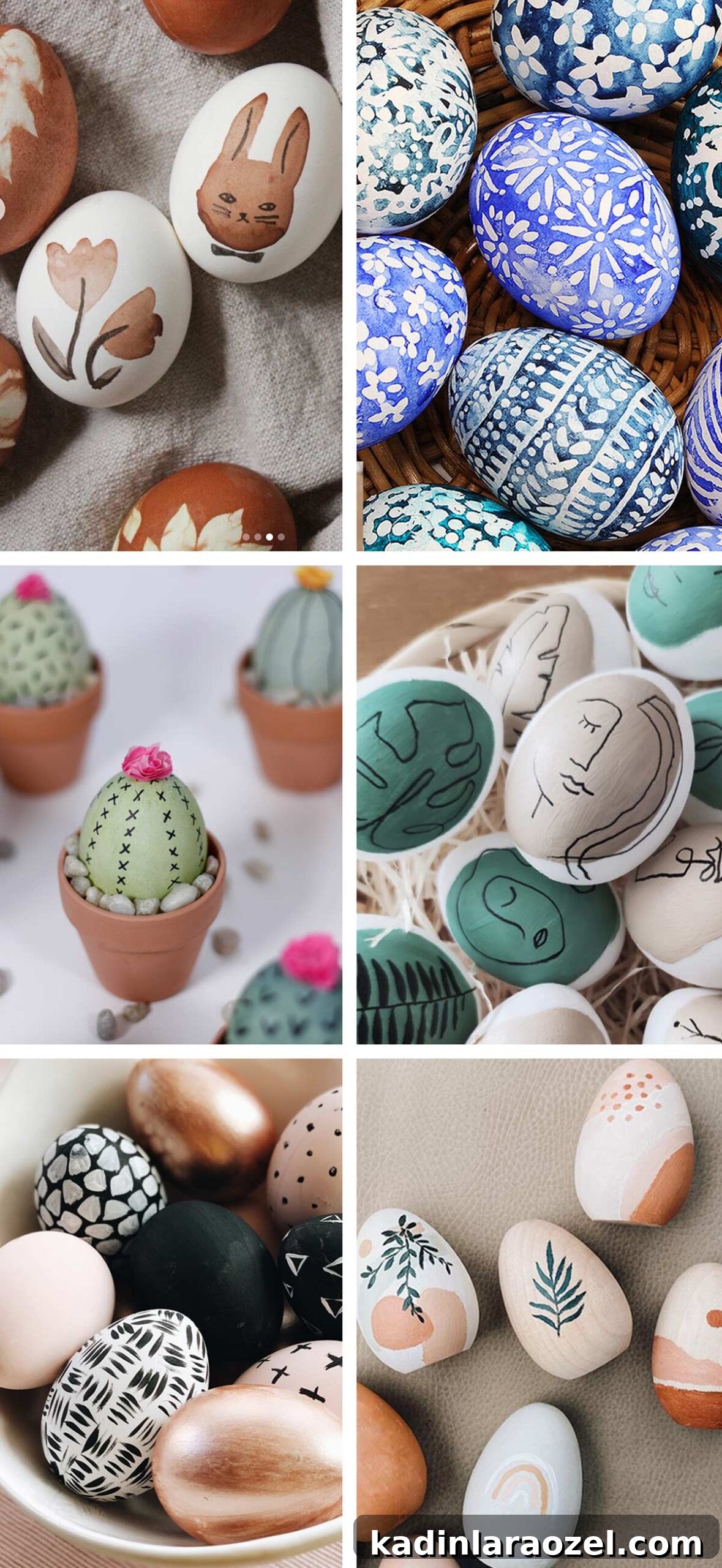
31. Watercolor eggs mimic watery pigments and delicate washes for a dreamy, soft-focus look.
32. Masking-fluid techniques let you reserve bright areas and create crisp, crisp lines or preserved motifs while watercoloring or dyeing.
33. Cactus-themed eggs are quirky and fun—tiny spines and pot-like designs suit a playful tabletop display.
34. Simple line-drawing eggs rely on minimal marks and suggestive outlines to create elegant, modern designs.
35. Chic painted eggs often mix bold color choices with refined brushwork for a contemporary, boutique feel.
36. Sunset and nature scene eggs depict miniature landscapes—small gradients and silhouettes evoke evening skies or horizons.
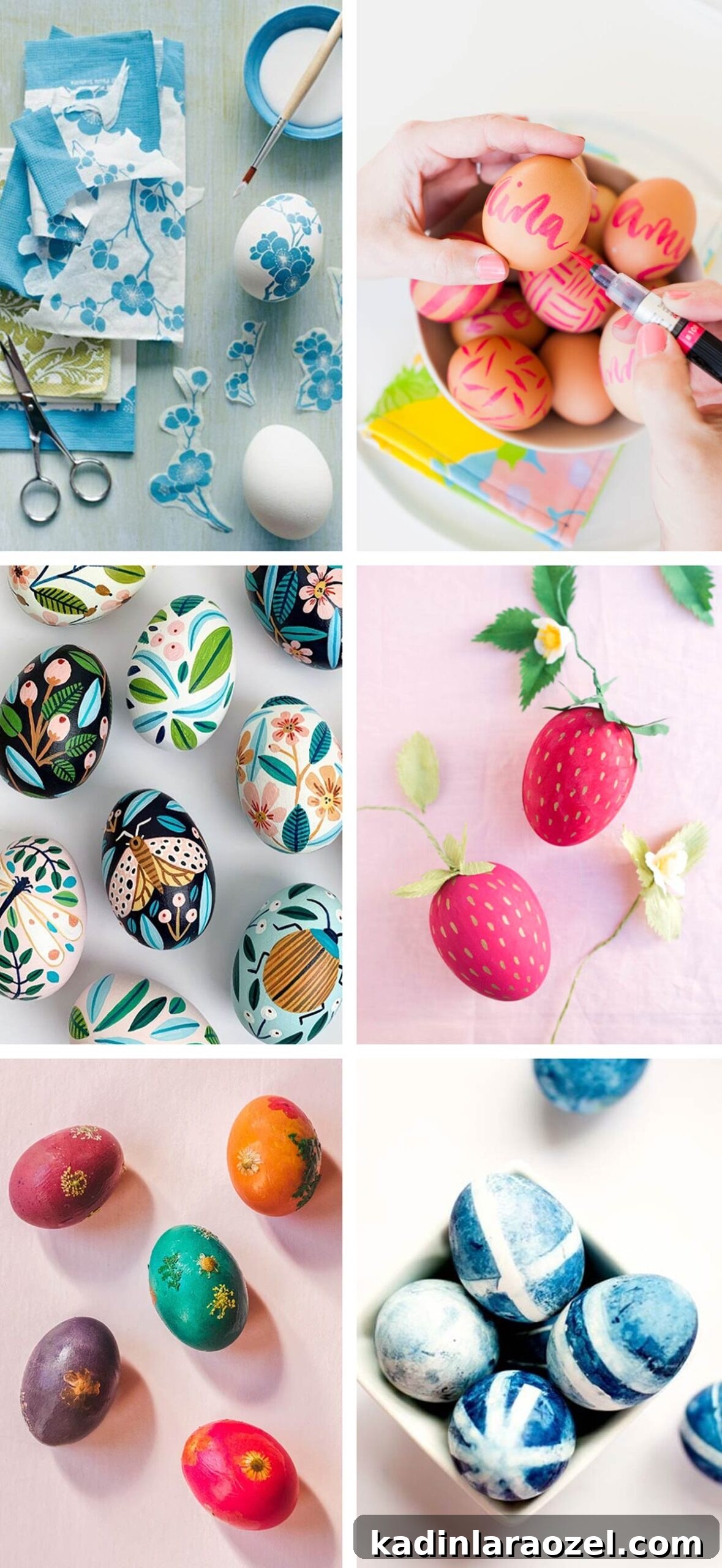
37. Decoupage eggs incorporate patterned paper, napkins, or fabric scraps for textured, collage-like surfaces.
38. Nameplate or place-setting eggs double as table decor—paint or label eggs to mark guests’ seats at a holiday meal.
39. Bugs-and-nature eggs feature tiny insect motifs, leaves, and natural elements for a whimsical, outdoorsy vibe.
40. Strawberry eggs use painted dots and leafy caps to transform eggs into oversized, kitschy fruit decorations.
41. Dried-flower eggs combine pressed blooms with adhesive and clear sealant for delicate, romantic embellishments.
42. Indigo-dyed eggs explore deep blue tones produced by indigo dye for rich, traditional color.
When do you usually dye Easter eggs—well in advance, the day before, or the day of? Whether you plan ahead or like last-minute crafting, there are egg techniques here for every timeline and skill level.
P.S. For more Easter DIY projects and inspiration, search for additional Easter-themed tutorials and ideas on crafting blogs and project archives to expand your holiday crafting list.