Block Printing Basics: A Step-by-Step Guide to Printing Fabric
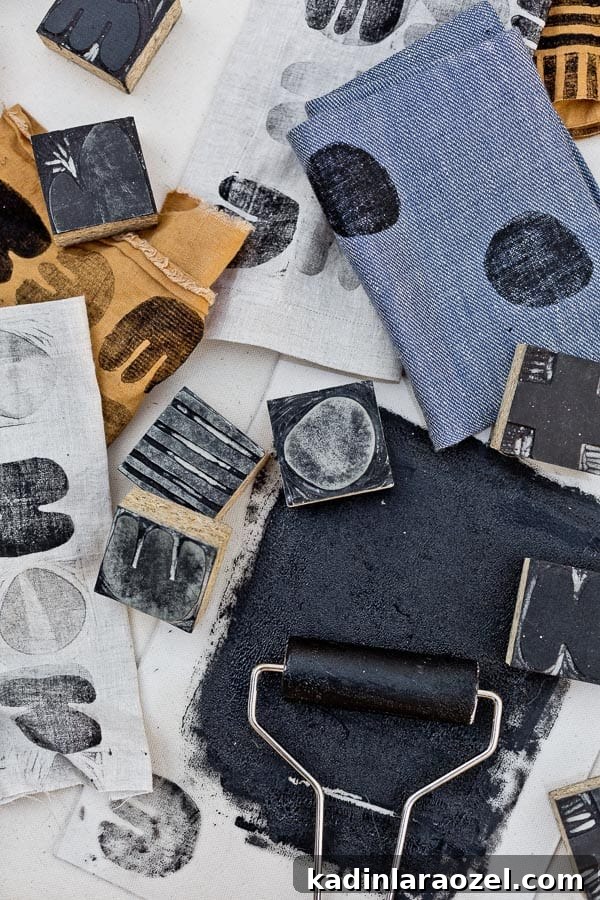
If you’ve ever wanted to learn how to block print on fabric, save this post — it’s simpler than you might expect.
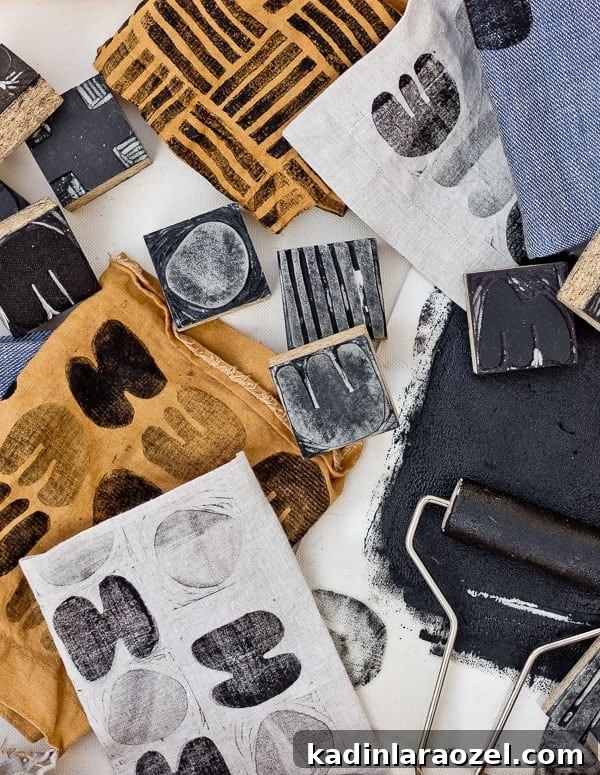
Block printing was one of my favorite techniques to explore in printmaking classes. It took a bit of practice before I felt confident, but once you master the basics it’s a fast, satisfying way to create repeatable patterns on fabric.
This guide covers everything a beginner needs to know to start block printing on fabric: the essential tools, a step-by-step process from blank block to finished print, and a few tips on inks and materials. The steps for printing on fabric and paper are essentially the same — the main differences are the type of ink you choose and drying or curing times. Learn one, and you can apply it to both surfaces.
What is block printing?
Block printing is a relief printing method in which a hand-carved block—usually made of linoleum or wood—is inked and pressed onto fabric or paper. The carved areas remain ink-free while the raised design transfers the image to the surface.
The technique is ancient, originating in China more than two thousand years ago. Early block printing was used primarily on textiles such as silk; paper printing became widespread later.
Quick note
While block printing on paper is very common today, fabric was one of the earliest materials printed with carved blocks. If you enjoy printing on fabric, these same skills will let you print on paper as well.
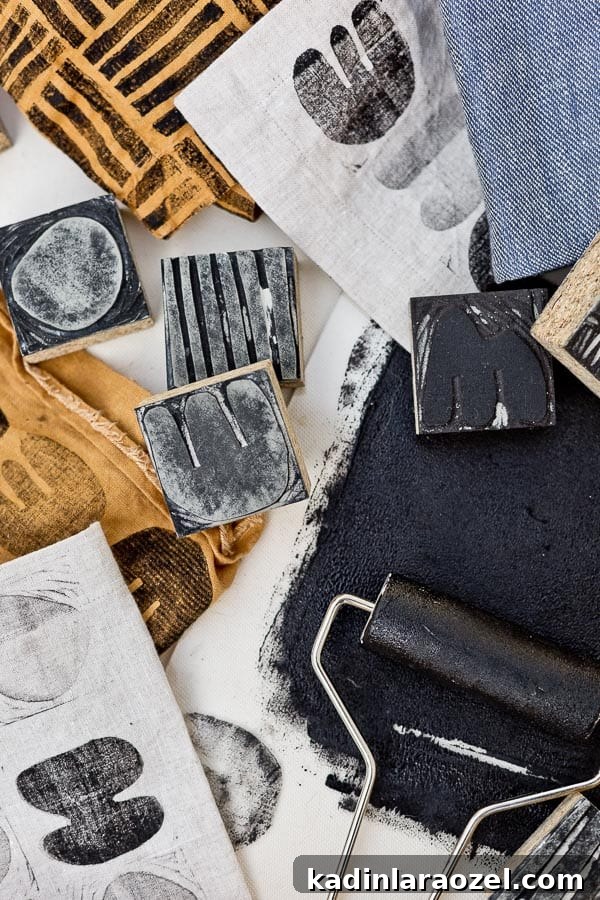
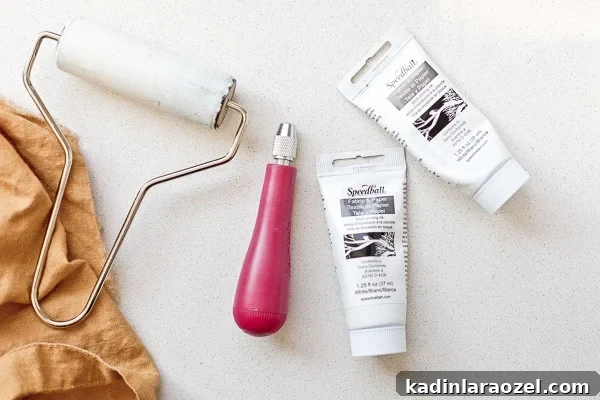
Basic materials for block printing on fabric
- linoleum or block printing carving block
- fabric-safe block printing ink (or water-soluble printing ink if you also plan to print on paper)
- linoleum cutter or carving tool with assorted tips
- soft rubber brayer (roller)
- an acrylic sheet, glass, or other smooth palette surface for rolling out ink
- permanent marker for drawing your design on the block
How to block print on fabric
Step 1: Design and transfer the image to your block
Start by sketching a simple design. Use a permanent marker to draw it directly onto the linoleum block so you can clearly see which areas to carve and which to leave raised. Permanent marker is important so the lines won’t bleed or transfer during printing.
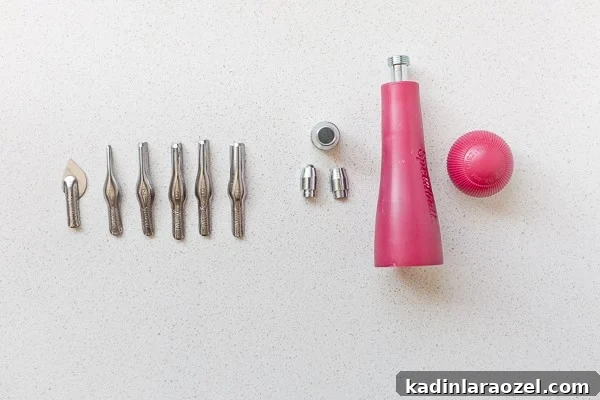
Step 2: Get familiar with your carving tools
Most lino cutters come with multiple tip sizes. Larger tips remove material faster and are great for clearing broad background areas. Smaller tips are ideal for fine detail. Some kits also include a knife blade for trimming around edges and creating crisp borders. That can be helpful if you’re worried about carving too close to a detail — it gives you a controlled guide.
Important: carving blades are very sharp. Keep your fingers well clear of the cutting path and work slowly and deliberately to avoid slips.
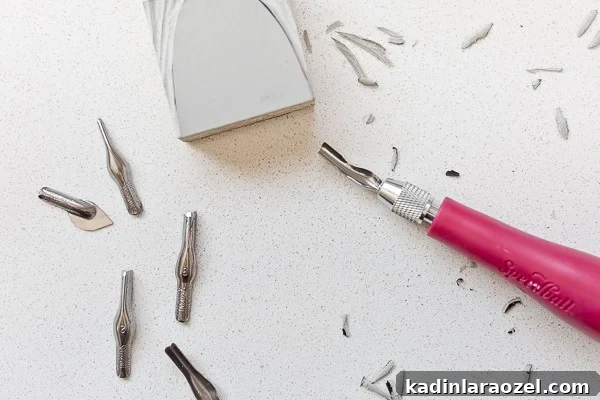
Step 3: Carve the block
Choose the cutting tip that suits each part of your design and remove the negative space so the parts you want to print remain raised. Switch between tip sizes as needed: use wider tips to clear areas quickly and finer tips to refine lines and small shapes. Carve gradually and check your progress frequently.
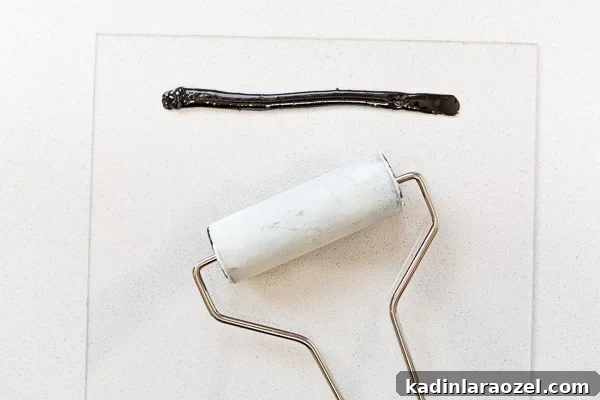
Step 4: Ink the block
For fabric, use an ink formulated for textiles. You can also use fabric ink pads for very small blocks, but for larger blocks the traditional method of rolling out ink on a flat surface and applying it with a brayer gives the most even coverage.
To ink: squeeze a thin line of ink onto your acrylic or glass palette, then roll the brayer through it until the ink is evenly distributed on the roller. Roll the brayer over the raised portion of the block in thin layers until the design is evenly covered. Avoid over-inking, which can obscure fine details.
You’ll notice block printing inks are tackier than ordinary paint; that’s normal. Apply only as much as needed for a crisp impression.
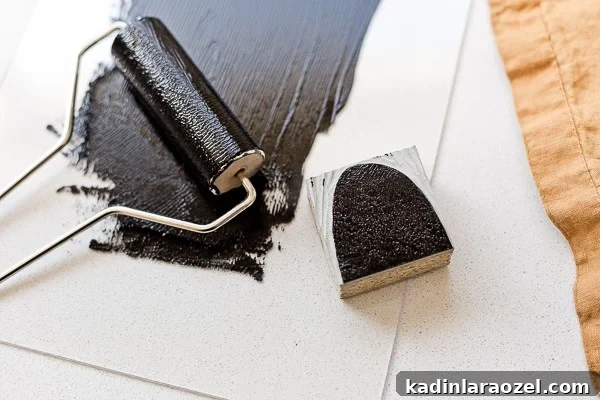
Step 5: Print the design onto fabric
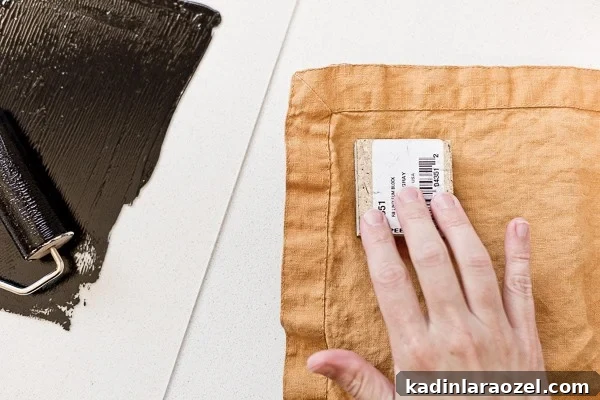
Place your fabric on a flat surface, then position the inked block face down and press evenly and firmly. You can use your hands or a baren / clean, flat tool to apply even pressure. Lift the block straight up to avoid smearing. Re-ink and repeat as needed to create patterns or a repeat design.
After printing, follow the ink manufacturer’s instructions for drying and setting. Some water-based fabric inks dry within 24 hours and can be heat-set with an iron to make them permanent. Oil-based inks may take longer to cure and usually require mineral spirits or a specific cleaner for cleanup.
Linoleum blocks vs wood blocks
Linoleum blocks are softer and easier to carve than wood, making them a great choice for beginners and small craft projects. Wood requires sturdier (and often more expensive) carving tools and more effort, but wood blocks are durable and ideal for printing large editions. For most home crafters and one-off projects, linoleum is the practical choice.
Mixing inks for custom colors
You can mix block printing inks like you would paints to create custom shades. A basic set of primary colors plus black and white can produce a wide range of tones. Mix inks on your acrylic palette, then roll them into a neat line for inking the brayer. If you plan to mix often, choose inks compatible with your final surface (fabric or paper) and follow manufacturer guidelines for blending and curing.
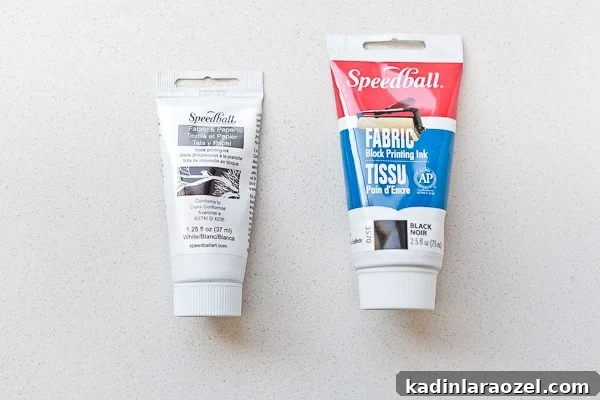
Water-based vs oil-based block printing inks
Oil-based inks
Oil-based inks work well on both fabric and paper and produce rich, durable prints. They generally take longer to dry and often require solvents like mineral spirits or turpentine for cleanup (though some formulations claim soap-and-water cleanup). Because of their slower cure, oil-based inks may need weeks to fully set on fabric.
Water-based inks
Water-based inks clean up easily with soap and water and are convenient for hobbyists. They often dry faster—sometimes within 24 hours—and can be permanent on fabric after heat-setting. Keep in mind that some water-based inks may shift or run if over-wet, so test before committing to a final piece.
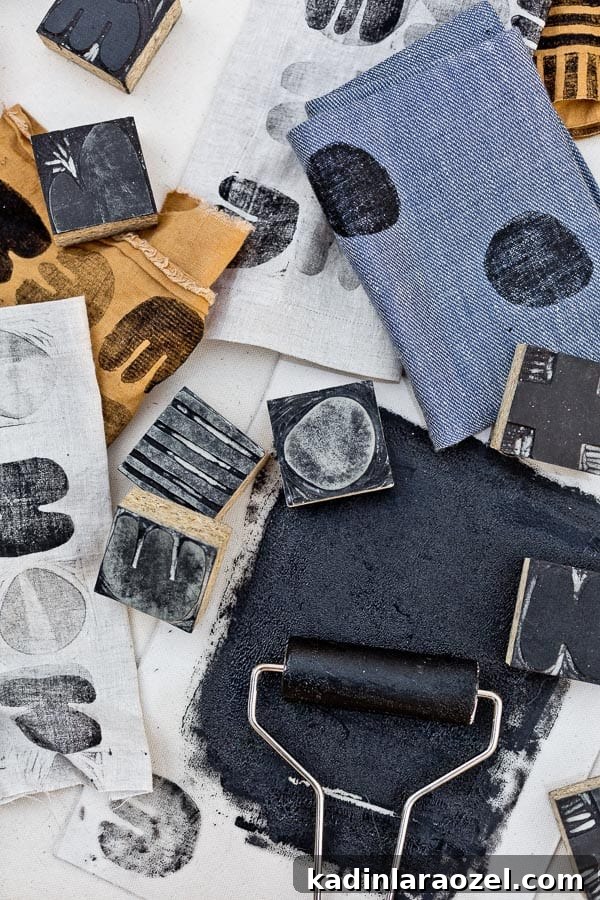
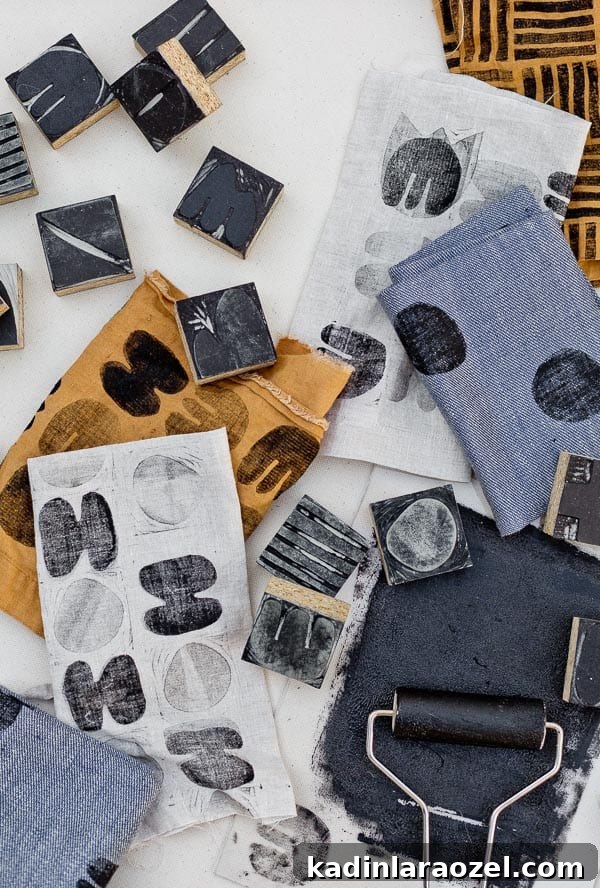
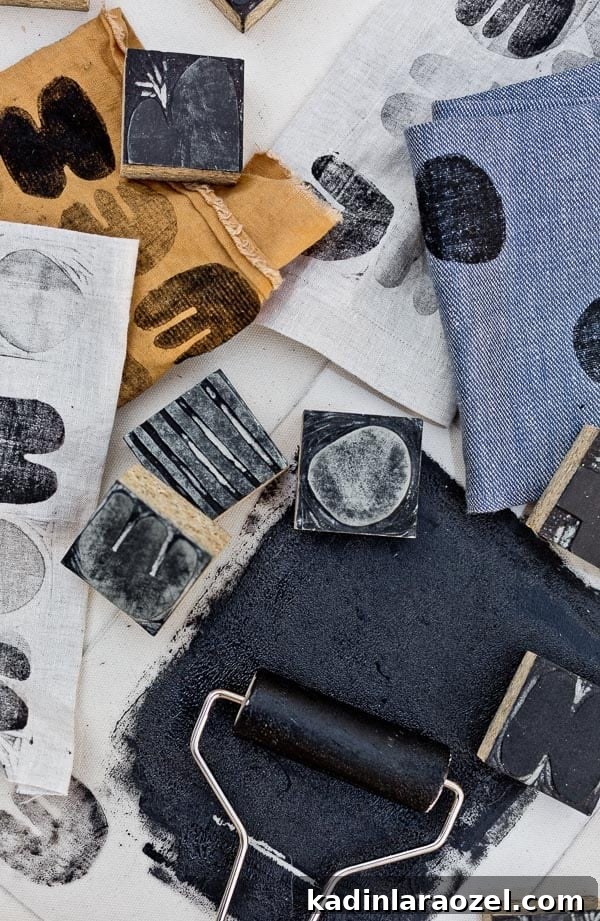
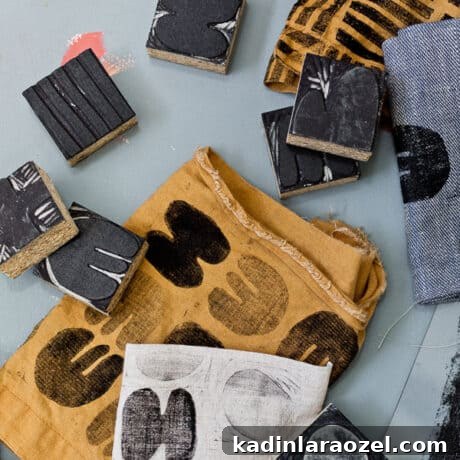
Block Printing 101: How to Block Print Fabric
Brittni
Ingredients
- block printing carving block
- fabric block printing ink or water-soluble printing ink for paper
- linoleum cutter carving tool
- soft rubber brayer
- acrylic sheet or glass palette
- permanent marker
Instructions
Step 1: Create a design and draw it onto your linoleum block.
- The first step is to come up with a design.
- Use a permanent marker to draw the design directly on the block so you know what to carve.
- This gives you a clear visual guide and prevents ink from transferring unwanted marks during printing.
Step 2: Get familiar with your tools
- Choose carving tips according to the areas you want to remove or keep raised.
- Use larger tips to remove background areas quickly and finer tips for detail work.
- Be cautious: carving tools are sharp and require steady, controlled movements.
Step 3: Carve the linoleum block
- Select the appropriate cutting tip for each section of your design.
- Remove excess material so the intended design remains raised.
- Work gradually and switch tips as needed to refine shapes and lines.
Step 4: Ink your linoleum block
- Choose a fabric-safe ink for textile projects.
- Roll a thin line of ink onto your palette and distribute it evenly on the brayer.
- Roll the brayer over the raised design in thin layers until the surface is evenly covered — avoid over-inking.
Step 5: Print the block design onto fabric
- Press the inked block face down onto the fabric and apply firm, even pressure.
- Lift the block straight up to avoid smudging.
- Re-ink and repeat to create a repeat pattern. Allow prints to dry and follow ink instructions for heat-setting or final curing.
Give block printing a try with a simple motif and a small piece of fabric to practice registration, pressure, and inking. If you have any specific questions about carving, inks, or printing techniques, I’m happy to help.