Create an Asymmetrical Wreath: Step-by-Step Design Guide
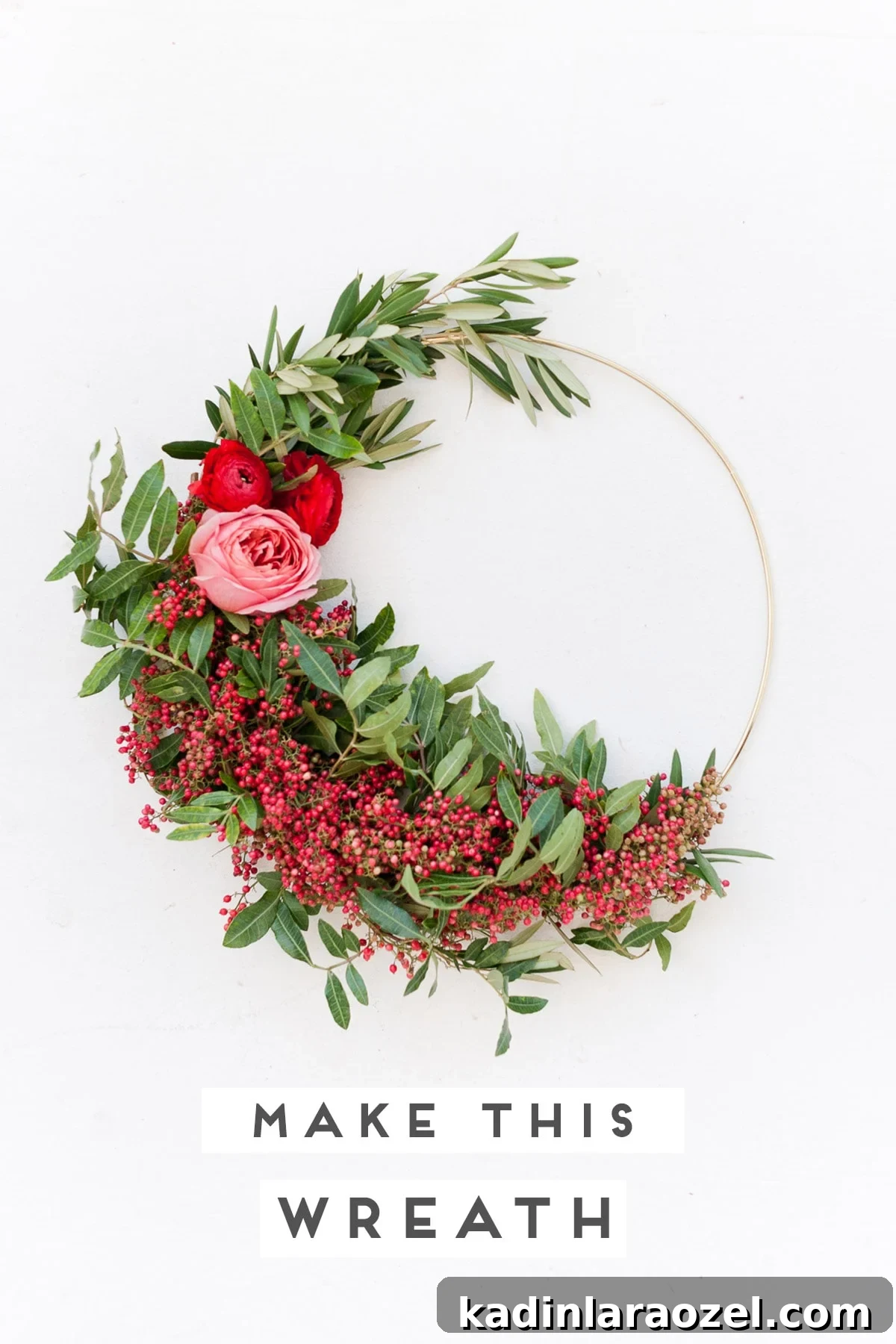
Want to make a wreath that feels fresh, modern, and easy to recreate? This DIY wreath uses fresh flowers and asymmetrical placement for a contemporary twist on a classic holiday decoration.
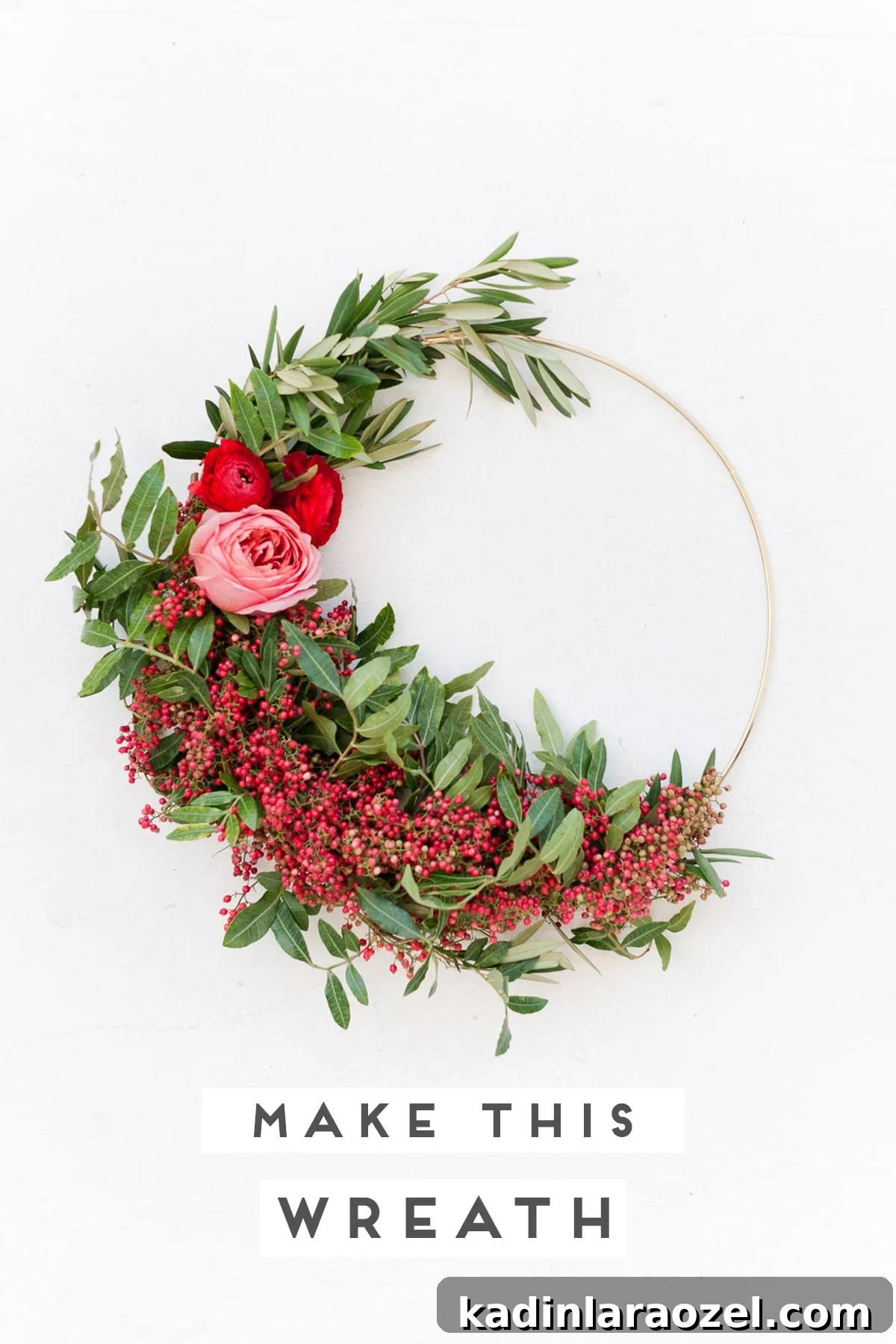
Create a beautiful wreath in under 30 minutes—simple steps, impressive results.
I’ve been making wreaths for the holidays for years and teaching workshops on them. Fresh-floral wreaths are one of my favorite holiday projects: they look gorgeous and add a lovely scent to your space.
This tutorial shows how to build an asymmetrical wreath using fresh flowers and greenery. I’ll point out a little-known material that helps fresh flowers last longer in wreaths, and I’ll share a reliable hanging method so the heavier side of your design won’t sag.
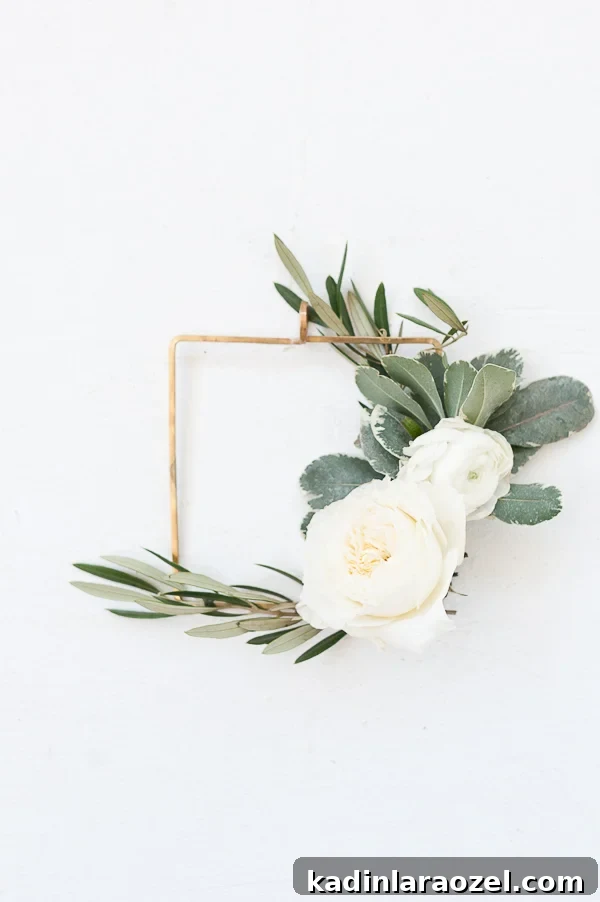
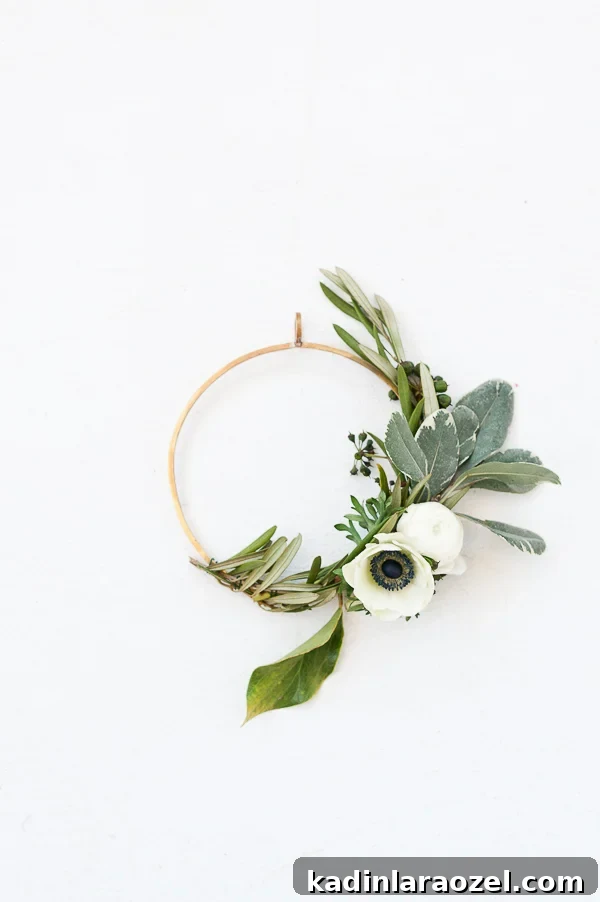
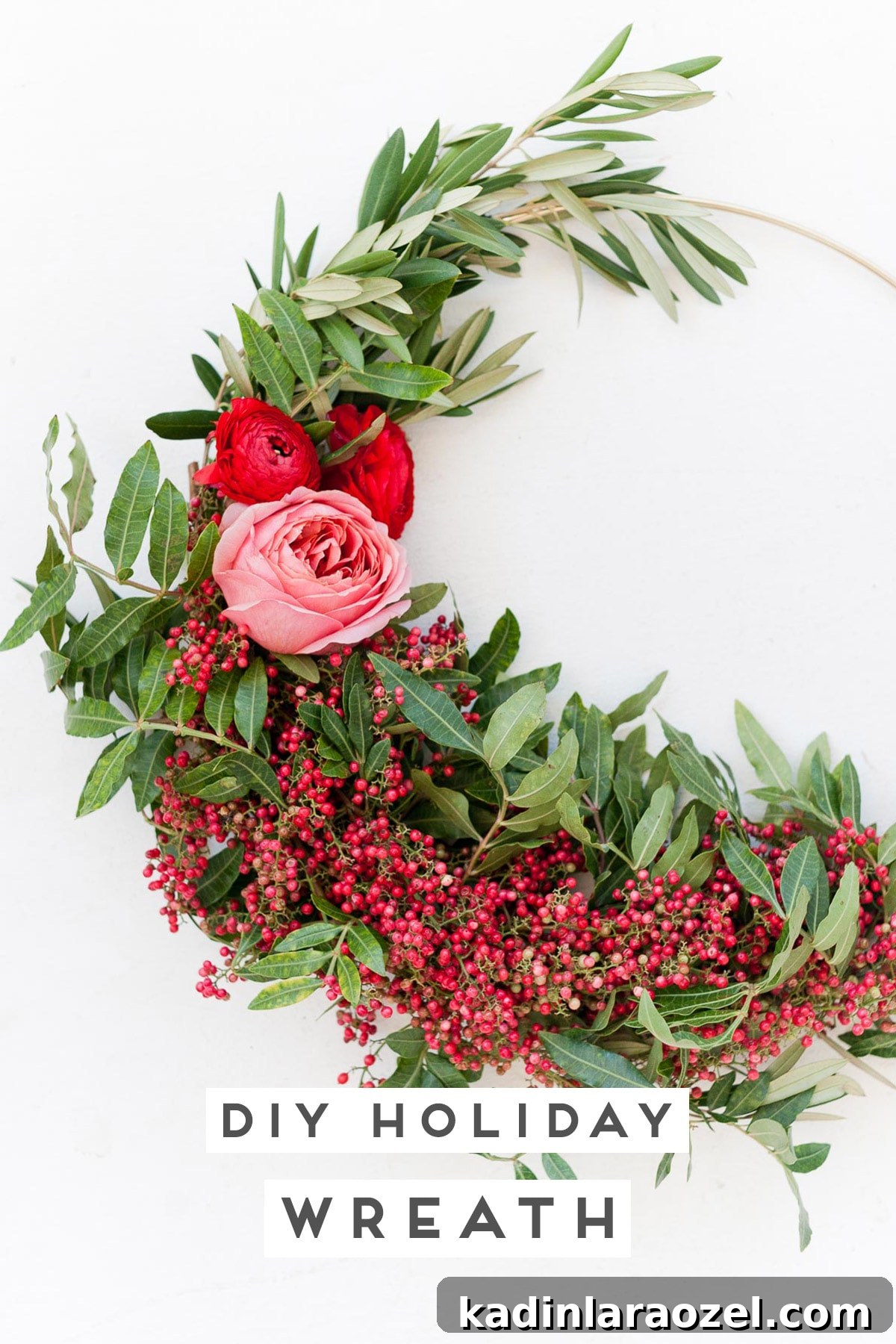
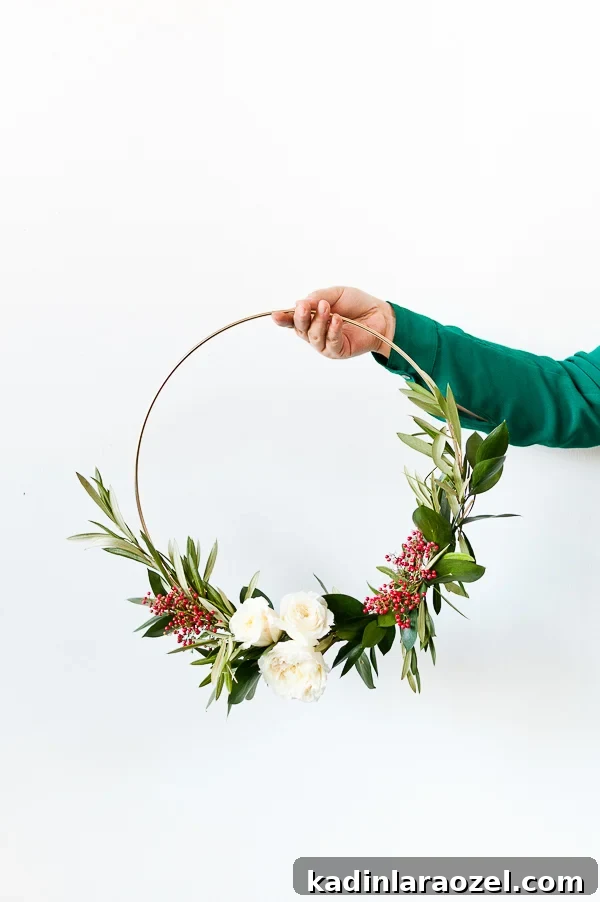
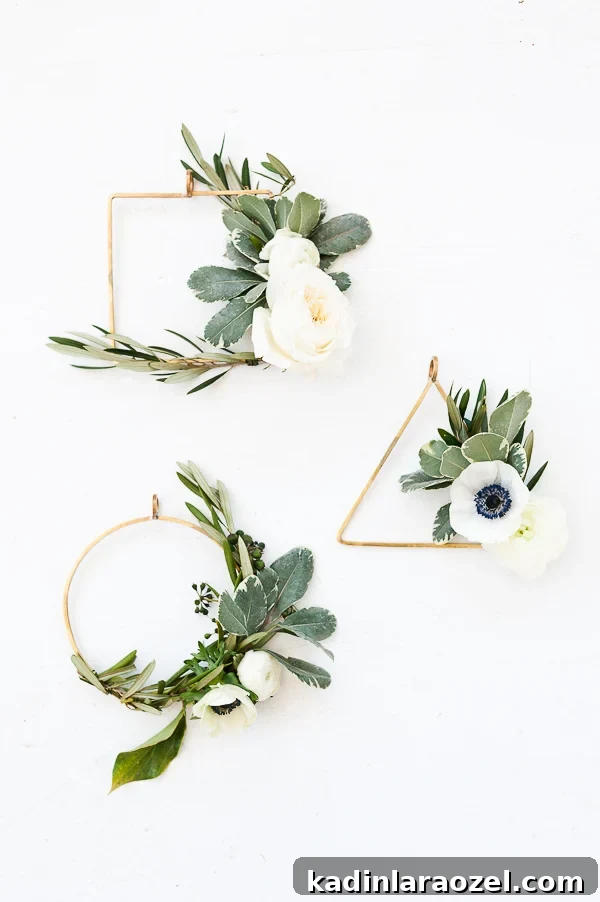
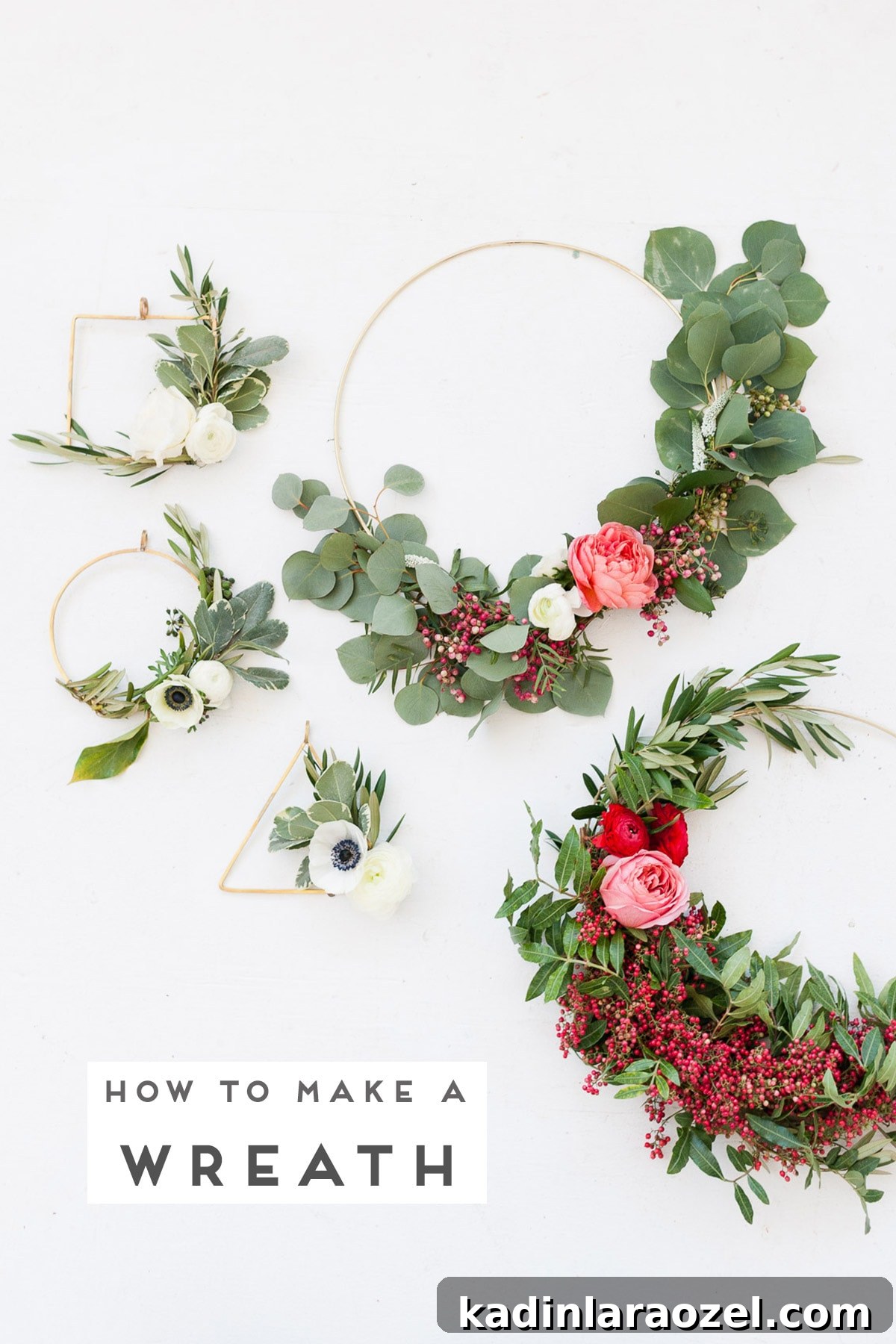
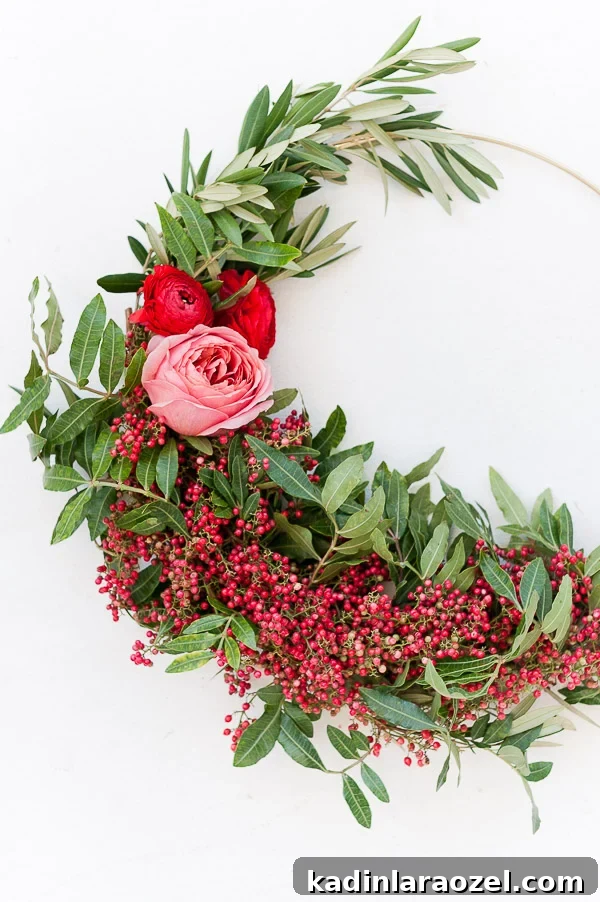
The wreaths shown here use fresh flowers and foliage sourced from Flower Muse, which supplies blooms and greens directly from growers. I made the smaller geometric wreaths as examples for a workshop and the bold pepperberry wreath at the top was created by a student—great work, Ashley.
Follow these steps to make an asymmetrical holiday wreath yourself.
Materials
- 12-inch gold macramé hoop (or 18-inch for a larger wreath)
- Thin-gauge floral wire
- Wire cutters or sharp scissors
- Pruning shears
- Corsage stems (this is the key item that helps keep cut flowers fresher longer)
- Assorted greenery and fresh flowers (see suggested varieties below)
About the geometric brass shapes
The thicker brass geometric shapes seen in some photos were sourced locally and can be hard to find online. If you prefer not to use a macramé hoop, you can build similar frames at home from heavy-gauge wire.
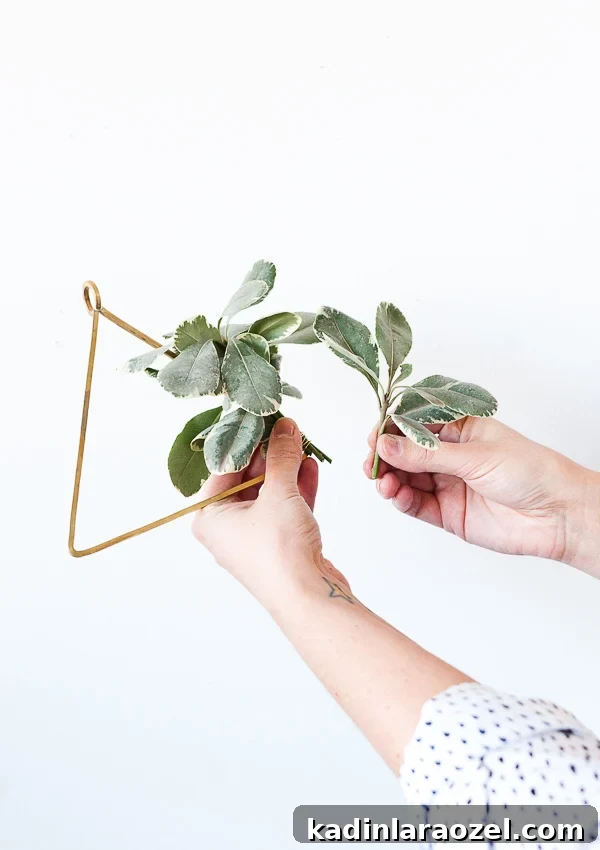
How to Make a Wreath
Step 1: Start with greenery
Choose foliage varieties that work well together. In the examples shown I used:
- Variegated pittosporum
- Olive branch
- Green bush ivy
- Pepperberry
- Silver dollar eucalyptus
Step 2: Build up the greenery
Begin where you want the wreath coverage to start—typically at the outer edge of the hoop—and work inward. Lay each branch in the same direction and secure it with 3-inch lengths of floral wire, wrapping the wire around both the stem and the hoop multiple times.
As you add each new piece, overlap it slightly to hide the wire from the previous attachment for a seamless look.
Step 3: Repeat on the opposite side
When you reach your planned midpoint, start again on the other side of the hoop using the same layering approach. This method keeps the design balanced while still allowing the focal cluster to be asymmetrical.
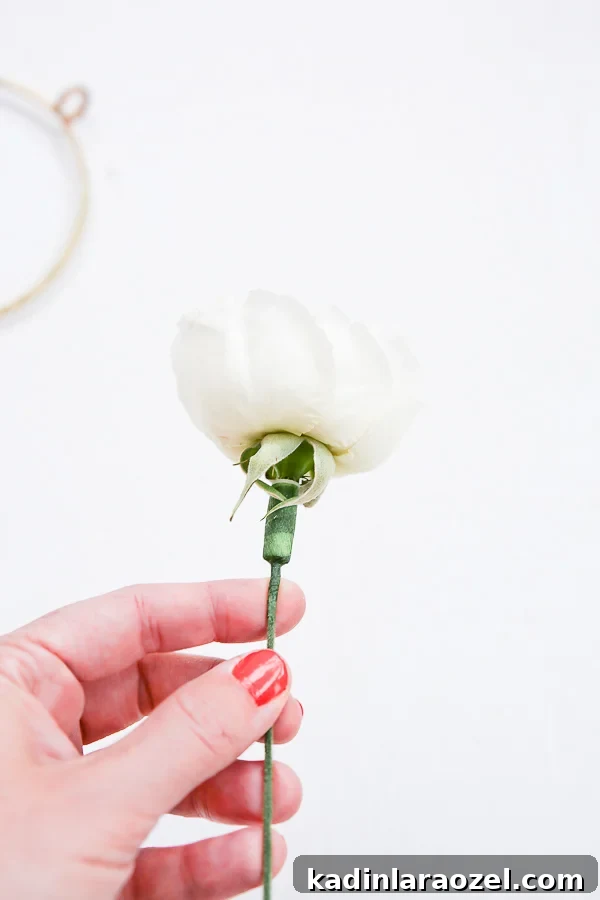
Step 4: Add flowers
After the greenery is in place, begin placing flowers. For smaller geometric wreaths I used white anemones, white ranunculus, and cream garden roses. For larger hoops I chose dusty pink garden roses and red ranunculus.
For sturdy-stemmed blooms (like garden roses), trim the stem away and insert a corsage stem through the flower’s base. Dip the exposed tip of the corsage stem in water for about 10 seconds before inserting—it helps give the bloom a short-lived water source.
For hollow or delicate stems (ranunculus and anemones), either use a corsage stem or thread floral wire through a short section of stem, then wrap the wire around the hoop to secure the flower.
Step 5: Secure the flowers
Wrap the wire end of each corsage stem around the hoop and the nearby attached branches so the flowers are anchored to the frame and supported by the greenery.
Step 6: Finish and adjust
Continue adding flowers and adjusting placement until you get the look you want. Once complete, your wreath is ready to hang on a wall, door, or over a mantel.
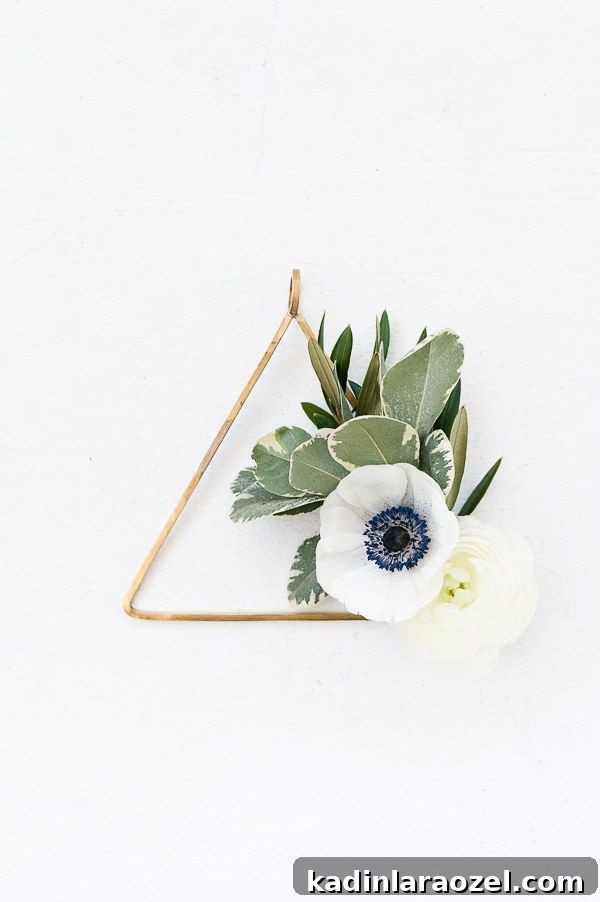
Note: Fresh-floral wreaths will eventually wilt—usually within 2 to 5 days, sometimes longer. You can swap out wilted flowers for fresh ones, or leave the wreath as an evergreen-only display for much of the season.
How do you hang an asymmetrical wreath?
One common question is how to keep the heavy side of an asymmetrical wreath from rotating downward. Here’s a reliable method:
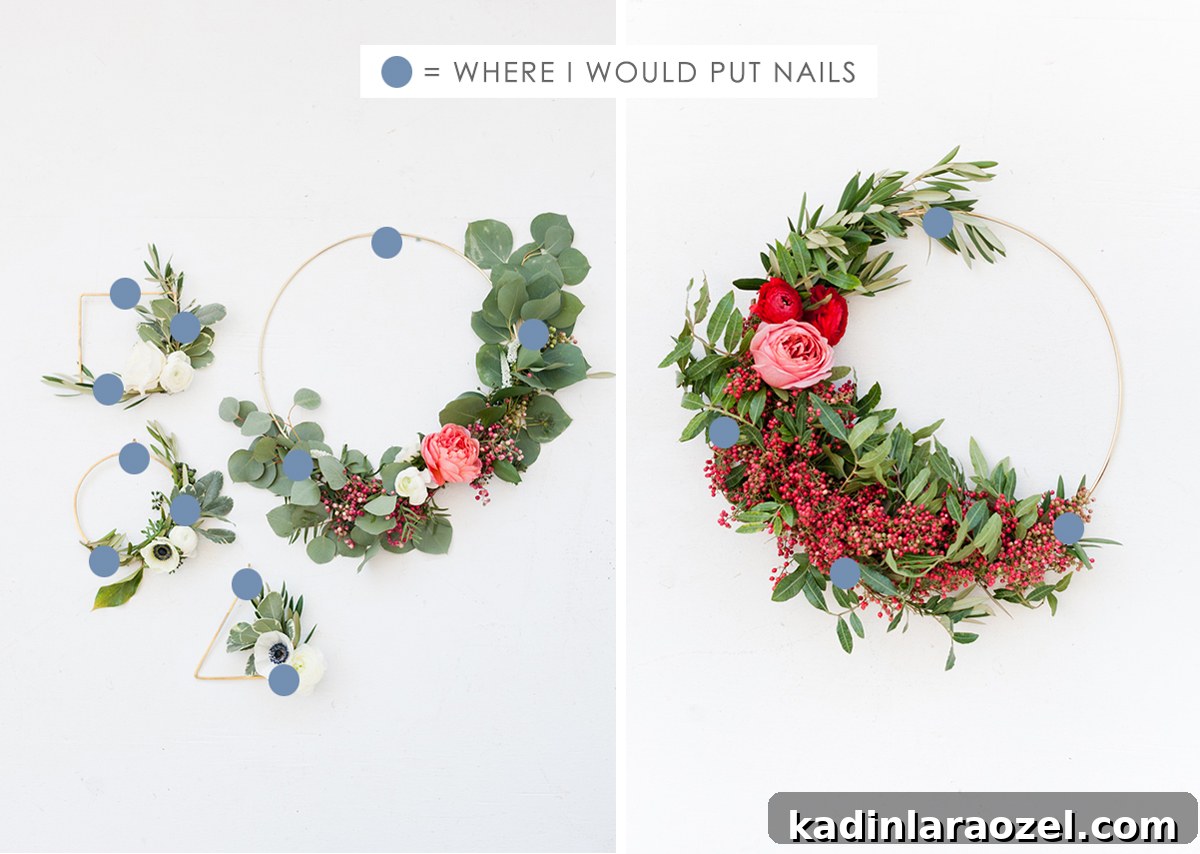
Hang the wreath from a single small nail where you want the top to sit. Arrange the floral cluster so it sits asymmetrically, then add two more small nails—one to the left and one to the right—so the bottom edge of the wreath rests on them. Those nails act as invisible supports that prevent the heavy side from swinging.
If your wreath is particularly heavy, add a third discreet nail for extra stability. Nail placement will vary depending on the shape and weight distribution of your wreath; use the bottom-edge supports to stabilize the design without being visible.
More holiday projects to try
If you enjoyed this wreath, try other seasonal DIYs—giant wreaths, tree skirts made from canvas, painted mason-jar lanterns, quilted stockings, or a dried fall wreath. These projects use similar materials and techniques and make great seasonal decor.
- Giant wreath project (over 3 ft tall)
- DIY canvas tree skirts
- Hanging mason-jar lanterns with twinkle lights and greenery
- Quilted Christmas stockings with a modern twist
- DIY fall wreath using dried elements
DIY Wreath (An Asymmetrical Christmas Wreath Idea)
Ingredients
- 12-inch gold macramé hoops (or 18-inch for a larger wreath)
- Thin-gauge floral wire
- Wire cutters or sharp scissors
- Pruning shears
- Corsage stems (helps keep flowers fresher longer)
- Greenery and fresh flowers
Instructions
- Start with your chosen greenery. Use a mix like pittosporum, olive branches, ivy, pepperberry, and eucalyptus for a layered look.
- Build the greenery from the outer edges inward, laying stems in the same direction.
- Secure each stem with 3-inch pieces of floral wire, wrapping around the stem and hoop several times. Overlap each new stem to hide previous wiring.
- When you reach the center, repeat the same process on the opposite side if desired.
- Add flowers: for sturdy blooms trim the stem and insert a corsage stem after dipping its tip in water; for hollow stems, use a corsage stem or thread floral wire through a short stem section and anchor to the hoop.
- Wrap the wire ends of corsage stems or floral wire around the hoop and attached branches to secure each bloom.
- Continue until the wreath looks balanced and finished, then hang using the nail-support method described above.
Notes
Fresh flowers will eventually wilt—typically within a few days. Replace flowers as needed, or remove them and enjoy the greenery through the season.
Hanging tip: use one central nail for the top and two small supporting nails under the wreath’s bottom edge so the heavy side won’t rotate. Add a third support if your wreath is particularly heavy.
Photography: Amelia Tatnall Lawrence
Styling: Brittni Mehlhoff
Will you be making wreaths this season? Will you include fresh flowers?