Create DIY Mixed Media Art: Step-by-Step Techniques and Tips
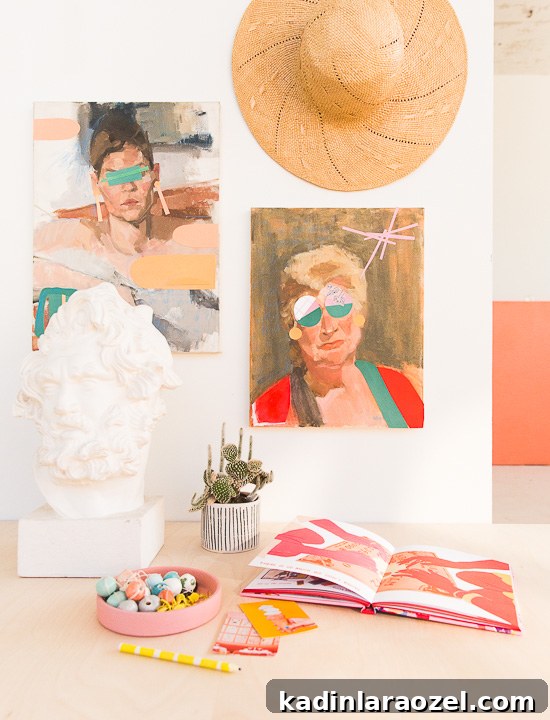
I’ve been collecting small, inexpensive pieces of art from thrift shops and estate sales—portraits, landscapes, inexpensive prints—and stacking them in a corner until I decided what to do with them. They weren’t exactly my style, but each one had something about it that caught my eye. Eventually I started thinking about the mixed-media collages I used to make in college and realized these found pieces would be perfect for that kind of playful update.
So I developed a simple mixed-media art DIY that’s forgiving and fun for any skill level, including beginners. This project is part of a collaboration celebrating the 50th anniversary of Fiskars’ iconic orange-handled scissors. It’s a great way to refresh thrifted or amateur paintings and prints to better fit a contemporary home.
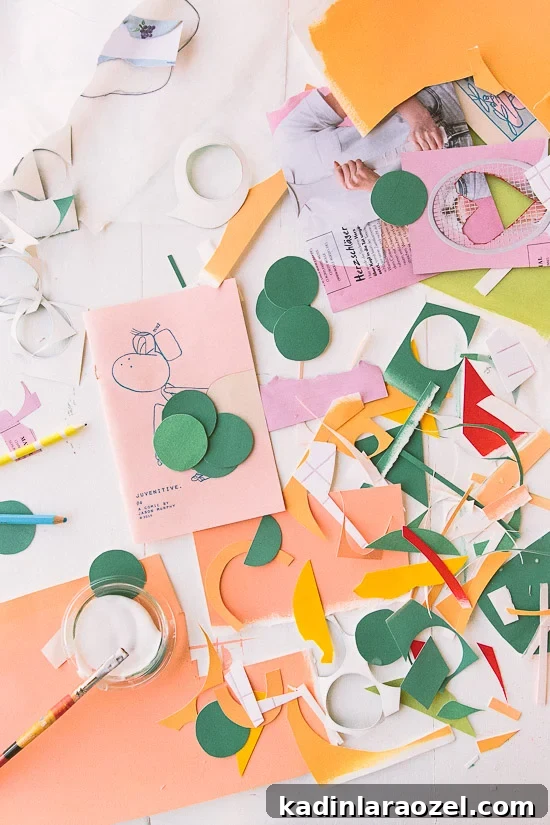
Before you begin: this approach modifies an existing piece of art, so you should avoid using anything that might have value. If the piece is signed, search the artist’s name online to be sure the work isn’t potentially valuable. This technique works best on thrifted paintings, student works, or inexpensive prints that could use a playful, modern update.
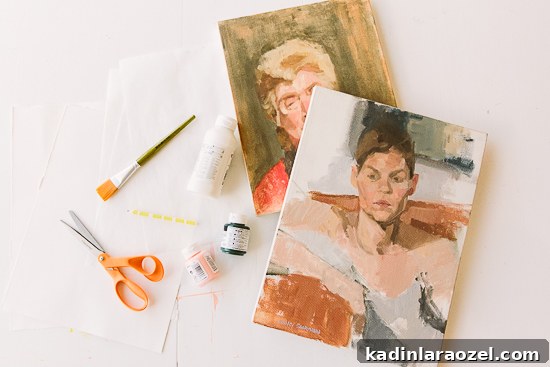
Materials
- Old portrait prints or paintings (thrifted or inexpensive)
- Sharp scissors (the Fiskars original orange-handled scissors are used here)
- Tracing paper
- High-quality art paper (I like Rives BFK 250g, 22×30)
- Matte medium (acts as glue and sealer)
- Acrylic paint and brushes
- Pencil
Instructions
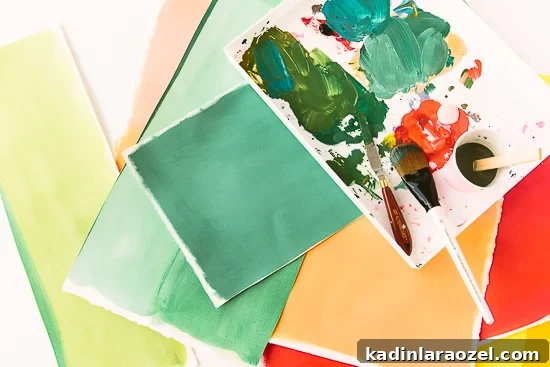
1. Paint sheets of art paper in solid colors to use as collage material. Choose colors that complement the painting’s palette so the new shapes feel cohesive with the original piece. You don’t need exact matches—just keep the painting’s overall color family in mind.
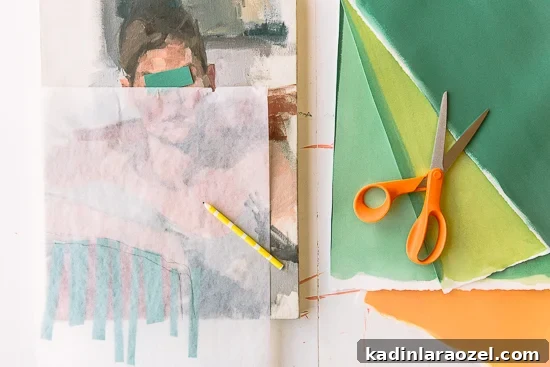
2. While the paint dries, use tracing paper to trace the main outlines of the portrait, bust, or surrounding shapes to get a sense of scale and composition. You can draw full shapes on the tracing paper or simply mark key lines.
If you prefer, flip the painted paper facedown and transfer pencil lines from the tracing paper by retracing on the tracing paper’s reverse. The graphite will transfer a faint guide onto the painted paper for cutting.
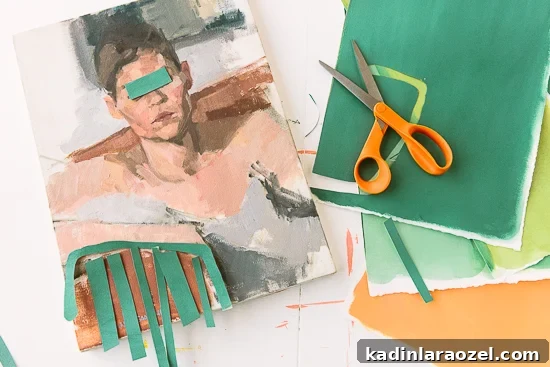
3. Cut out the shapes from your painted paper using sharp scissors. I used Fiskars orange-handled scissors because they cut cleanly and handle multiple materials well. Try a few shape options—geometric, organic, or silhouette-like pieces that interact with the portrait or landscape below.
4. Lay the cut pieces over the painting and experiment with arrangements until you find a composition you like. Move pieces around, layer them, and try different combinations. If a color doesn’t work, you can paint over the cut shape later to tweak it.
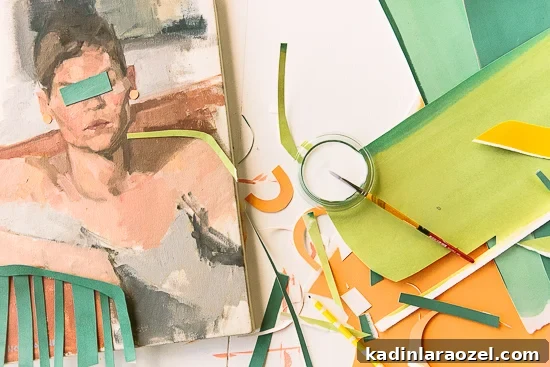
5. When you’re happy with the layout, apply matte medium to the back of each paper piece with a brush and adhere them to the surface. Press each piece down for 15–30 seconds to ensure good contact. Continue until all elements are glued into place.
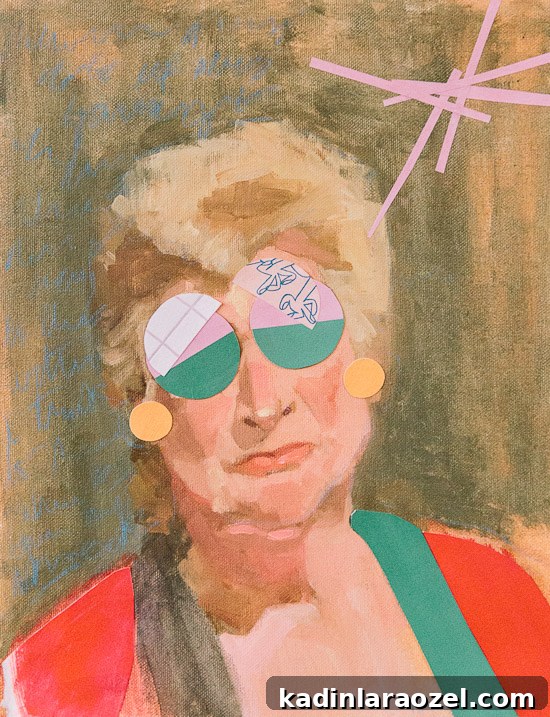
Once everything is dry, brush a final coat of matte medium over the entire collage to seal and protect it. This is also the moment to add hand-drawn details, text, or marks on top of the layered paper if you want to unify the composition. I added some simple linework and handwriting with a colored pencil.
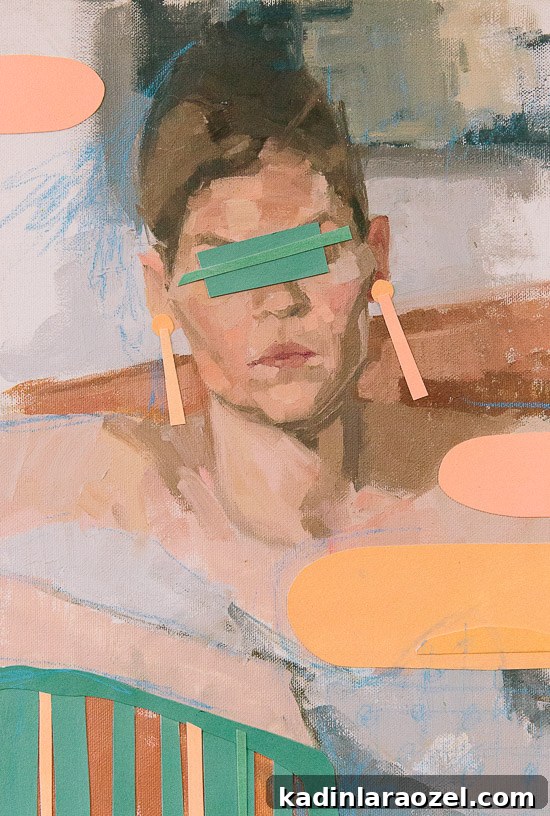
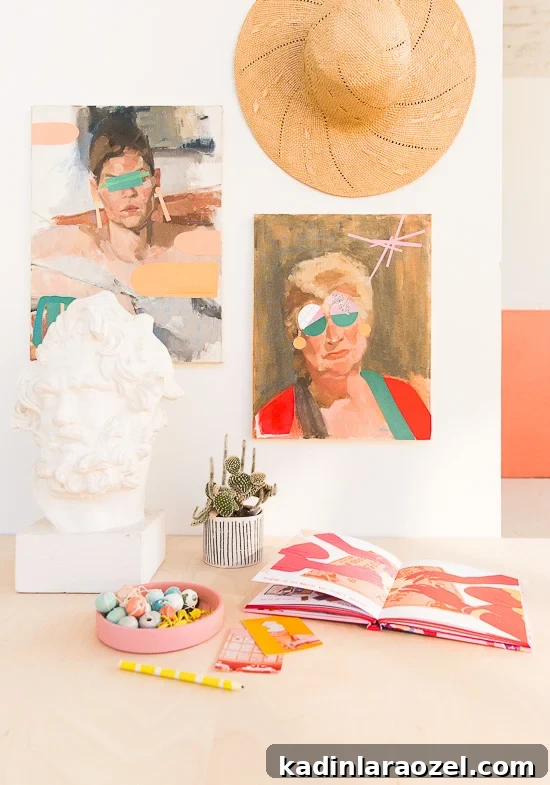
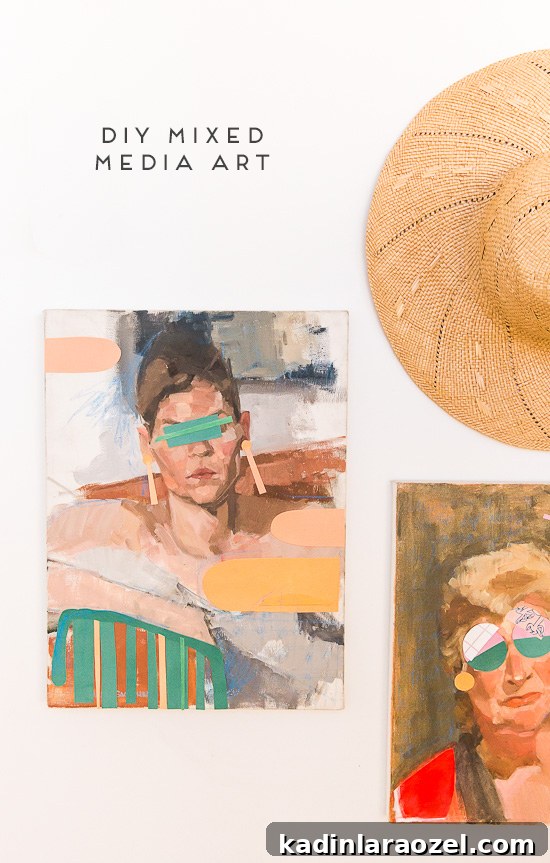
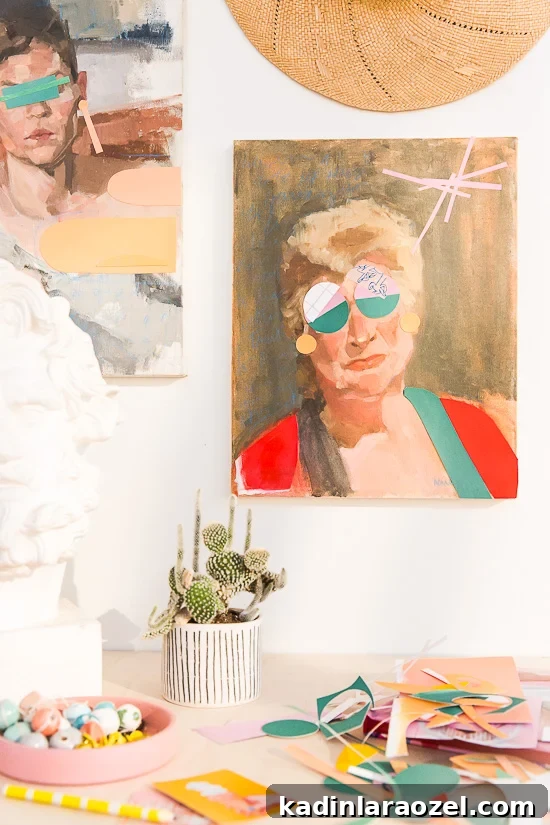
When the final coat of matte medium is dry, your piece is ready to hang. This technique is a quick, creative way to transform thrifted or overlooked artwork into something fresh and modern. You can adapt it to landscapes, still lifes, or abstract prints—use color and shape to create new narratives on the original surface.
Would you try this on a thrifted find or an old piece you already own? It’s a great way to personalize inexpensive art and give it a second life.
This post was created in partnership with Fiskars to celebrate the 50th anniversary of their orange-handled scissors. All opinions are my own—thanks for supporting the brands that help keep creative projects like this possible.