DIY Drop Cloth Christmas Tree Skirt: Two Stylish Ways
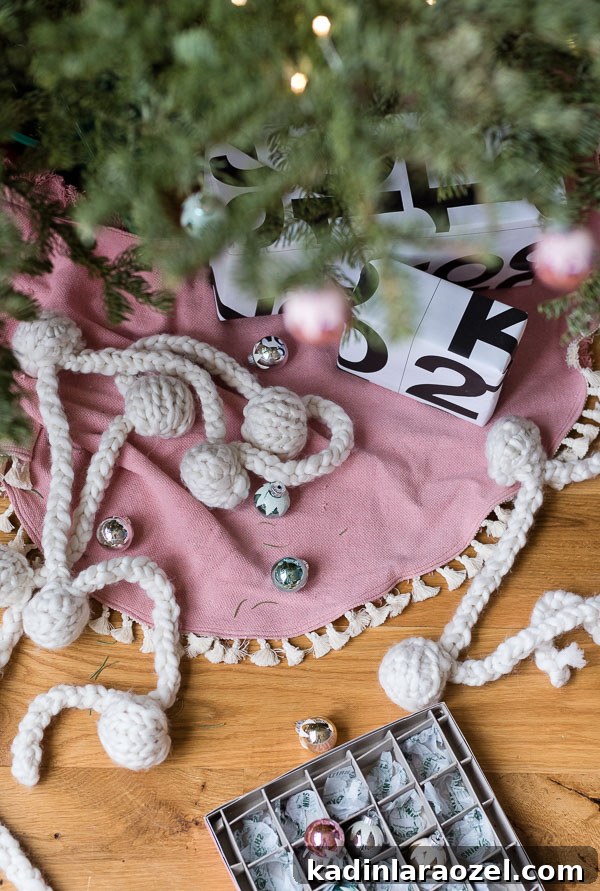
Two Christmas tree skirt ideas to inspire your holiday decor.
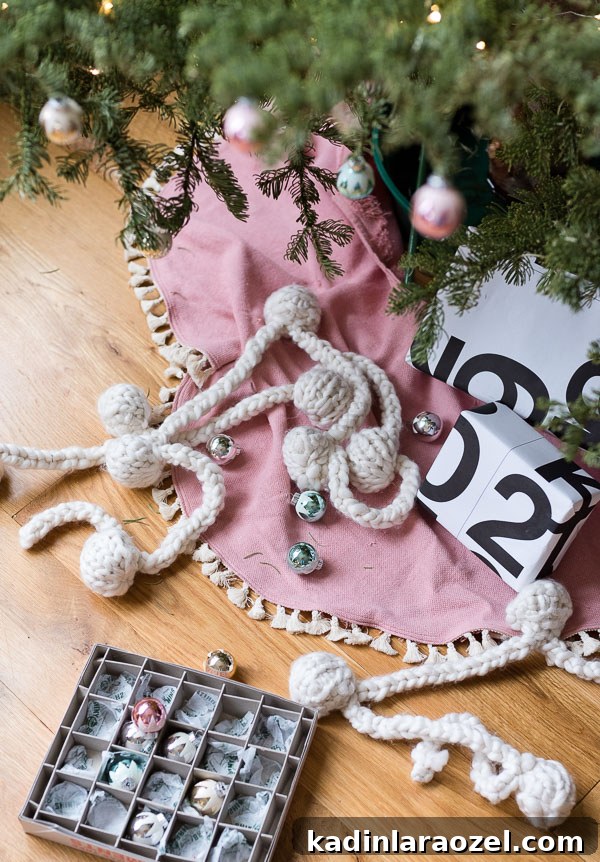
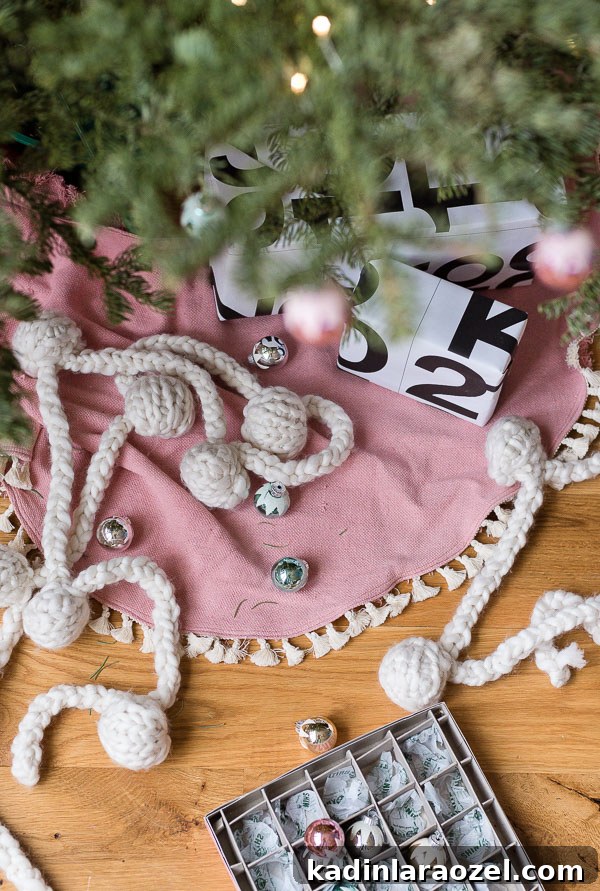
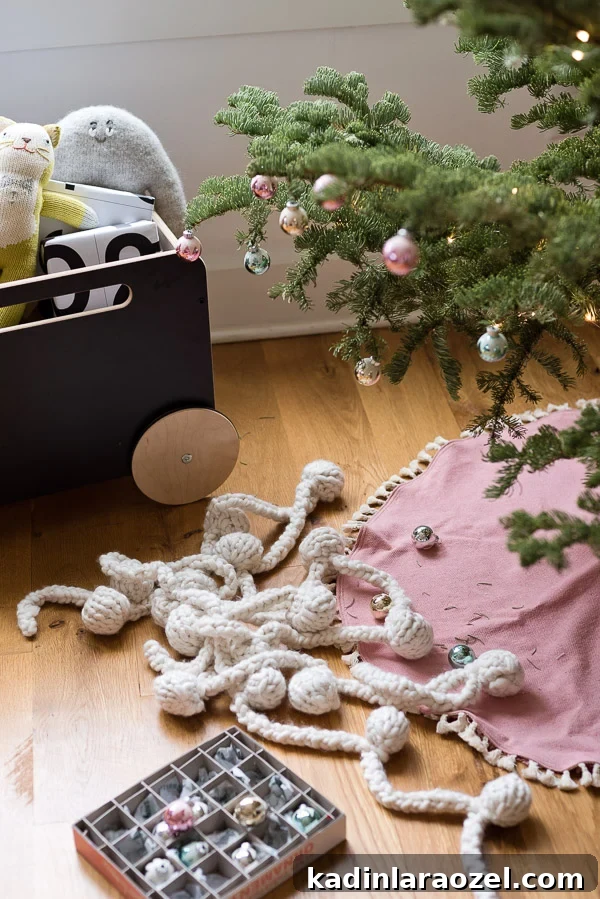
The first design is a modern twist on a classic tree skirt: hand-dyed canvas finished with delicate tassels. The fabric starts as an inexpensive drop cloth, which keeps this project budget-friendly.
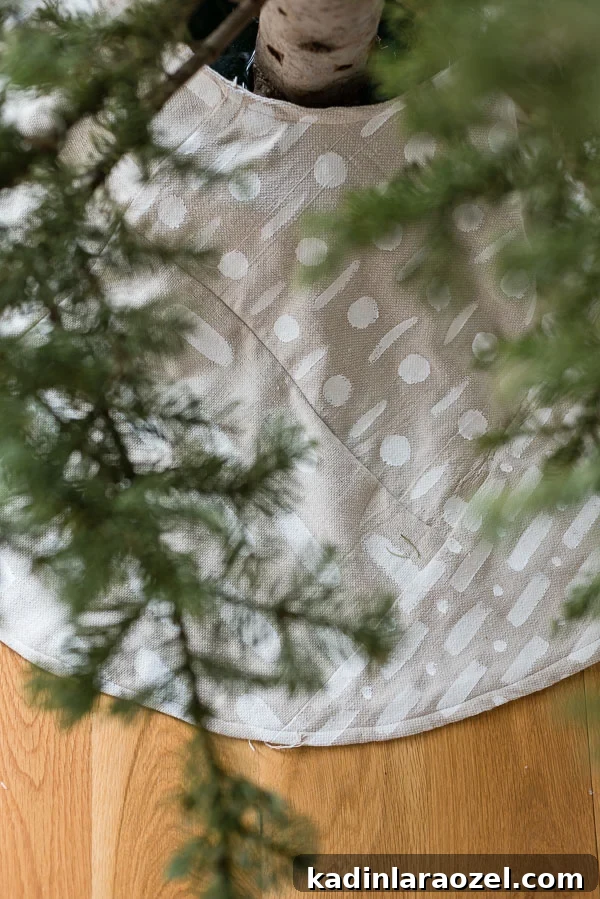
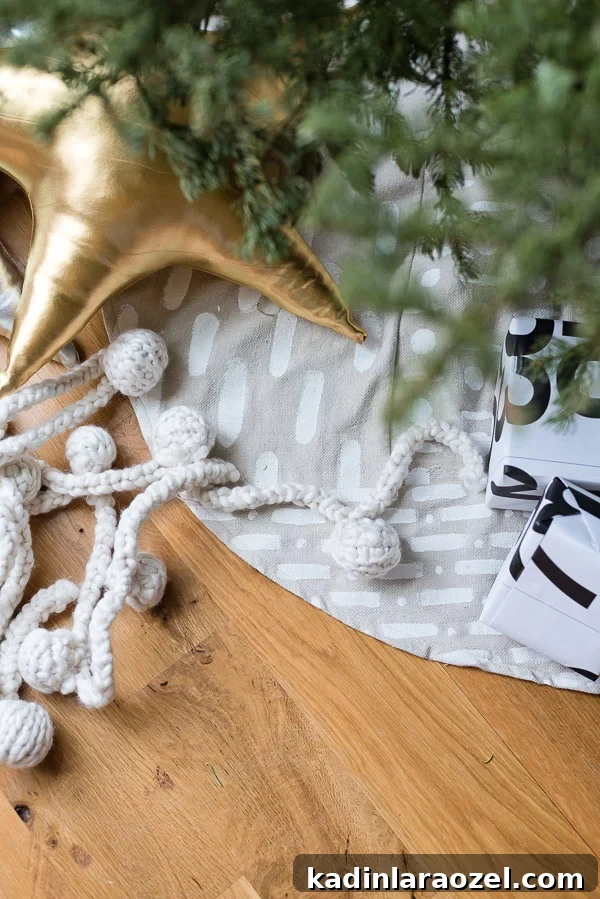
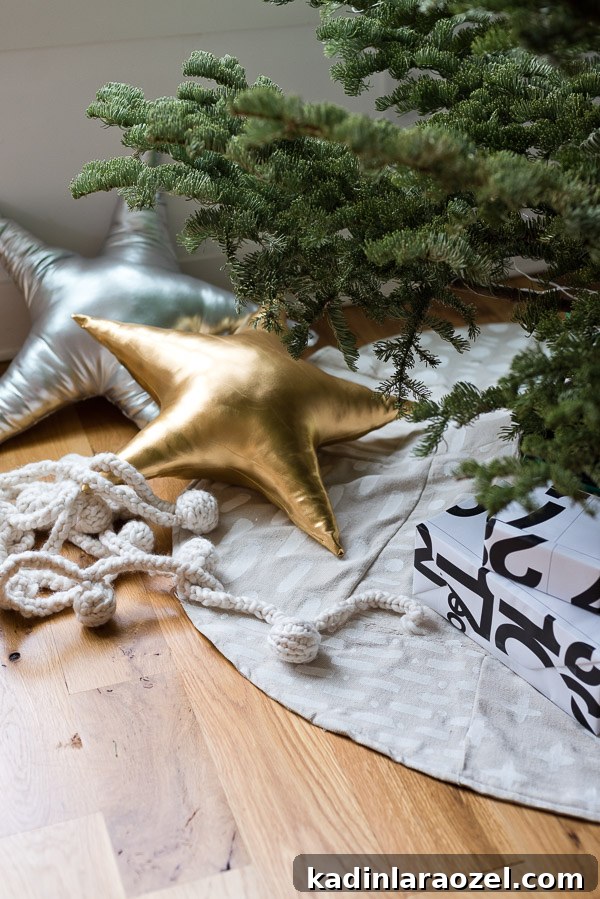
The second design is a patchwork tree skirt inspired by traditional mudcloth patterns, also created from an affordable drop cloth and painted by hand for a personalized look.
Below you’ll find step-by-step instructions for both DIY tree skirts so you can recreate them at home.
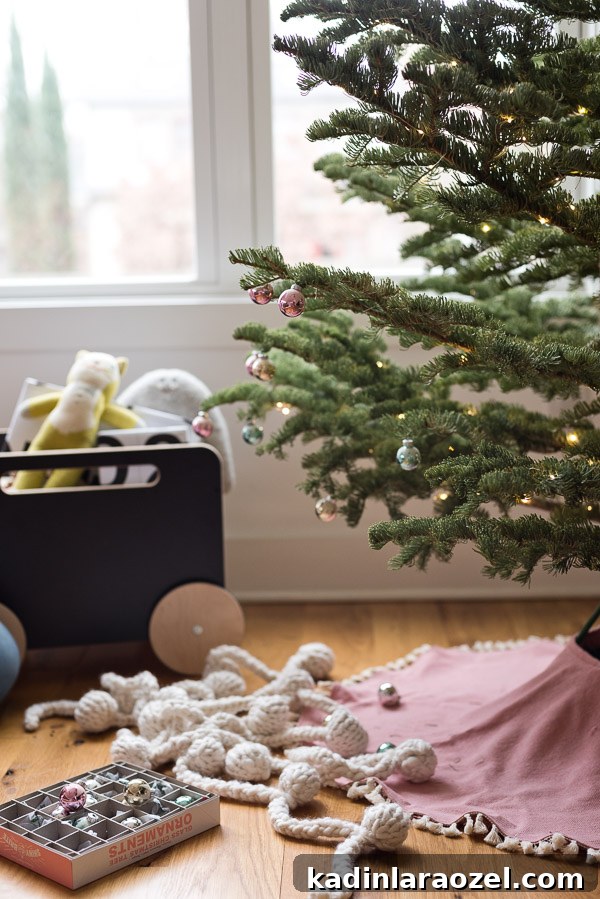
Materials for Dyed Drop Cloth Tassel Tree Skirt
This pink-dyed canvas tree skirt is made from a single drop cloth and a few yards of tassel trim, making it an affordable and achievable holiday project. The supplies below are what I used—adjust quantities for larger sizes.
- large drop cloth (canvas)
- fabric dye (I used Rit Fabric Dye in coral)
- about 4 yards of tassel trim
- thread: one spool to match the original canvas and one to match the dyed color
- sewing machine
- fabric scissors
- tailor’s chalk
- measuring tape
Note: a typical canvas drop cloth is slightly coarse and will mute dye colors compared to the bottle. If you prefer a smoother finish, consider canvas by the yard.
How to Make a Dyed Tassel Tree Skirt
Prepping the Drop Cloth
Wash the drop cloth on the hottest setting with a small amount of detergent to remove any factory coating. Dry it to pre-shrink and soften the fabric before cutting.
Cutting the Tree Skirt Shape
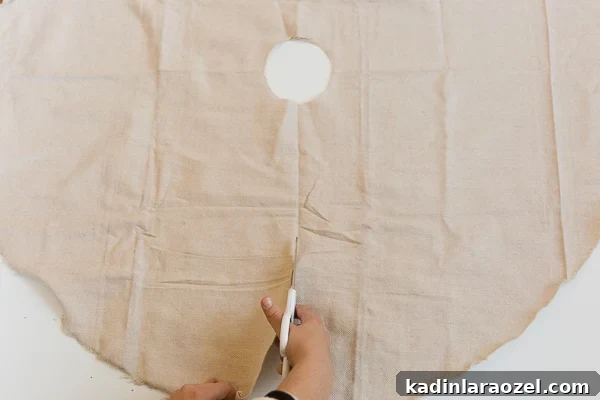
Cut a square from the prewashed drop cloth—45 inches per side is a good starting point for a small to medium skirt. Make sure each side is equal so the piece remains square.
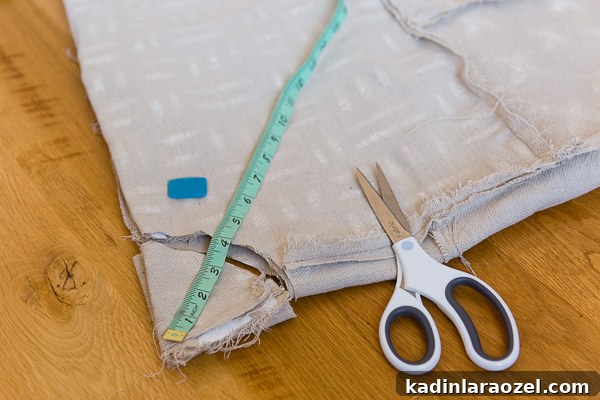
Fold the square into quarters (fold in half one way, then in half the other). Divide the square’s side length by two to determine the radius for cutting the outer circle. For a 45-inch square, measure 22.5 inches from the inner folded corner and mark with tailor’s chalk. Move the tape a few inches along and mark again every 3 inches to sketch a gentle curve, then cut along that curve to form a rounded edge.
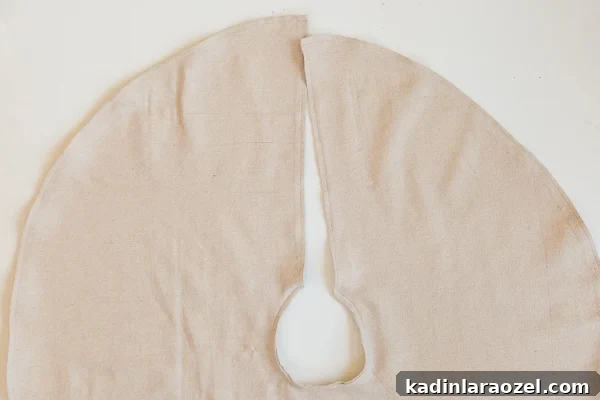
To create the center hole for the trunk, measure about 3 inches from the inner corner on each folded edge, mark a small arc and cut to form a circular opening. Finally, cut a radial slit from the center to the edge so the skirt can wrap around the tree base. Set this aside until sewing.
Sewing the Skirt Edges
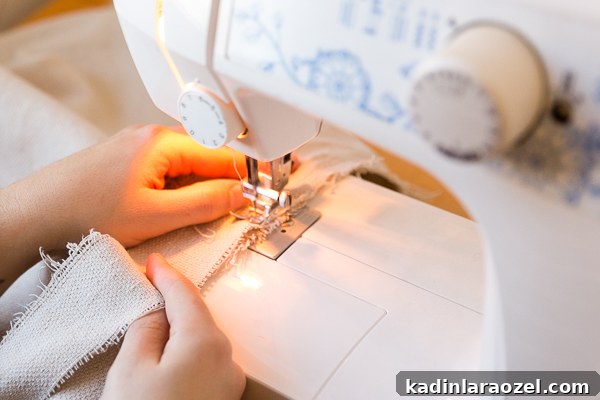
Cut three long strips of canvas, each about 4 feet long and 3 inches wide. Sew them together lengthwise to create a continuous binding roughly 12 feet long. Pin the binding to the outer edge of the skirt starting at one side of the slit and stitch it in place.
Press the binding under with an iron to enclose raw edges, then topstitch about 1/4″ from the folded edge for a clean finish. For the inner trunk circle, cut a shorter strip (about 20 inches by 3 inches), sew it in place around the opening, fold, press, and topstitch. Finally, fold the two edges of the slit under about 1/2″ and stitch them down so the skirt wraps neatly around the tree base without fraying.
Dyeing the Tree Skirt
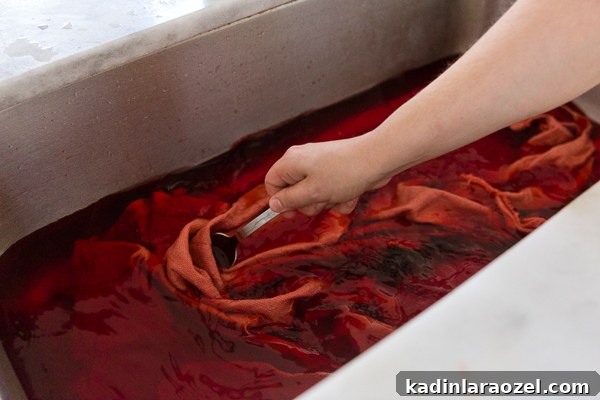
Prepare a dye bath in a stainless-steel sink or a large plastic bucket. Follow the dye manufacturer’s instructions, but here’s a basic approach:
- Fill the sink or bucket with the hottest water available so the skirt can be fully submerged.
- Add one tablespoon of table salt to help set the color, stirring until dissolved.
- Add about a quarter of the dye bottle to the water and mix well.
- Submerge the finished, stitched skirt and stir gently with a non-wooden spoon so the color distributes evenly.
After about five minutes, remove the skirt and drain the dye bath. Rinse thoroughly until the water runs mostly clear, then wash the skirt in the washing machine with a small amount of detergent and dry. Press the skirt with an iron before adding trim.
Attaching Tassel Trim
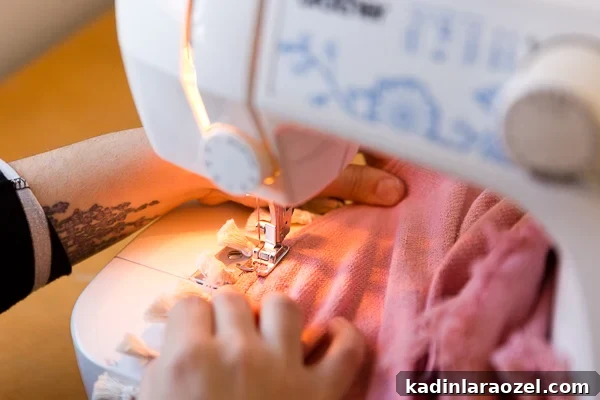
With the skirt ironed flat, pin the tassel trim to the underside of the outer edge so the tassels hang freely. Use thread that matches the dyed color so your stitching blends in, then sew the trim all the way around. Backstitch at the beginning and end to secure the trim, trim threads, and your dyed tassel skirt is complete.
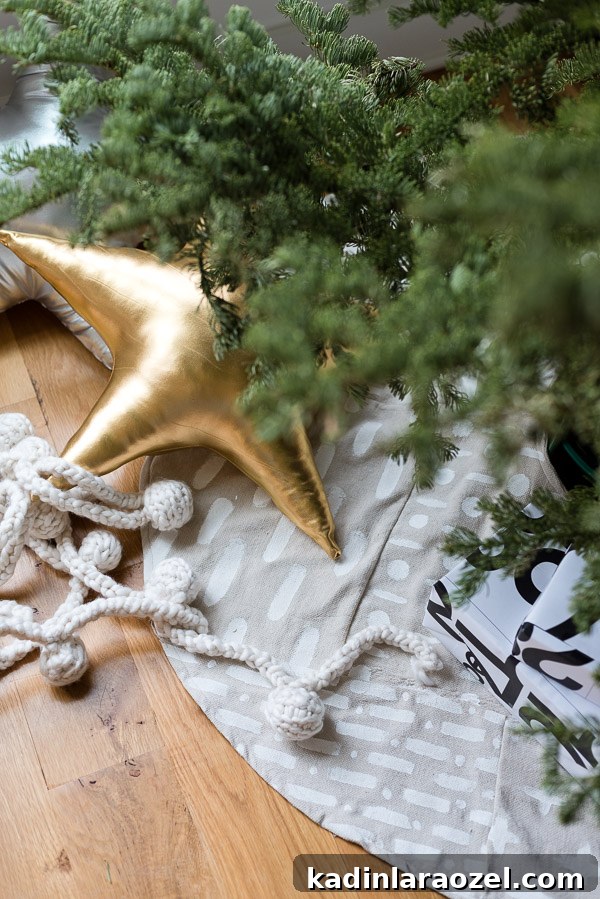
If you prefer a painted look, try the patchwork mudcloth-inspired tree skirt below. It uses simple paint and brushwork and is slightly cheaper since no dye or tassel trim is required.
Materials for Drop Cloth Patchwork Tree Skirt
- large drop cloth (canvas)
- thread that closely matches the canvas
- sewing machine
- white paint or another color of your choice
- paintbrush
- fabric scissors
- tailor’s chalk
- measuring tape
- optional: seam ripper (if the drop cloth has a sewn hem)
How to Make a Patchwork Mudcloth Tree Skirt
Cutting and Painting Patches
Cut a square from the drop cloth—48 inches per side is a good starting point for a small to medium skirt; increase this for a larger tree. If your drop cloth has a hemmed edge, either seam-rip the hem or trim it off before cutting.
Divide the square into patches of varying sizes while keeping the overall square shape intact so you can easily reassemble them. Lay out the pieces in the arrangement you plan to sew and photograph the layout for reference.
Paint mudcloth-inspired patterns on each patch using white paint or another chosen color. Simple motifs—dots, stripes, dashes, crosses—work well and are easy to repeat across multiple patches. Allow the paint to dry completely before proceeding.
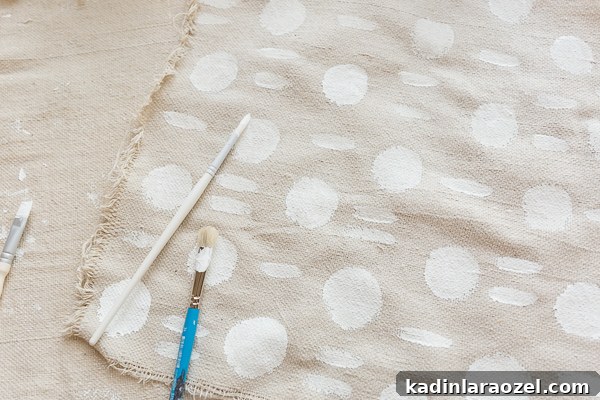
Sewing the Patchwork
Recreate the square layout and begin sewing patches together, stitching approximately 1/4″ from each seam. Once the full square is reassembled, fold into quarters and mark the curve for the outer circle as described earlier (measure roughly half the side length from the center and mark at intervals to form a curve). Cut the outer circle and a roughly 3-inch diameter center hole for the trunk, then add a radial slit from center to edge.
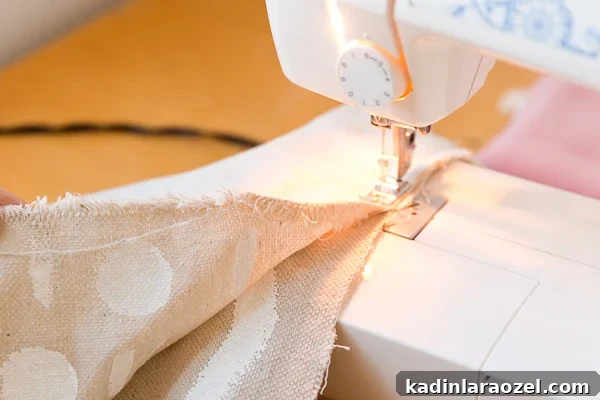
Finishing the Patchwork Skirt
Finish the skirt edge using the same binding technique as the dyed skirt: join three 4′ x 3″ strips into a long binding, stitch it to the outer edge, fold under, press, and topstitch about 1/4″ from the edge. Add a 20″ x 3″ strip to finish the trunk opening in the same manner. Fold and stitch the slit edges under about 1/2″ and secure them. Trim threads and press for a polished look.
DIY Tree Skirt FAQ
What is the average size for a Christmas tree skirt?
Most tree skirts range from 48 to 56 inches. The examples here are on the smaller end (around 45–48 inches), which suits small to medium trees. For larger trees, increase your square dimensions proportionally.
Which drop cloth is best for a tree skirt?
Choose the highest-quality canvas drop cloth you can find—usually the heavyweight option—for a nicer finish and greater durability. If you plan to keep the skirt for many seasons, consider buying canvas by the yard for a smoother texture and more consistent dye results.
Can I use regular canvas instead of a drop cloth?
Yes. Regular canvas by the yard will generally be higher quality and hold dye and paint more consistently. It costs more than a typical drop cloth but is worth it if you want a longer-lasting, more refined tree skirt.
Sewing: Casey Harper
Photography: Amelia Lawrence
Have you ever made a tree skirt? Which style would you try—the dyed tassel skirt or the patchwork mudcloth version?