DIY Fringe Jean Jacket: Step-by-Step Makeover Guide
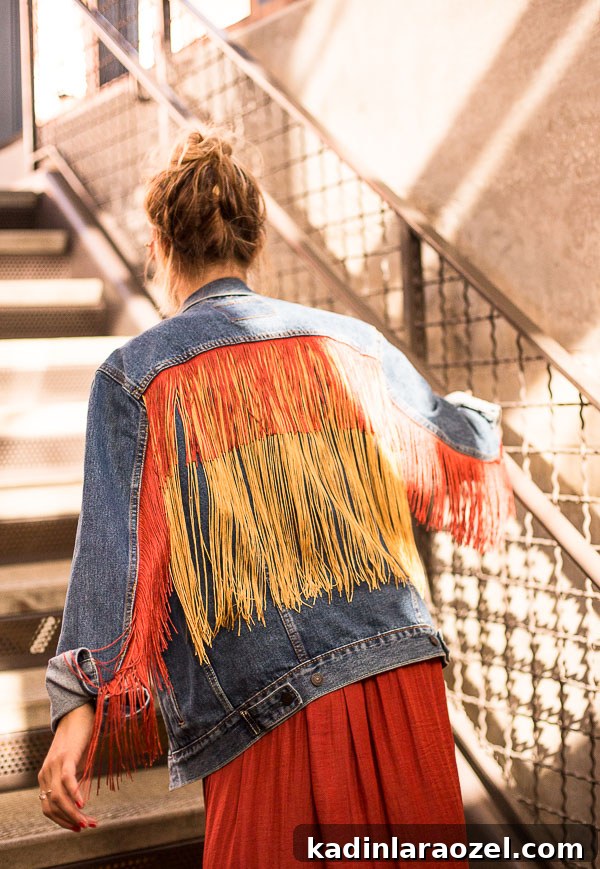
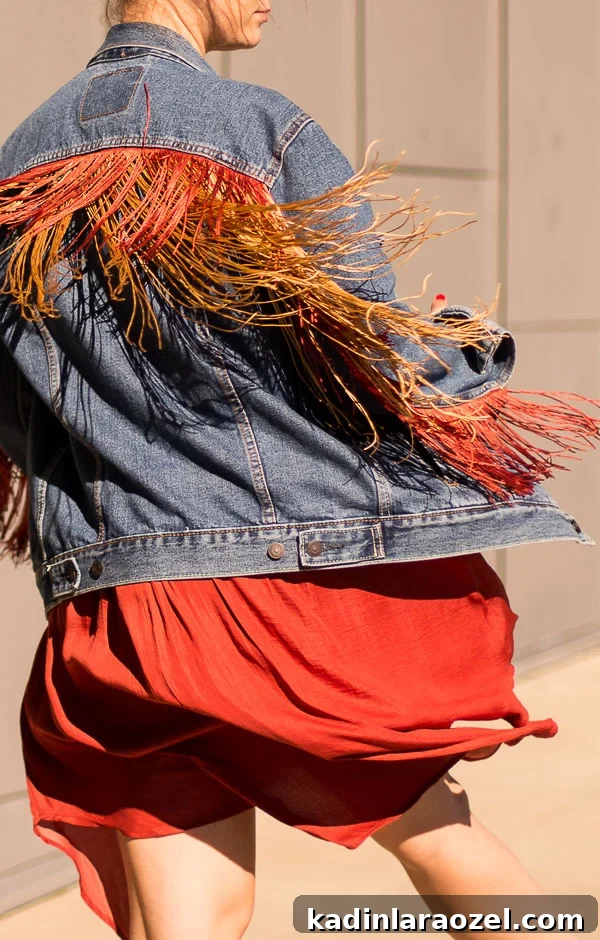
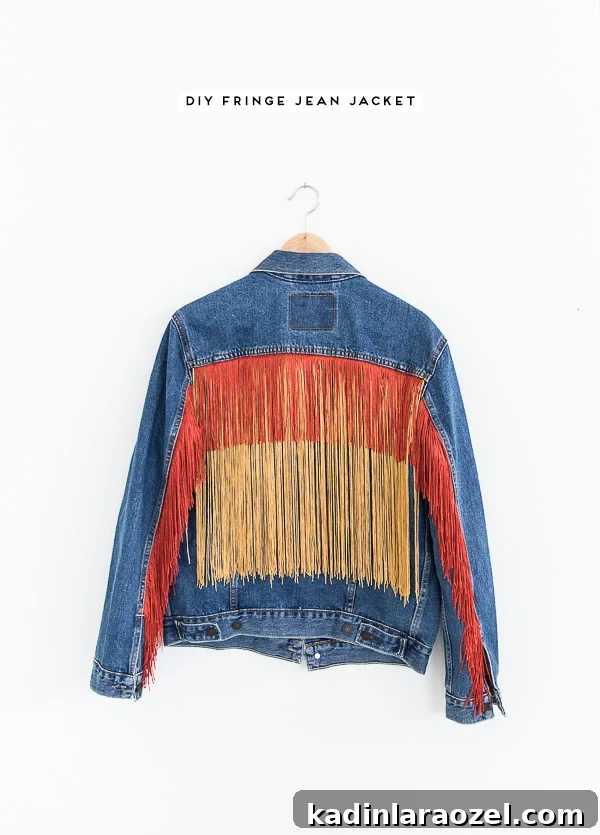
This fringe denim jacket is a fun and easy weekend project.

I had an old jean jacket that felt a little plain, so I added fringe—and it’s been bringing me so much joy. I love the idea of taking a classic wardrobe staple and making a subtle but striking change with a simple embellishment. Fringe was high on my list because it adds movement and personality without changing the jacket’s structure.
Patches and embroidery are great too, but fringe gives a lot of life to a stiff denim jacket. Because I hid the trim inside the seams, the addition looks like it belongs there—it’s clean and professional-looking. Below is a step-by-step guide for adding chainette fringe so the finish appears factory-made.
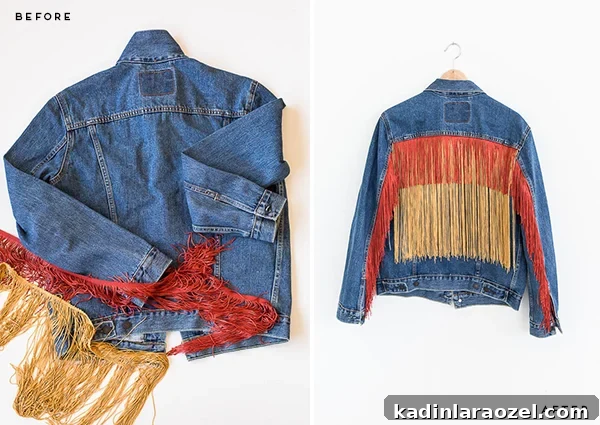
Materials for Fringe Jean Jacket
- Jean jacket
- Chainette fringe trim
- Denim thread that matches the jacket’s thread
- Sewing machine
How to Add Fringe to a Jean Jacket
1. Match the thread
Use thread that matches the jacket’s seam thread so your stitching blends in. I used classic yellow denim thread commonly seen on jeans, which matched my jacket’s stitching perfectly.
Most jean jacket seams are flat-felled seams. That construction lets you carefully open one side of the seam, slip the fringe underneath, and resew so the trim looks like it was always part of the jacket.
2. Measure and cut the fringe
Measure the length of fringe you’ll need for each sleeve and for the back panel separately—so you’ll end up with three pieces of trim: left sleeve, right sleeve, and back. Cut them to size and set them aside.
3. Open the seam
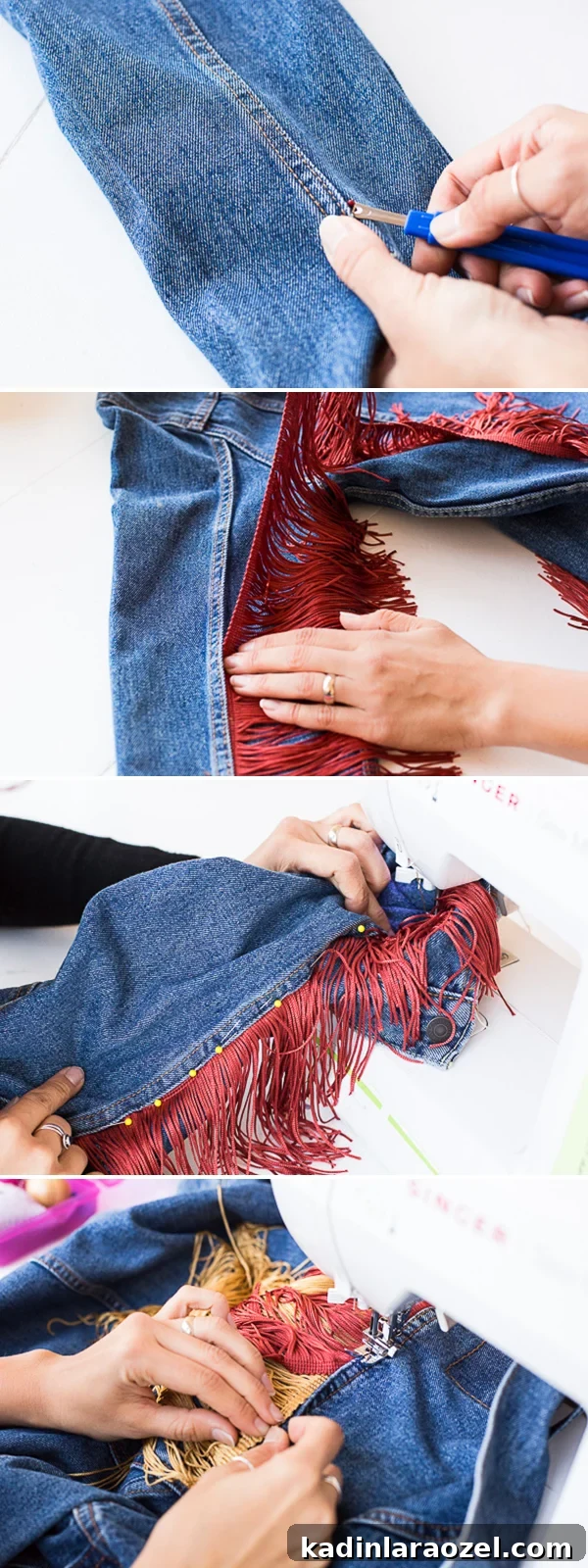
Use a seam ripper to carefully open one side of the flat-felled seam where you want the fringe to sit. Open only the seam closest to the edge—do not rip both stitch lines. Opening just that side creates a neat pocket for the fringe.
4. Insert the fringe
Slide the fringe trim under the opened seam and pin it in place so it won’t shift. Make sure the row of stitching on the fringe (if present) sits where you plan to resew so the final line lines up cleanly.
5. Stitch the seam closed again
Sew the seam closed with your sewing machine, sandwiching the fringe inside the seam. Try to sew directly on top of the original stitch line so the repair is nearly invisible and the seam looks factory-made. Essentially, you’re recreating the original line of stitching.
6. Repeat for each section
Repeat the seam-opening, inserting, and resewing steps for each sleeve and the back panel separately. For a little extra detail, consider layering two different colors of fringe on the back panel and keeping the sleeves to a single color for contrast.
Notes and tips
You can sew fringe directly onto the jacket surface without opening seams, but I prefer the neat edge that tucking the fringe into the seam creates. If you want the most polished result, open the seam and sandwich the trim between the original layers.


Project summary
This is a quick, satisfying way to refresh an older jacket and add playful movement to your outfit. Tucking fringe into the flat-felled seams gives a clean, intentional look that’s hard to tell wasn’t factory-made. The process is straightforward: match thread, measure and cut trim, open one stitchline of the seam, insert and pin the fringe, then resew directly on the original stitch line. Repeat for each section and enjoy your newly customized denim piece.
Sewing: Julia Pistsova // Model: Cori Maass // Photography: Brittni Mehlhoff
What do you think of the finished jacket? Would you try this on a jacket of your own? This would be adorable on a kid’s jean jacket, too—so if you have children, consider making a mini version.