DIY Stylish Floor Tiles on a Budget: Step-by-Step Guide
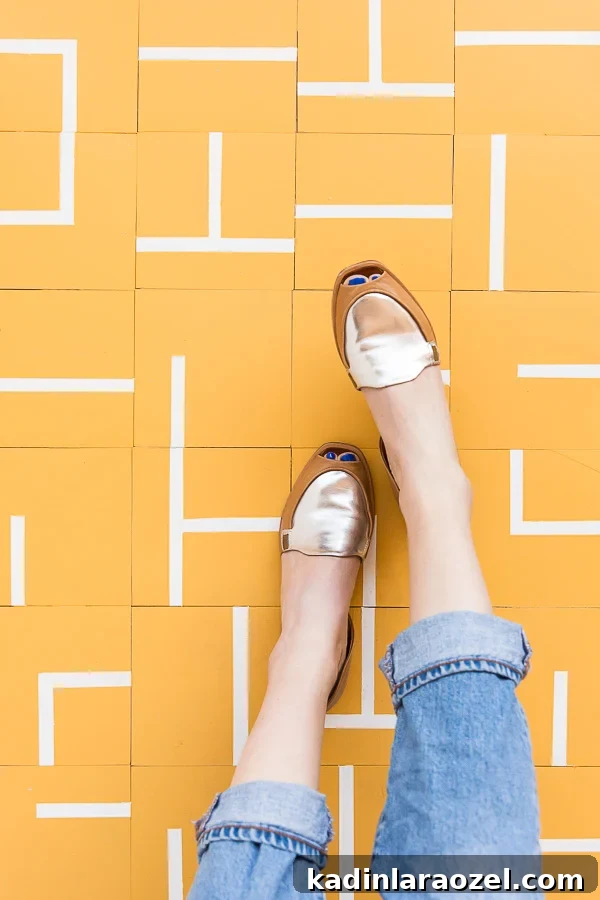
Affordable floor tiles you can make yourself.
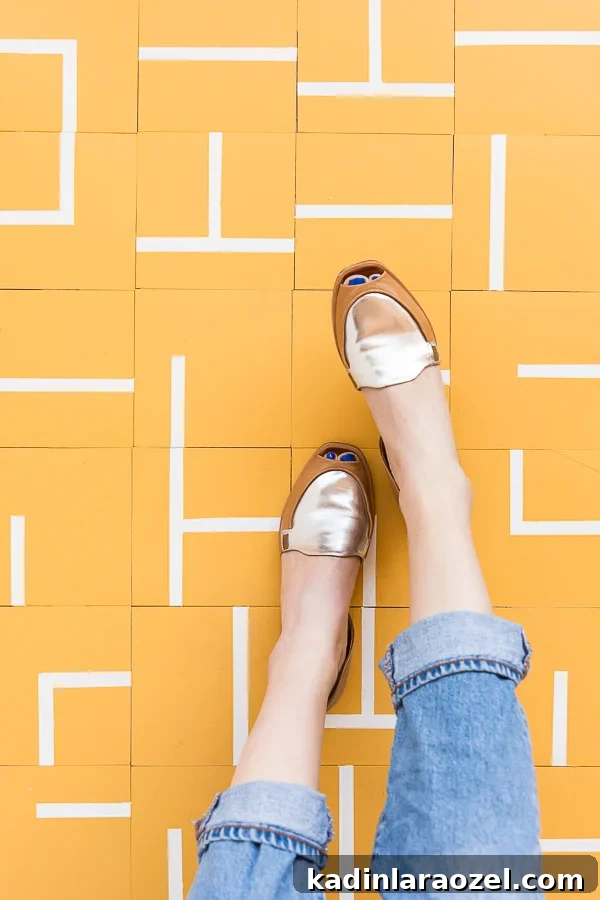
If you love patterned floor tiles or enjoy DIY home projects, this inexpensive idea is for you. I’ve wanted to make painted pattern floor tiles since working on last year’s budget backsplash, and now I’ve completed a version I’m happy to share.
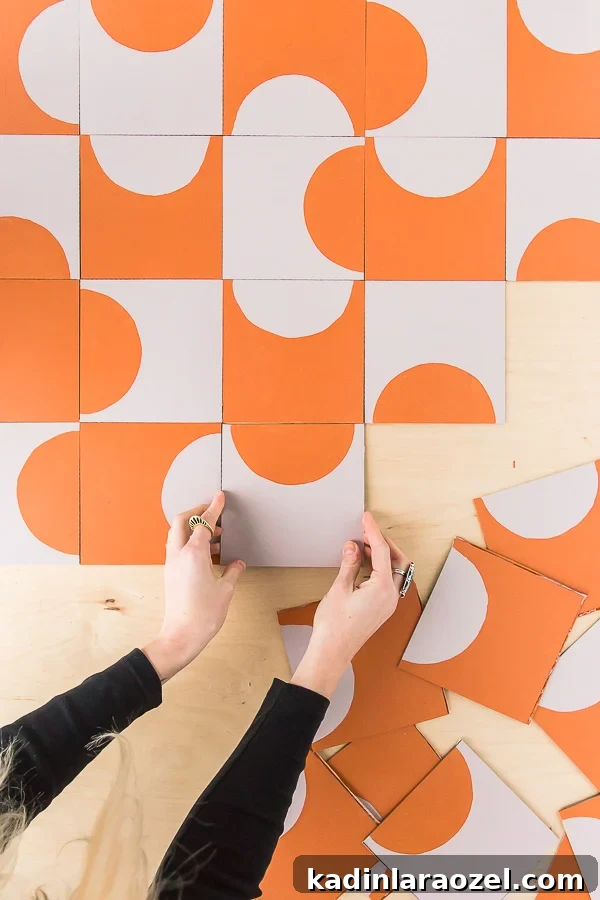
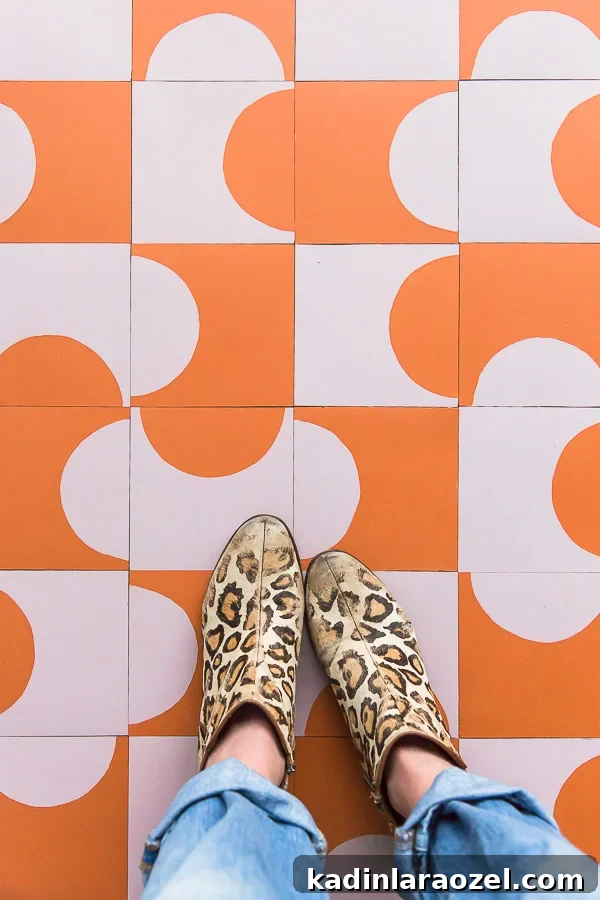
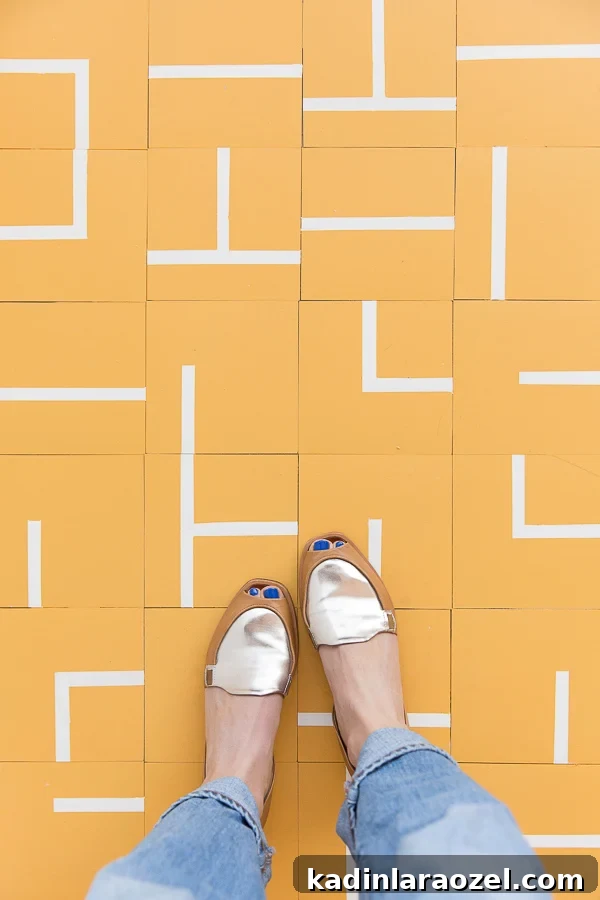
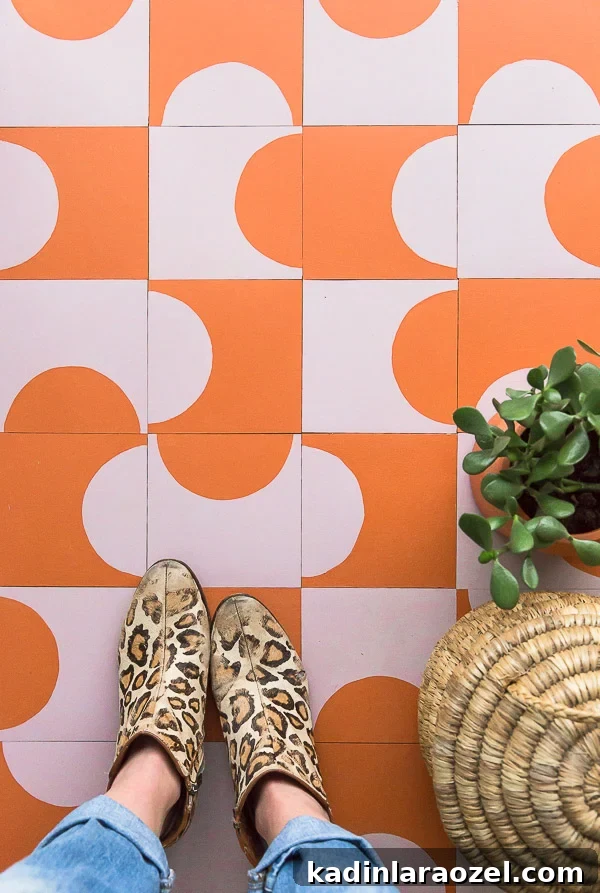
I created two patterns so far—one shown above and another below—and they were so quick and easy that I plan to make more. What I love most about this method is how budget-friendly it is: all supplies cost less than $1 per square foot, and you can install the peel-and-stick tiles yourself to save even more.
This approach gives you the look of cement pattern tiles without the high cost. If you’ve ever wanted decorative floor tiles but couldn’t justify the price, this DIY gives a great alternative. Read on for a full materials list and step-by-step instructions.
This project works especially well in small rooms that already have vinyl or other basic flooring that needs an upgrade. Picture it in a guest bathroom, a small kitchen, a laundry room, or an entryway—these tiles add big visual interest without a big expense.
One note before you begin: some vinyl floors have very sticky glue backing. While peel-and-stick tiles are easy to remove with care, the adhesive could leave residue on the floor underneath. If you rent, check with your landlord first. If you own the space, be aware of this possibility before installing.
Materials
- High-quality painter’s tape (ScotchBlue or similar)
- Peel-and-stick vinyl tiles, 12×12 (or preferred size)
- Interior acrylic paint in your chosen colors (flat or eggshell finish)
- Matte or satin interior polyurethane to seal the tiles
- Soft-bristle paint brush (to avoid brush marks)
- Ruler or straightedge (a 6″ ruler is handy if you cut tiles into 6″ squares)
- Sharp blade or utility knife
Overview and Design Tips
I studied many floor tile patterns before deciding on two simple motifs: half-circles and straight lines. Both are easy to execute on vinyl tiles and give a timeless modern look. If you want inspiration, look at cement-tile designers for pattern ideas and color combinations.
Two practical decisions to make up front: what base color you want for your tiles, and whether you’ll keep them as 12×12 tiles or cut them into smaller squares (6×6). I preferred 6×6 for a more frequent pattern repeat, but both sizes work well.
Step-by-step Instructions
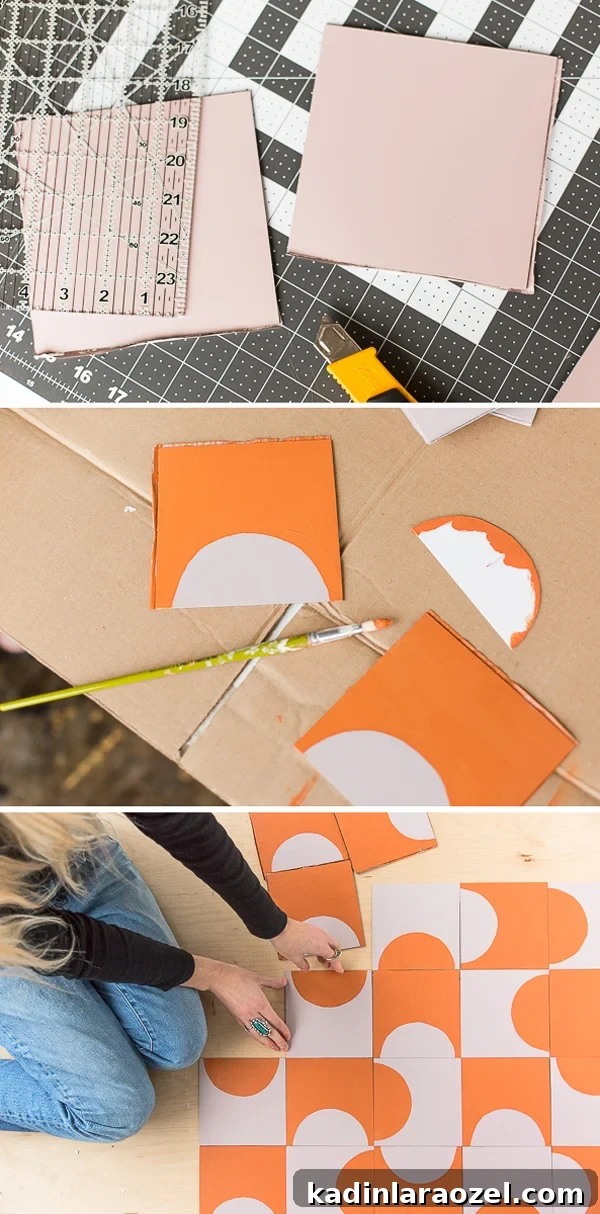
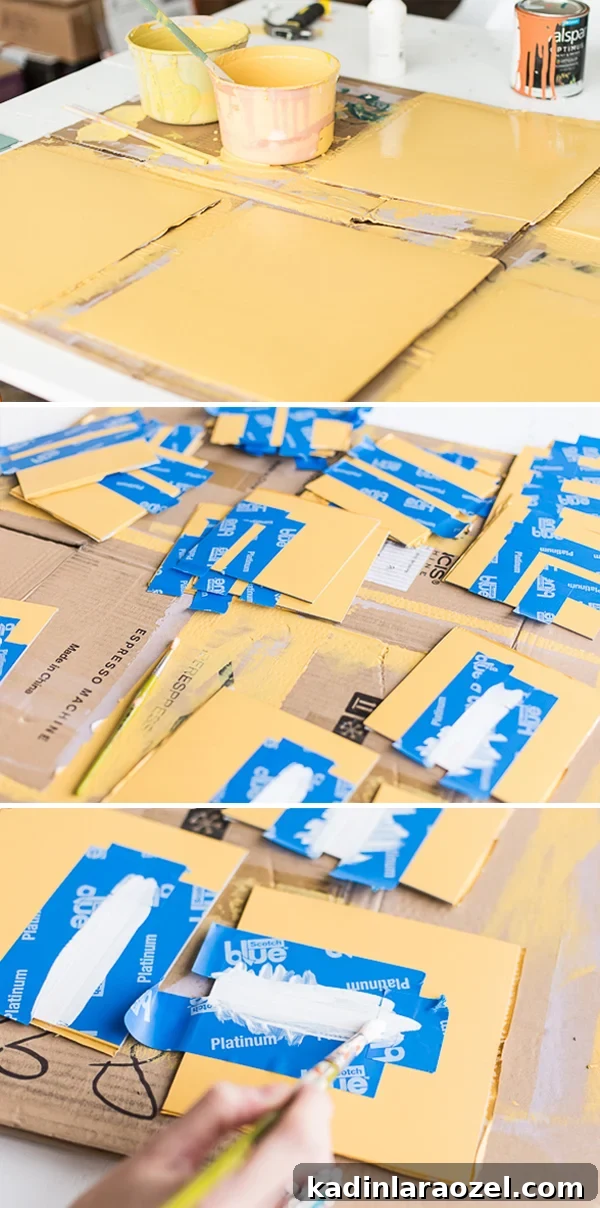
1. Paint the base color. Start by painting all the vinyl tiles one solid color for the background. I alternated between a mustard yellow and a dusty lilac for different sets. Let the painted tiles dry for at least 24 hours in a well-ventilated area.
2. Optional: cut tiles into smaller squares. If you want 6×6 tiles, score and snap each 12×12 tile. Use a straightedge and a utility knife to score the face of the tile—light pressure is enough to create a guide. Bend at the score line to break cleanly, and then score and separate the paper backing. Repeat for the second direction so you end up with four 6×6 tiles from each 12×12 tile. Take your time and be precise for neat edges.
3. Tape and mark your pattern. For a linear stripe design, use painter’s tape to mask straight lines. Keep the tape spacing consistent so every stripe has the same width. Press the tape down firmly across the entire taped surface, especially along edges, to prevent paint bleed.
For the half-circle motif, create a circular template from a piece of cardstock or any round object. Place the template in the same position on each tile (I centered my half-circle along the bottom edge) and trace lightly. You can paint either inside the traced half-circle or paint the area outside for a contrasting look.
4. Paint the pattern. With the tape or template in place, paint the exposed areas using your contrasting color. Use a smaller brush for precise shapes like half-circles. For taped stripes, remove any excess paint on the tape surface with a dry brush before carefully pulling the tape away at a 45° angle. Removing tape as soon as the paint is dry to the touch usually gives the sharpest lines.
5. Let tiles dry and seal them. Allow painted tiles to cure in a ventilated area for 24 hours. Once dry, apply a thin coat of interior polyurethane (matte or satin) to seal and protect the surface. Follow the manufacturer’s drying time and instructions for a second coat if desired.
6. Prepare the floor and install. Clean and remove debris from the floor and make any necessary repairs. Keep in mind the note about adhesive residue underneath. When you’re ready, peel the backing from each tile and press them into place. It helps to mark level guide lines on the floor first so your pattern stays straight. For tiles that require trimming near walls or fixtures, mark and score them with a utility knife as you did earlier.
Cost and Final Thoughts
Everything for this project came in at under $1 per square foot, including paint and sealant—not counting your labor, which is free if you do the work yourself. That’s a fraction of the price of cement or handmade patterned tiles, which can cost many dollars per tile.
The final look feels modern, minimal, and vibrant—an affordable way to add personality to a small room. Would you try this approach, or do you prefer authentic cement tiles? Either way, this technique is an easy and budget-friendly way to bring pattern and color into your floors.
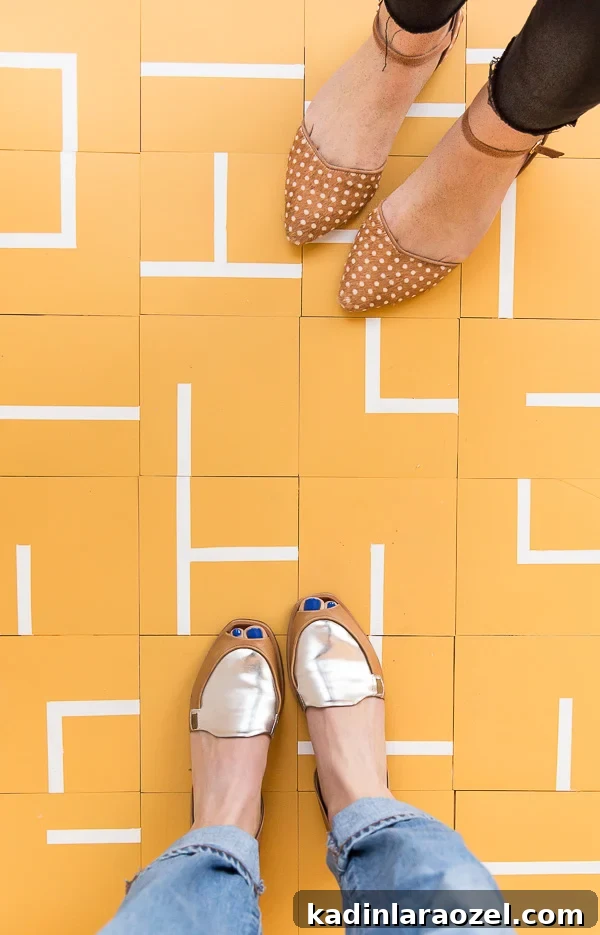
What do you think of the results? Are you as excited by these DIY tiles as I am, or do you prefer the look of real cement tiles? Either way, this method is an inexpensive way to experiment with color and pattern on your floors.