DIY Wooden Luggage Rack and Step-by-Step Fabric Block Printing Guide
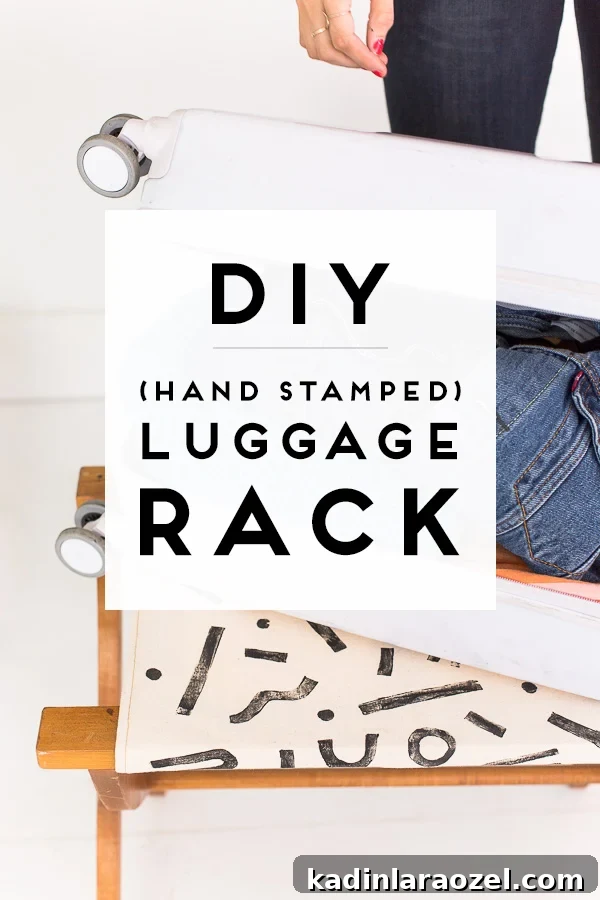
A charming DIY luggage rack for guests
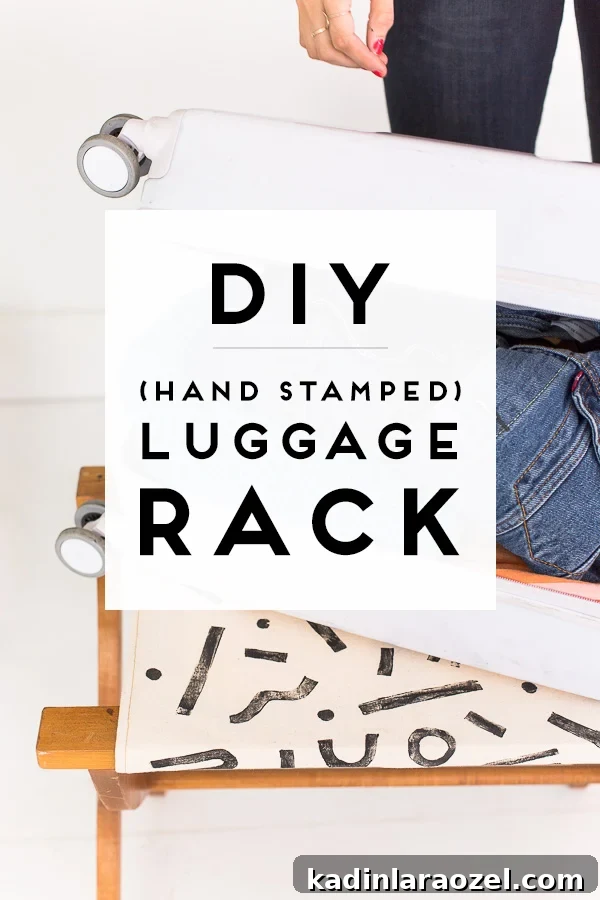
With friends and family visiting over the holidays, a DIY luggage rack is a thoughtful, practical touch. I love using luggage racks in hotels, and offering one at home gives guests a designated spot for their suitcases during a visit.
For this project the canvas cover is hand-sewn and hand-stamped, and it only costs a few dollars to make. Below you’ll find two clear, step-by-step guides: the first covers refurbishing the luggage rack itself; the second explains block printing on fabric if you want a patterned canvas. The block-printing method can be used for many other fabric or paper projects as well.
If you have any questions, feel free to ask!
Materials (DIY Luggage Rack)
- Old luggage rack (found at thrift stores or estate sales)
- Heavy-duty canvas (about 1/2 yard or less)
- Staple gun and staples
- Scissors
- Tape measure
- Canvas wax (optional, for added water and stain resistance)
How to Make a DIY Luggage Rack
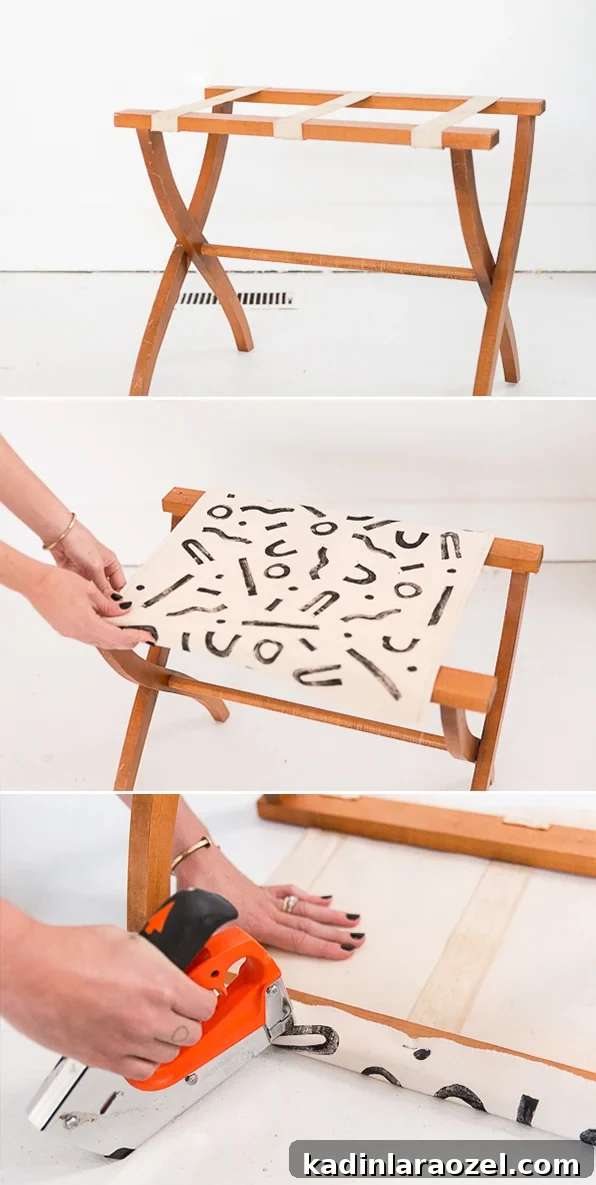
1. Measure the area of the luggage rack where the canvas will sit. Use the existing straps as a guide for width and length if they’re still in place. Cut the canvas slightly larger than your measurement to allow for seams and finishing. (My canvas pieces were cut to about 18×18 inches.)
2. Finish the two visible edges by folding each edge twice and stitching with a sewing machine. The other two edges can remain raw if they won’t be visible when installed. After sewing, your finished piece should be slightly smaller—around 17×18 inches in my case—with two finished ends and two raw edges.
3. (Optional) Apply canvas wax now if you want a more water- and stain-resistant surface. Follow the product instructions. This step is optional but useful for durability—I’ve used wax before on other canvas projects with good results.
4. Wrap the finished canvas around the luggage rack’s straps or frame, then turn the rack over and staple the canvas to the underside. Work across both sides so the canvas is taut and secure. Return the rack to its upright position and it’s ready for guests.
Materials for Block Printing on Fabric
- Block-printing carving block
- Fabric block-printing ink
- Linoleum cutter / carving tool set
- Soft rubber brayer (roller)
- Acrylic sheet, glass, or another smooth palette surface
- Permanent marker
How to Block Print on Fabric
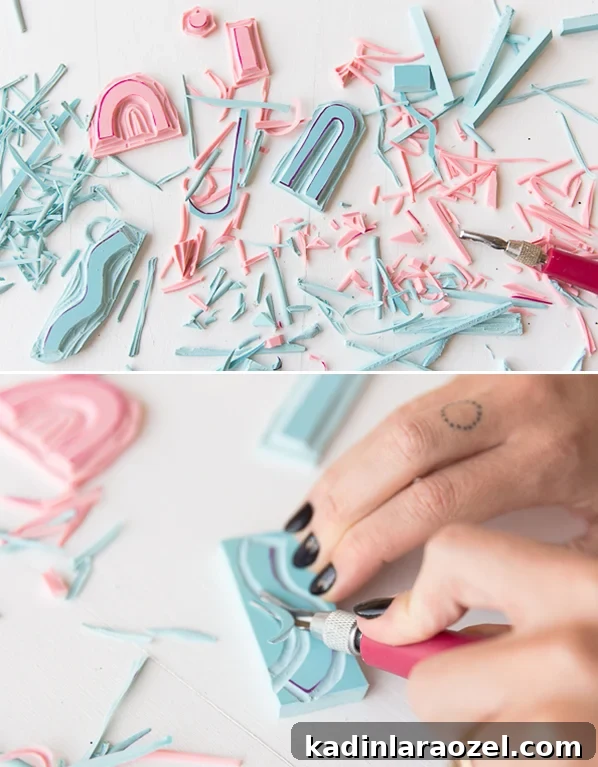
1. Start with a design. Draw directly onto the carving block with a permanent marker. Keep shapes bold and simple—this makes carving and stamping easier and yields clear printed shapes.
My pattern was inspired by a few painted shapes I used to work with and a favorite printed dress. Simple organic forms often translate beautifully to block prints.
2. Carve away the background from around your drawn design so the design itself remains raised. Use the U-shaped gouges from your carving set—the wider the U, the deeper and broader the cuts. A small V- or blade-shaped tool can help trim edges so each stamp is comfortable to hold.
Safety note: carving tools are very sharp. Work slowly and carefully, carving away from your hands and keeping fingers clear of the cutting path.
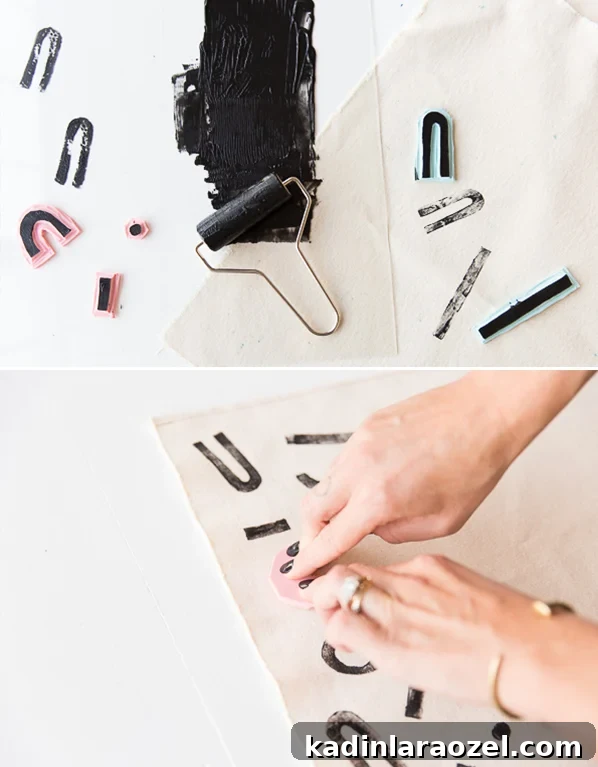
3. Squeeze a line of fabric ink onto your acrylic sheet or glass palette. Choose a color you like—fabric inks come in many options.
4. Roll the soft rubber brayer across the ink to distribute it evenly on the palette, then roll the brayer over the carved stamp until the raised areas are uniformly inked.
5. Press the inked stamp firmly and evenly onto your canvas, then lift straight up to avoid smudging. Practice a few test prints on scrap fabric to judge pressure and ink coverage.
6. Continue inking and stamping until you’ve covered the canvas with your pattern. Allow the fabric to air-dry for 24 hours to set the ink before using or handling the material.
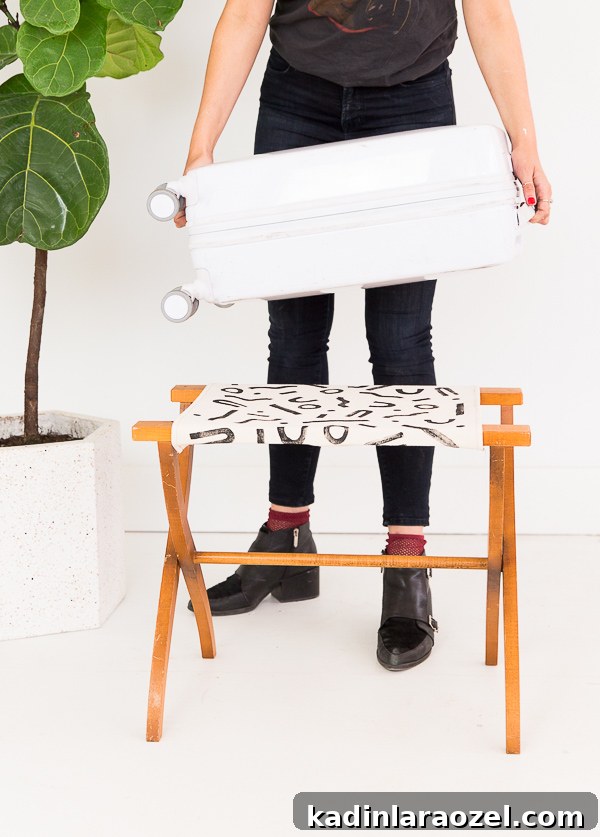
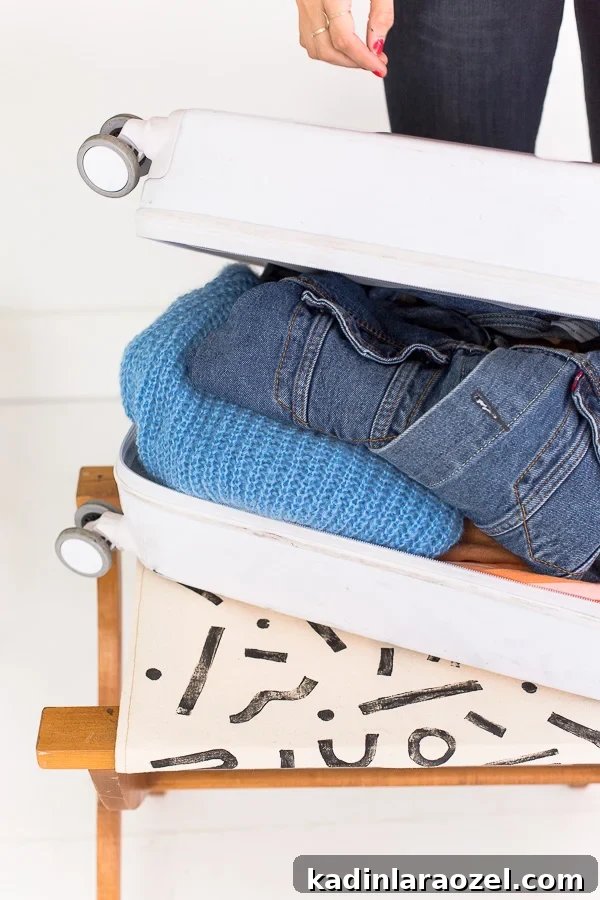
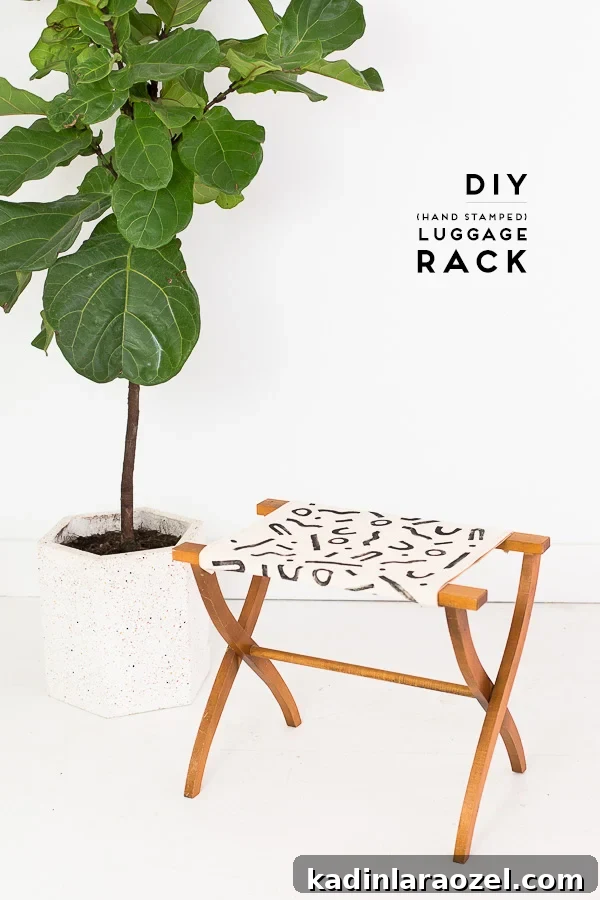
DIY Luggage Rack Redo
Offering a luggage rack for holiday guests makes their stay more comfortable and keeps suitcases off the floor. This simple redo replaces worn straps with a fresh canvas cover that you can personalize by hand-stamping. Below is a concise recap of the steps.
Ingredients / Materials
- Old luggage rack
- Heavy-duty canvas (about 1/2 yard)
- Staple gun and staples
- Scissors
- Tape measure
- Canvas wax (optional)
Instructions
- Measure the area for the canvas and cut a piece slightly larger for seam allowance (example size: 18×18 inches).
- Finish the two visible edges by folding them twice and stitching; leave the other two edges raw if they won’t be seen.
- Optional: apply canvas wax for water and stain resistance following product directions.
- Wrap the canvas around the rack, flip it over, and staple the canvas securely to the underside across both sides. Flip back and the rack is ready for use.
Block Printing on Fabric
Part two covers creating the hand-stamped fabric used for the luggage rack cover. These steps are broadly applicable for any block-printing fabric or paper project.
Materials
- Carving block
- Fabric block-printing ink
- Linoleum cutter / carving tools
- Soft rubber brayer
- Acrylic sheet or glass palette
- Permanent marker
Instructions
- Draw your design on the carving block with a permanent marker.
- Carve away background areas so the design remains raised; choose gouge sizes to control groove width and depth.
- Apply ink in a long line on the palette and roll it out with the brayer until evenly distributed.
- Ink the stamp with the brayer and press the stamp down firmly and evenly onto the fabric, then lift straight up.
- Repeat until the fabric is covered. Let the ink set by air-drying for 24 hours before handling or finishing the fabric.
With these two tutorials you can transform an inexpensive or vintage luggage rack into a stylish, guest-ready piece—customized by you. Are you a fan of having luggage racks available for guests? Planning a holiday full of visitors?