Make Clay Earrings: DIY Techniques to Craft Head-Turning Jewelry
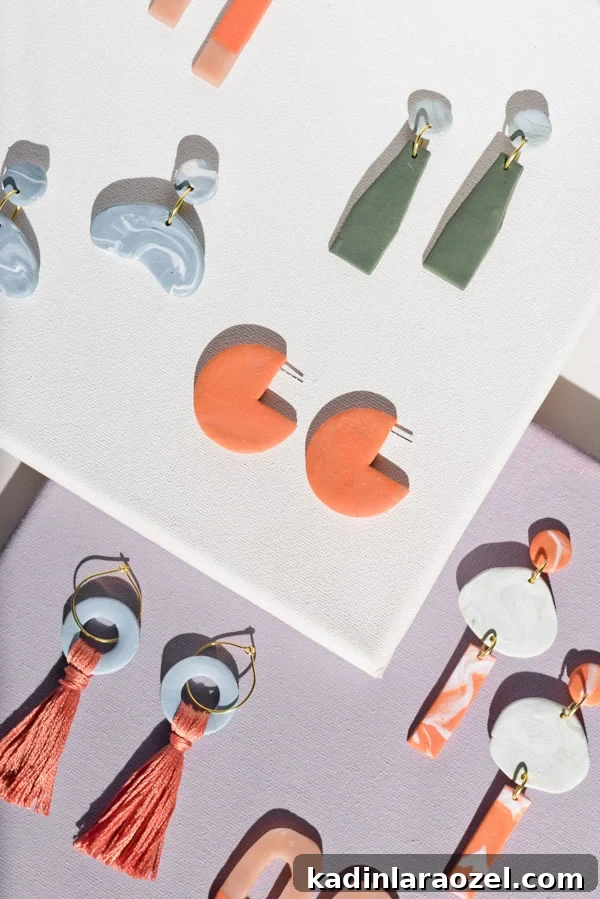
DIY clay earrings for the win!
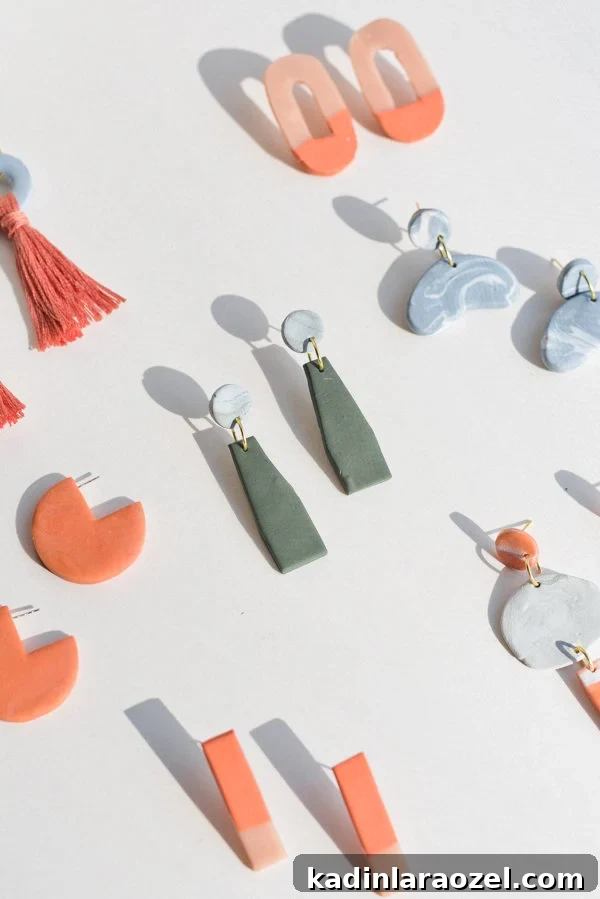
If you’ve ever wanted to make your own polymer clay earrings—or any clay jewelry—this guide will get you started. Below I share a handful of easy, stylish techniques and a step‑by‑step process for making beautiful clay earrings on a budget. You’ll be surprised how quickly you can create pieces that get compliments.
Before we begin, here are answers to a few frequently asked questions about the main material for this project.
Where can I buy polymer clay?
Polymer clay is widely available at craft stores and online. Common brands include Sculpey, Fimo, Kato Polyclay and Cernit. Each brand offers different formulations (for example, Fimo Soft or Sculpey III), so check the packaging for recommended baking temperature and handling instructions.
What is the best brand of polymer clay?
There’s no single “best” brand for everyone. I personally use Sculpey most often because it’s easy to find and comes in many colors and tool options, but many makers prefer Fimo or Kato depending on firmness and finish preferences.
Does polymer clay need to be baked?
Yes. Polymer clay must be baked to cure and harden. Baking times and temperatures vary by brand, so follow your clay manufacturer’s instructions.
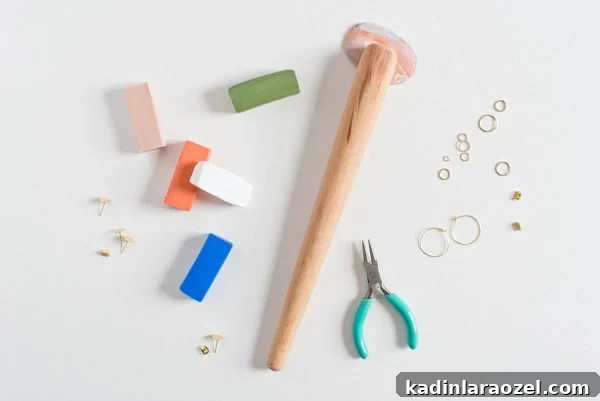
Materials for Clay Earrings
- Polymer clay in the colors of your choice*
- Rolling pin
- Knife or clay cutter
- Jewelry pliers
- Earring posts and backs (I used gold)
- Jump rings with open connectors (also gold in my examples)
- Optional: small circular cookie or clay cutters
- Super glue
- Cutting surface
- Parchment paper
- Baking sheet
*If you’re unsure which colors to buy, start with primary colors plus black and white—you can mix them to create other shades. Keep color ratios in mind: a little black goes a long way; white dilutes pigments toward pastels. Adding a complementary color can help mute an overly bright hue.
How to Make Clay Earrings: Basic Techniques
Polymer clay is extremely versatile, so you can create almost any shape, color or style. Below are three simple techniques—marbling, custom color mixing, and color‑blocking—that are easy to reproduce and form the foundation for many earring designs. Decide on a color palette first; a single batch often yields a few pairs.
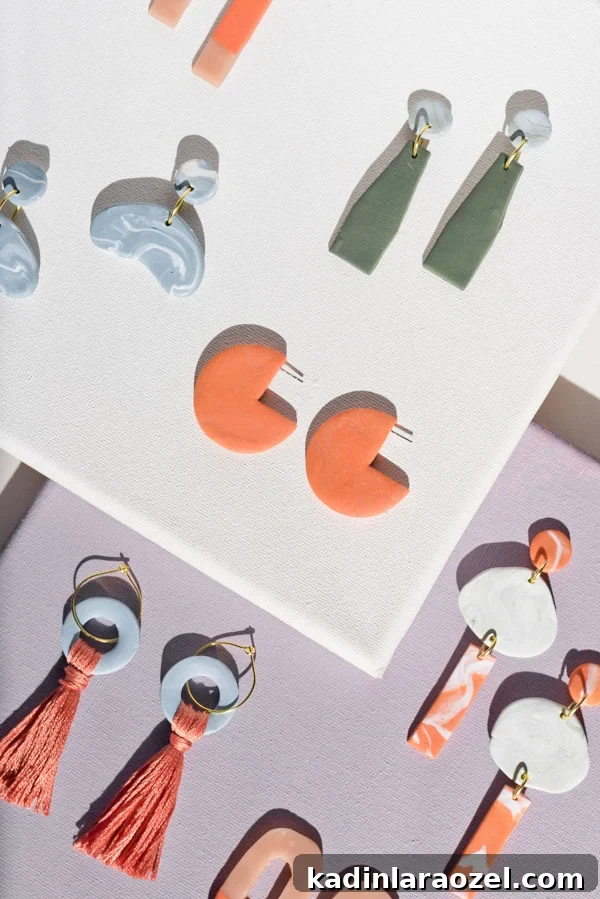
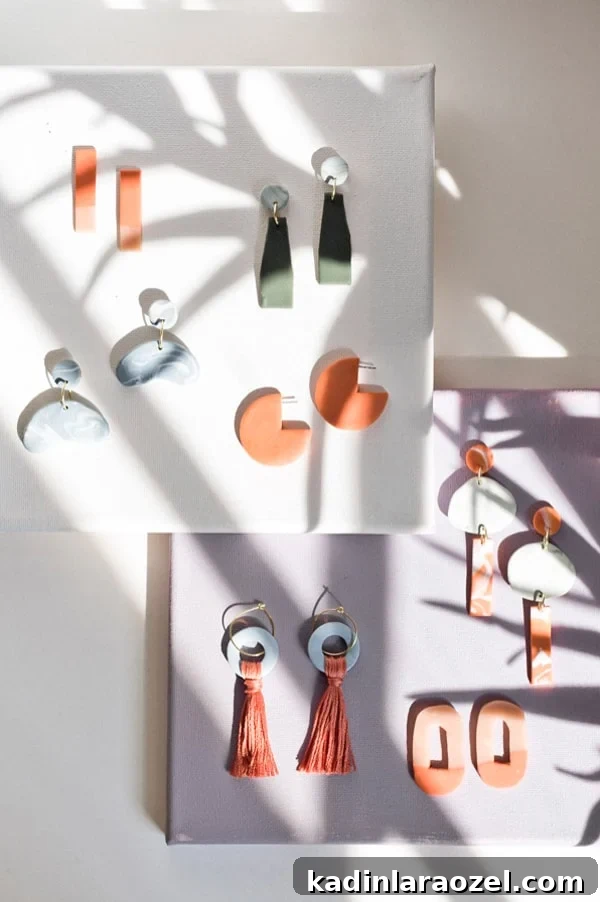
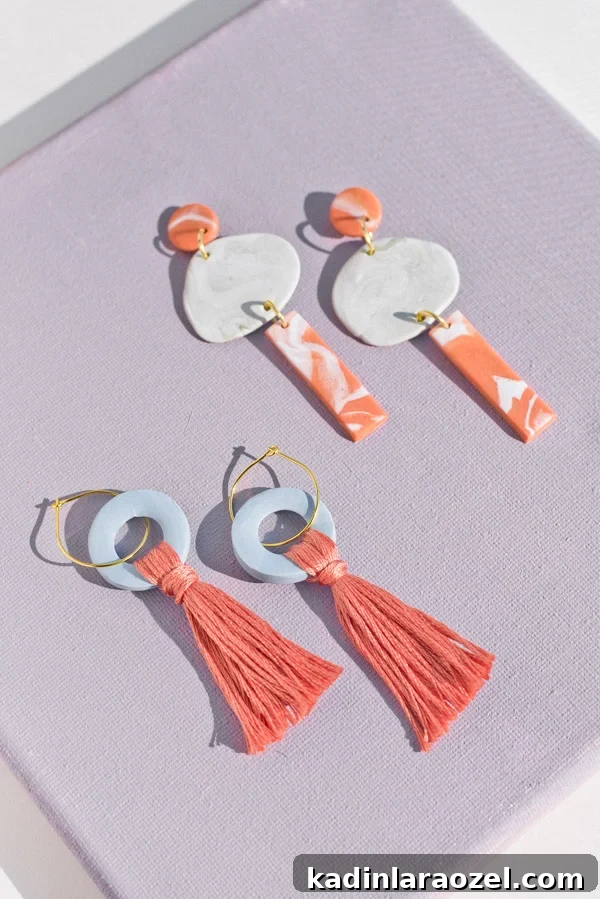
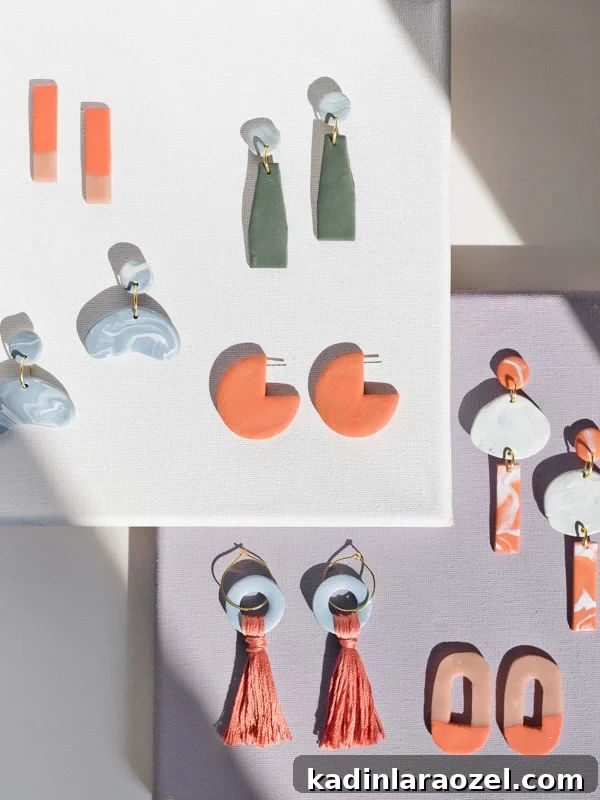
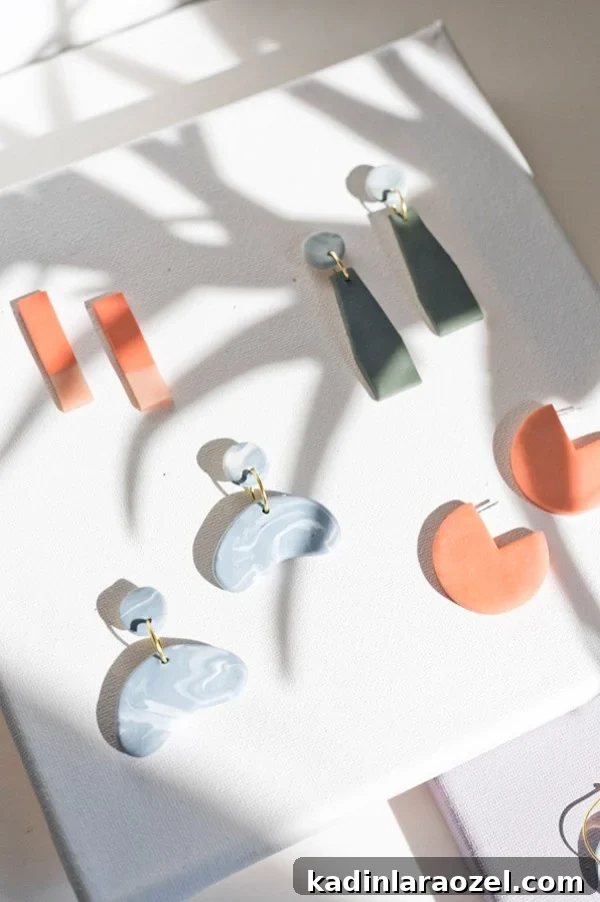
I chose earthy, muted tones for the examples pictured—muted greens, peaches, rust, subtle marble and a gray‑blue—to create a cohesive set.
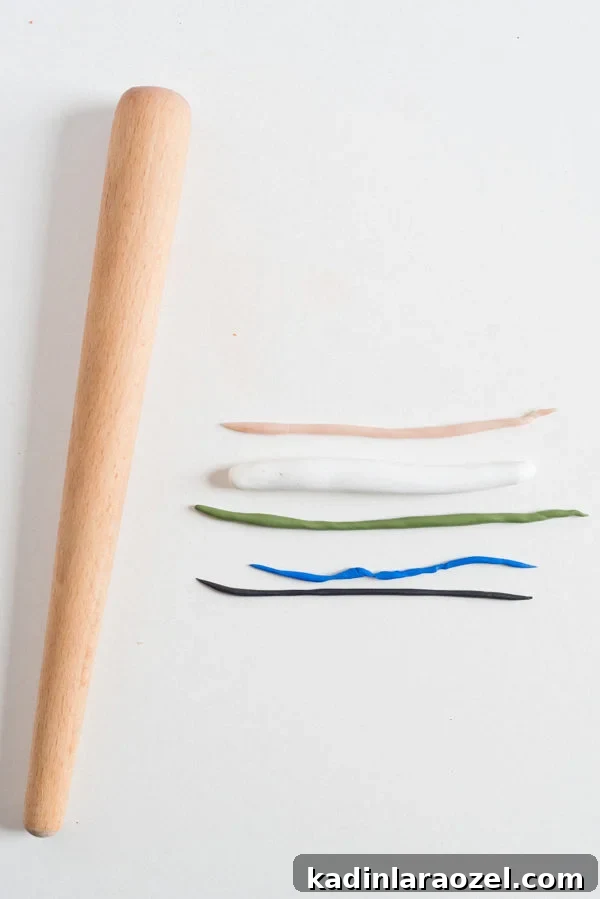
Marbling Technique
1. Start with a mid‑size amount of your base color (for example, white). Choose one to three accent colors and roll them into small balls.
2. Roll each accent into thin “snakes.” Wrap those snakes around the base color and roll the combined piece in your hands.
3. Stretch, fold and roll the clay repeatedly. As you fold and twist, the colors will begin to swirl and blend. Continue until you like the marbled look—be careful not to overmix if you want visible veins of color.
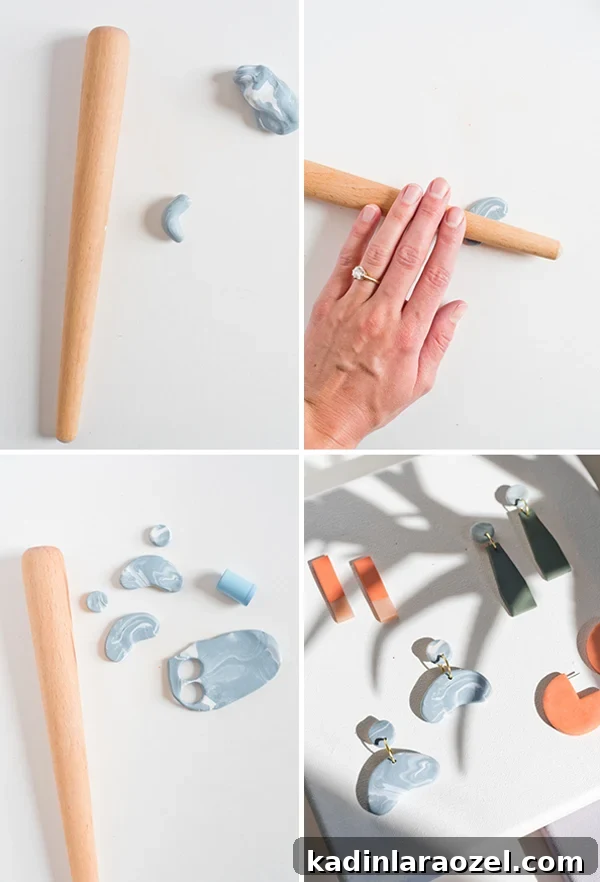
To form the kidney‑bean shaped, marbled earrings shown: roll two small marbled balls (about marble size). Shape each into a short, thick cylinder and curve it into a bean shape. Flatten lightly with a rolling pin so the piece is slightly flattened but retains its curve. Roll out the remaining marbled clay to about 1/16″–1/8″ thickness and use a small circular cutter to punch two 1/4″ circles for connecting pieces. If you don’t have a cutter, flatten small balls with a flat surface or cut by hand.
Creating Custom Colors
Use the same fold/stretch technique as marbling, but continue mixing until the colors blend uniformly for a solid custom shade. Start with small amounts and gradually add a stronger color to control the final tint. Remember: small amounts of dark colors drastically change a mix; small additions of neutral or complementary tones can tone down brightness.
If you go too far with one color, keep adding clay until you reach the tint you want—polymer clay is forgiving that way.
Color‑Blocking Technique
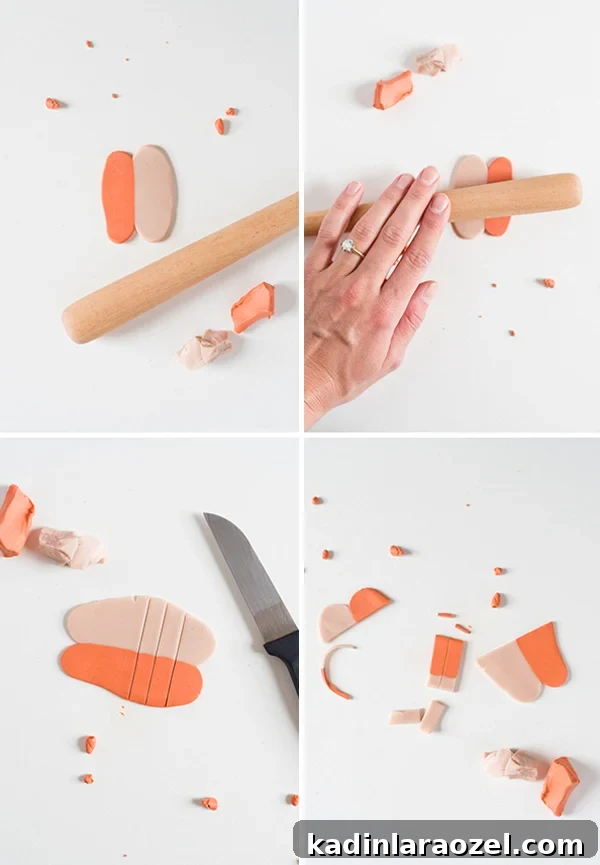
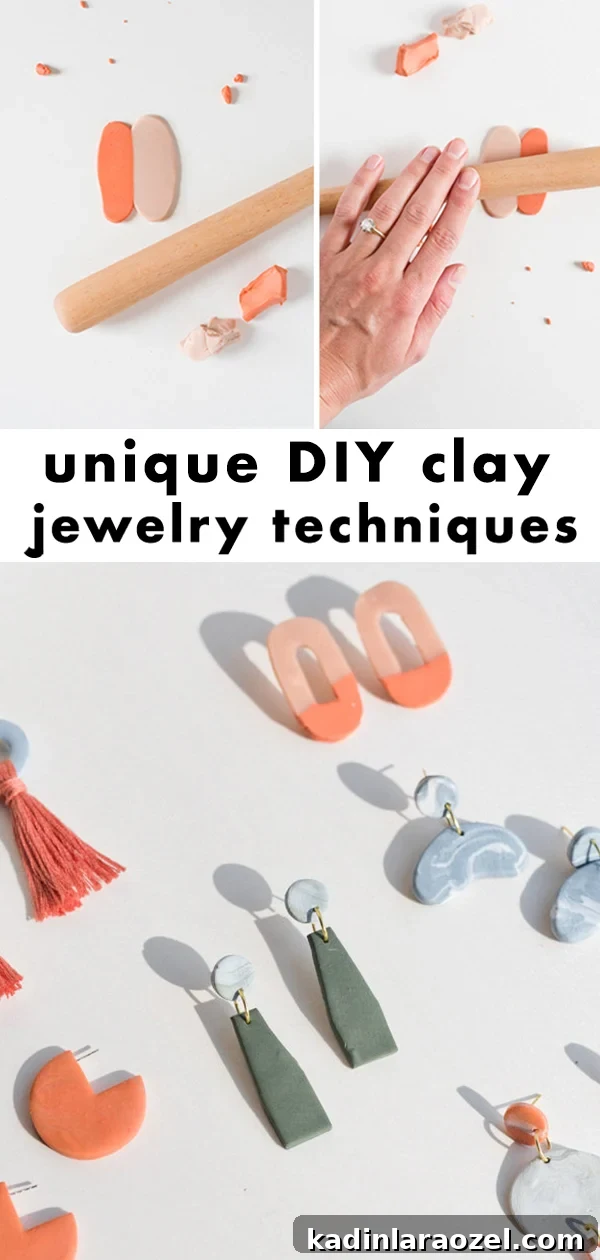
1. Roll two chosen colors into short, thick cylinders.
2. Place them side by side and press together so their edges meet and adhere.
3. Use a roller to flatten them into a single slab with a clear division between colors. From there you can cut rectangles, circles or other shapes for earrings.
For the rectangular color‑blocked earrings shown: roll the color‑blocked slab to about 1/16″–1/8″ thickness and cut two rectangles roughly 1/4″ wide by 1″ long (adjust size to preference).
Instructions: How to Make Clay Earrings
- Preheat the oven to 225°F (or follow your clay brand’s recommended temperature). Line a baking sheet with parchment paper.
- Create your clay shapes using the marbling, color mixing, or color‑blocking methods above. Make sure pieces are even in thickness so they bake consistently.
- If your design needs jump rings, make holes now. Use the sharp end of an earring post to gently puncture the clay where you want the connection point. You can wiggle the post slightly to enlarge the hole if necessary.
- Place all shapes on the lined baking sheet and bake for approximately 10–12 minutes (time varies by brand and thickness—follow the clay manufacturer’s directions). Keep an eye on pieces if your oven runs hot to prevent burning.
- Remove the baking sheet and let the clay cool completely. They may feel slightly soft while warm, but should hold shape once cooled.
- To attach posts: put a small dab of super glue on the post, press it onto the clay piece and hold for about 30 seconds until secure.
- To attach jump rings: use pliers to thread a jump ring through the small circular pieces or punched holes, then close the jump ring so it doesn’t open while wearing.
Take it further
There are many ways to customize: add embroidery‑floss tassels, use hoop findings instead of posts, experiment with organic shapes, combine bright marbles, or add metallic leaf or paint after baking. The possibilities are endless.
Why polymer clay is great for jewelry
Polymer clay is accessible, easy to shape, and available in many colors and formulas. It’s soft enough to hand‑shape, compatible with cutters and molds, and bakes into a lightweight, durable finish—ideal for earrings, necklaces and bracelets. Both beginners and experienced makers can create polished, wearable pieces quickly.
Other clay project ideas
- Clay bead bracelets made from polymer clay beads.
- Small decorative clay bowls formed from polymer clay sheets or hand‑shaped clay.
- Adorable clay figurines like tiny mushrooms or strawberries for ornaments or gifts.
- Terracotta‑style clay ornaments for seasonal décor.
More jewelry ideas to try
- Unique hand‑shaped necklaces and pendants using mixed clay and metal findings.
- Painted wood earrings or mixed‑media pieces combining clay and wood.
- Beaded necklaces that incorporate clay beads for texture and color.
- Leather and brass combinations for bold, long‑lasting necklaces.
How to Make Clay Earrings (Polymer Clay Jewelry Ideas)
Author: Brittni
If you’ve ever wanted to make your own clay earrings (or any clay jewelry), this project is for you. These techniques are easy to recreate and budget‑friendly.
Ingredients
- Polymer clay in the colors of your choice
- Rolling pin
- Knife or clay cutter
- Jewelry pliers
- Earring posts and backs (gold used in examples)
- Jump rings with open connectors (gold used in examples)
- Optional small circular cookie or clay cutters
- Super glue
- Cutting surface
- Parchment paper
- Baking sheet
Instructions
- Preheat oven to 225°F (or follow your clay brand’s instructions) and line a baking sheet with parchment paper. Create your clay shapes using one of the techniques described above.
- For pieces that require jump rings, use an earring post to carefully create holes where connectors will go. Wiggle the post slightly if the hole needs enlarging.
- Arrange shapes on the baking sheet and bake for about 10–12 minutes (times vary by brand and thickness). Keep a close eye so pieces don’t burn.
- Remove from oven and let cool; they may feel slightly soft while hot but should hold shape when cool.
- Attach earring posts with a dab of super glue and hold until secure.
- Use pliers to thread jump rings through small circular pieces or holes, then close rings tightly so earrings stay together while wearing.
- Optional: add tassels, use hoops instead of posts, or explore other shapes and color combinations.
Photography: Amelia Lawrence
Have you tried making your own jewelry? What materials and techniques do you like to use?