Make Leather Drawer Pulls: Step-by-Step Push-and-Pull Guide
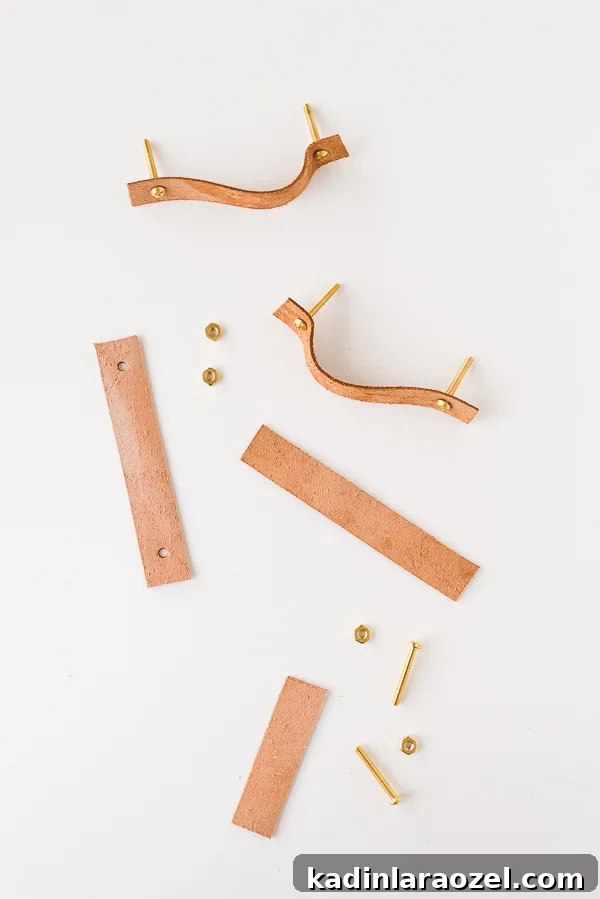
DIY leather drawer pulls are a stylish, simple swap for standard cabinet hardware.
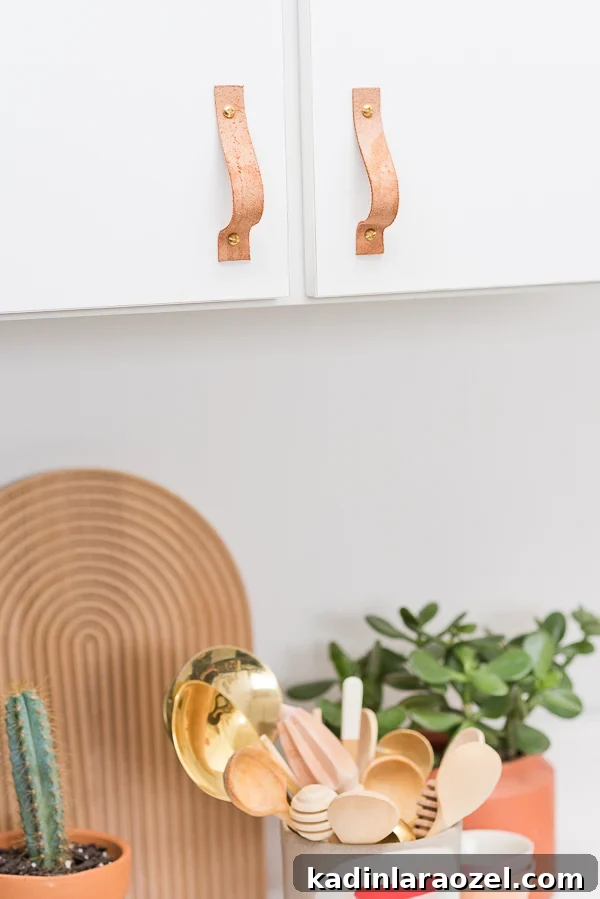
I love making my own drawer and cabinet pulls—it’s one of the easiest, most rewarding home updates you can do. Leather handles are affordable, simple to install, and work well for DIYers at any skill level.
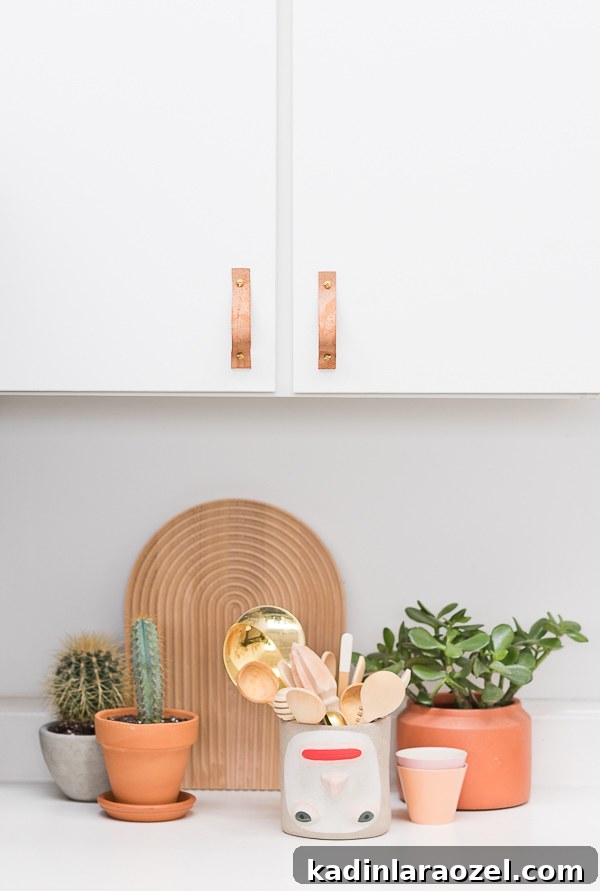
When I updated my studio kitchen I made a bunch of these. They were the finishing touch after I resurfaced laminate countertops and installed a bold DIY backsplash, and they completely changed the look of basic cabinets without a major renovation.
These leather pulls are perfect for renters because they’re affordable, reversible, and instantly elevate builder‑grade cabinets. It’s been about six months since I installed mine and they’ve held up really well—basically the same as the day I put them on.
Follow the steps below to make leather cabinet pulls in just a few minutes per handle.
Materials for Leather Drawer Pulls
- Sheet of leather (vegetable‑tanned or finished leather works well)
- Round‑head brass machine screws (I used #8‑32 thread, 1.25″ length; you’ll need two screws per handle)
- Matching machine screw nuts (brass #8‑32; you’ll need two nuts per handle)
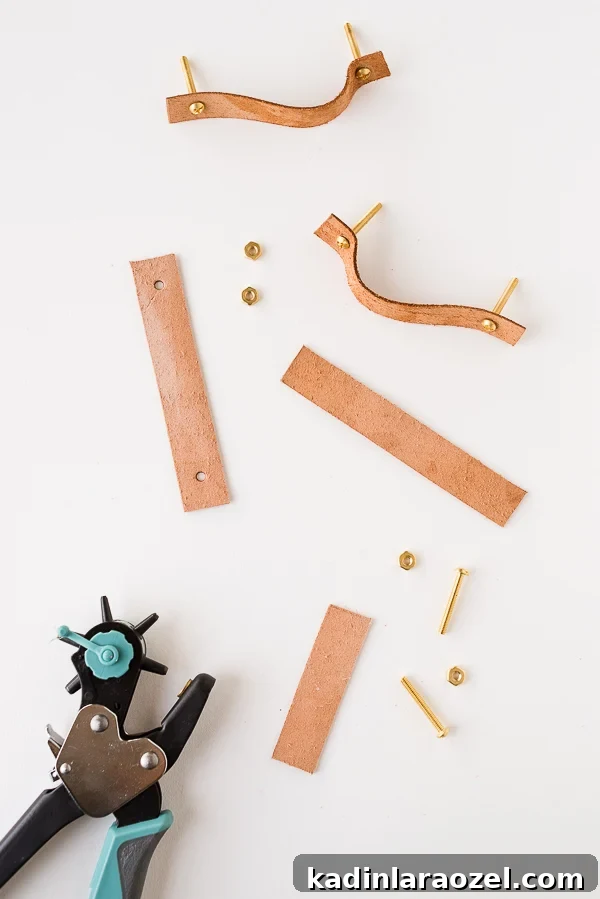
- Rotary cutter or sharp utility knife
- Leather hole punch (or a rotary punch set)
- Straight edge or ruler and a marker
Are DIY drawer pulls budget friendly?
Yes. If you already own a rotary cutter, hole punch and straight edge, these pulls are very inexpensive. A single $20 leather sheet yields roughly 18–20 pulls at 5″ long by 3/4″ wide. Screws and nuts add only about $0.75 per set, so each finished pull costs under $2.
By comparison, pre‑made leather cabinet pulls typically run $8–$25 each, so this DIY approach is a major savings while giving you full control over size, finish, and hardware.
How to Make Leather Drawer Pulls
1. Cut leather strips. If you have a large leather sheet, use a straight edge and rotary cutter to trim strips. A good standard size for typical cabinet doors is 3/4″ wide by 5″ long. Adjust the width and length to your cabinets and taste—wider straps for larger doors, narrower for small drawers.
2. Punch holes at each end of the strip. Place the holes about 1/2″ in from each end and make sure they’re centered. Use a leather hole punch sized to the screw shank so the screw fits snugly without the head passing through the hole.
3. Fasten the pulls. Insert the screws through the cabinet front from the inside so the screw head sits behind the door, feed the screw through the punched leather strap, then thread and tighten the nut on the visible side (or vice versa depending on your hardware orientation). Repeat for the second screw. Tighten by hand or with pliers, but avoid over‑tightening to prevent crushing the leather.
Handles may loosen slightly over time; a quick pass through the kitchen to re‑tighten all nuts takes only a minute or two and keeps everything secure.
Tips and variations
- If you want a cleaner look on the cabinet face, use flat machine screw heads with matching brass washers, or countersink the leather slightly so the screw head sits flush.
- Edge‑paint or burnish the leather edges for a more finished appearance. A dab of leather conditioner or wax will help protect the straps and keep them supple.
- Experiment with different leather colors and hardware finishes—tan leather with aged brass looks warm and modern, while black leather with brushed nickel lends a more minimal, contemporary vibe.
- For added durability, you can stitch around the strap ends or glue a small leather patch where the screw goes to prevent tearing over time.
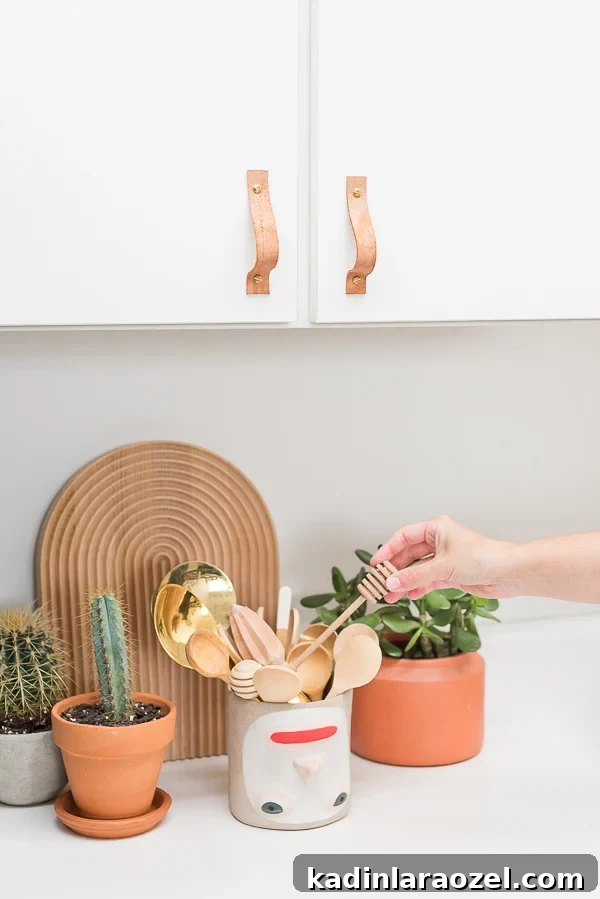

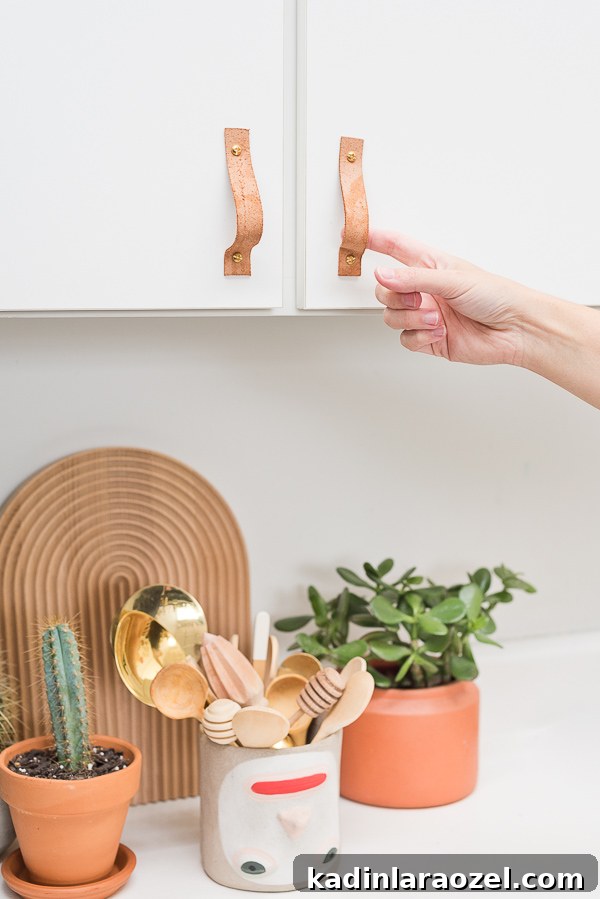
Photography: Amelia Lawrence
What do you think of leather cabinet and drawer pulls? Would you try them in your kitchen—yay or nay?