Modern Plywood Shelving Ideas for Stylish Prop Organization
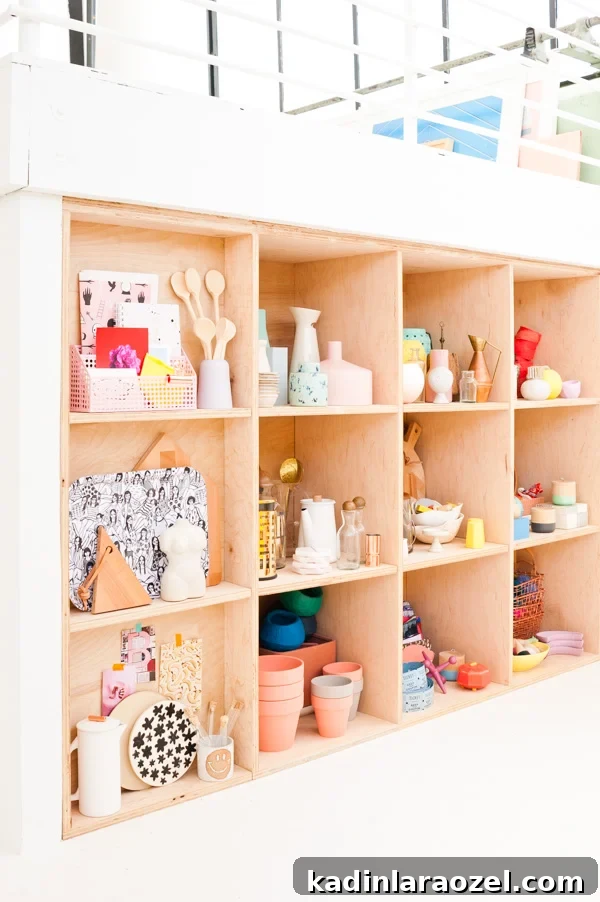
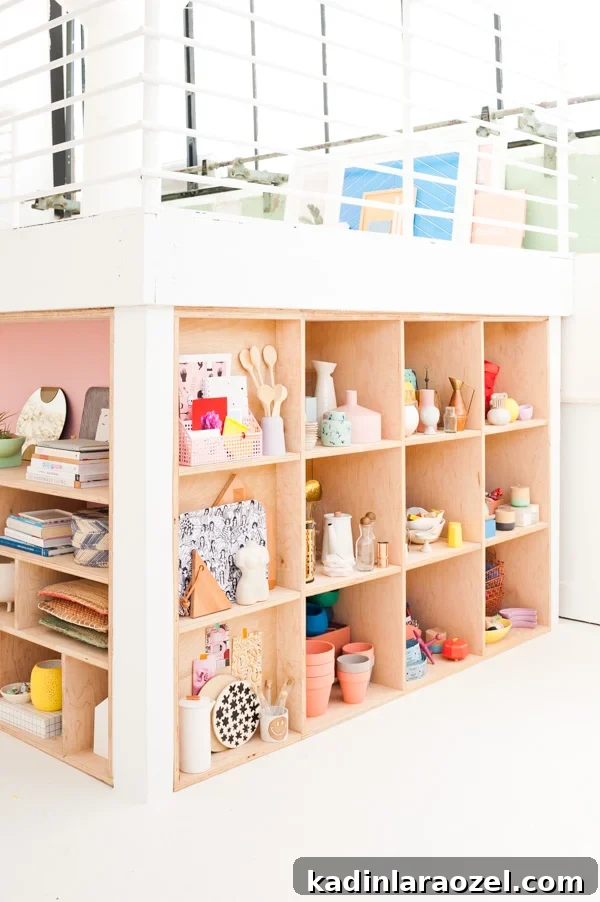
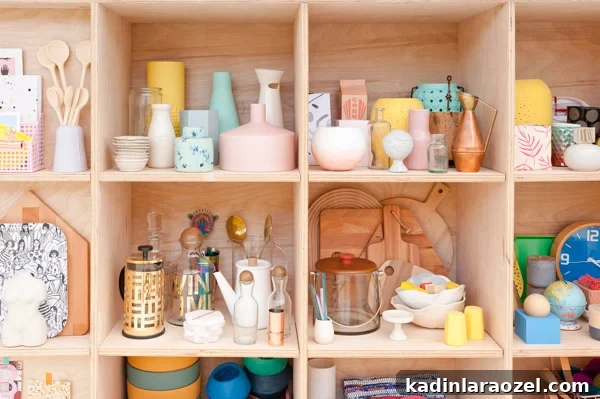
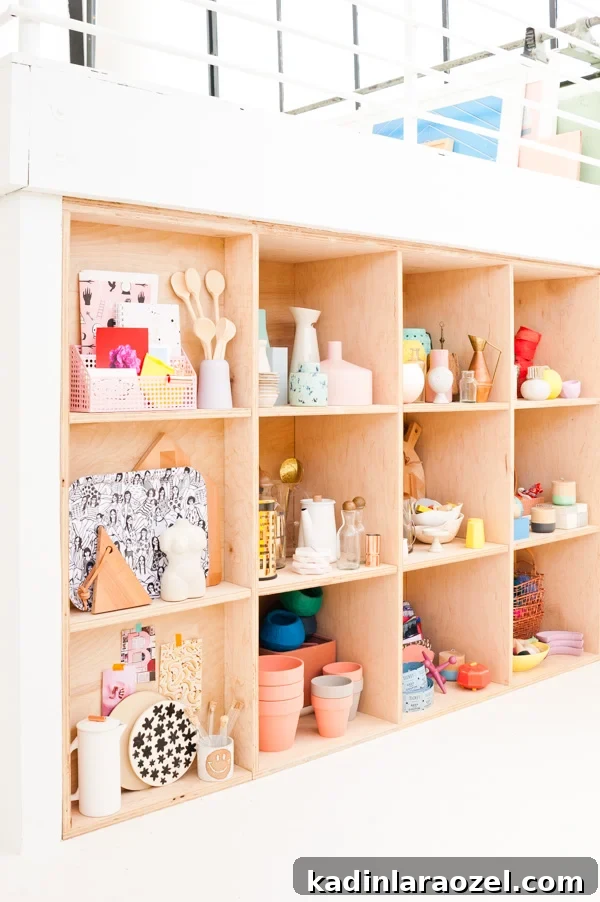
Recently I shared one of my favorite studio projects — custom DIY built-ins — and today I’m showing the companion piece: a practical plywood shelving unit where I store all of my props in one place. While the seating side of the project aimed to be styled and decorative, this shelving side was designed to be utilitarian: easy to scan at a glance and built for function rather than for display.
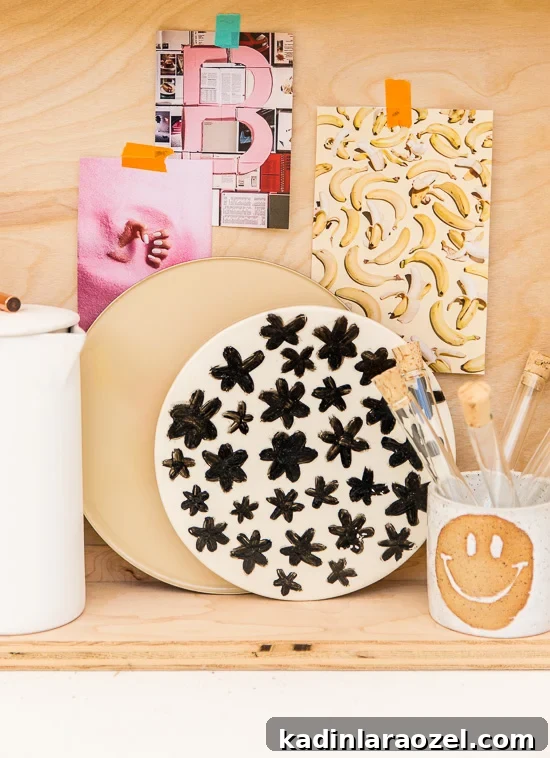
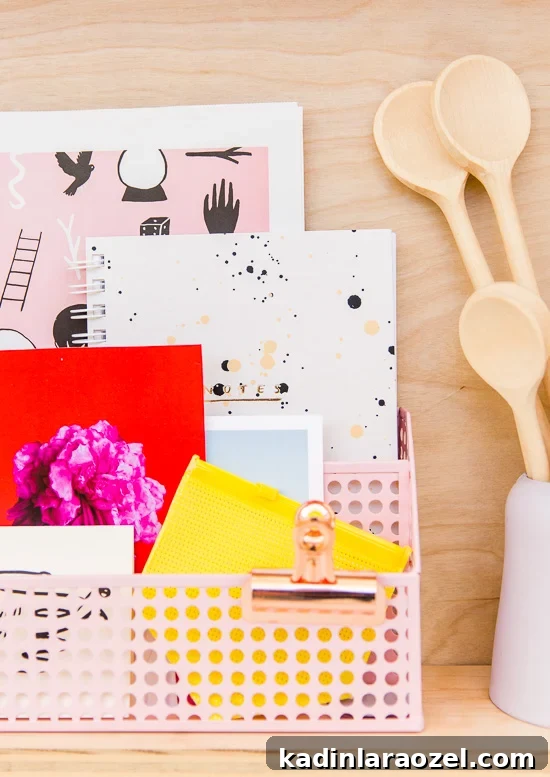
Admittedly, I couldn’t resist styling the shelves a little for the photos, but the primary goal here was organization. The result is a compact, efficient system that keeps hundreds of items accessible and out of the way.
Here’s what this side of the studio looked like before the build:
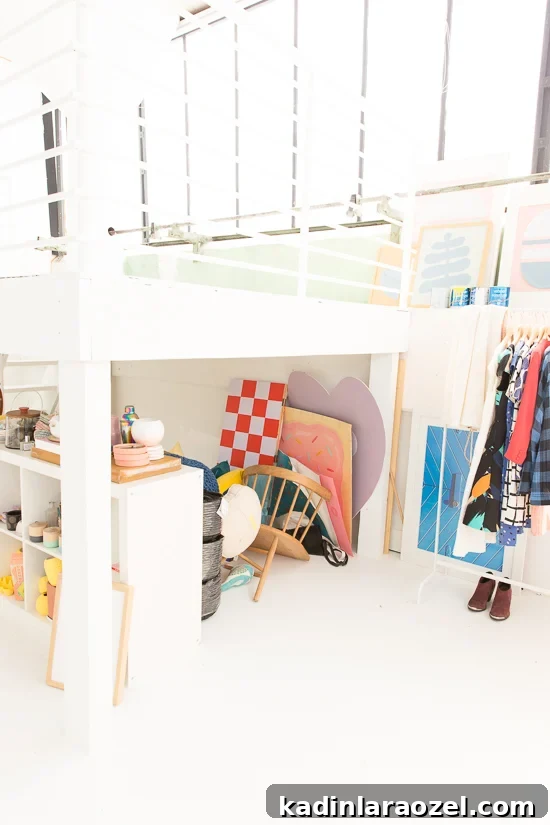
Below is a practical materials list and step-by-step overview if you want to build a similar plywood shelving unit in your own space.
Materials
- Two 4×8 plywood sheets (adjust quantity based on your built-in size)
- 2 1/2″ interior finish or brad nails
- 2 1/2″ finish nailer / nail gun
- Table saw
- Sanding block or power sander
- Natural wood filler
- Tape measure
- Small framing square
- Drill and countersink drill bit
- 1 5/8″ coarse thread drywall screws
- Soft clamps
- Saw horses (optional)
- Level (2 ft or torpedo level)
- Eye and ear protection
Instructions
1. Measure the rough opening. Use a tape measure to determine the height, width, and depth of the space where your built-in will sit.
2. Account for vertical supports. When laying out the interior cubbies, subtract the width of the plywood vertical bracing before dividing the remaining width by the number of compartments you want. If you skip this step, cubbies may end up uneven.
3. Calculate individual box widths. Subtract the combined width of vertical supports from the total opening width, then divide by the number of cubbies to find each box width.
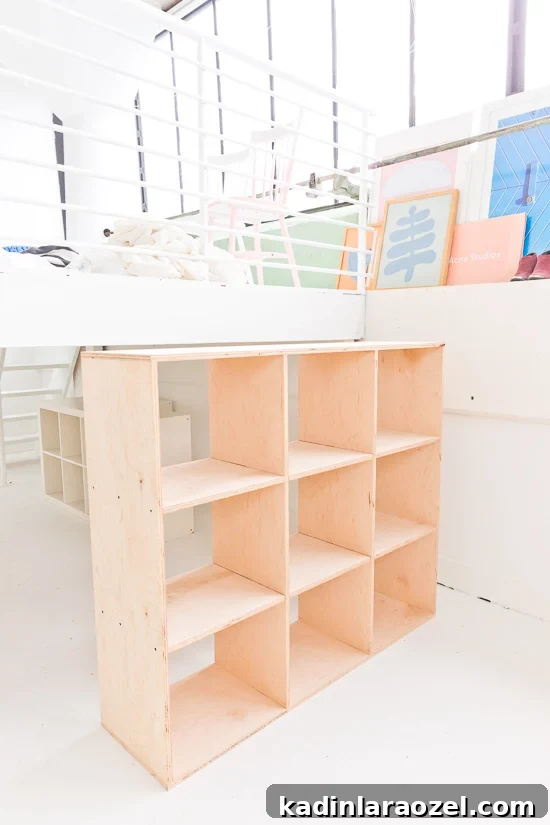
4. Build the box. Construct the outer frame first, then add vertical supports and shelves. The assembly method mirrors the approach used for the seating and shelving built-ins: build the box frame, install shelving and support pieces, then move the built unit into position and secure the back panel to finish the look.
5. Fasten and finish. Use a combination of screws and finish nails, countersink all screw heads, and fill holes with natural wood filler. Sand smooth and check for level and square as you go.
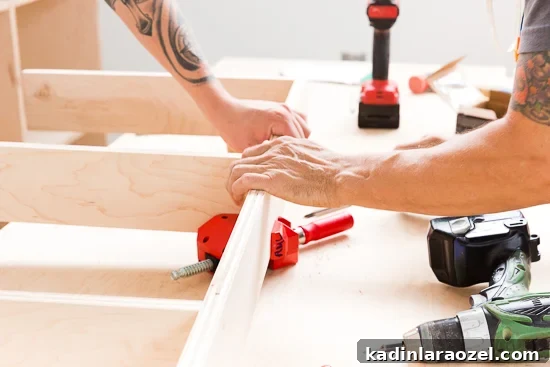
Note about layout: My studio required two deep built-ins that meet at a corner, so the first column on one side needed to be shallower to accommodate the depth of the adjacent unit. Most home installations won’t need this adjustment, but if your built-ins intersect at a corner, you’ll want to plan for varying depths to ensure a seamless fit.
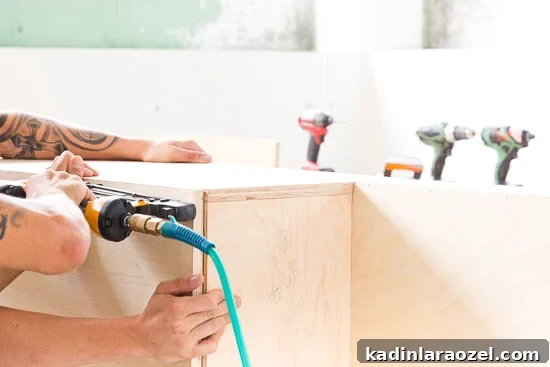
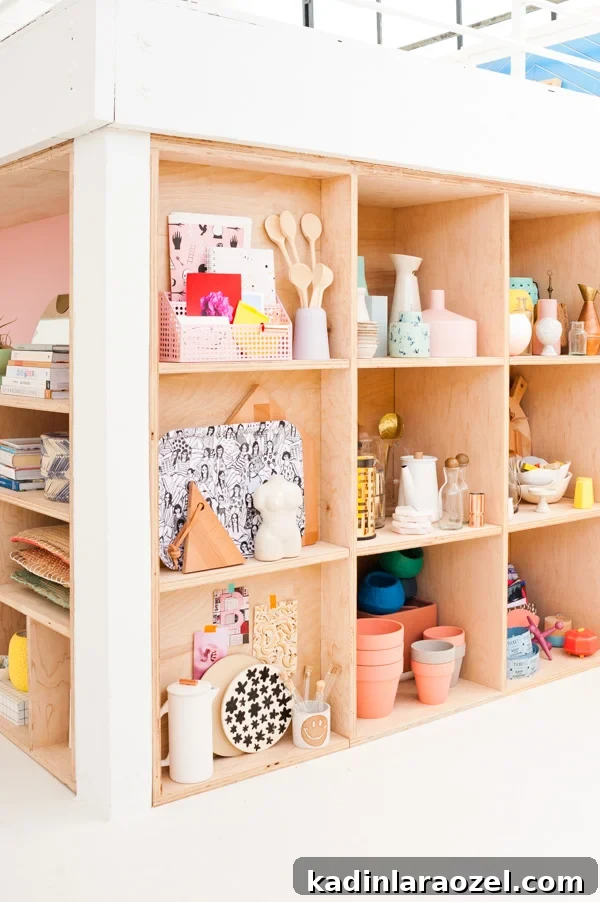
Once the unit was installed (I worked with a local contractor), I started filling the cubbies and was pleasantly surprised by the storage capacity. Each compartment holds many items, and the hidden storage behind the unit freed up even more room in the studio. That extra space meant I could finally unpack boxes that had been waiting since we moved in.
The finished built-in transformed the studio. Because the space is a loft with only two small closets, this custom shelving solved a major storage problem and made the whole area feel cleaner and more functional.
Photography: Amelia Tatnall Lawrence
Styling: Brittni Mehlhoff
What do you think of this second built-in? Do you prefer the raw plywood look or would you paint it? Either way, a custom shelving solution like this can be a game changer for a small studio. P.S. National Get Organized Week falls the week of October 3rd — a great reminder to tackle storage projects like this one.