Modern Staircase Design Trend: Should You Upgrade Your Steps?
The era of generic staircases with waist-high knobby railings—or worse, completely enclosed stairwells—is fading. Contemporary designers favor cleaner, lighter approaches that open up sightlines and bring more natural light into the home. One standout trend that accomplishes this is the wooden stair screen.
Popularized in modern renovations and well-suited to open-plan living, wooden stair screens replace bulky balustrades or full walls with vertical fins or slats. The result is a partition that provides visual separation without blocking airflow or light. It reads as architecture and art, adding texture and scale to a room while maintaining a sense of openness.
Many of the most compelling examples blend mid-century modern lines with Asian minimalism. That combination feels surprisingly versatile—it pairs easily with boho, California coastal, contemporary mountain homes, and minimal modern interiors alike. The vertical wooden fins create rhythm and depth and often serve as a striking focal point.
Here are several inspiring variations of the wooden stair screen and what makes each one effective:
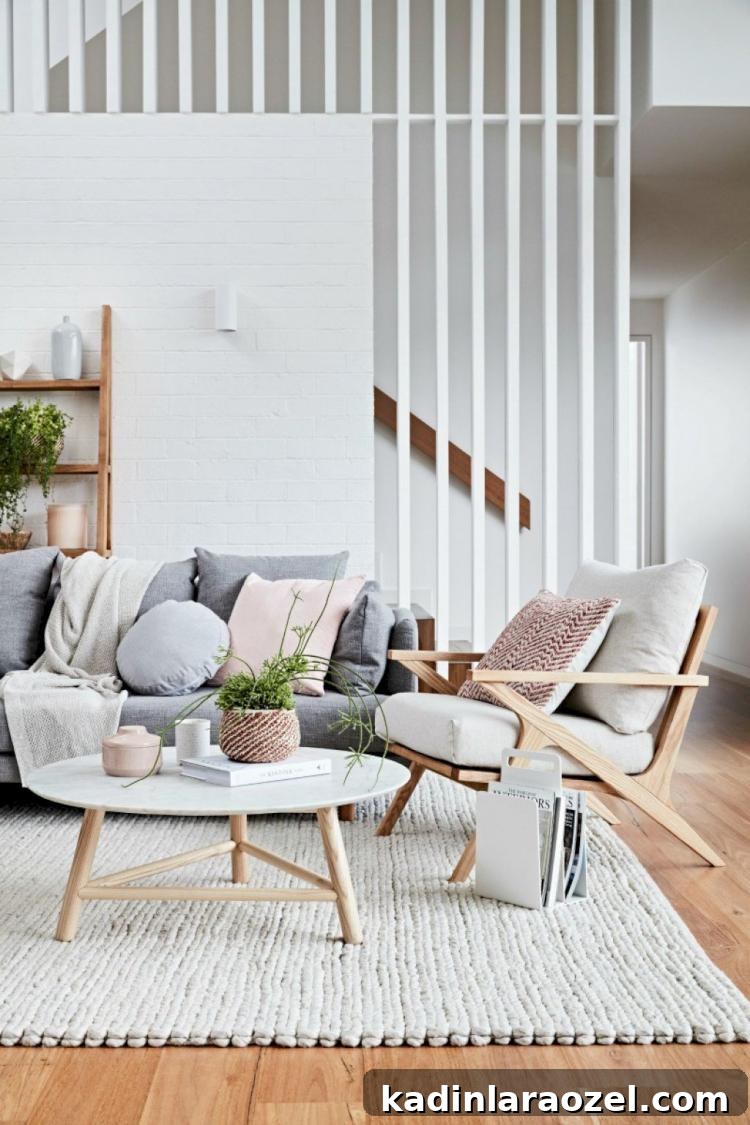
1. A light, Scandinavian approach uses a partial screen painted white to maintain wall space and usable surfaces while adding subtle depth and dimension. The white finish keeps the installation airy and unobtrusive, ideal for small or minimalist rooms where every surface counts.
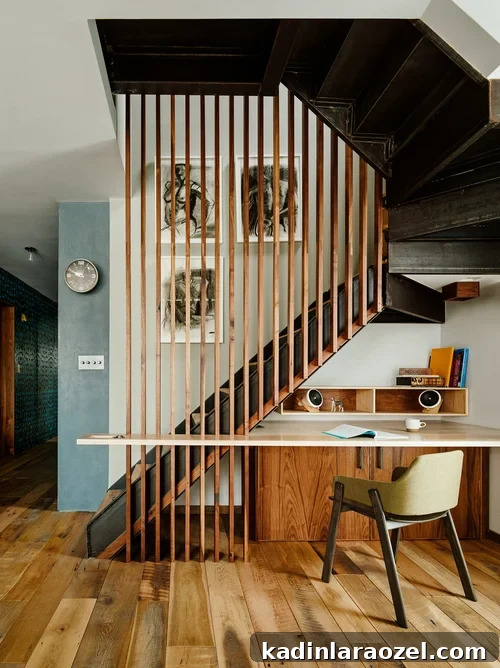
2. In compact apartments, a stained wood slatted screen can frame a small desk nook or living area without feeling overwhelming. The slats offer definition and privacy while still allowing light and sightlines to flow through the space. Layering artwork or plants behind the screen adds depth and interest.
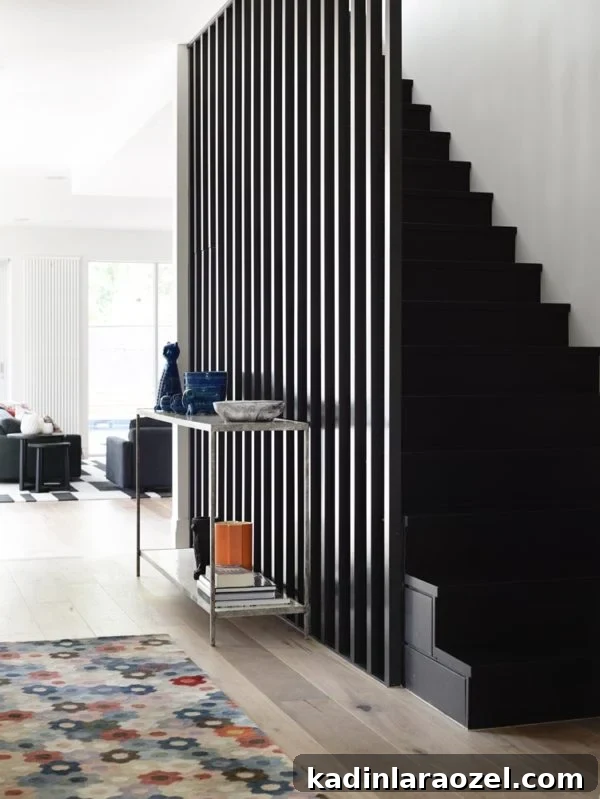
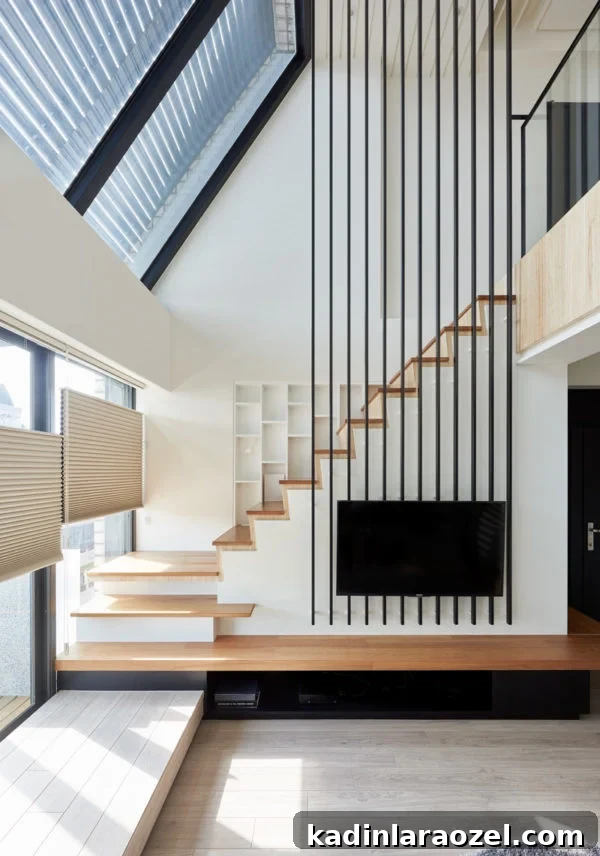
3. For high-contrast drama, paint the screen and stair stringers black against white walls. The stark graphic silhouette reads bold and contemporary, warming otherwise bare surfaces and giving the staircase real presence in the room.
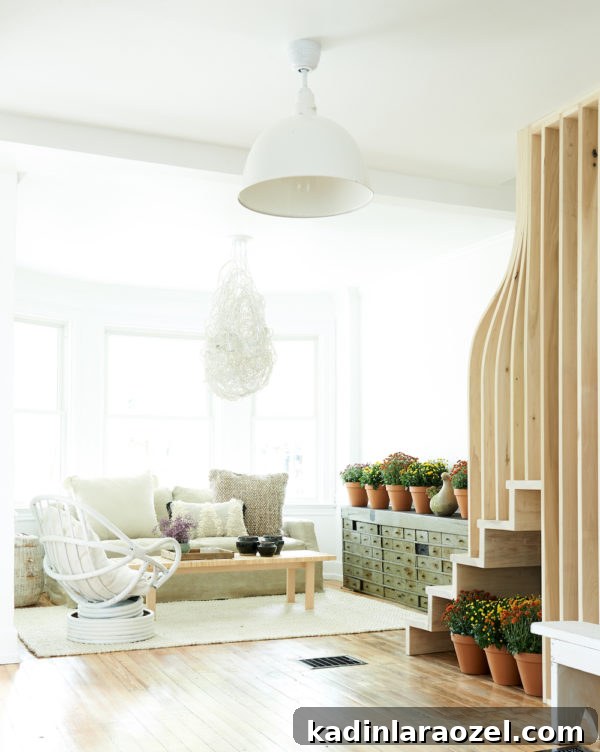
4. Custom millwork lets you explore more organic forms. A curvier wooden screen in natural wood tones softens sharp modern lines and highlights the craftsmanship of the installation. These custom pieces can feel sculptural—part furniture, part architecture.
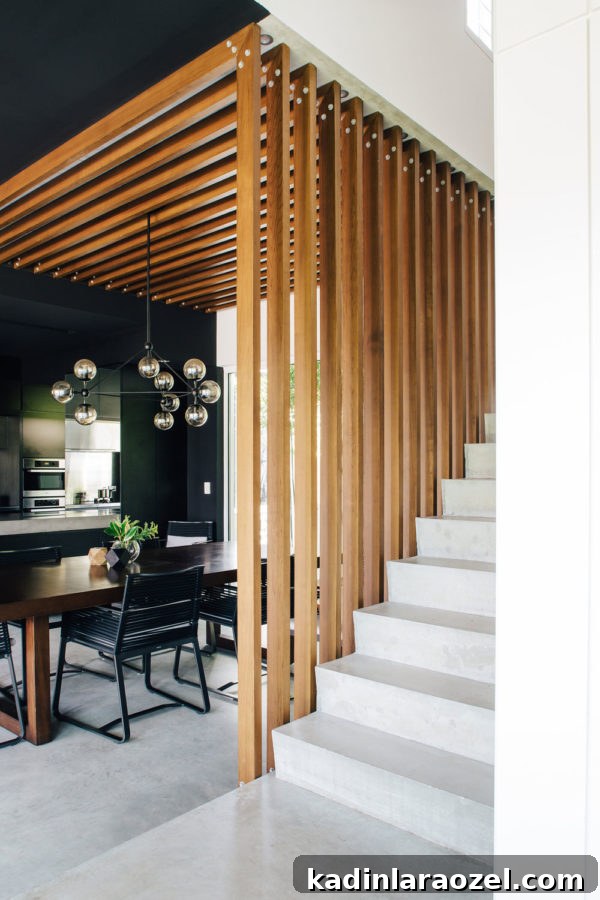
5. Some designs extend the slatted screen beyond the stairwell and up into an adjacent ceiling or dining area, creating a cohesive architectural feature that ties two rooms together. Extending the slats can help warm cold finishes like concrete floors and black walls while unifying multiple zones within a single scheme.
6. In homes with abundant natural light, a simple Asian-inspired slatted screen directs the eye upward toward loft spaces or skylights. The vertical emphasis draws attention to height and circulation, amplifying an already airy feeling without interrupting daylight paths.
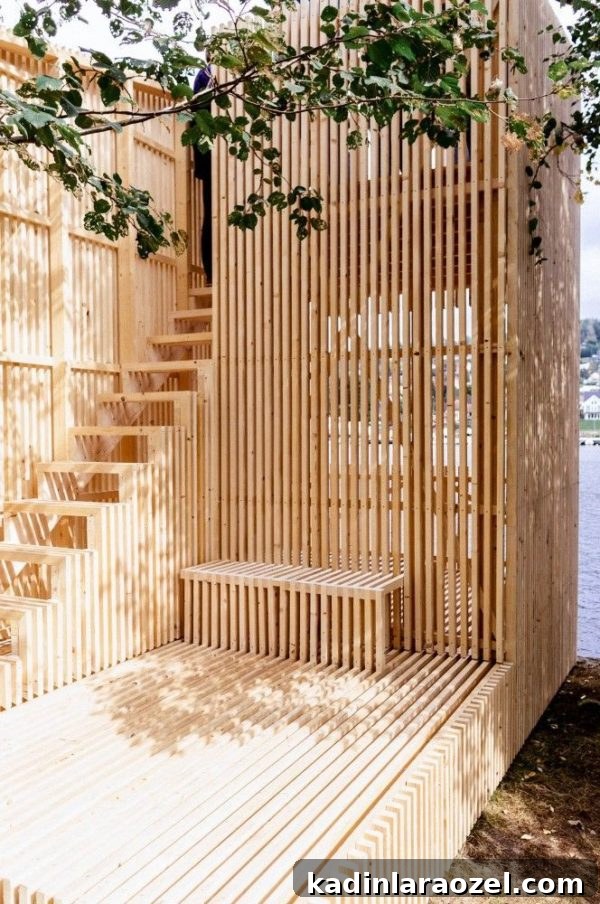
7. A more experimental take uses slatted partitions as an almost sculptural installation in an outdoor or semi-outdoor setting. Leaving the stair completely open while punctuating it with slatted planes emphasizes form over function and reads as an artful intervention—especially effective in creative or commercial spaces.
Benefits of wooden stair screens
- They provide a sense of separation without closing off spaces, preserving daylight and airflow.
- They create vertical rhythm and texture, turning a functional element into a design feature.
- They’re highly adaptable—different finishes, spacings, and profiles can suit many styles.
- They work in both small and large spaces, from compact apartments to open-plan family homes.
Design considerations
- Spacing and thickness of the fins determine privacy and openness; closer spacing reads more private, wider spacing feels more open.
- Finish choices—stained natural wood, painted neutrals, or bold black—change the visual weight and mood of the screen.
- Attachment and structural integration should meet local building codes and safety requirements; consult a professional for structural or code-related questions.
- Think about how the screen relates to surrounding elements: lighting, artwork, furniture placement, and sightlines all affect the final impact.
Whether you prefer minimal, sculptural, or high-contrast statements, the wooden stair screen is a flexible design move that upgrades a staircase from merely functional to intentionally beautiful. It’s a relatively simple way to add personality and architectural interest to a home while preserving light and openness.
What do you think of the wooden stair-screen trend? Too modern for your taste, or the perfect balance of form and function?