Potholder Loom Weaving: DIY Projects and Techniques
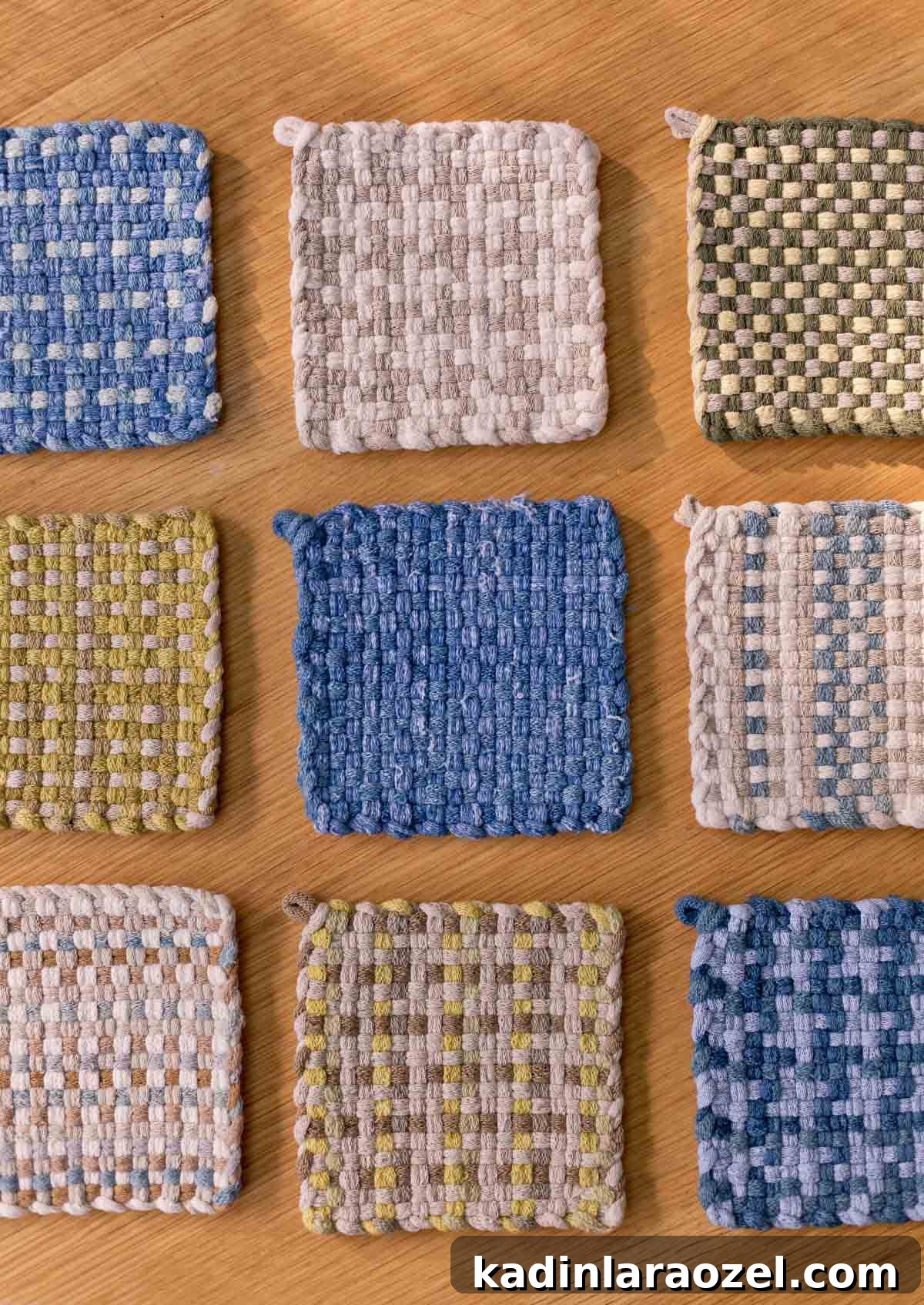
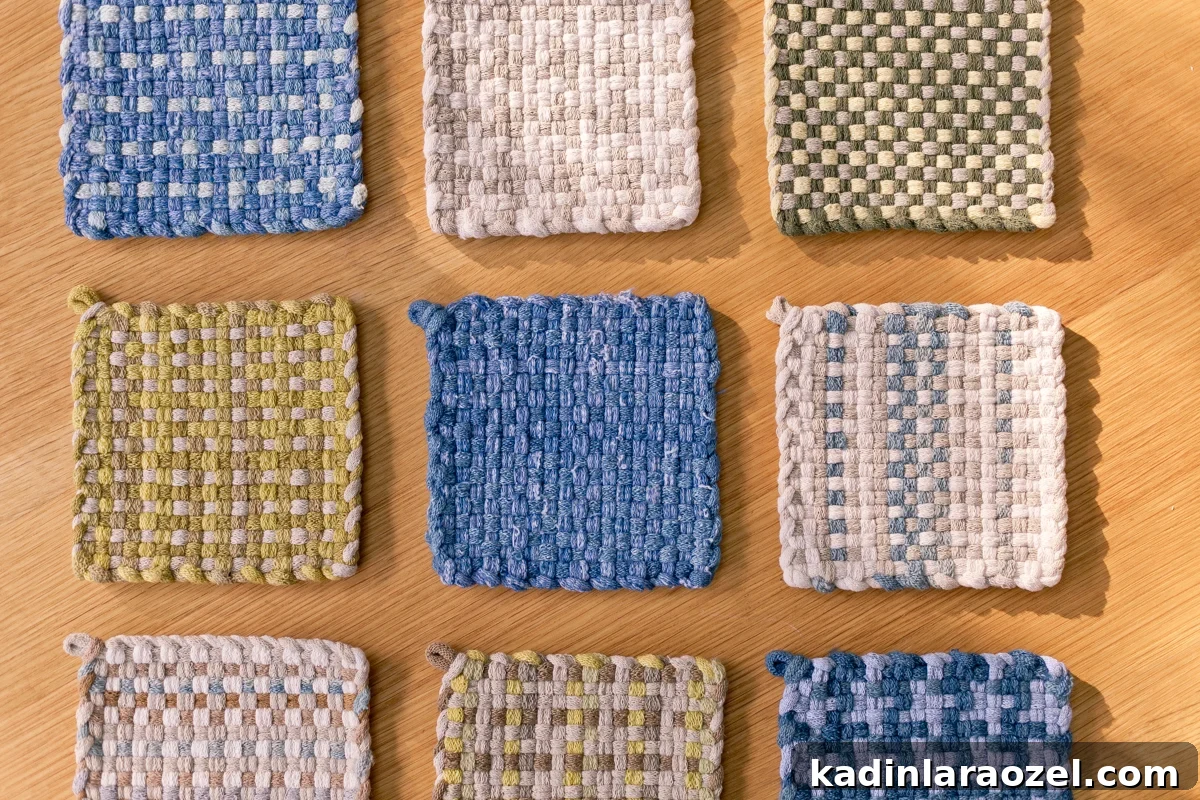
Potholder looms and the small weavings made on them have evolved far beyond the bright, polyester craft kits many of us remember from childhood. Today, they’re appreciated as a simple, modern way to create beautiful woven pieces — and they’re easy to learn.
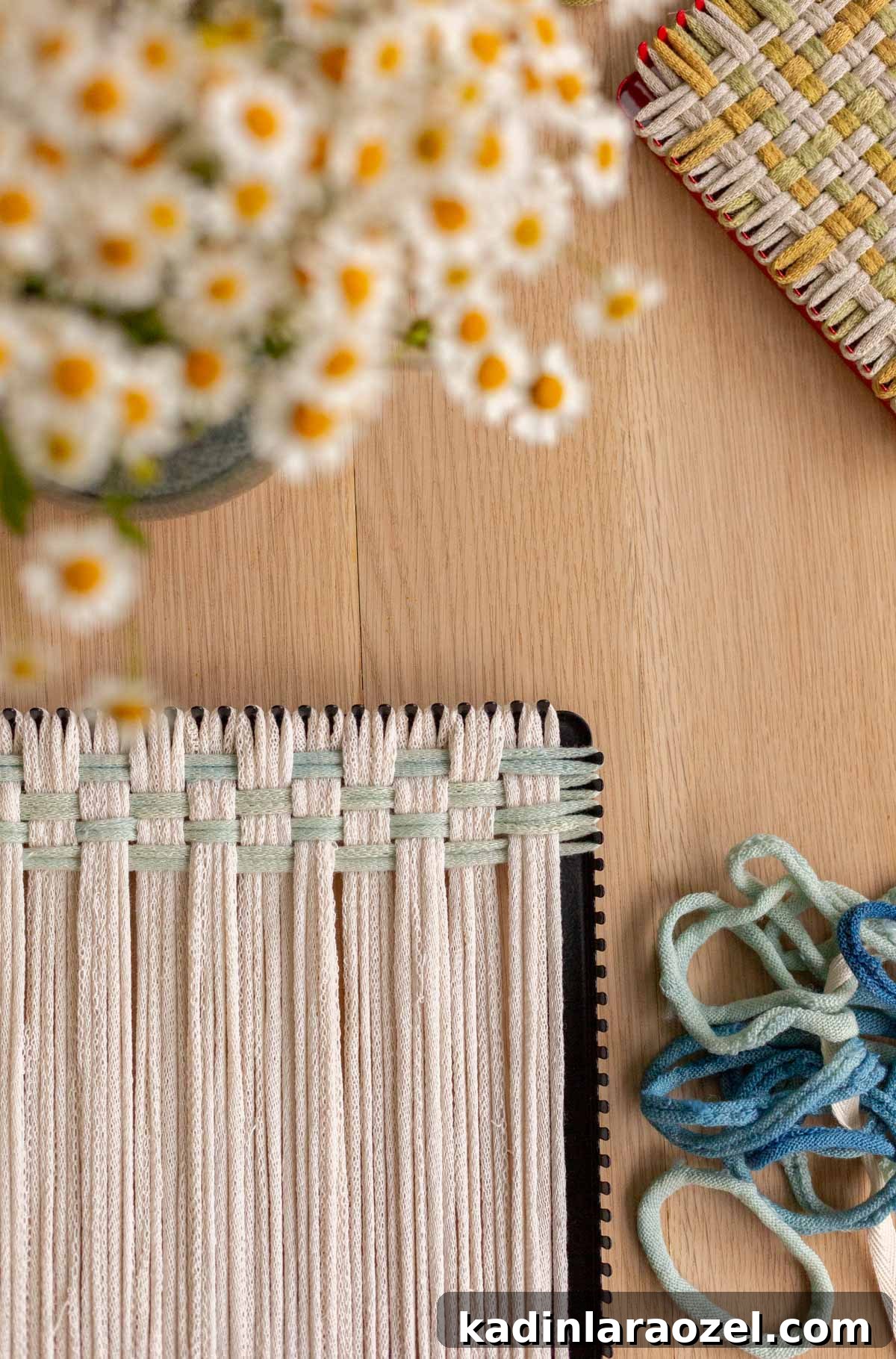
A year ago I attended a weaving workshop with a friend that focused on using a potholder loom to make small weavings. I became hooked immediately — the process felt meditative and relaxing, a perfect way to step away from stress for an hour or so. These small woven pieces are quick to finish and genuinely fun to make.
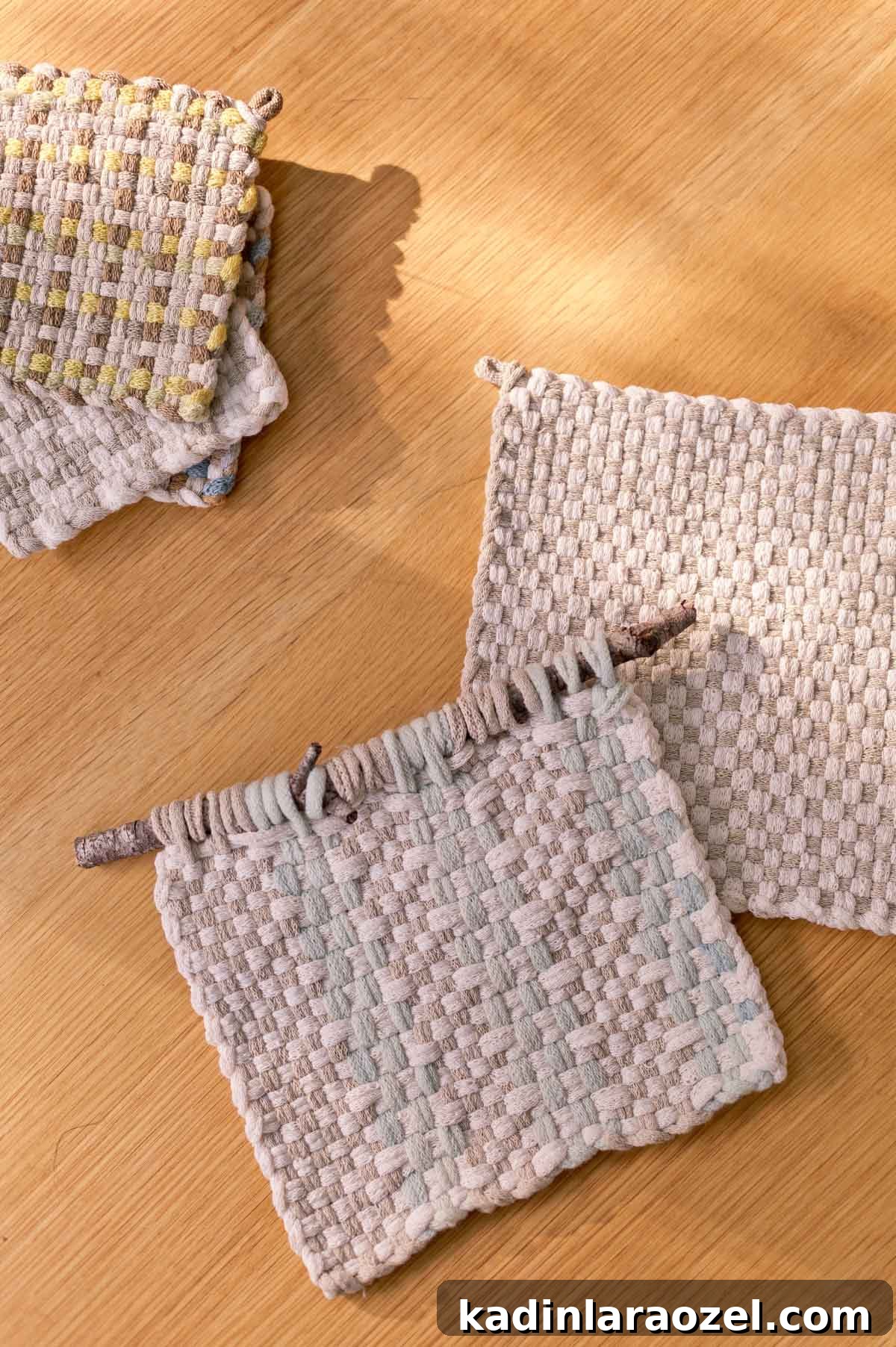
There are many ways to customize them: hand-dyed loops, knotting, incorporating branches, mixing yarns, and more. Lately, as I’ve started making ceramics, I’ve thought about weaving small ceramic elements into the loops. The possibilities are endless.
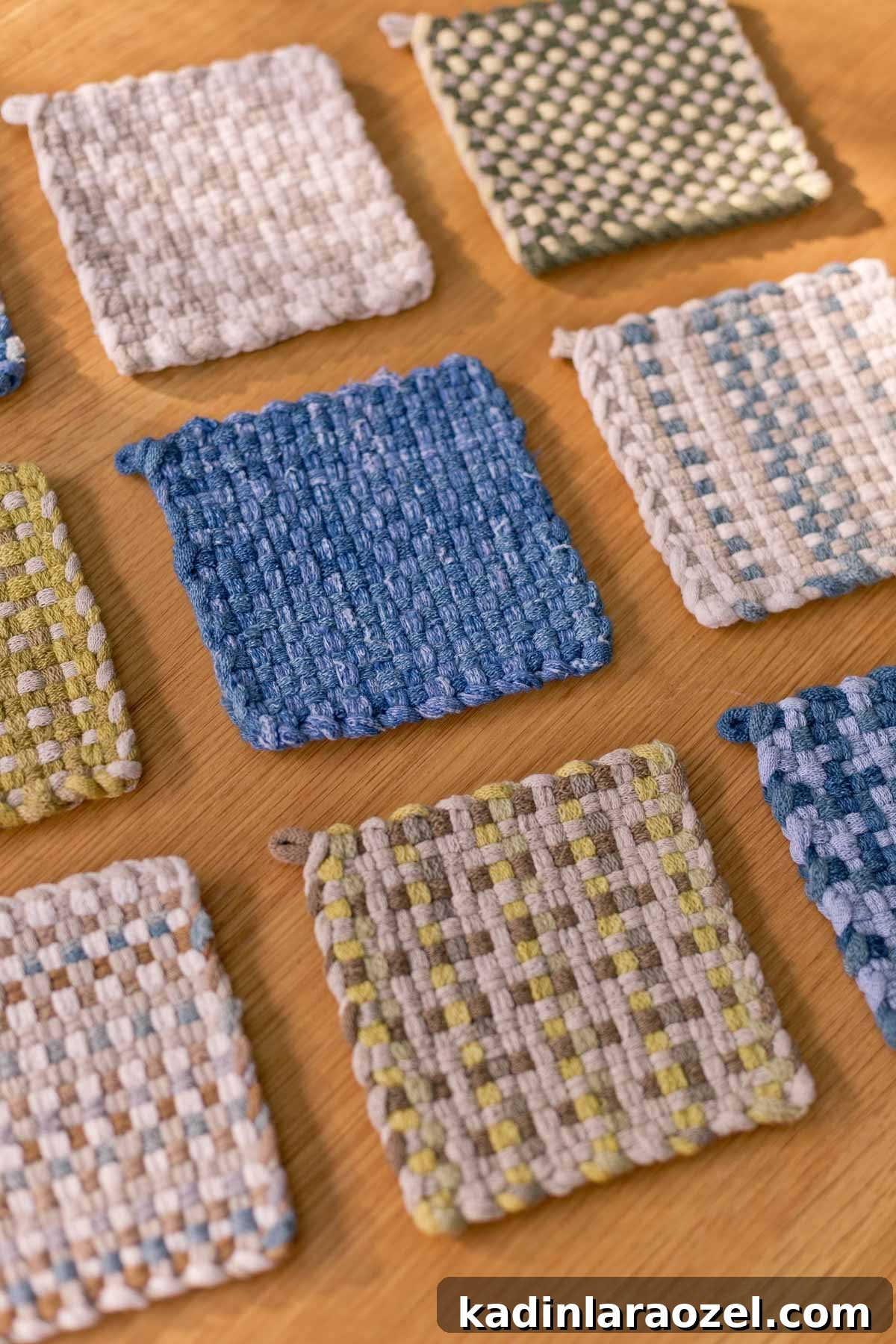
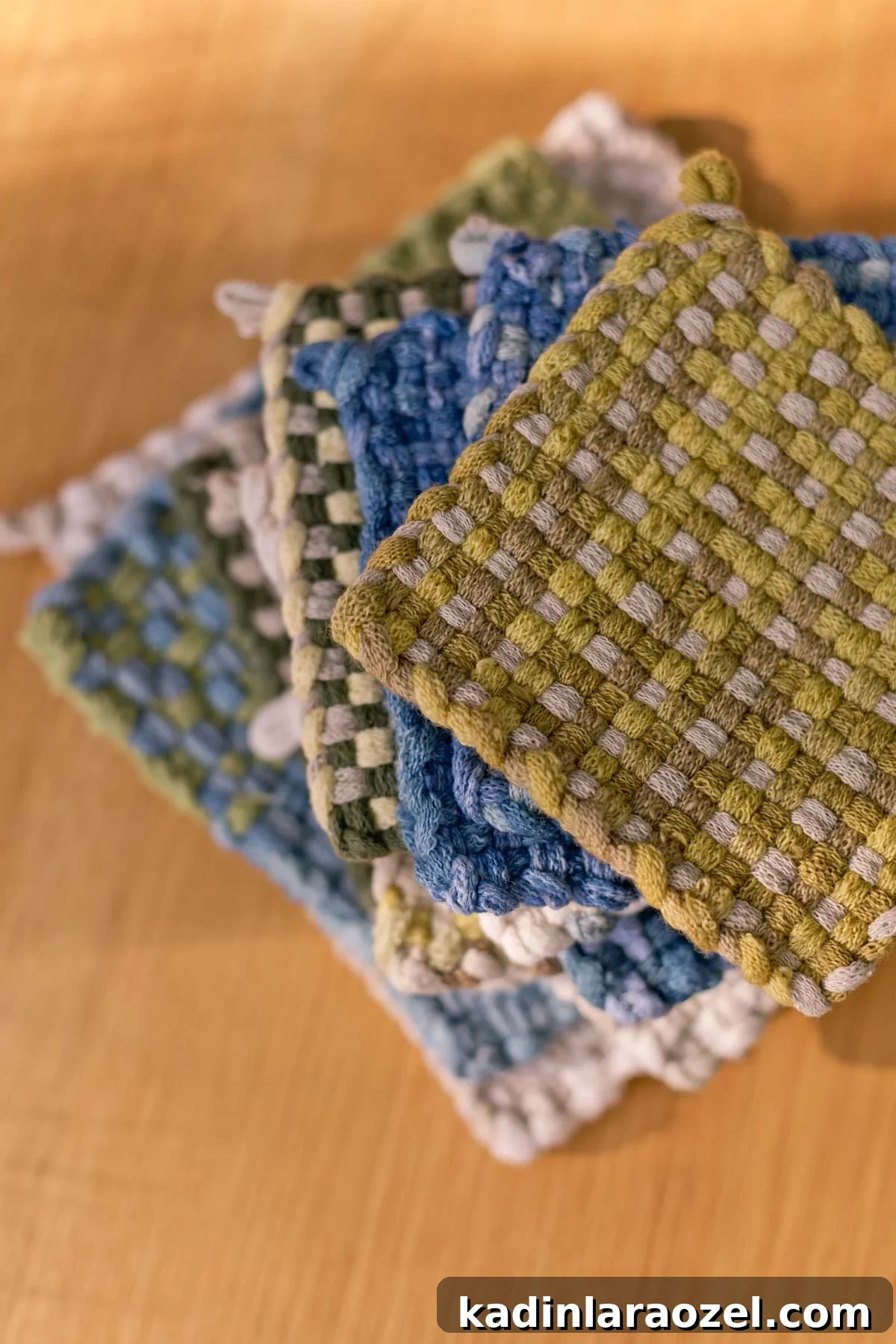
Although these pieces are created on a potholder loom, they aren’t the garish kids’ potholders you might imagine. Many makers treat them as small works of art — suitable for hanging on the wall or displaying as textured accents. Of course, they can also be used as functional potholders, but they can be much more than that.
If you’re after a simple, elevated craft to try, you’ll be pleased to know you only need two items to get started. That simplicity is part of the appeal.
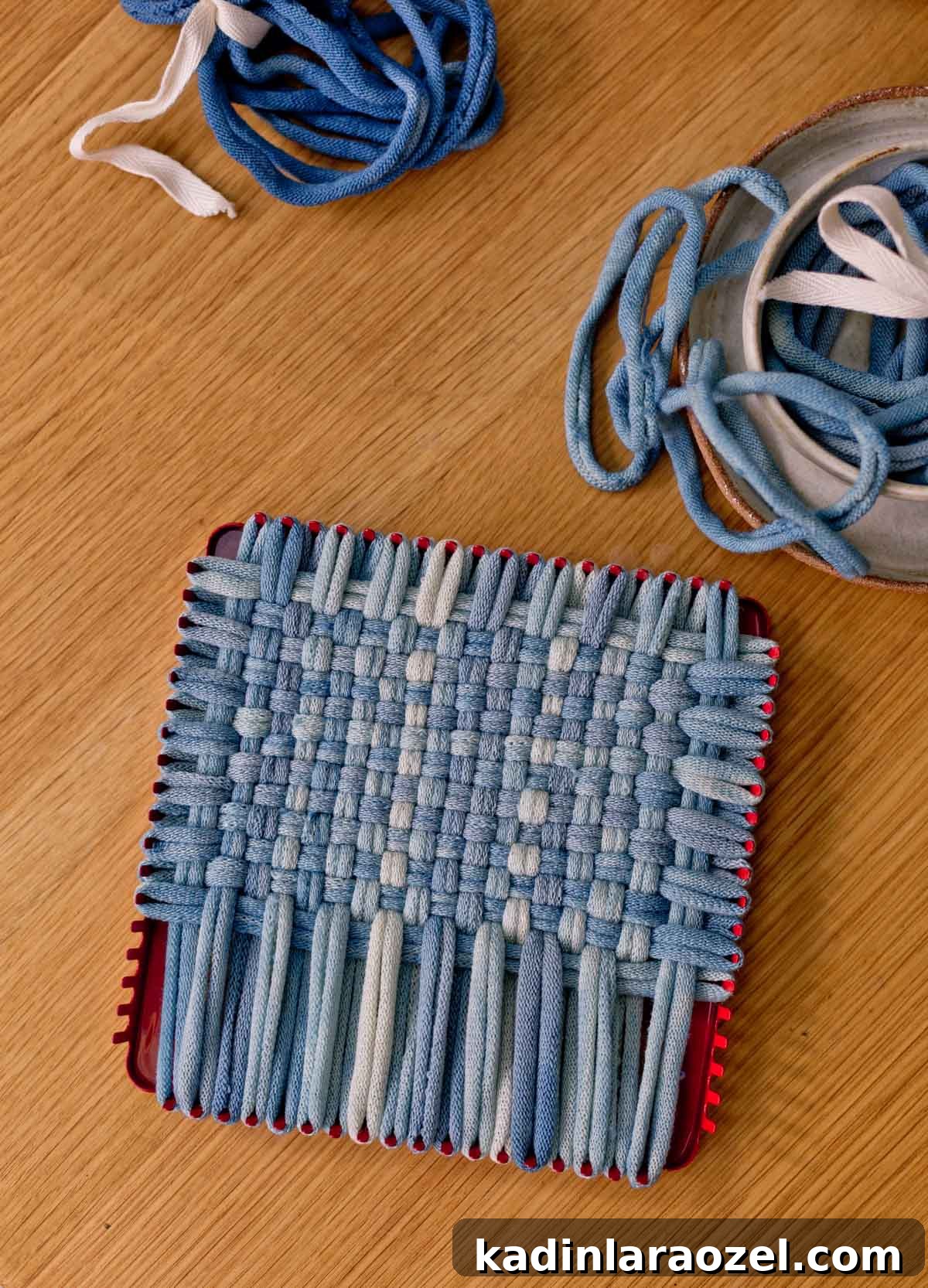
During cold months, a potholder loom is a perfect, low-effort way to keep your hands busy indoors. I learned basic techniques from an excellent artisan, Kate Kilmurray, who teaches online and sells her work in shops internationally. Learning from a skilled teacher can accelerate your progress if you want to explore more advanced textures and patterns.
What is a potholder loom?
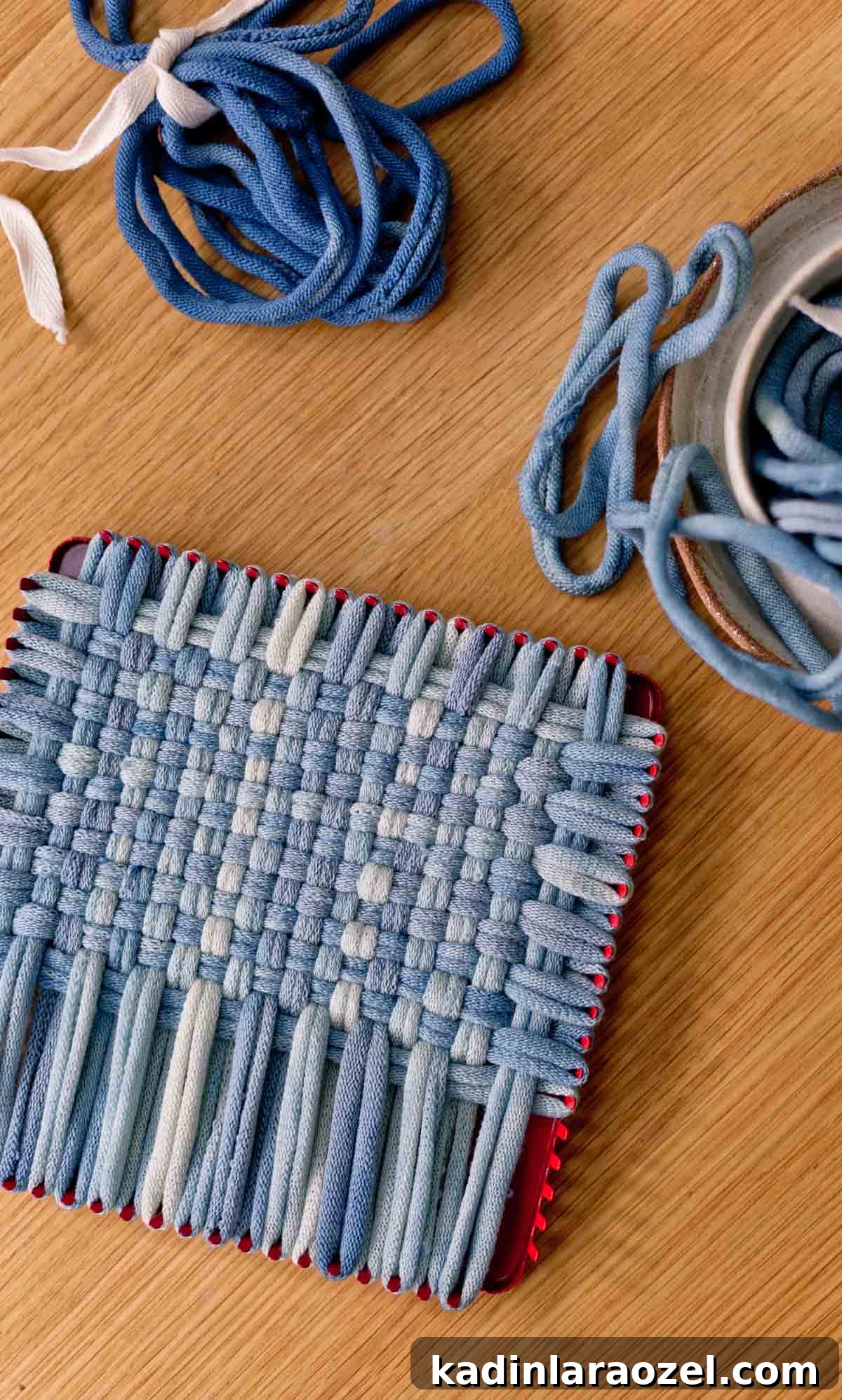
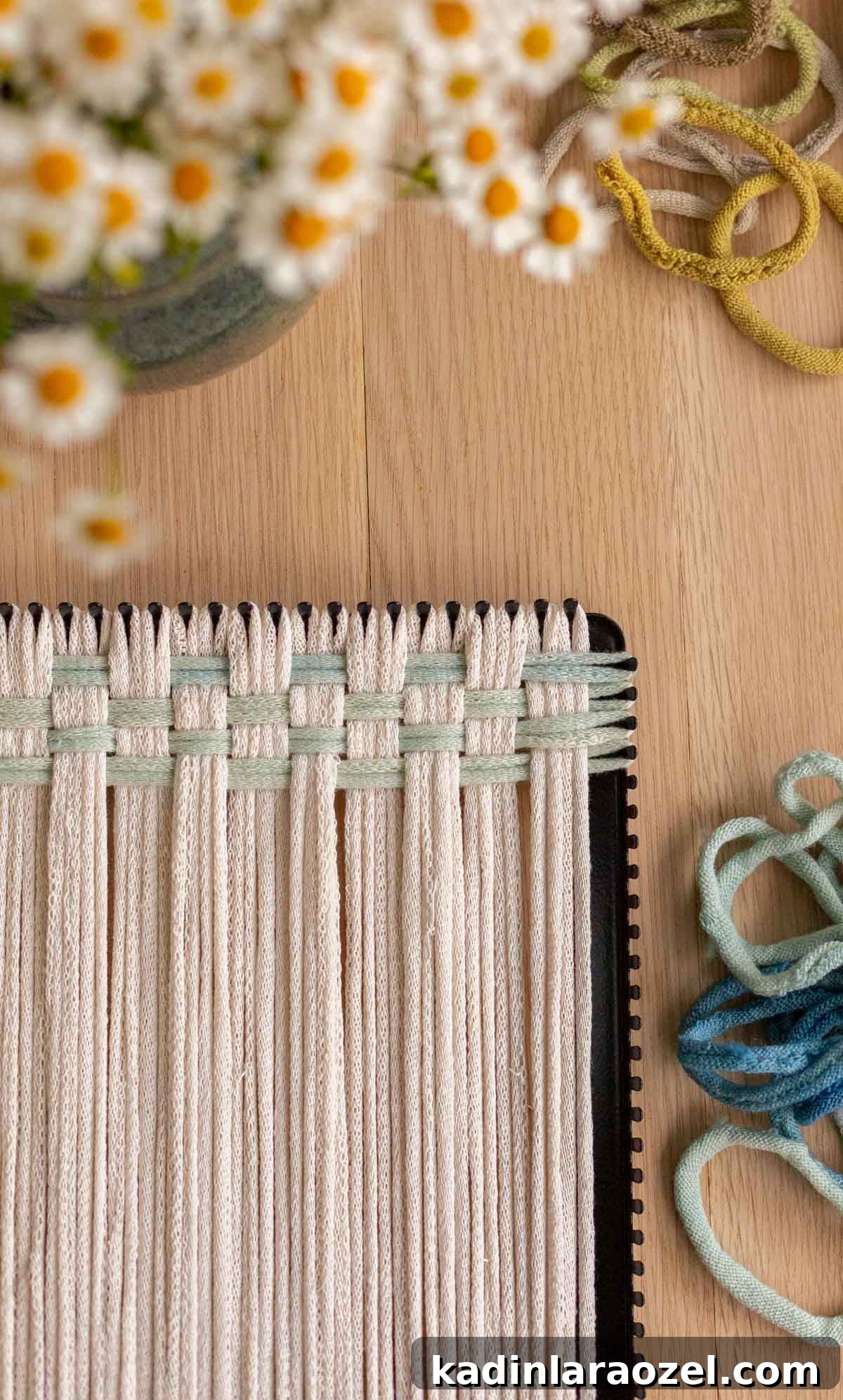
A potholder loom is a simple square frame with pegs (or pins) along all four sides, designed for weaving small, square pieces. Loops of fabric, yarn, or pre-cut “loopers” are stretched across the pegs to form the warp, and then material is woven over and under to build the design. Loops and looms commonly come in two sizes: the 7-inch traditional size and the 10-inch pro size, with the 7-inch being the most widely used.
The history of the potholder loom
The potholder loom began as a practical way to reuse leftover hosiery and sock loops during the 1930s. Factories used short cut strips of material — called loopers — that would otherwise go to waste. Manufacturers began selling simple looms and bags of loops as craft kits for homemakers, creating a new use for the factory remnants while opening a small retail market for the materials.
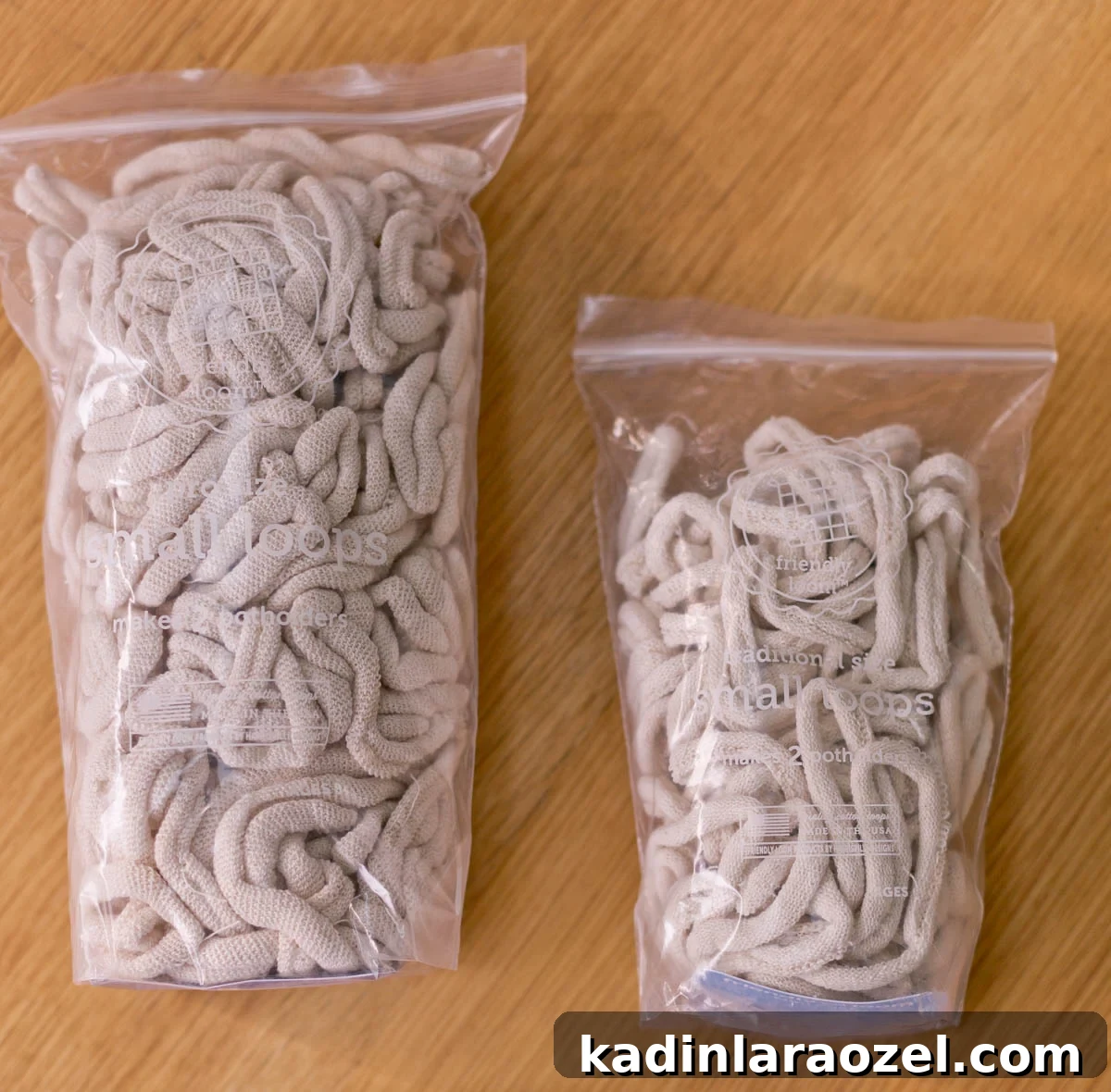
*The photo above shows pro-size loops on the left and traditional-size loops on the right.
Are there different sizes of looms for potholders?
Yes. Potholder looms typically come in two sizes: a 7×7 inch “traditional” loom and a 10×10 inch “pro” loom. The smaller 7-inch loom is the traditional and most commonly used option.
What size will the final weavings be?
Finished dimensions vary by loom. On a 7×7 traditional loom you’ll usually end up with a roughly 6×6 inch woven square. On a 10×10 pro loom, the finished piece is often closer to 8×8 inches, depending on the materials and how tightly you weave.
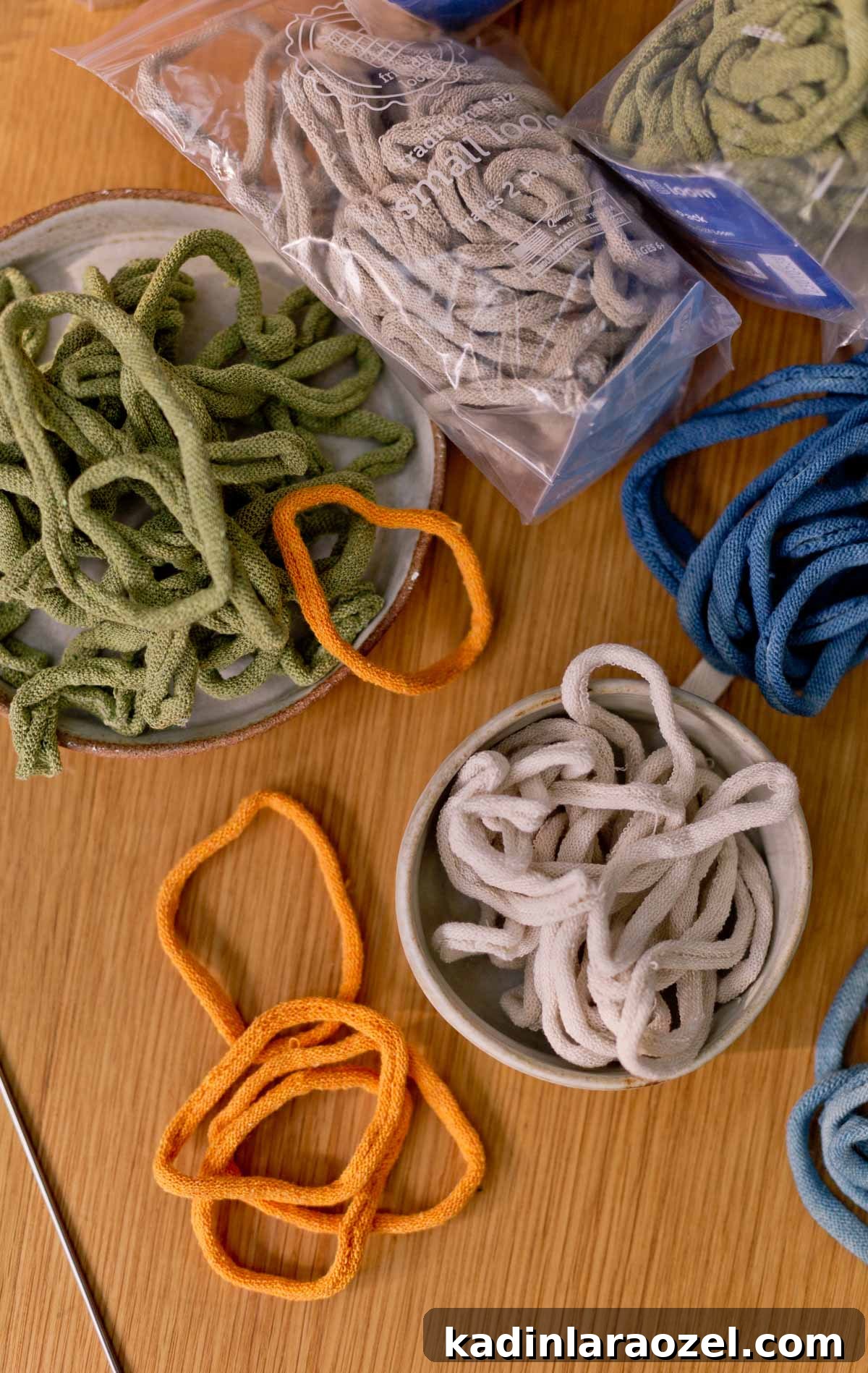
Sources for weaving loops
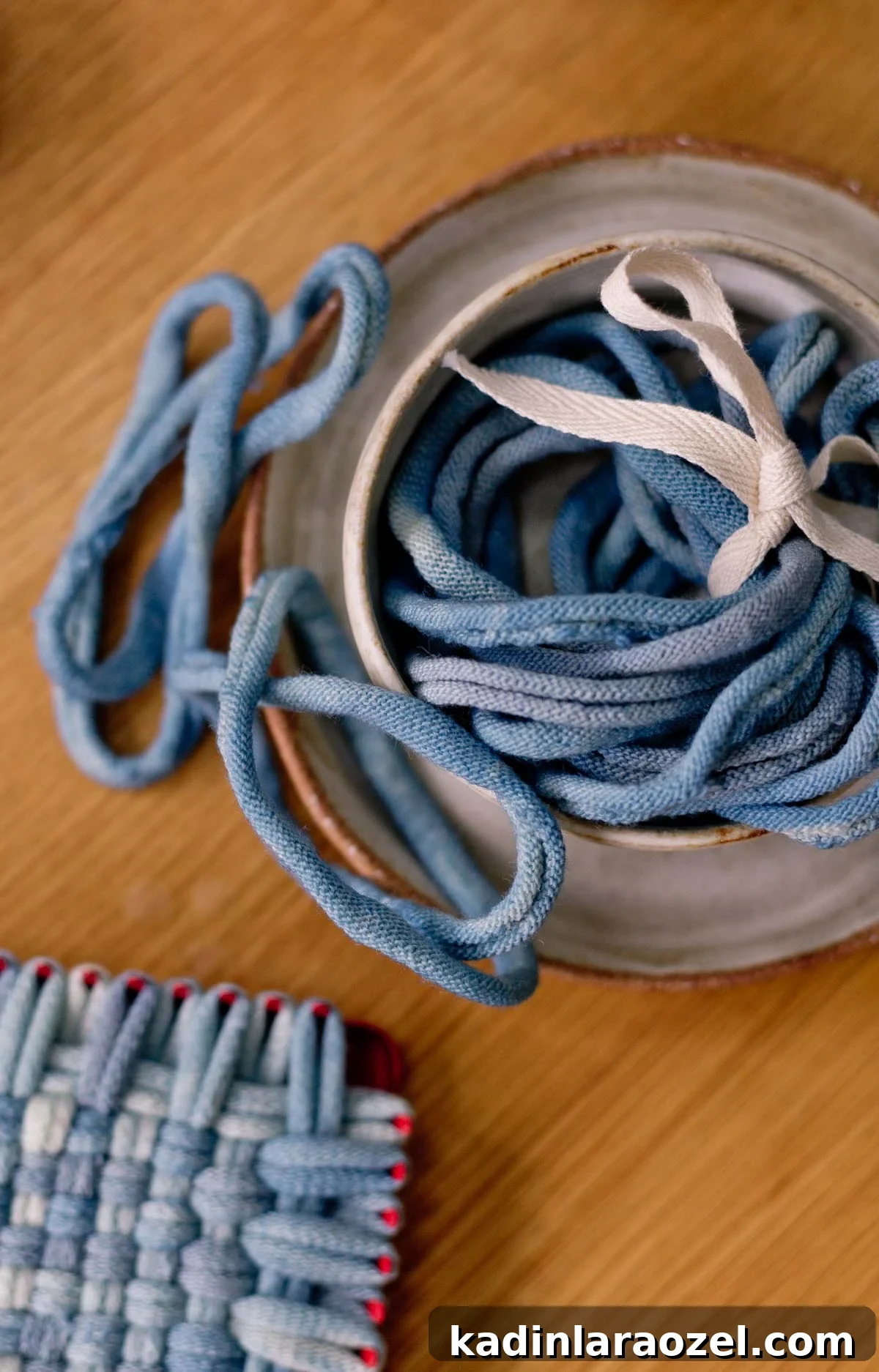
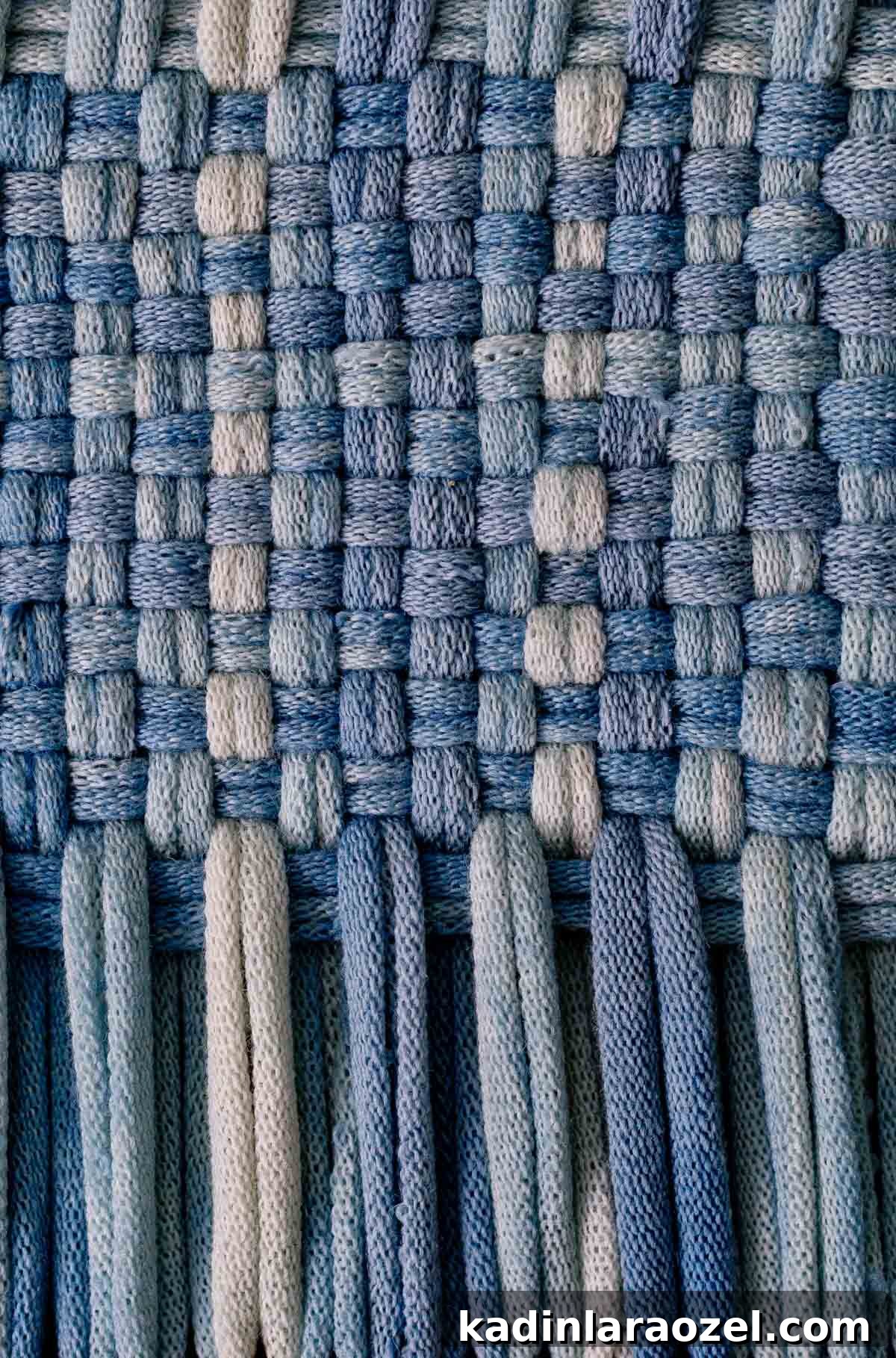
The type of loop material you choose will have a huge impact on the final look and feel of your piece. Options include cotton, wool, recycled fibers, and unique hand-dyed loops. Many independent fiber sellers and craft shops stock a variety of loops, from budget-friendly recycled options to premium hand-dyed selections. Choosing different textures and weights lets you experiment with density, stitch definition, and overall aesthetic.
Loop sizes
Loop sizes correspond to the loom size: traditional loops fit a 7-inch loom and pro loops fit a 10-inch loom. Make sure you select loops compatible with your loom for the best fit and finished dimensions.
Potholder loom patterns
There are countless potholder patterns available in print and online. Free digital pattern tools can be especially useful for planning color combinations and layout before you start weaving. Pattern planners let you preview designs and switch colors quickly, which helps you make confident design choices before cutting any loops.
Should I buy a metal loom or a plastic one?
While potholder looms are made from plastic, metal, or wood, plastic looms are often less durable. Metal and wooden looms tend to last longer and feel sturdier in use. A metal traditional loom is affordable and reliable — a tool you can use for years. If you prefer a warmer, natural look, a wooden loom is also an excellent choice. For longevity, avoid inexpensive plastic looms when possible.
Do you have to use the hook that comes with the loom?
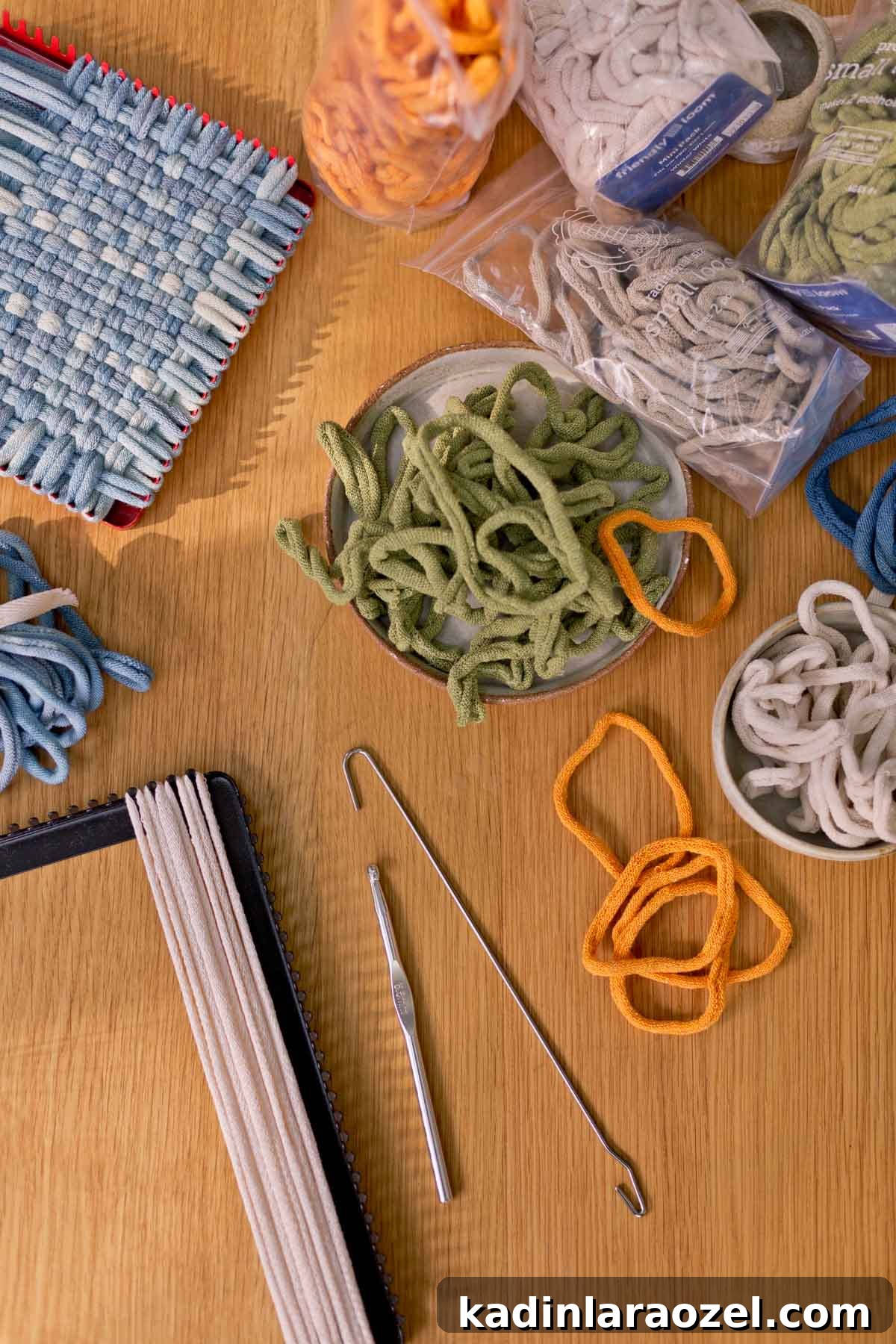
No. Many makers prefer using their hands to push loops into place and weave, which can feel more tactile and less fussy. The small metal or plastic hook included with many kits is useful for pulling loops or adjusting tight spots, but it’s a matter of personal preference rather than necessity.
Books and resources on potholder weaving
- Potholder Loom Designs: 140 Colorful Patterns — a collection of classic patterns and ideas.
- Artful Twill Weaving with Loops: Endless Possibilities — techniques for creating varied woven effects.
- Radical Potholder Weaving — inspiration and techniques to plan your own designs.
More weaving ideas
- Try making a simple homemade loom to explore larger weaving projects.
- Experiment with small woven wall hangings built from potholder-sized studies and expanded into larger pieces.
- Collect DIY art ideas that incorporate weaving as a textured element in home décor.
—
Note: This post may contain affiliate links. A small commission may be earned when purchases are made through those links.