Create a Bold Geometric DIY Studio Mural: Step-by-Step Guide
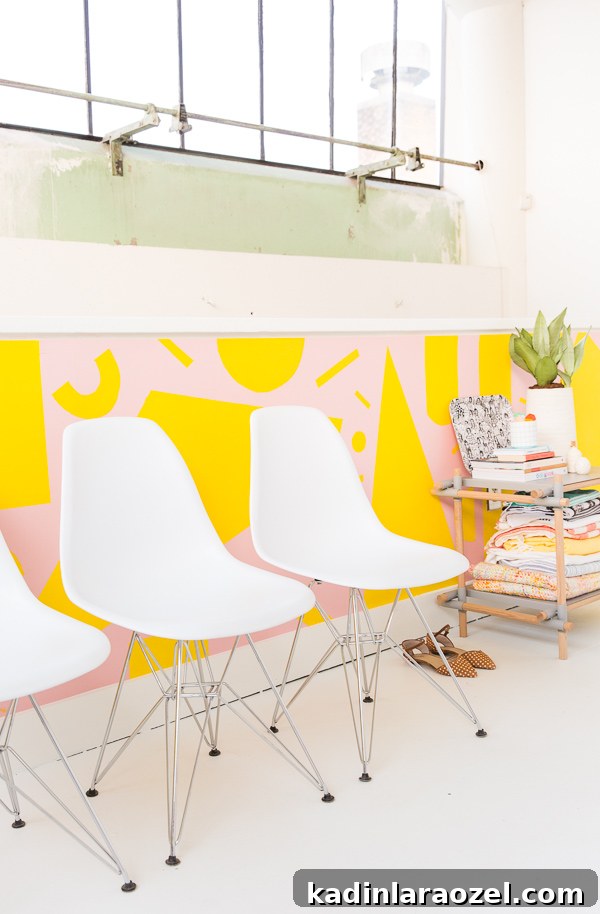
After spending several months in the new studio, I’m finally tackling larger projects I’ve been planning since the move. My original idea was to keep the space light and mostly white for shooting, but after living here a while, a few areas clearly needed pops of color to bring them to life.
To help with that, I partnered with 3M and their ScotchBlue™ Pre-Taped Painter’s Plastic. Over the next few months I’ll be sharing a series of color-focused projects; this post is the first in that series.
I’ve been inspired by geometric patterns and murals I’ve seen lately, so I decided to paint a bold, geometric-style mural on the upstairs half wall. It would also work beautifully in an entryway, hallway, or landing—no half wall required. The plan was partly pre-designed and partly improvised, and the whole process is very achievable for anyone with basic painting tools and a little time. Below are the materials and step-by-step instructions I used to create this colorful mural.
Materials
- ScotchBlue™ Pre-Taped Painter’s Plastic to protect baseboards and floors from splatters and drips
- ScotchBlue™ Delicate Surfaces Painter’s Tape (for taping on freshly painted walls and delicate surfaces)
- Damp cloth for cleaning baseboards and wall edges, if needed
- Screwdriver for removing outlet and switch plates, if needed
- Paint roller
- Paint brush (I recommend a 2-inch short-handle brush for detail work)
- Flat interior paint in two coordinating colors
- Paper, pencil, and scissors for optional stencils or templates
Note: Follow all package instructions on the ScotchBlue™ Painter’s Plastic for proper surface preparation, adhesion, and removal.
Instructions
1. Start by cleaning baseboards and the lower edge of the wall with a damp cloth to remove dust and grime. Remove outlet and switch plates with a screwdriver so you can paint cleanly around those openings.
2. When the surfaces are dry, apply ScotchBlue™ Pre-Taped Painter’s Plastic along the baseboards and flooring the same way you would apply painter’s tape. Place the tape as close to the wall edge as possible and press firmly along the tape to ensure a tight seal. Cut the roll with the built-in blade and unfold the plastic to protect the baseboards and floor.
I also used the Painter’s Plastic to protect the top molding where there’s a slight overhang. It saved me from having to buy a separate drop cloth and kept paint off the floors and trim—handy when paint is an expense you don’t want to waste.
Tip: For additional masking advice, check the “How to Mask for Painting” resources from ScotchBlue.
3. Paint the wall a solid base color using a roller for the main surface and a brush for edges and trim. Apply a second coat if needed following the paint manufacturer’s recommended drying times. Allow the paint to cure for 24 hours before taping for the pattern so the base coat won’t lift.
4. After the base coat is fully dry, use ScotchBlue™ Delicate Surfaces Painter’s Tape to mark out large geometric shapes across the wall. This tape is formulated for delicate or freshly painted surfaces and comes in several widths, which helps when creating varied shapes. Press the tape down firmly—use a putty knife on very smooth surfaces if you prefer—to secure clean edges.
Step back periodically to view the composition as a whole. It’s easier to adjust the taped design now than to repaint later, so remove and reapply tape if a shape doesn’t look right.
5. With the pattern taped, paint the exposed areas using your second paint color. A roller works well for larger sections and a brush handles corners and smaller shapes. Allow paint to dry, and add a second coat if required for full coverage.
6. While paint dries, consider adding smaller, organic shapes with homemade stencils. I cut shapes from heavy paper—circles, half-circles, and freehand forms—then taped them to the wall to try placement before tracing with a pencil and filling in with a brush. This optional step softens the geometric pattern and adds visual interest.
Taping the paper shapes before tracing helps ensure you’re happy with their placement before committing to paint.
7. When all paint is dry, remove the tape and painter’s plastic. Start by peeling the painter’s tape back slowly at a 45-degree angle and pull it against itself to reveal crisp lines. Take your time to avoid any chipping or tearing along the edges.
8. Remove the ScotchBlue™ Pre-Taped Painter’s Plastic the same way. If you don’t get to this step immediately, the product can be removed cleanly up to 14 days after painting, so there’s flexibility in your timing.
Photography Amelia Tatnall + Brittni Mehlhoff
If you were to paint a mural like this in your home, what colors would you choose?
—
This project was completed in partnership with 3M. All opinions are my own, and I selected the additional materials used. Thank you for supporting the brands that help keep creative work like this possible.