How to Sew an Extra-Long Lumbar Pillow for Sofa and Bed

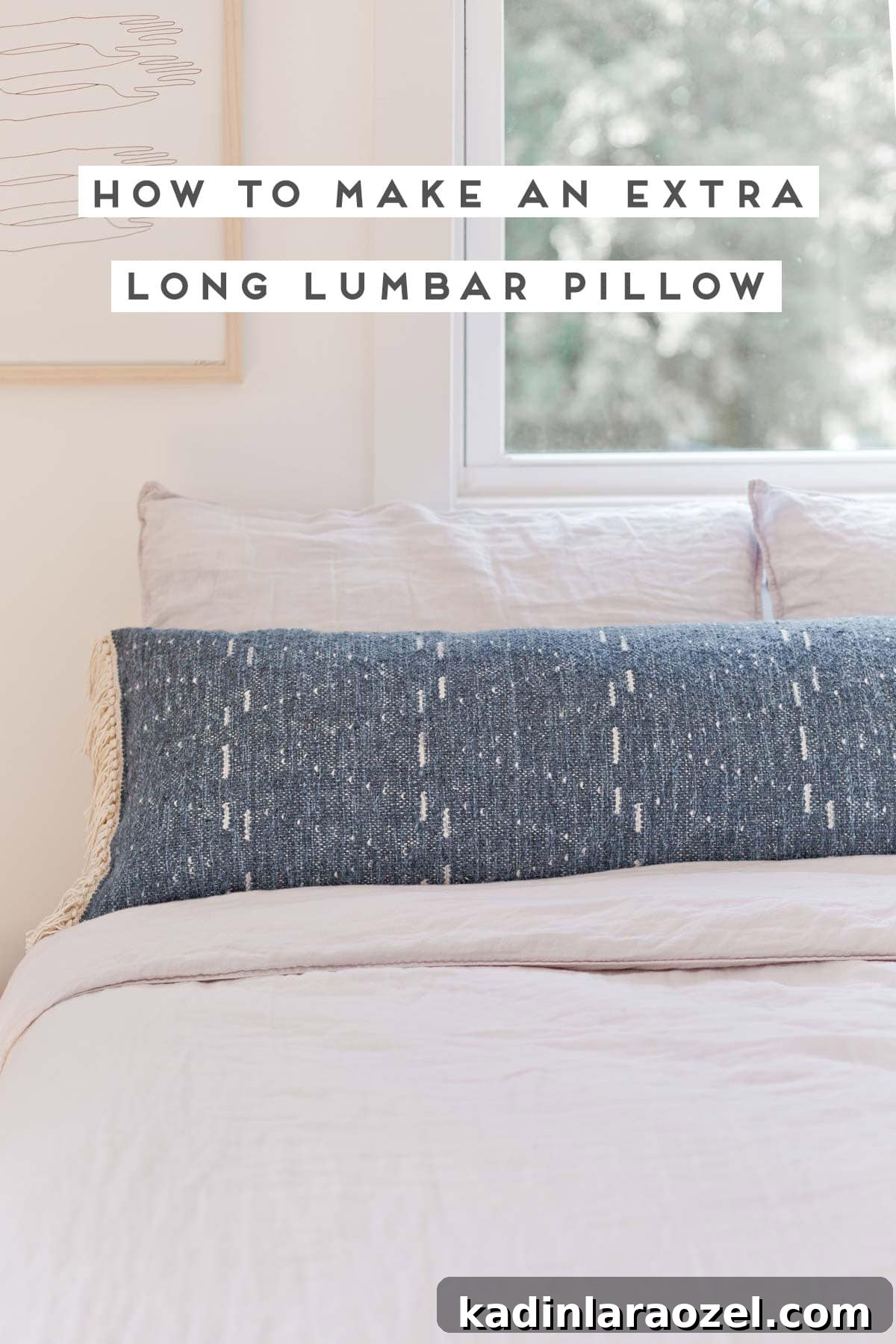
How we made an extra-long lumbar pillow for our guest bedroom for a fraction of the price of the tempting ones you’ve seen online.
Those extra-long lumbar pillows everyone is obsessed with—often hundreds of dollars on boutique decor sites—are gorgeous, but expensive. We made a similar one for roughly half the cost, and the main material might surprise you. Hint: it’s not a conventional upholstery fabric.
Curious to guess the material before you read on? You might be surprised.
This DIY lumbar pillow makes a striking bed accent and also works beautifully across a long sofa or seating area. It would also be a cozy addition to a reading nook or window seat.
What is the pillow made from?
It may sound odd at first, but the pillow is made from a woven flatweave rug.
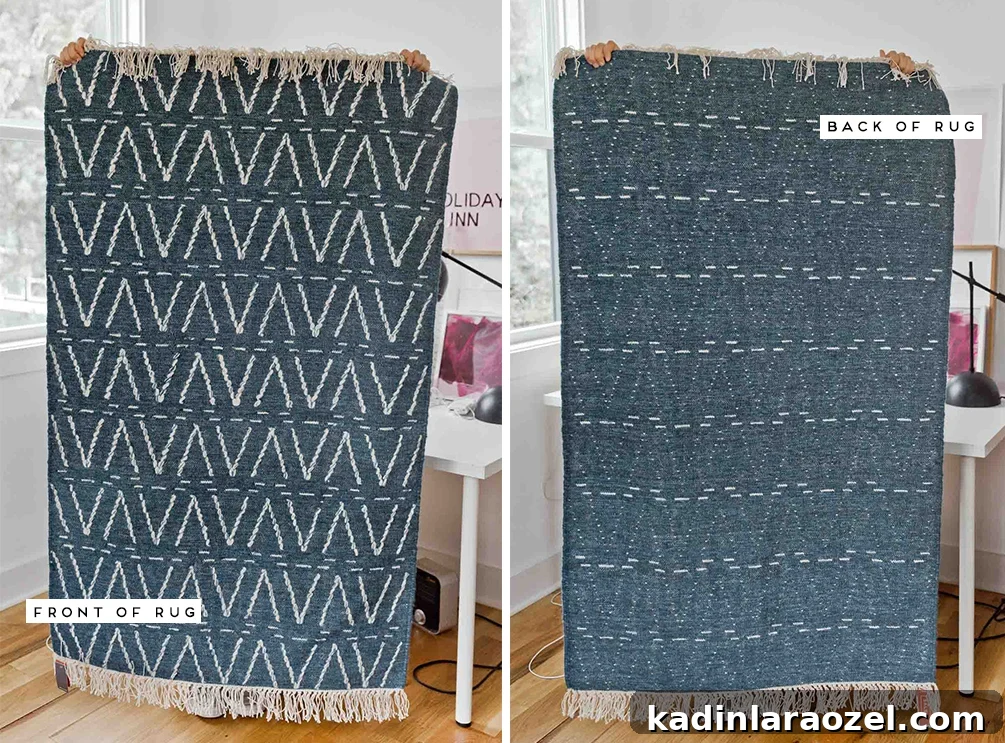
Yes—a rug transformed into a pillow. The reasons for choosing a flatweave rug were practical and aesthetic:
- Size: this rug gave us a super-long length—about five feet—which is ideal for an extra-long lumbar pillow.
- Texture and value: woven flatweave rugs have a luxe, Kilim-like look often seen in expensive pillow covers. I recently saw a cover priced at $208 (no insert) that was only cotton-backed, so the premium textile didn’t wrap fully around the pillow.
All materials for our pillow, including inserts, totaled under $100. If you find the right rug on sale you can spend even less. Another option to reduce cost is to cover only the front with the pricier weave and use an inexpensive cotton or canvas for the back.

How to Make an Extra-Long Lumbar Pillow
For this project I used the BACK of the sale rug because I preferred the subtler pattern there. When shopping flatweave rugs, check both sides—the patterns can vary and give you extra design choices. This particular 3×5 rug was on a deep in-store sale: 50% off, plus an extra 20% off, bringing the price down to $60 from $149.
A five-foot lumbar pillow suits a queen or king bed best due to its length. It can also double as a unique wall-mounted headboard for a full-sized bed: attach leather straps wrapped around each end of the pillow and secure the straps to the wall, similar to a DIY curtain rod setup.
Materials
- 3×5 woven flatweave rug
- Needle and thread (choose a thread color that matches the rug)
- Two 20×30 pillow inserts or one 20×60 insert*
- Large clips or clamps to hold layers while sewing
*I found a 20×54 insert as a close option, which is inexpensive. If you want the full 60 inches, two 20×30 inserts will fill the length evenly.
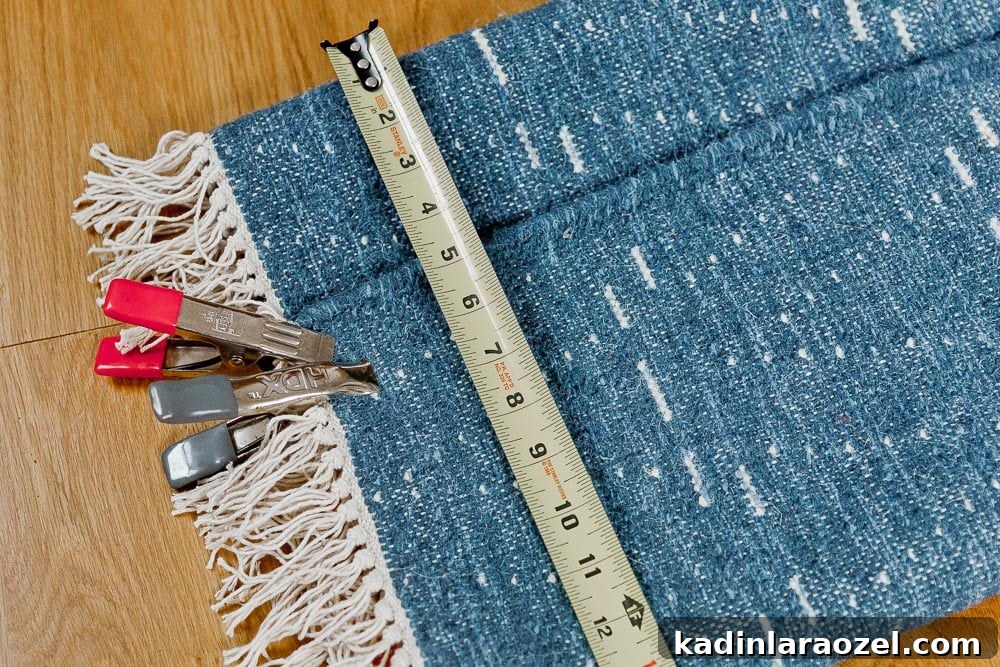
Step 1: Fold and clip the rug to the desired pillow depth.
Decide how deep you want the pillow; I folded the rug ends to about 14 inches each and overlapped them. In retrospect I might have folded to 12 inches—this is a matter of preference. Use clips or clamps to hold the folded edges in place while you sew; they help keep a straight line.
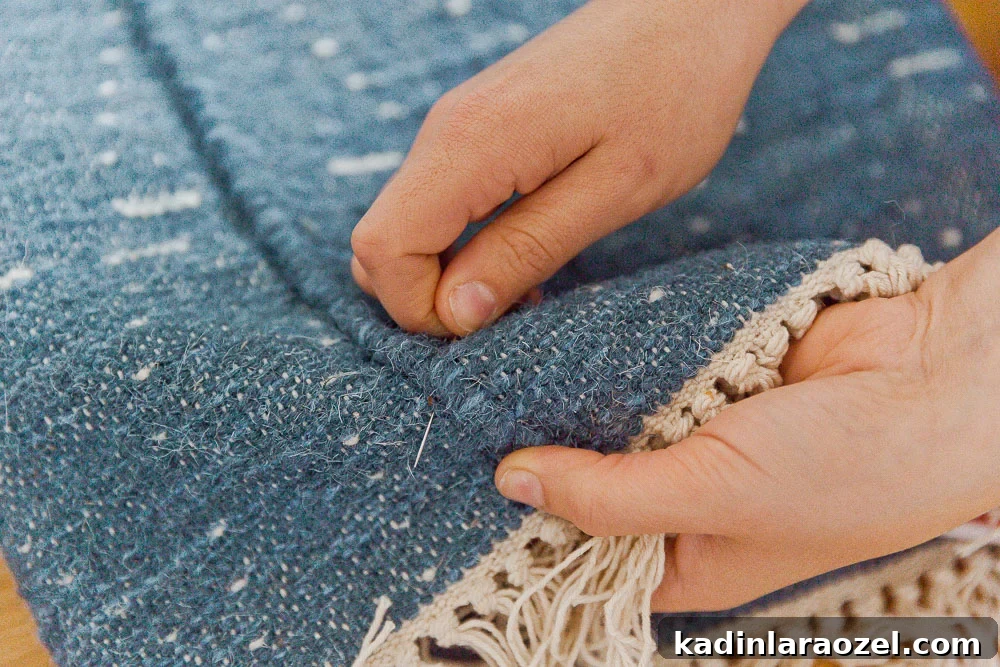
Step 2: Hand-stitch the length to make the pillow pocket.
Using an overhand (overcast) stitch, hand-sew along the length where the rug layers fold over to create a long pocket for the inserts.
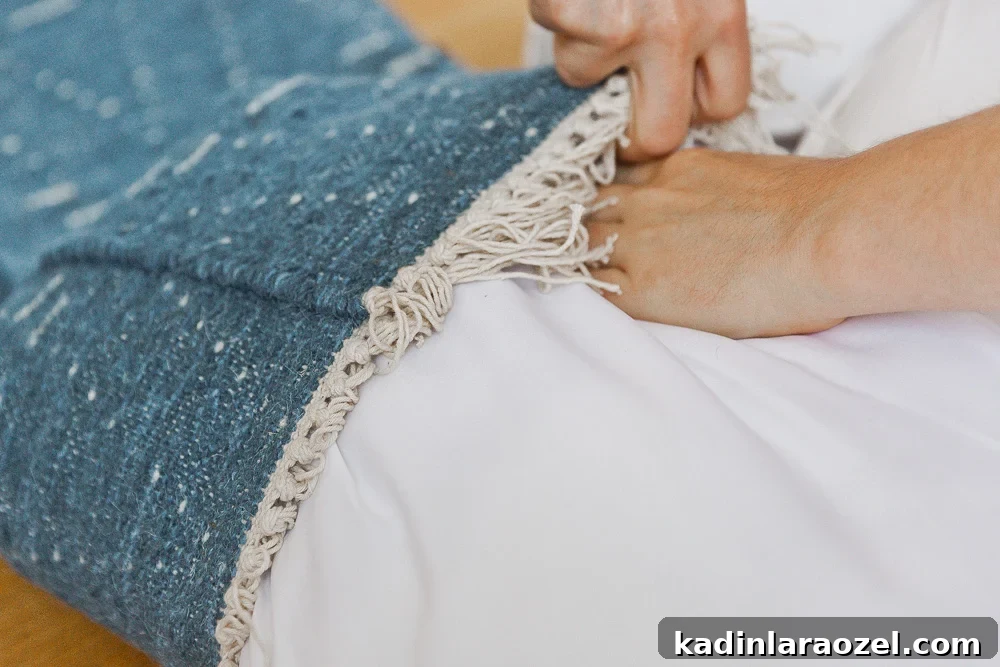
Step 3: Insert the pillow fills.
Stuff the pocket with two 20×30 inserts or a single long insert. I used two inserts I already had on hand. If you choose a slightly shorter single insert, fold or sew the sides in to match its length so the pillow forms neatly.
*If you use a smaller insert than the full length, tuck the rug sides in and sew them closer to the insert’s edge—or trim the material and then stitch—to avoid excess slack inside.
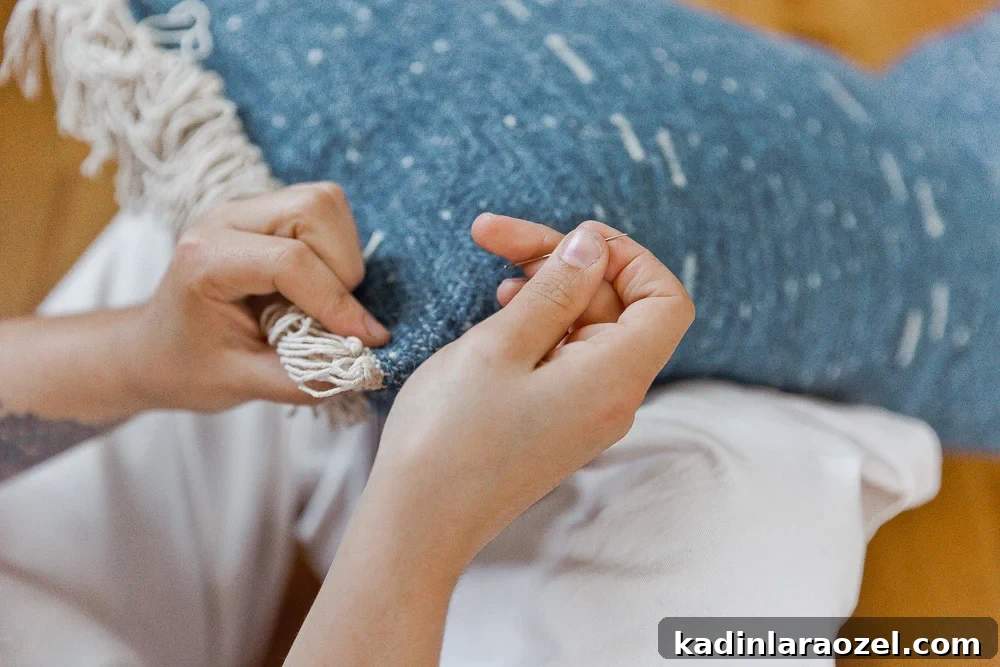
Step 4: Sew the ends closed with a basic stitch.
After the inserts are in place, sew the short ends closed with a simple stitch. If your rug has tassels, you can leave them visible for added detail or fold them inside before stitching. Avoid cutting tassels, since removing them can unravel the weave.

More pillow project ideas
Over the years I’ve made many pillows, and this extra-long lumbar is one of my favorites. If you’re looking for other DIY pillow inspiration, here are a few projects you might enjoy:
- Reversible mudcloth pillows for pattern and texture.
- Faux fur pillows for a plush, cozy accent.
- A giant monstera leaf pillow (and a smaller version) that’s great for a child’s room.
- A DIY circle pillow that instantly upgrades a chair or sofa.

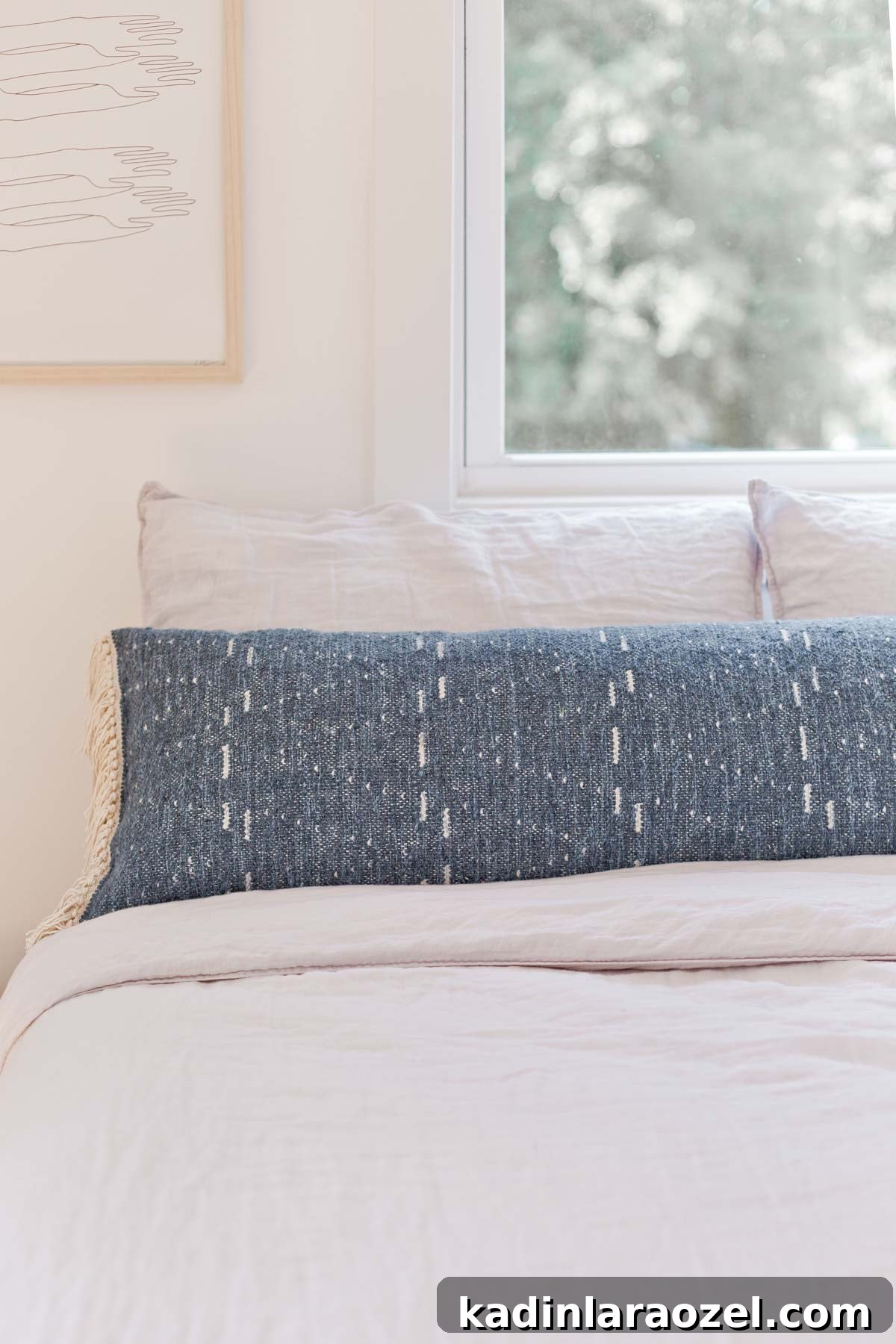
How to Make an Extra Long Lumbar Pillow
Brittni
Ingredients
- 3×5 woven flatweave rug
- Needle and thread (choose a color that matches the rug)
- Two 20×30 pillow inserts OR one 20×60*
- Large clips or clamps
Instructions
Step 1: Fold and clip the rug to the desired pillow depth.
- Fold the rug ends to form the desired pillow depth (about 12–14 inches per side is a good starting point). Use clips to hold layers steady while you sew.
Step 2: Hand-stitch the length to create the pillow pocket.
- Sew an overhand (overcast) stitch along the length where the rug folds overlap to form a long pocket for the inserts.
Step 3: Insert the pillow fills.
- Place two 20×30 inserts or a single long insert into the pocket. If you use a shorter insert, tuck or trim the rug sides and stitch accordingly for a snug fit.
Step 4: Sew the ends closed with a basic stitch.
- Sew the short ends closed with a simple stitch. Leave tassels exposed if desired, or fold them inside before stitching. Avoid cutting tassels to prevent unraveling.
Sewing by Casey Harper
Did you guess this pillow was made from a rug before you read the article? Tell us in the comments below!