Statement-Making DIY King Size Half-Circle Headboard
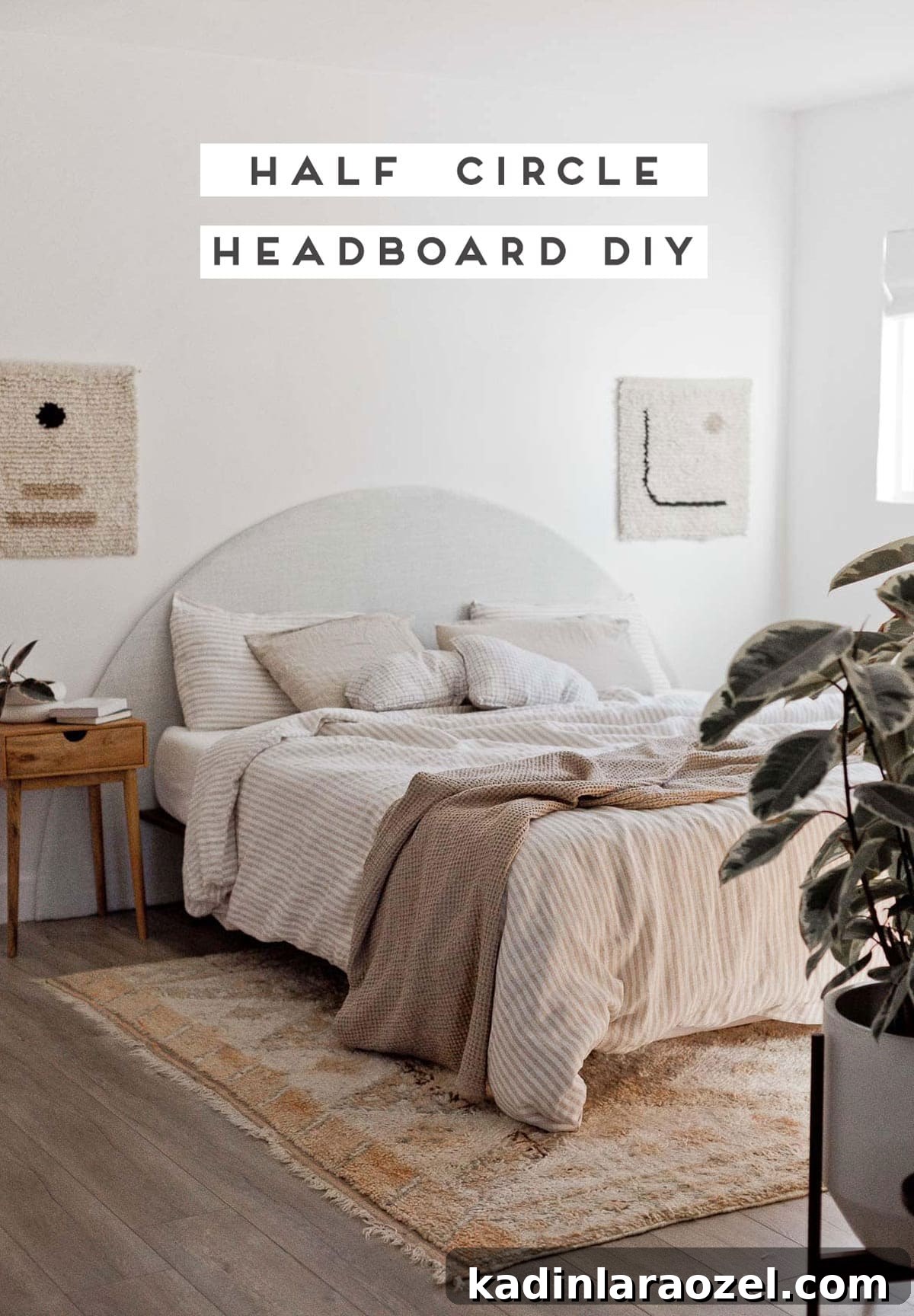
An upholstered half‑circle headboard you can build for under $200. This DIY round headboard is a striking weekend project that will transform your bedroom. I wish I’d made mine sooner.
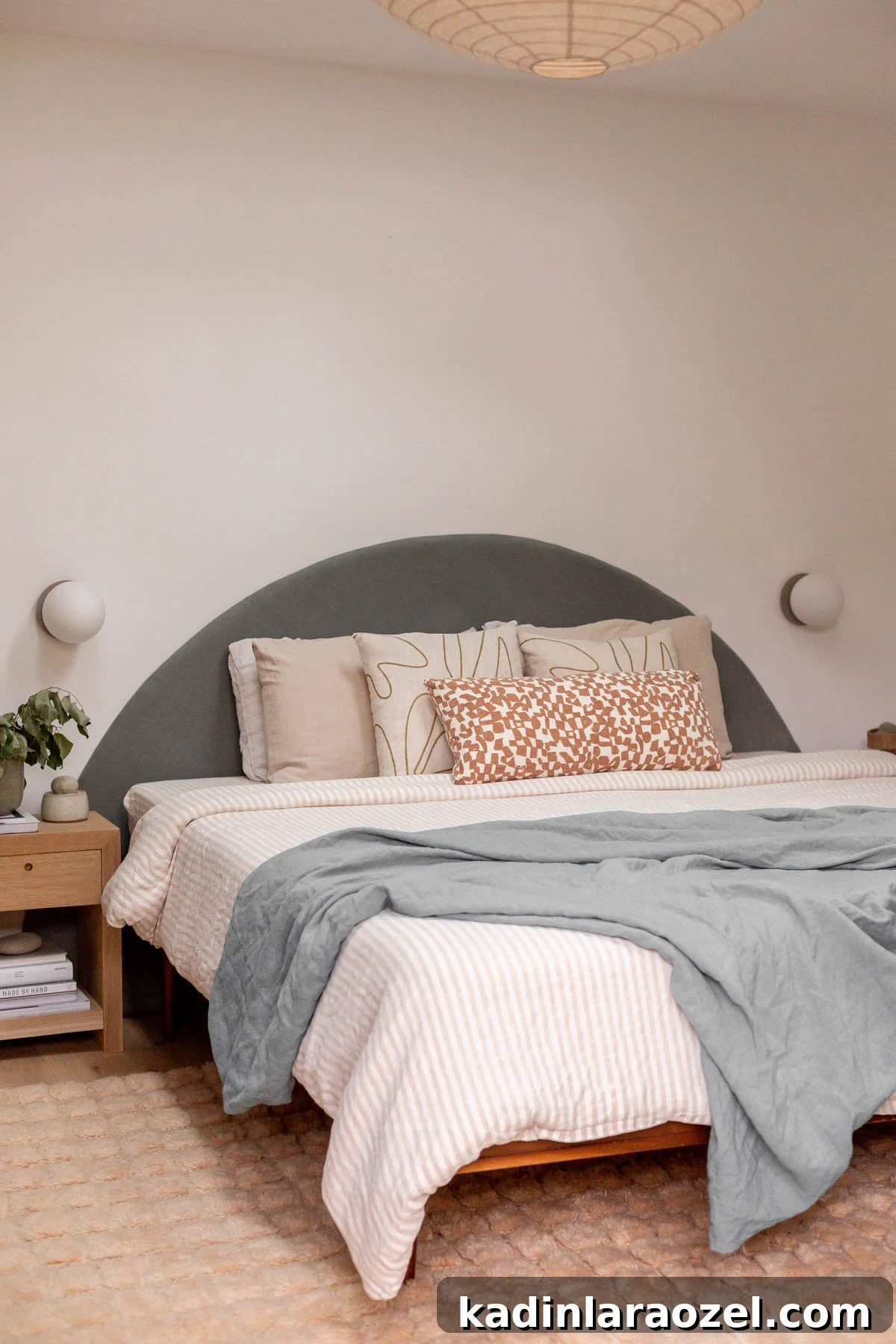
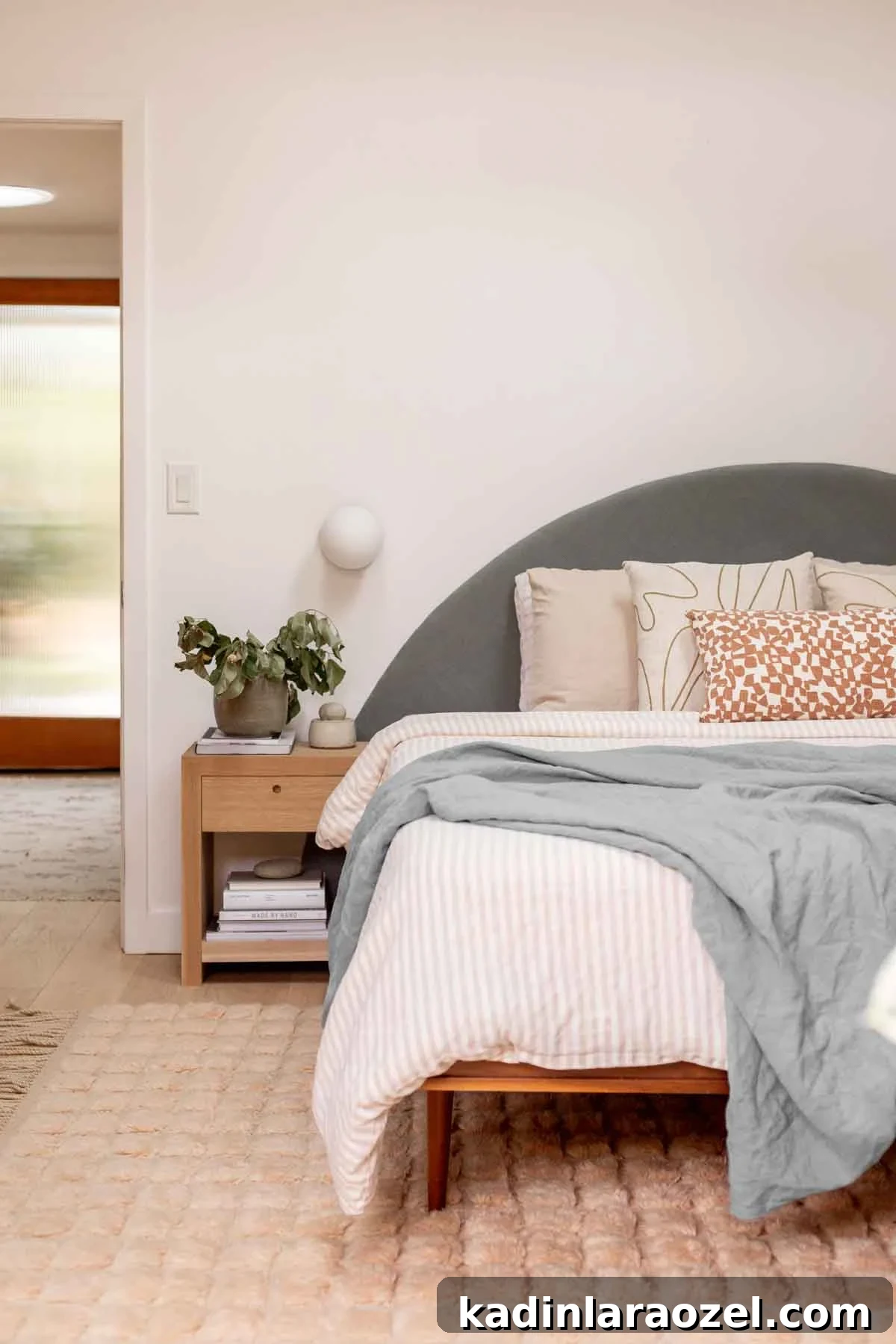
Have you noticed oversized half‑circle headboards appearing in home tours and on Pinterest? I loved the look and decided to try making one myself. The result turned out almost exactly as I imagined—I’ll explain the small differences later. For now, here are the details so you can make one too.
This half‑circle upholstered headboard can be completed over a weekend for less than $200, especially if you already own some of the basic tools and supplies. Comparable retail headboards often cost $800–$2,000, so this is a budget‑friendly way to get a high‑impact piece.
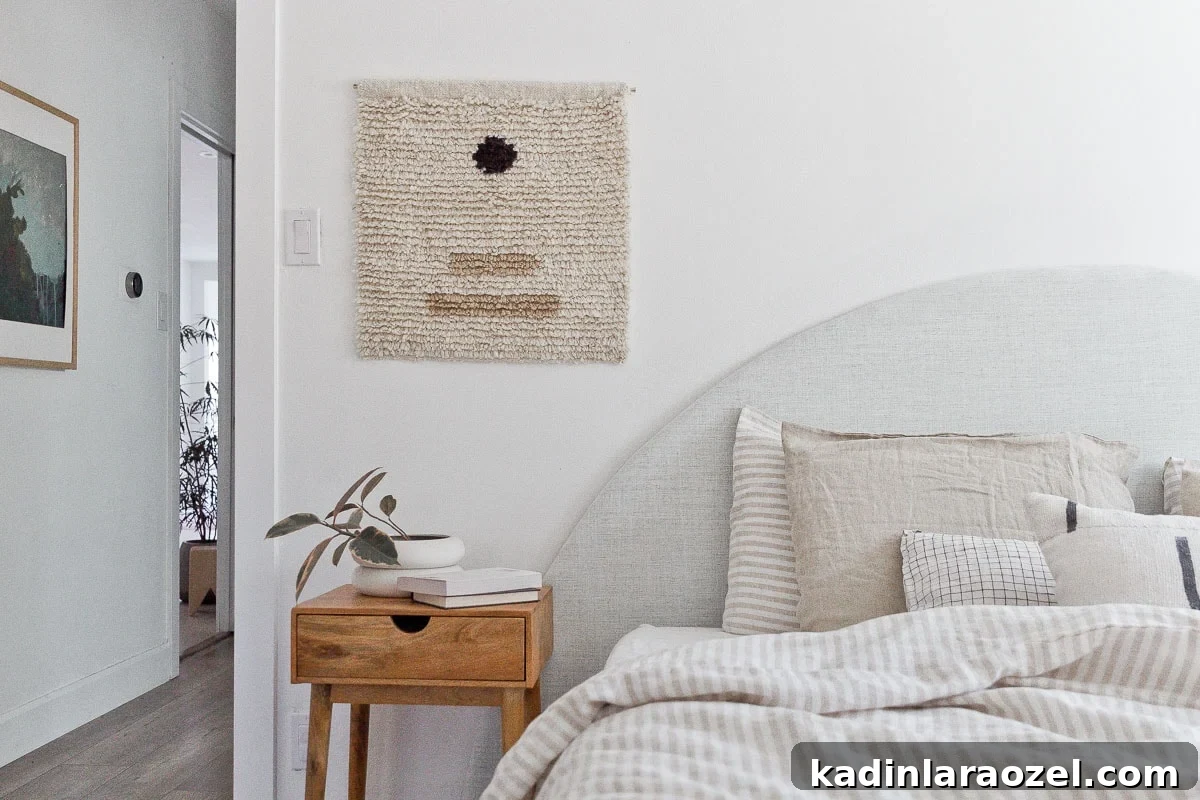
Materials and Equipment
- 4 MDF sheets, each 2 × 4 ft (or equivalent boards sized to your space)
- 2 pieces of upholstery (high‑density) foam, each approximately 24 × 72 in
- Fabric yardage—about 1.5 yards of linen was used here (see notes below)
- Spray adhesive
- Wood glue
- Furniture straps or anchors to secure the headboard to the wall
- String
- 1 nail and hammer, or heavy‑duty tape (like duct tape)
- Marker
- Measuring tape
- Scissors
- Serrated knife or electric knife
- Staple gun and staples
- Jigsaw or similar cutting tool
Notes on Materials
MDF panels
I used four 2 × 4 panels so I could transport the pieces in my car. The number and size of panels depend on your bed size—my king‑size headboard required four panels.
Upholstery foam
High‑density foam is sold in white or green. The green foam is often easier to find, but thinner, light‑colored fabrics can show a green tint through the cover. If you choose green foam and your final fabric is thin, add a white underlayer (or batting/interfacing) before covering.
Foam thickness is a personal choice. Two inches gives a plush look; one inch is the minimum I’d recommend for this style. Thicker foam costs more.
Fabric yardage
When buying fabric, ensure the width is at least 4–6 inches wider than the final headboard height so you have enough material to pull around the foam and staple to the back. For example, my finished headboard height is 48 inches, so I needed fabric at least 52–54 inches wide.
Length should also include 4–6 extra inches beyond the finished headboard length to allow for stapling to the back.
How to Make a Round Headboard
1. Create the arch shape
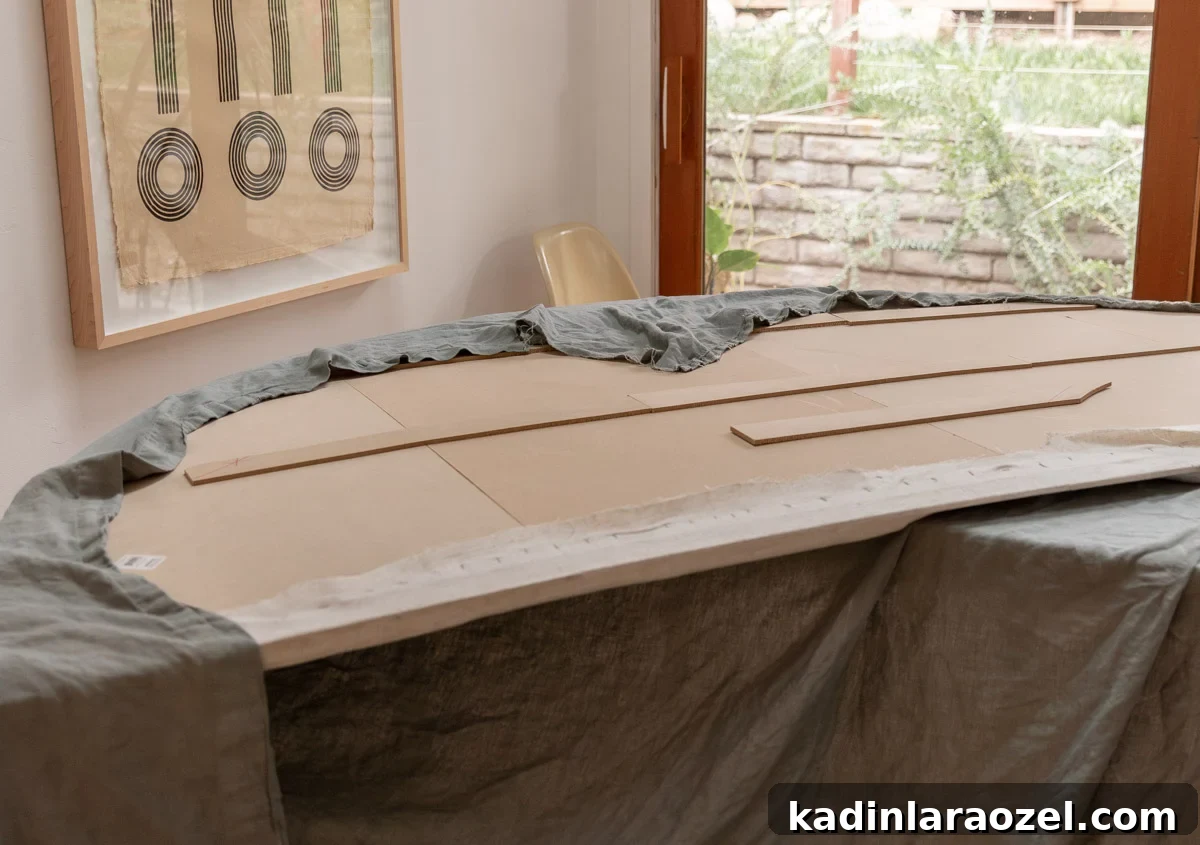
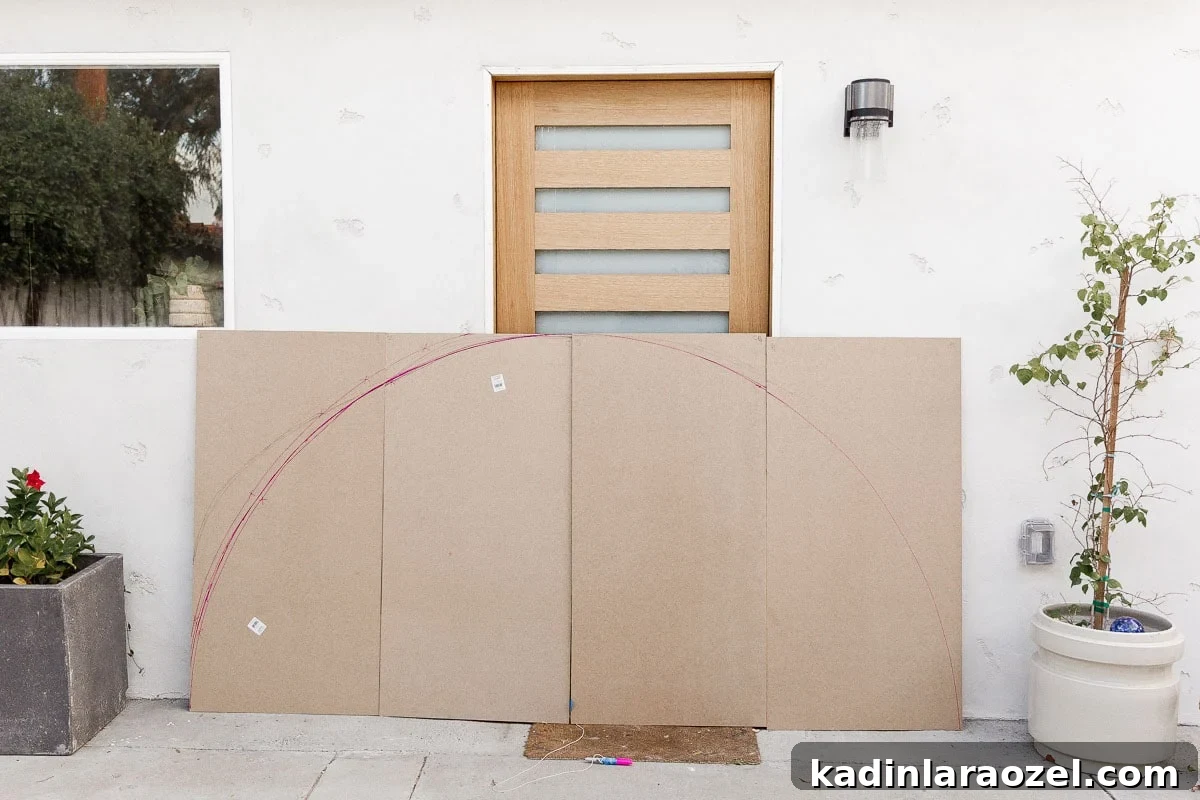
Line up the MDF panels so their edges touch. They can lie flat or stand propped against something; the important part is keeping the angle consistent.
Find the bottom center along the row of panels. Nail or tape a long string at that point. Tie a marker to the string at the radius you want for the half‑circle, then swing the marker to trace a smooth arch across the panels. The anchored string becomes a compass that ensures a perfect arc—the string length sets the headboard’s radius.
2. Cut the panels
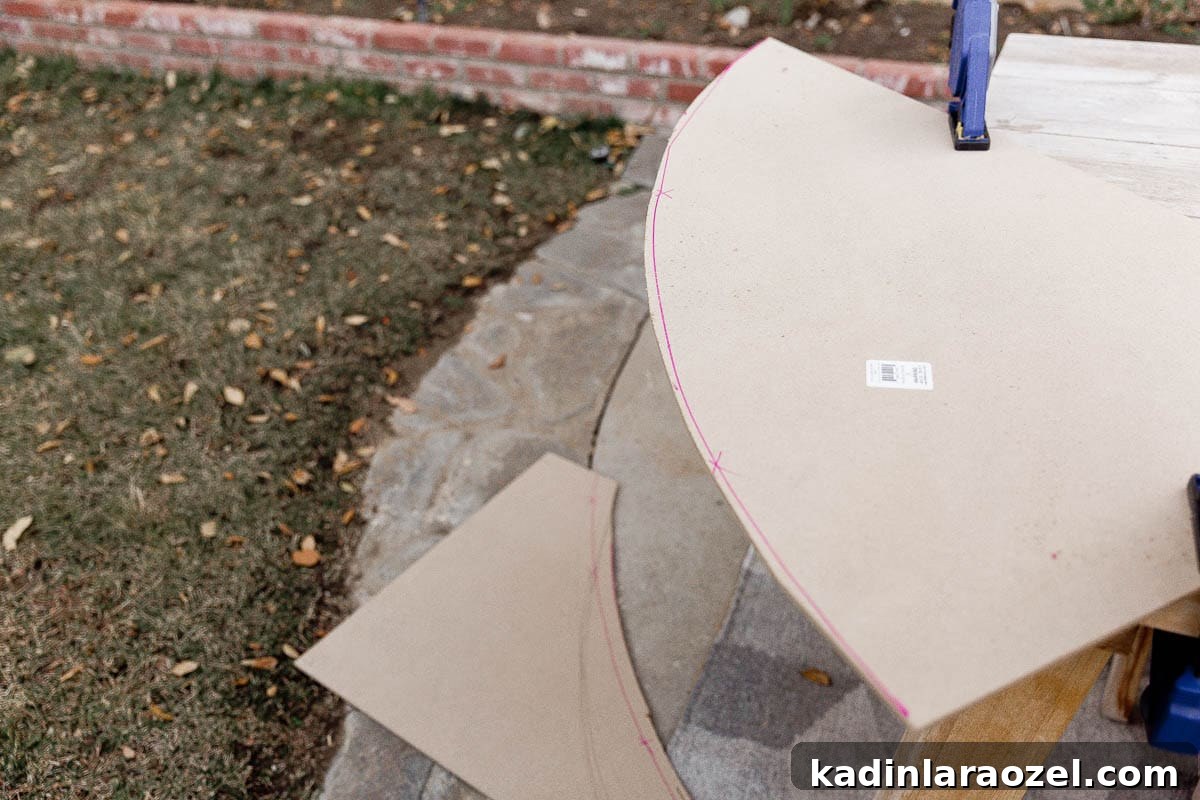
Cut along the traced line with a jigsaw, using clamps to secure each panel as you cut. After cutting, reassemble the pieces to check that the seams flow smoothly; make minor adjustments and recut if needed.
3. Cut scraps into long strips
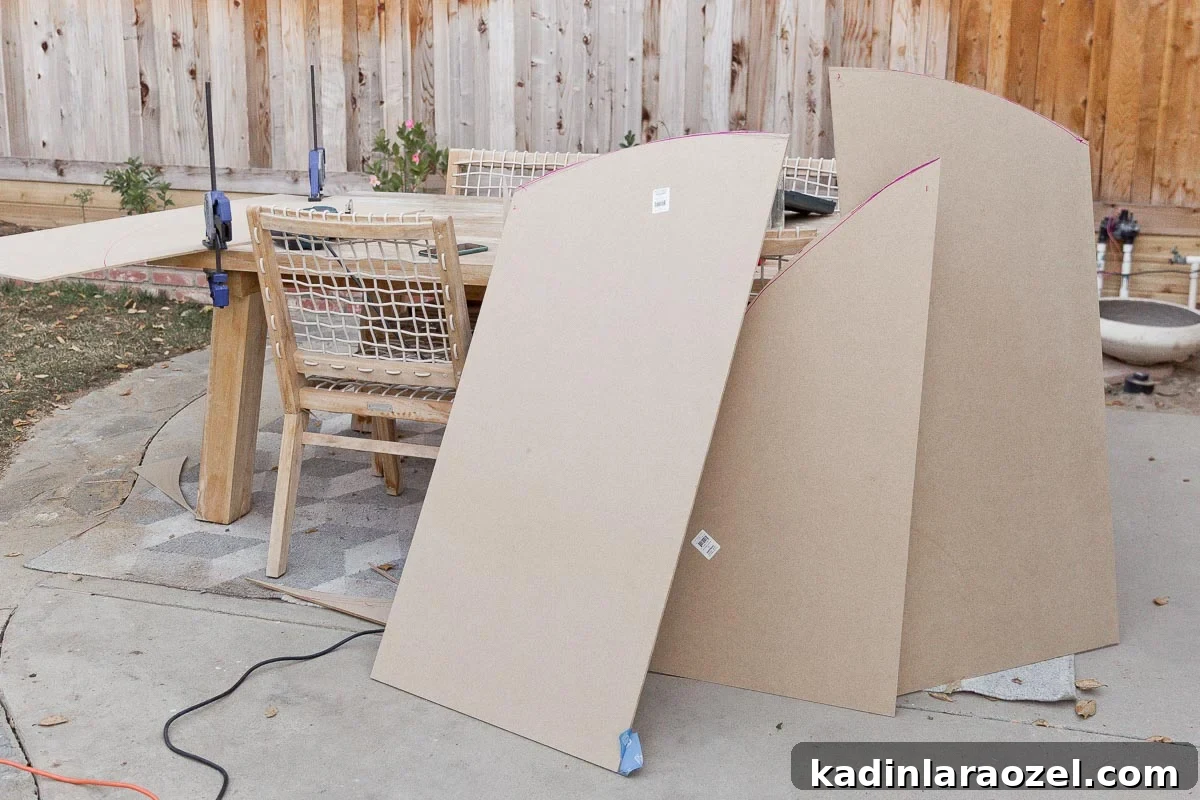
Save the scrap pieces. Cut them into strips 2–3 inches wide. These strips will serve as internal supports across seams to strengthen the assembled headboard.
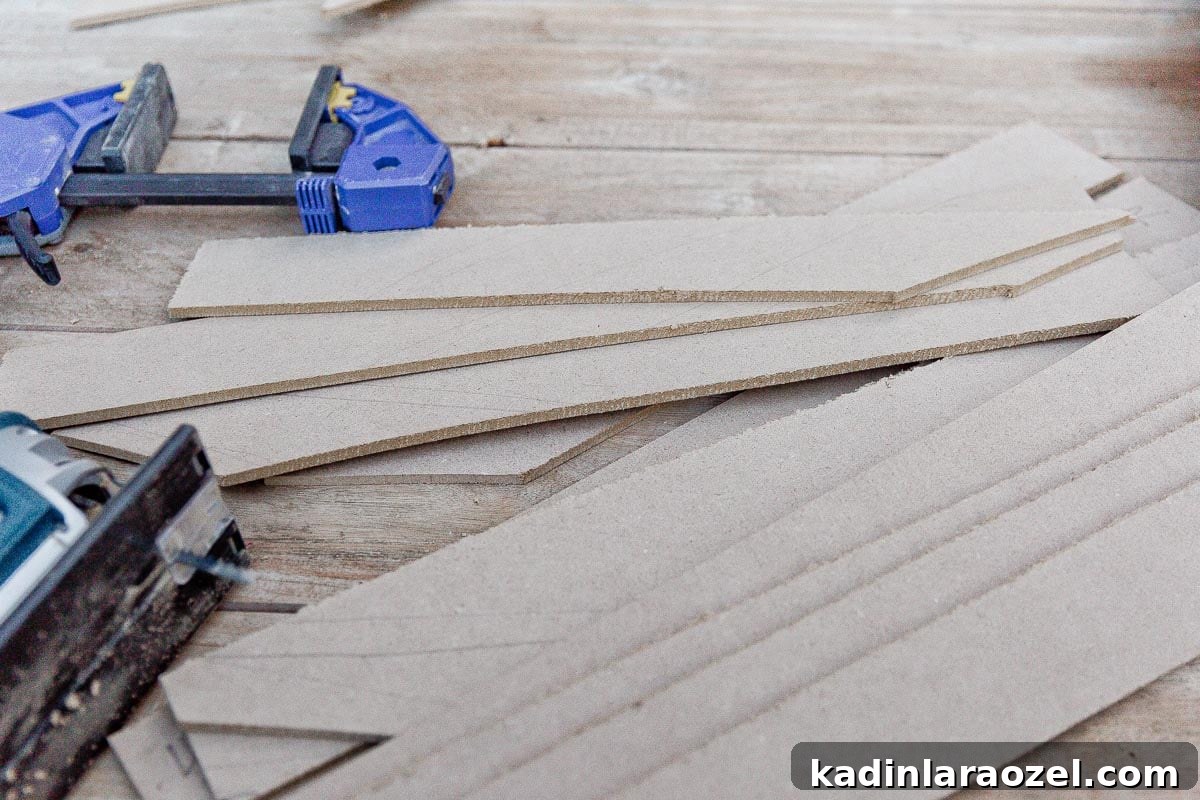
4. Attach the panels together on the back
Lay the cut panels backside up so they form the half circle and press seams tightly together. Use the scrap strips as backing plates across each seam and glue them in place with wood glue. Apply supports generously where needed for strength. While the glue dries, weigh the assembly down with heavy items (books, boxes, etc.). Allow glue to cure overnight or per the product directions before continuing.
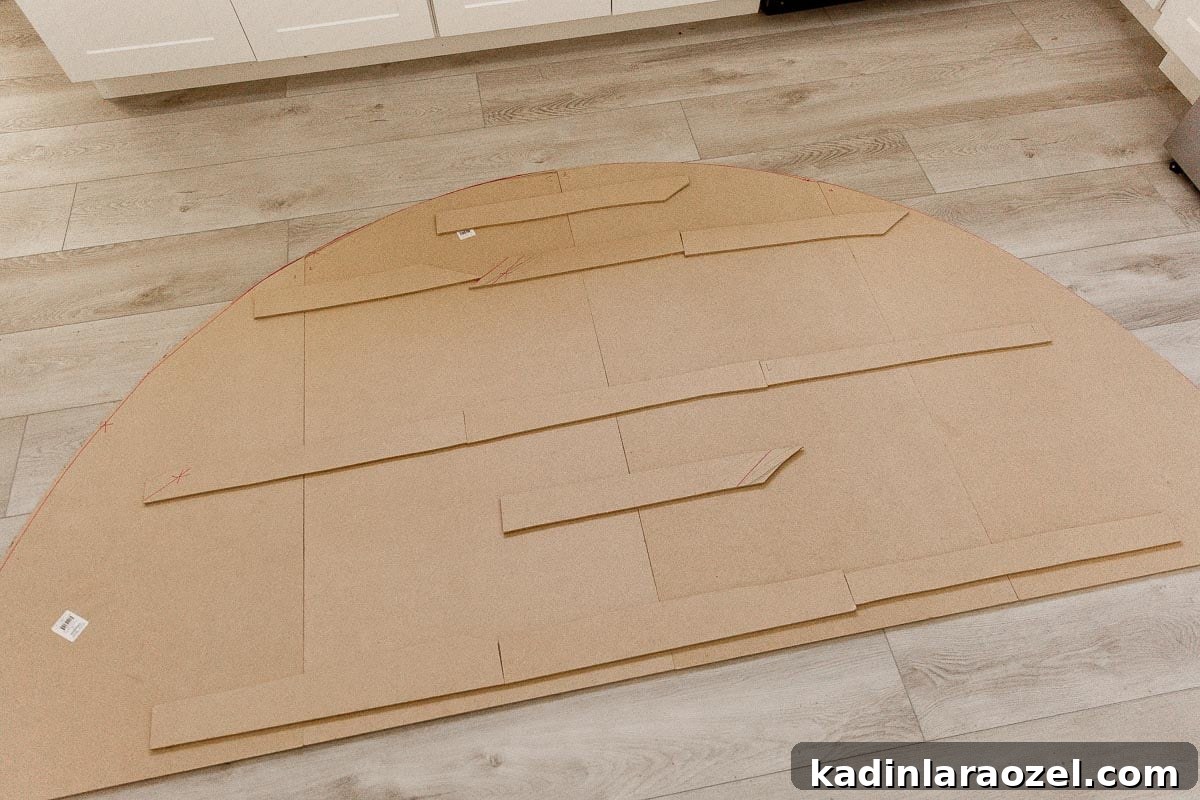
5. Attach foam to the base
Work outdoors for spray adhesive. With the headboard face up, spray adhesive on the surface and press the foam into place. I used one full roll at the top and cut the second roll to cover the bottom ends. Expect foam overhang that you’ll trim later.
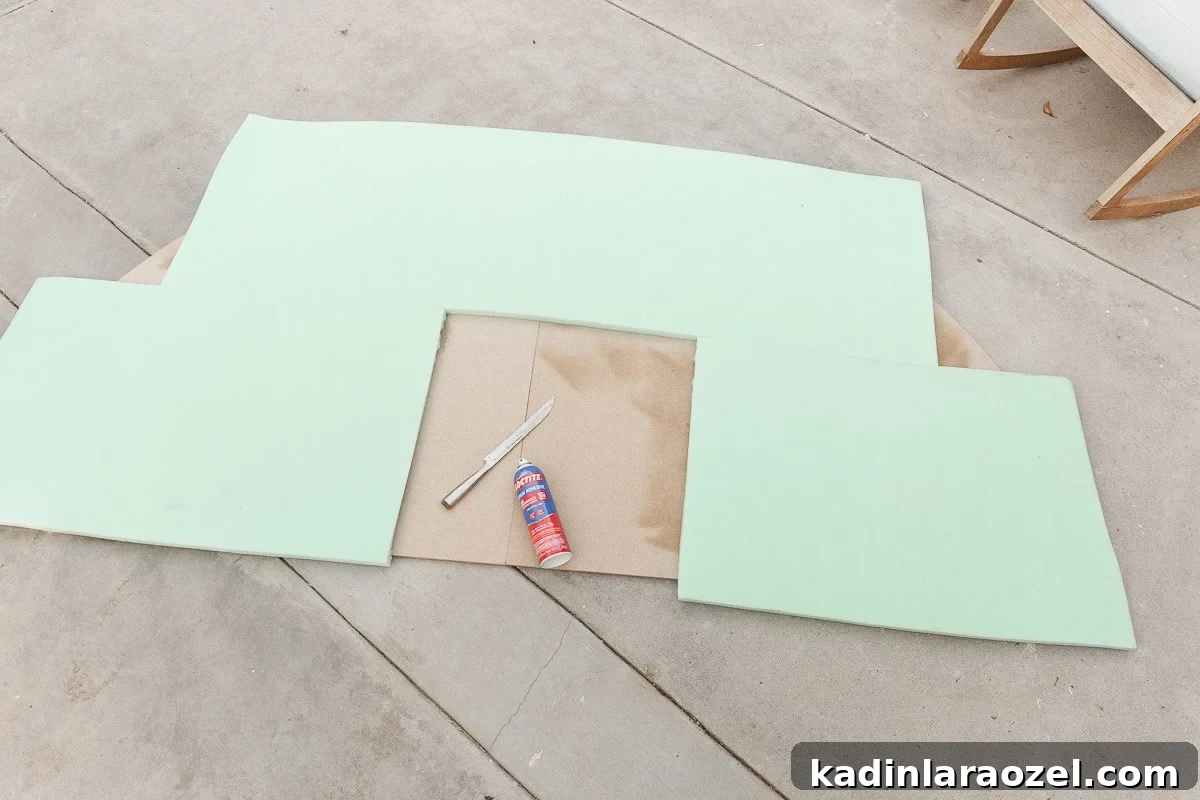
6. Trim excess foam
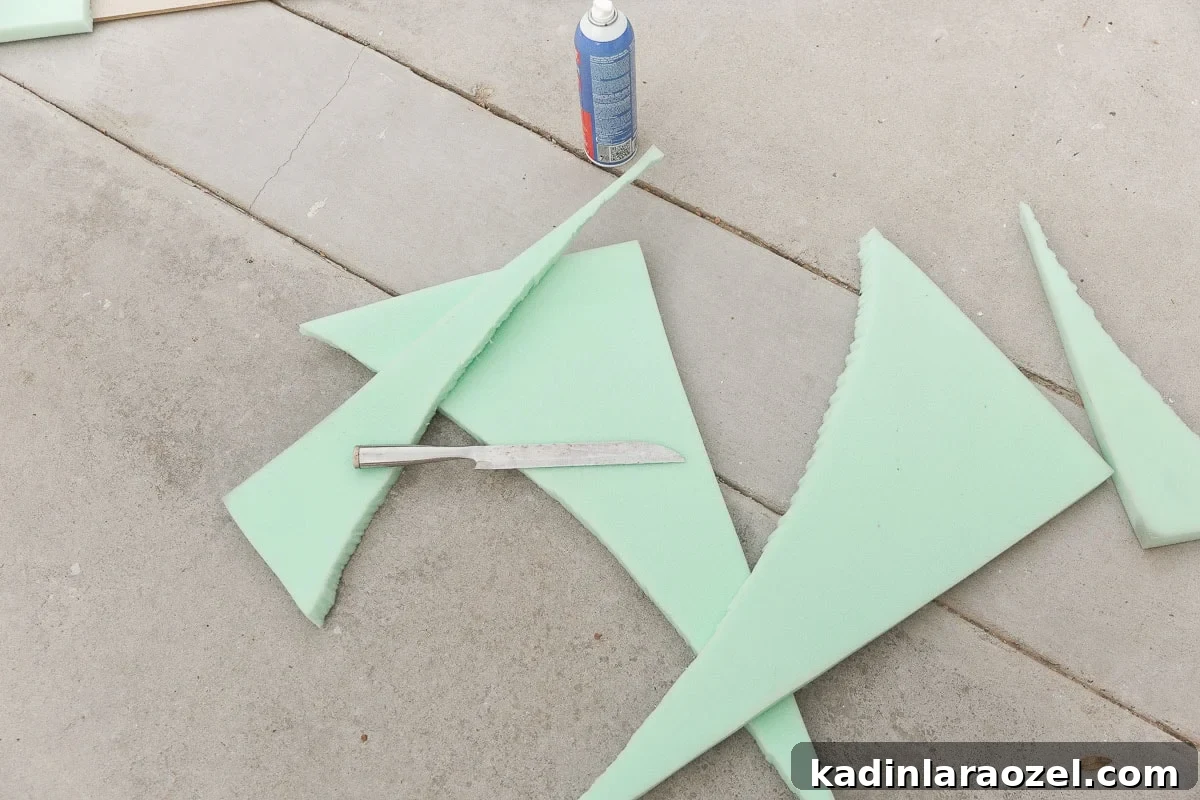
After the adhesive sets (about 15 minutes or per instructions), stand the headboard upright. Using a serrated or electric knife, trim foam flush at a 90° angle around the perimeter so the covered edge is neat. Keep all foam scraps—you’ll use them to fill uncovered areas.
Spray glue and use scrap pieces to fill in any remaining gaps, focusing on the top visible areas first. Depending on foam quantities, a small bottom center area may remain uncovered; if it’s never visible when installed, you can leave it as is or purchase additional foam if desired.
7. Add batting (optional) and attach fabric
If your outer fabric is thin or the foam color shows through, add a layer of white interfacing or batting before the final fabric. If your cover fabric is thick and opaque, you can skip this step.
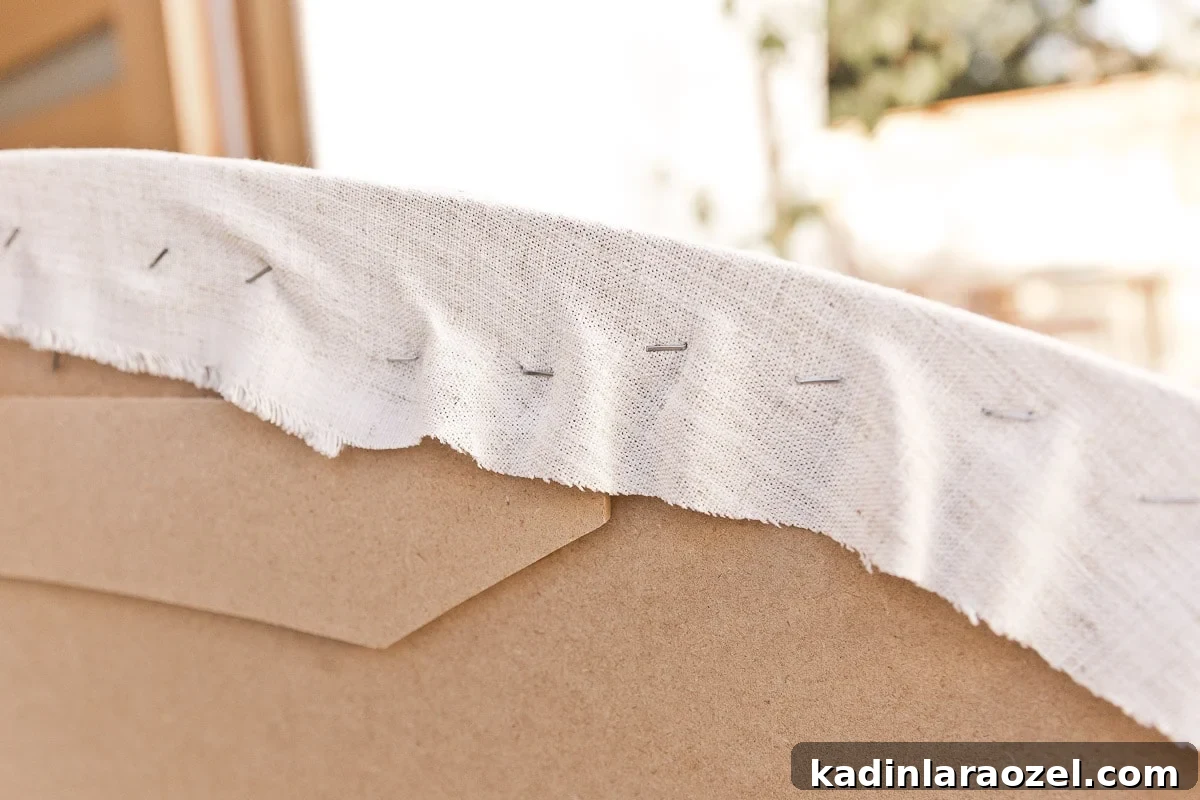
Center the fabric over the headboard, pull it tight, and staple to the back. Start at the middle and work toward the edges, alternating sides to keep tension even. Continue stapling every inch or two until the entire perimeter is secured. This step requires patience but produces the smoothest finish.
8. Install
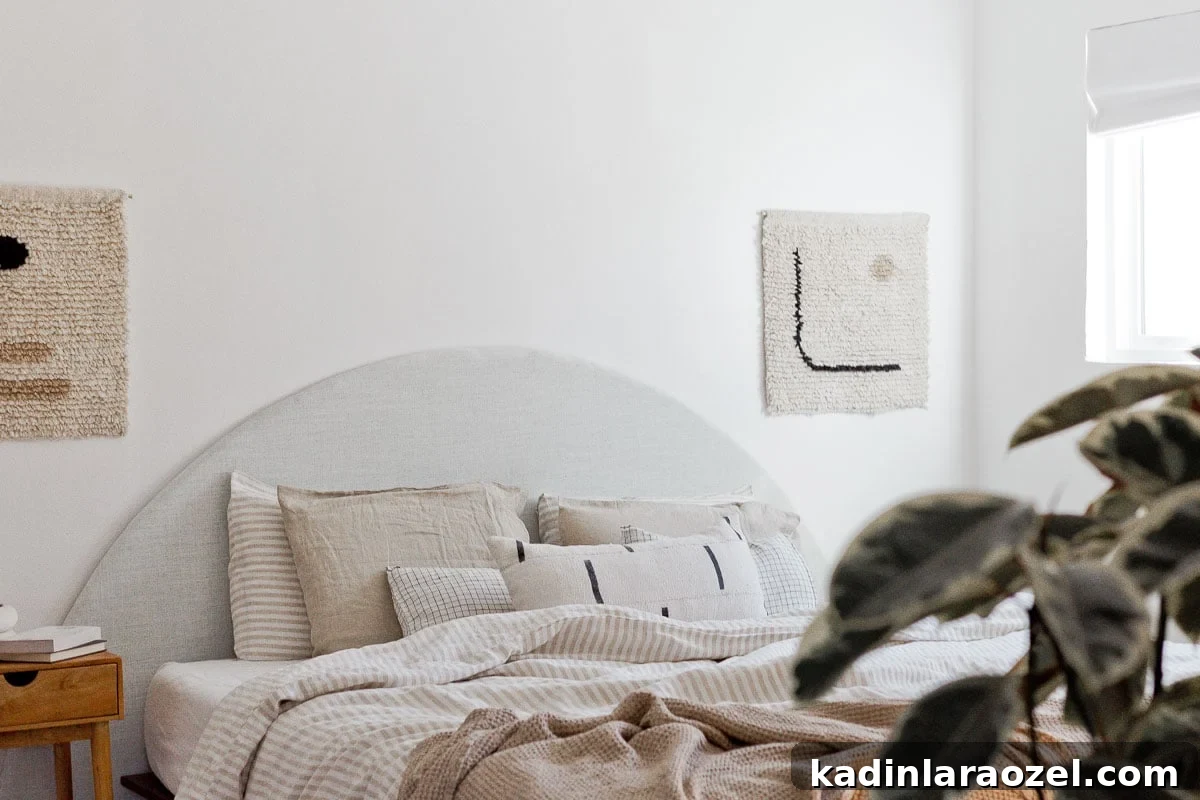
Use furniture straps or anchors to secure the headboard to the wall, following manufacturer instructions. Choose low‑profile anchors so they don’t show. Position the headboard so its bottom rests on the floor—this supports the weight and reduces stress on the straps while giving a clean, grounded look.
Headboard Q & A
Below are answers to common questions about this project. If you have more questions, leave a comment and I’ll respond.
How much did this round headboard cost?
Costs vary by size, foam thickness, and local prices. For my king‑size headboard the breakdown was roughly: foam $70, four MDF sheets at $9 each ($36), spray adhesive $7, fabric about $30. I already owned tools and small supplies like glue, a hammer, and scissors. My total was about $152. If you buy tools you don’t already have, add those costs.
How long does it take?
This is a true weekend project. You can cut and glue the panels one day, then attach foam and cover the next. It’s not continuous work—allow drying times and breaks.
Can you use other materials for the base?
Yes. Use whatever wood or wood‑like material you prefer. I chose MDF for affordability and ease of handling. You can also build a headboard from a single large sheet instead of piecing panels together if transport isn’t an issue.
Why use panels instead of one solid piece?
Panels made it possible for me to transport and move the pieces alone. Panels also make the project flexible: you can use one sheet, several panels, or even scrap pieces—the back is hidden once covered, so imperfections won’t be seen.
How did you choose the height?
Headboard height is a matter of taste. I chose 48 inches, which felt bold without overwhelming the room and matched the panel height before trimming.
What are the final dimensions?
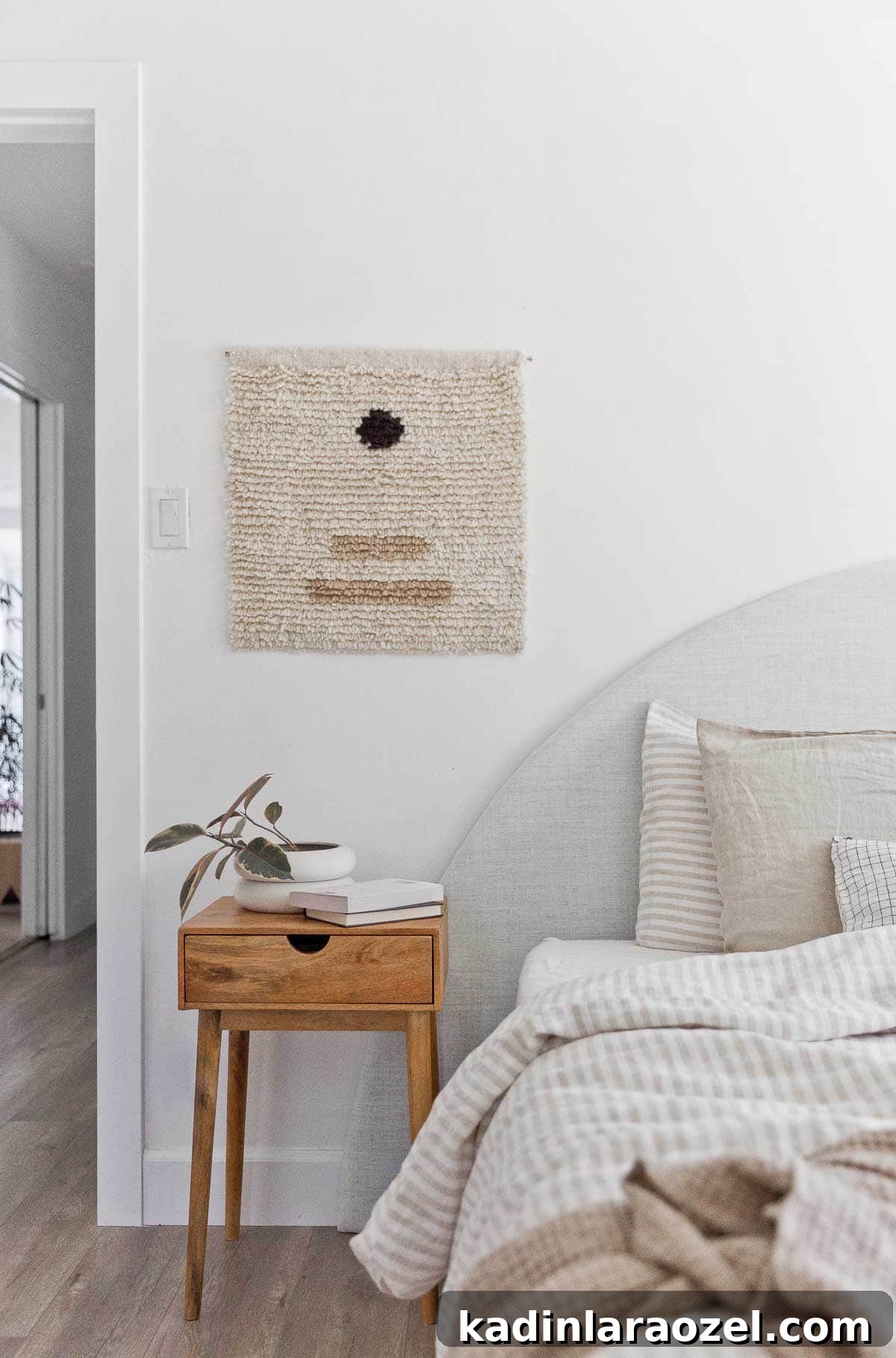
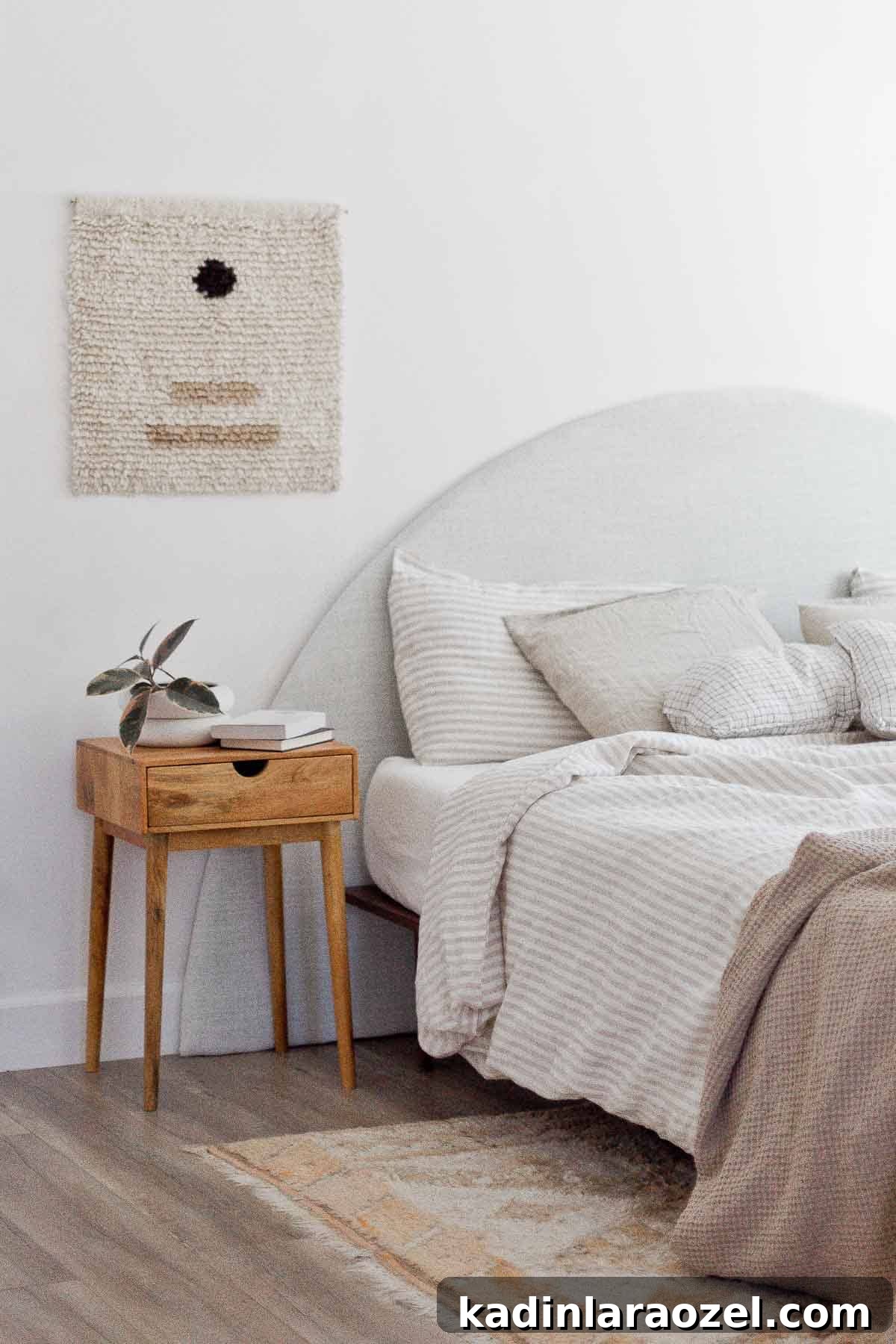
My king headboard measures about 96 inches wide at the floor and reaches roughly 48 inches at the highest point, extending about 10 inches beyond the bed on each side for a dramatic look.
Can you use different foam thicknesses?
Yes. Thinner foam reduces cost but produces a less plush result; thicker foam is more luxurious and costs more. Choose according to budget and desired feel.

More headboard ideas
- Classic upholstered rectangular headboard for a cleaner, traditional look
- Painted wood headboard for an inexpensive, graphic option
- Explore many more DIY headboard concepts if you want different shapes or finishes
I recently updated this half‑circle headboard with new fabric. Reupholstering is easy: remove the old cover, drape the new fabric tight, and staple it around the back just like the original build.
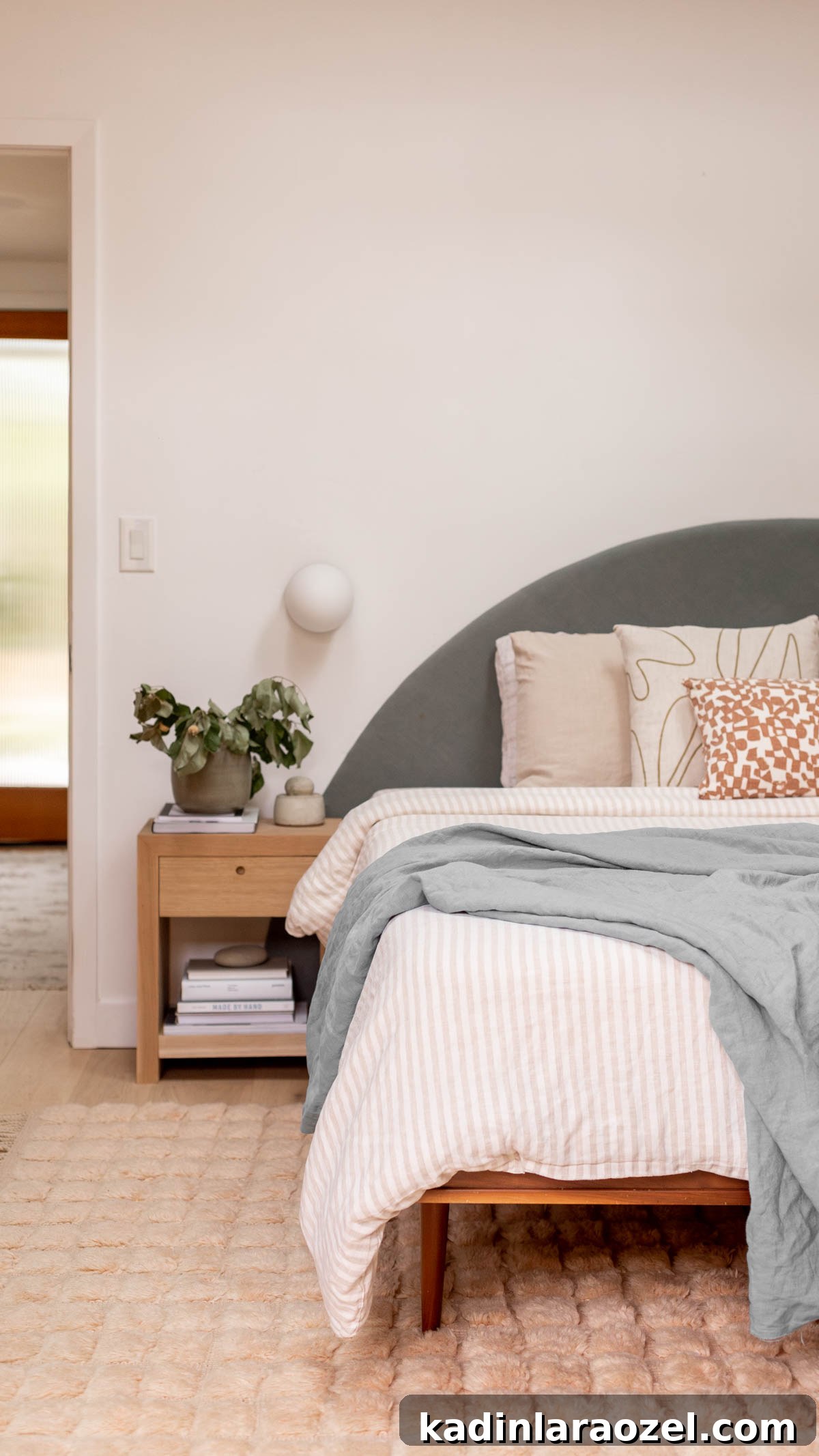
Update (as of 2/28/24)
I finished this headboard over two years ago and moved it to a new home without issues. It’s held up well—sturdy and still looks great. The only change was replacing the fabric for a more contrasting color during a move; the swap was straightforward and affordable.