From Dumpster Find to DIY Holographic Accent Chair: Step-by-Step Guide
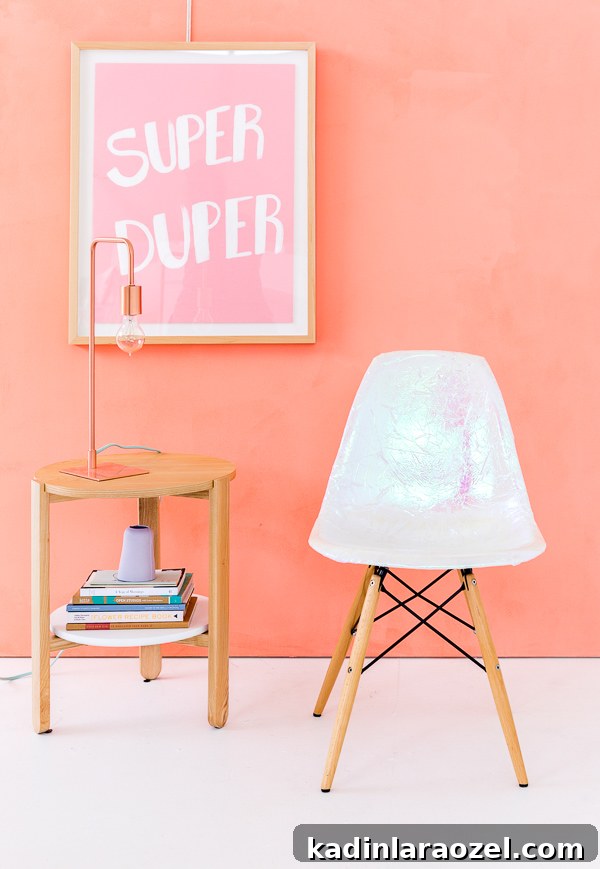
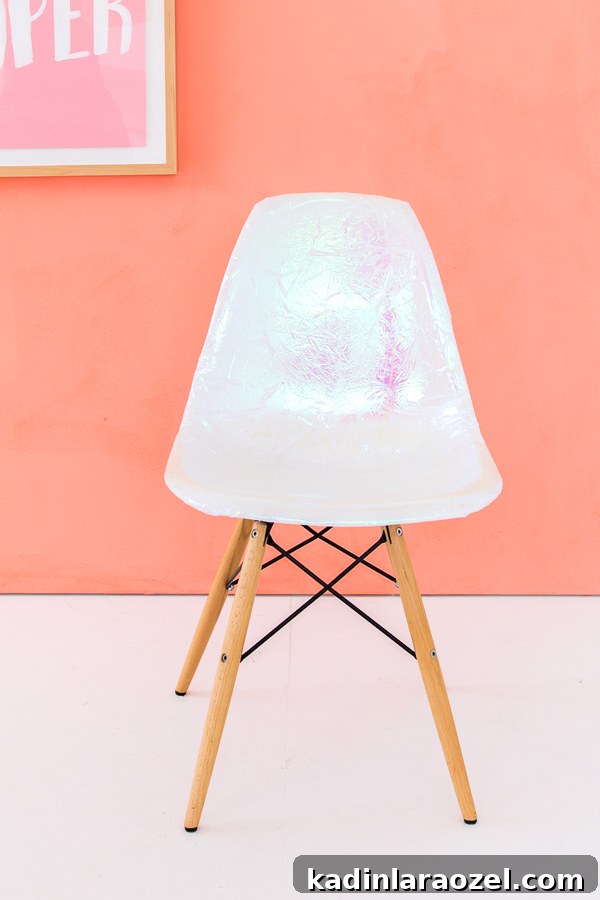
I rescued an Eames-inspired shell chair from the trash at my studio one day. It wasn’t an original, but the seat was intact—only the base was missing a few screws. It matched my other chairs nicely, so I brought it inside intending to replace the base. Weeks passed and the chair sat in the corner, unused. Rather than let it collect dust, I decided to experiment and give it a bold new look: holographic.
The transformation was easy, inexpensive, and completely zero-cost for me because I already had the supplies. You can take similar discarded or inexpensive chairs and turn them into an eye-catching statement piece with a few simple materials and some time. Below is a clear, step-by-step guide to create your own holographic chair at home.
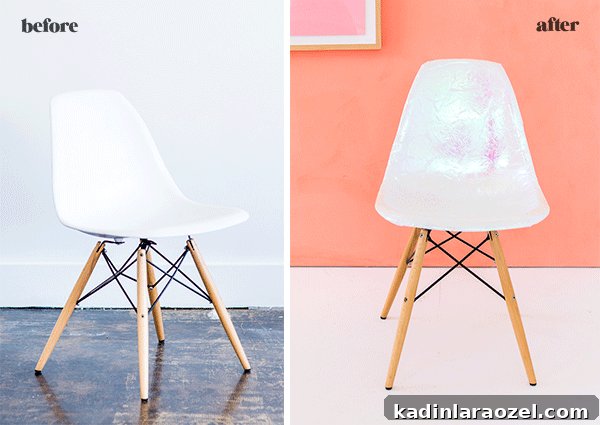
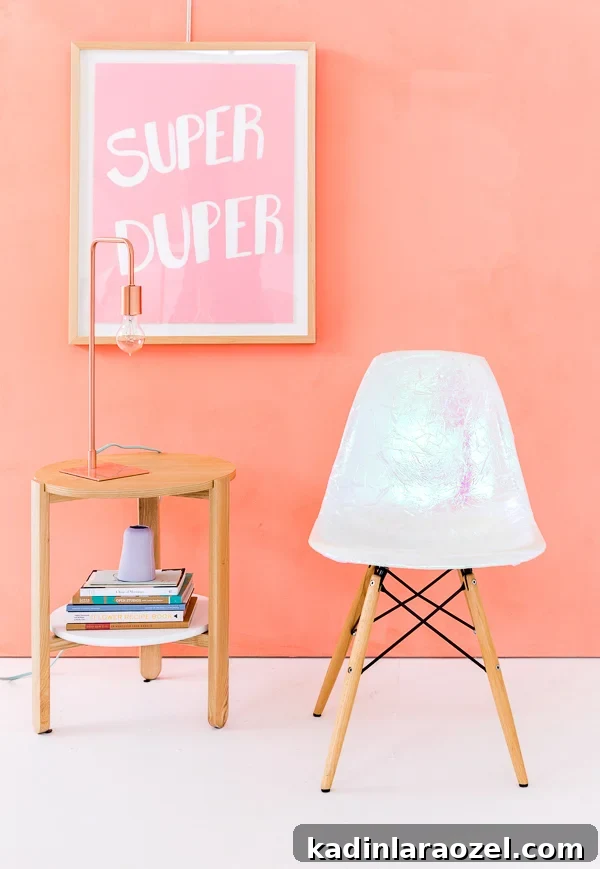
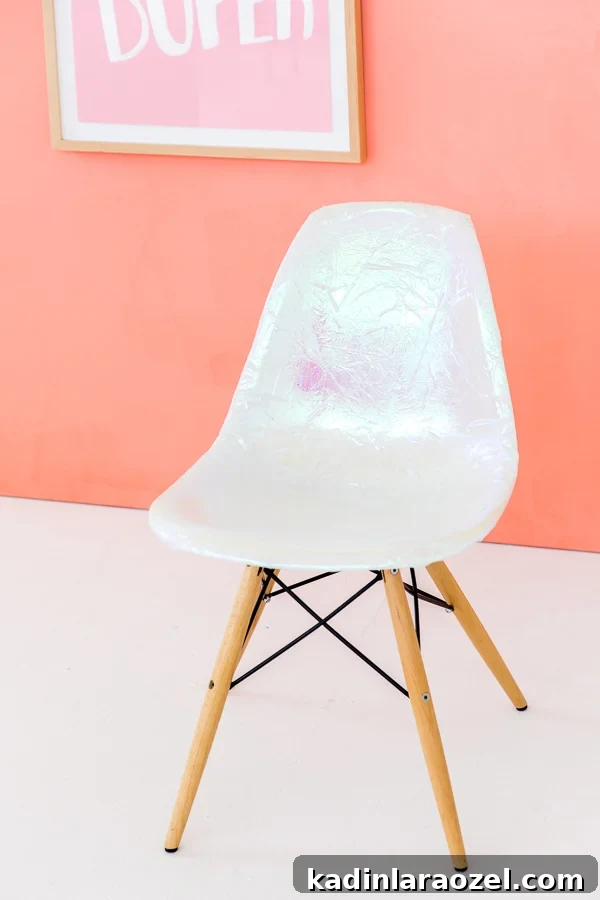
There are many ways to refresh a midcentury-style shell chair—upholstery, paint, decals, or adhesive vinyl—but holographic tissue gives the piece an unexpected, modern twist. The effect is iridescent, playful, and surprisingly sophisticated once finished. This technique works best on hard-shell chairs made of fiberglass or molded plastic, but you can adapt the method for other smooth surfaces too.
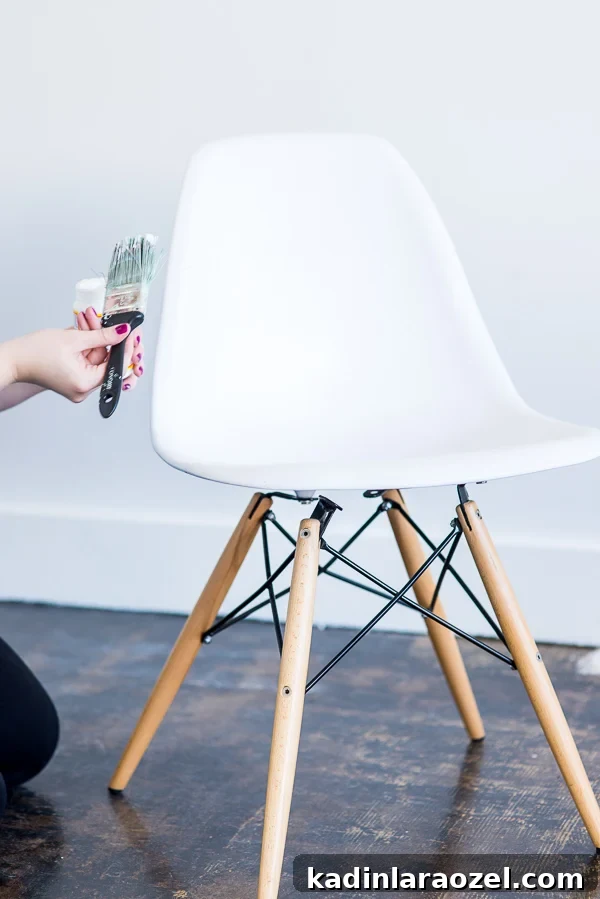
Materials
- A found or inexpensive shell chair (any clean, smooth surface will do)
- Holographic or iridescent tissue paper in enough quantity to cover the chair
- Matte Mod Podge (or a similar water-based decoupage medium)
- A soft paintbrush for applying adhesive
- Clothes pins, small clamps, or binder clips
- Scissors or a sharp blade for trimming
Instructions
1. Clean the chair thoroughly and remove any loose dirt, grease, or flaking paint. A dry cloth and mild cleaner should be sufficient. Allow the surface to dry completely.
2. Work in small sections of about 6–8 inches. Apply a thin, even layer of Mod Podge to the area with your brush. Don’t over-saturate—just enough to make the tissue adhere.
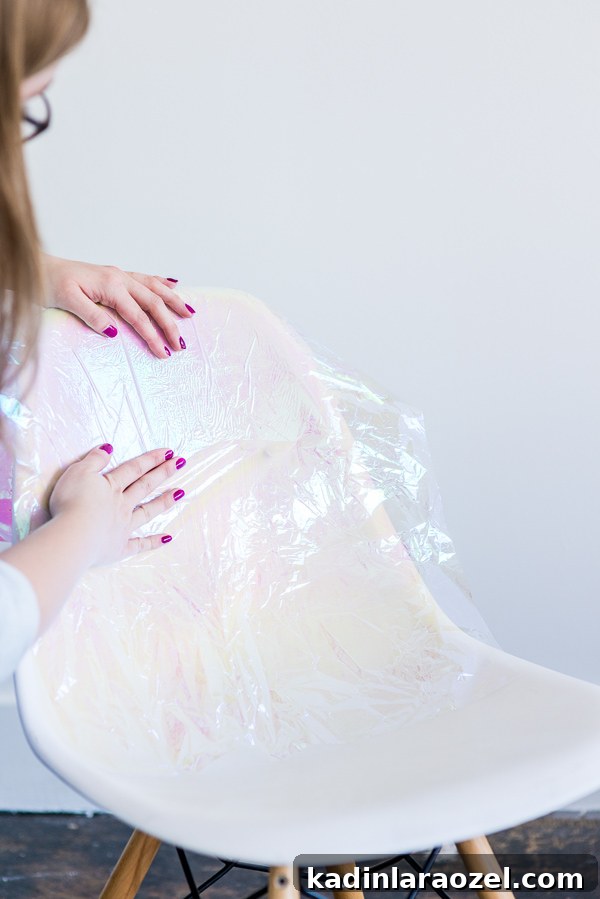
3. Gently lay a sheet of holographic tissue onto the wet Mod Podge and smooth it out. Some wrinkles and small bubbles are normal and add character; try to smooth large creases as you go. Be gentle—the tissue is delicate.
4. Continue applying Mod Podge and overlapping pieces of tissue until the entire front and back of the shell are covered. For curved edges, allow the tissue to overhang slightly so you can trim and secure it neatly.
5. Where the tissue overhangs an edge, press it down with a little extra Mod Podge and hold it in place with a clamp or clothes pin until it begins to set. Once semi-dry, trim excess material with scissors or a sharp blade and press the trimmed edge flat with adhesive to prevent peeling.
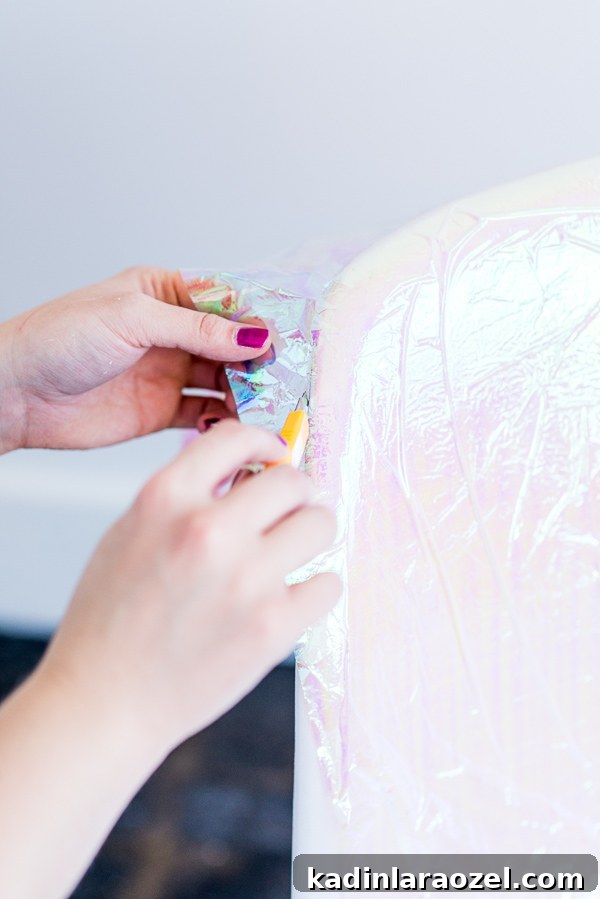
6. If any large wrinkles remain, carefully score them with a blade, apply a touch more Mod Podge underneath, and smooth the tissue into place. Use clamps or pins as needed while the adhesive sets.
7. Allow the chair to dry fully—overnight is best. Once completely dry, you can apply a thin topcoat of Mod Podge to seal the surface and increase durability. Let the topcoat cure overnight as well before regular use.
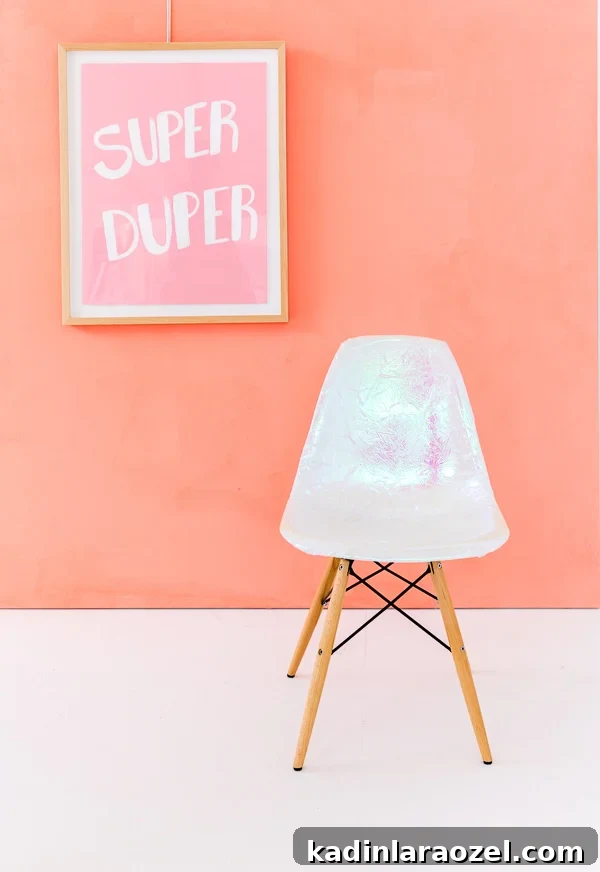
Crafting by Rachel Brewer
Photography by Amelia Tatnall and Brittni Mehlhoff
Styling by Brittni Mehlhoff
This project is especially rewarding because it’s sustainable and budget-friendly: you can upcycle a discarded chair and turn it into a striking décor piece. The holographic finish is suitable for bedrooms, creative studios, retail displays, or as a focal accent in living spaces. You can also adapt the same decoupage technique to lamp bases, side tables, trays, or storage boxes for a coordinated look.
Will you try this DIY holographic chair idea? What other items would you transform with holographic tissue?