Resurface Laminate Countertops Yourself for Under $50
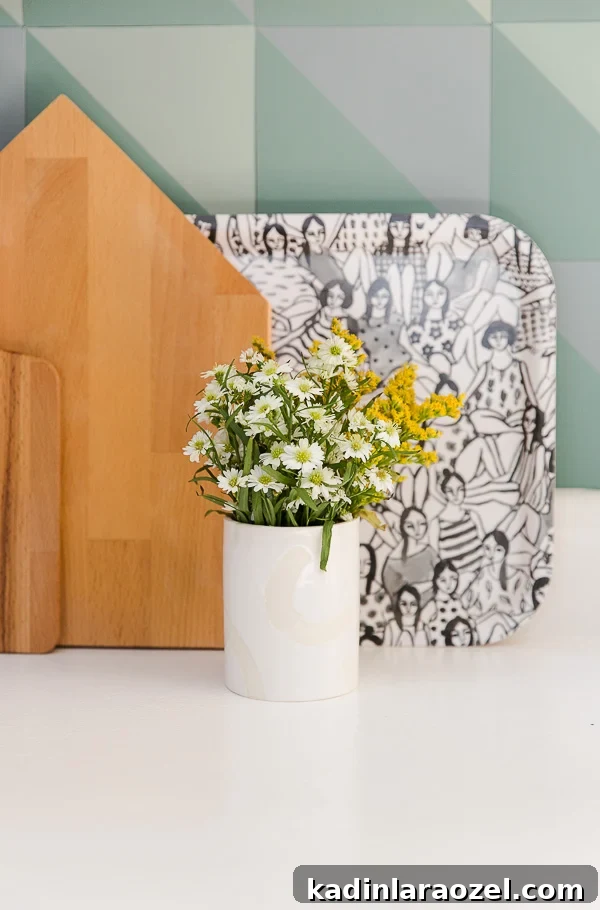
Did you know you can resurface laminate countertops for under $50? It’s true — here’s a clear, practical guide to transforming worn or dated laminate into a fresh-looking surface without a costly remodel. Say goodbye to ugly laminate counters.
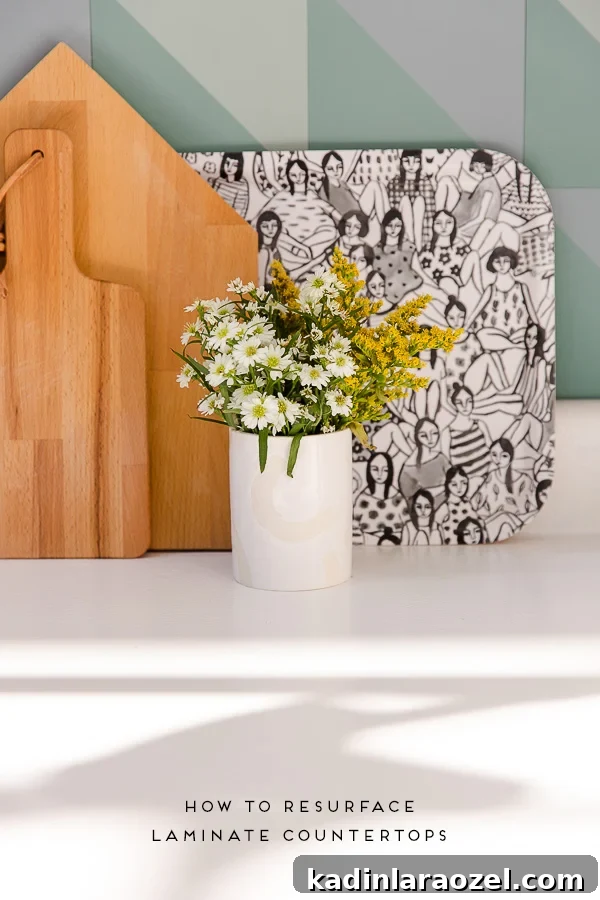
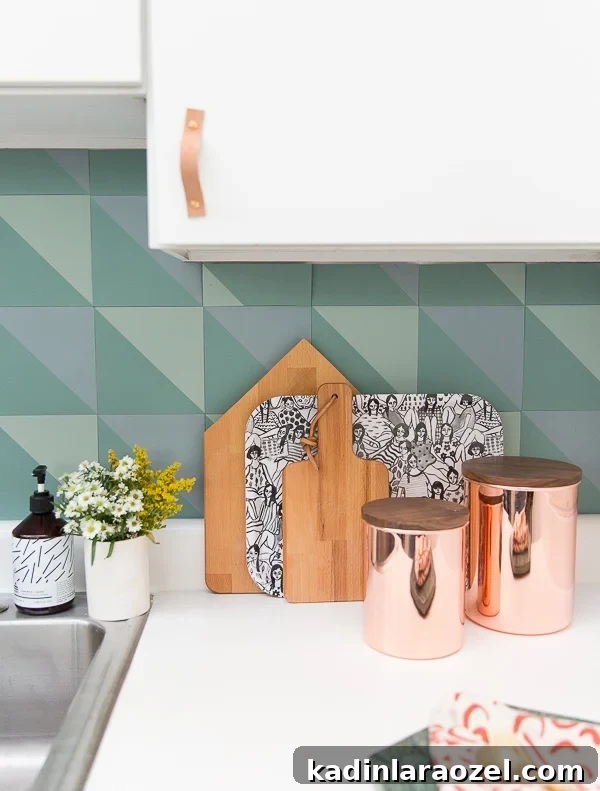
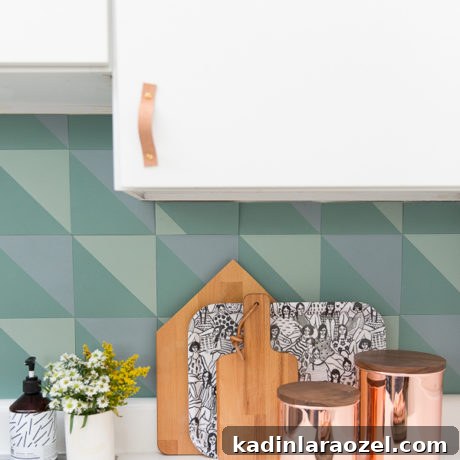
Recently I resurfaced the countertops in my studio kitchen, added leather drawer pulls and created a small DIY backsplash. The countertop resurfacing was the biggest visual upgrade and it cost under $50. Whether you want a temporary refresh or a longer-lasting update, this method can completely change the look of your space without replacing countertops.
This is a budget-friendly option for renters and homeowners alike who want to modernize laminate counters for a very reasonable cost.
How to Resurface Laminate Countertops
Laminate counters are economical but show wear quickly and can date a kitchen. Resurfacing with the right products will give you a clean new finish without a full renovation.
Using a specialty countertop coating designed for laminate, you can go from dark to light or refresh an existing color. I resurfaced my black laminate counters to crisp white myself and was very pleased with the result — especially for under $50.
Materials Needed for Resurfacing Laminate Countertops
- Countertop coating (about $30 for a small kit)*
- High-quality paint roller (smooth foam or short nap)
- Foam paint brush for detail work (won’t leave brush marks)
- Sandpaper or sanding sponge
- Old cloths and a mild, non-abrasive kitchen cleaner
- Respirator mask (ventilate area well)
- Painter’s tape and painter’s plastic to protect adjacent surfaces
- Old sheet or drop cloth
- Polyurethane topcoat (optional — for extra durability)
*Many countertop coatings can be tinted to different colors if purchased at a home improvement store. If you want plain white, some manufacturers sell the untinted version online or in-store.
I chose the untinted white finish so I could order the product online. If you prefer a tinted shade (light gray, beige, charcoal), ask for tinting at a store that offers it.
What Kind of Paint to Use for Countertop Resurfacing
Countertop coating is not the same as regular wall paint. It has a different consistency, is much more durable and cleanable when cured, and produces a strong odor during application. For longevity and cleanability, use a specialty countertop coating formulated for laminate, vinyl tile, wood, and metal.
Important: wear a respirator and ventilate the room while applying and drying the coating. Using standard paint for a countertop is likely to peel or wear prematurely — stick with the specialty product for best results.
When applying over bare wood or metal, follow the product recommendations, which may include a primer. Clean and prep surfaces carefully according to the manufacturer’s instructions, and use nonabrasive cleaners for final cleaning.
Step-by-Step Instructions
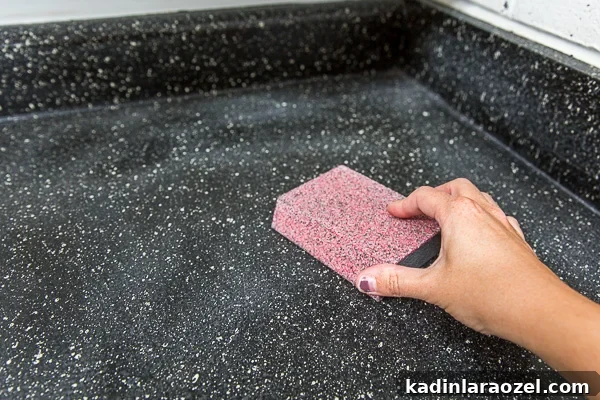
Step 1: Clean and sand. Thoroughly clean the countertop using a non-abrasive cleaner to remove grease and residue. Sand the entire surface, including any backsplash lip, to slightly roughen the laminate and promote adhesion. Wipe away dust and clean again with mild soap and water. Allow the surface to dry completely before proceeding.
Step 2: Protect surrounding areas. Use painter’s tape to mask edges you don’t want coated — around the sink, fridge, backsplash, and cabinet edges. Cover floors and cabinet interiors with painter’s plastic and drop cloths to catch drips. Protecting adjacent surfaces is easier than cleaning mistakes later.
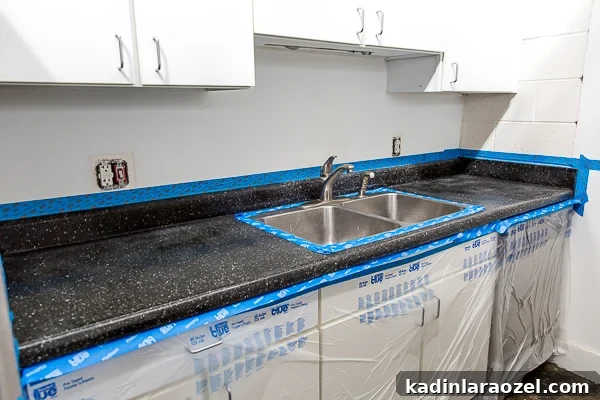
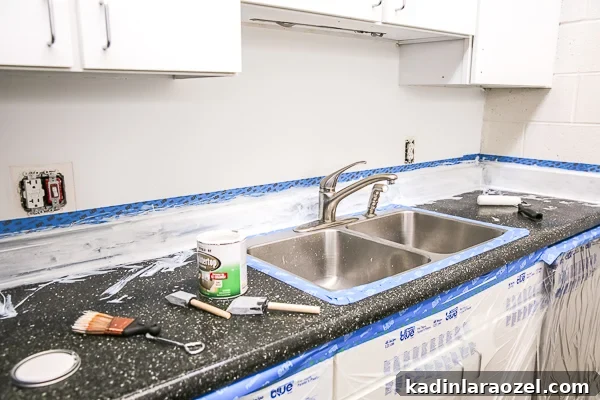
Step 3: Cut in the edges and details. Start at the back of the countertop and work forward so you don’t lean over wet coating. Use a foam brush to paint thin coats on the backsplash lip, crevices, and around the sink. Paint about an inch or two onto the countertop from vertical surfaces to make rolling the top surface easier. Avoid bristle brushes — the specialty coating doesn’t self-level like wall paint, and bristles can leave visible strokes.
Step 4: Roll the top surface. Use a foam roller to apply a thin, even layer across the countertop top and then along the sides/edges, always working from back to front. Follow the manufacturer’s guidance for stroke technique — long, overlapping strokes avoid ridges. Don’t stop mid-stroke to prevent lap marks.
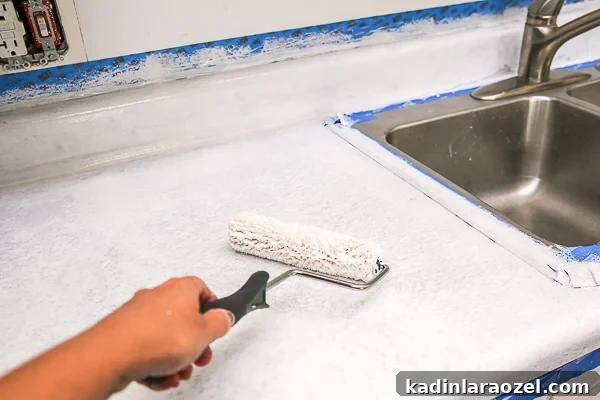
You’ll need multiple thin coats, especially when covering a dark surface with a light color. Each coat must be fully dry to the touch before applying the next. I applied six thin coats to go from black to solid white — thinner coats required more layers, so adjust accordingly for your starting and target colors.
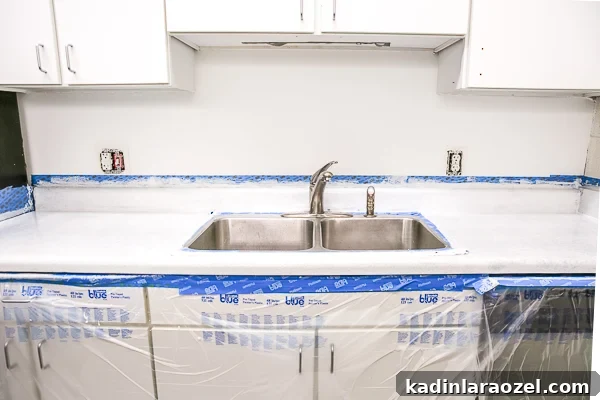
Step 5: Repeat until fully covered. After the first coat is dry to the touch (often one to two hours, depending on product and conditions), apply another thin coat across the entire surface. Continue layering and letting each coat dry until the old color is completely hidden and the finish is even.
Step 6: Remove tape and cure. When you’re satisfied with the finish, remove the painter’s tape and allow the countertop to cure for at least 72 hours before heavy use. The surface will feel dry within hours, but placing objects on it too soon can cause chipping. If you experience chipping or incomplete curing after the recommended time, adding a coat or two of polyurethane can improve durability.
Optional update: Some users add a polyurethane topcoat for extra protection. I didn’t apply one, but it can help prevent chipping or wear if you have concerns.
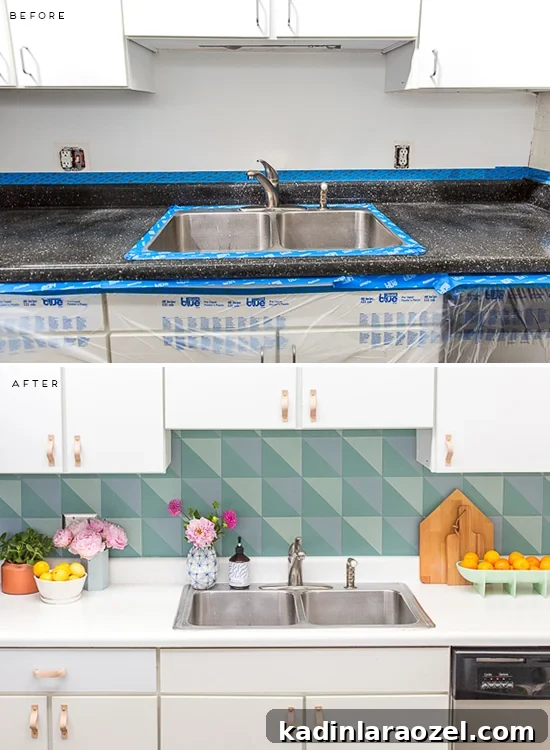
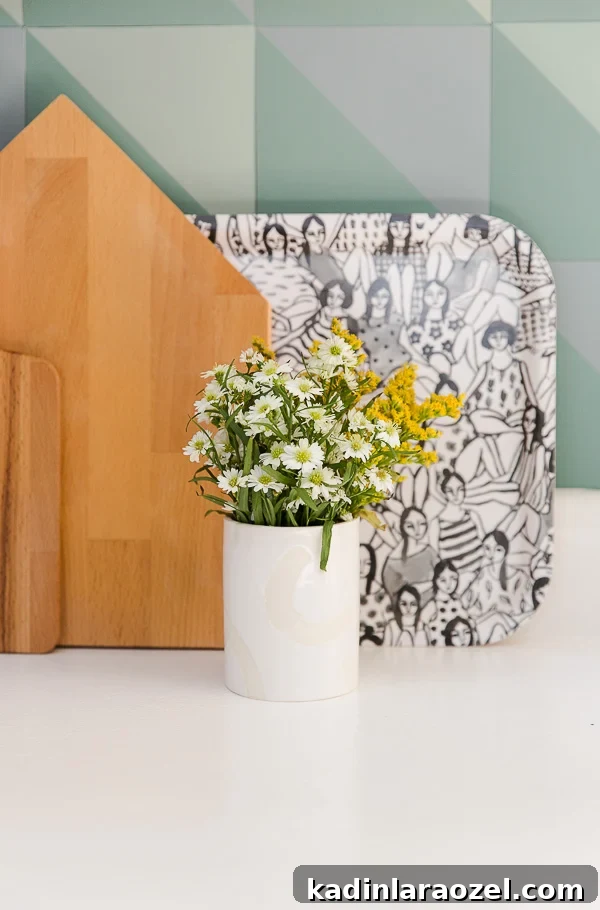
And that’s how to resurface laminate countertops for under $50. The process is straightforward, though the coating can be sticky and smelly during application. If you’re willing to put in the work, the visual payoff is significant and far less expensive than replacing countertops.
It’s a great cost-saving option even for larger kitchens — you may need additional cans for bigger areas, but it still beats a full countertop replacement.
If you have questions about tools, product selection, or technique, ask away — I’m happy to help.
How My Resurfaced Countertops Have Held Up
I painted mine two months ago and they’ve held up well overall. I had one small half-inch chip near the lip after placing an object on the surface before it had fully cured — a reminder to wait the full 72 hours. If you follow the drying and curing guidance, most people report good durability.
More DIY Kitchen Upgrades
- Consider adding a budget-friendly DIY backsplash to complement your refreshed counters.
- Replace hardware with simple updates like leather drawer pulls for a custom look.
- If you rent, choose renter-friendly options and check what’s allowed before altering surfaces.
- You can also apply similar coatings to tile floors or other surfaces, but follow product instructions and test a small area first.
How to Resurface Laminate Countertops (Under $50)
Author: Brittni
Summary: Laminate countertops are affordable but show wear over time. Resurfacing with a specialty countertop coating is an inexpensive way to refresh their look. With proper prep, multiple thin coats, and adequate curing time, you can transform tired laminate into a clean, updated surface without a remodel.
Equipment
- Countertop coating (small kit)
- Paint roller (foam or short nap)
- Foam paint brush for detail work
- Sandpaper or sanding sponge
- Old cloths and mild kitchen cleaner
- Respirator mask
- Painter’s tape and painter’s plastic
- Old sheet or drop cloth
Instructions (condensed)
- Sand the entire countertop and backsplash/lip areas to roughen the surface, then clean thoroughly. Let dry completely.
- Mask off areas you don’t want coated and cover floors and cabinets to protect from drips.
- Cut in edges and detail areas with a foam brush, then roll the countertop surface with thin, even coats from back to front.
- Allow each coat to dry to the touch before applying the next. Multiple thin coats produce the best, most durable finish.
- When the new coating fully hides the old color and the finish is even, remove tape and let the countertop cure for at least 72 hours before regular use.
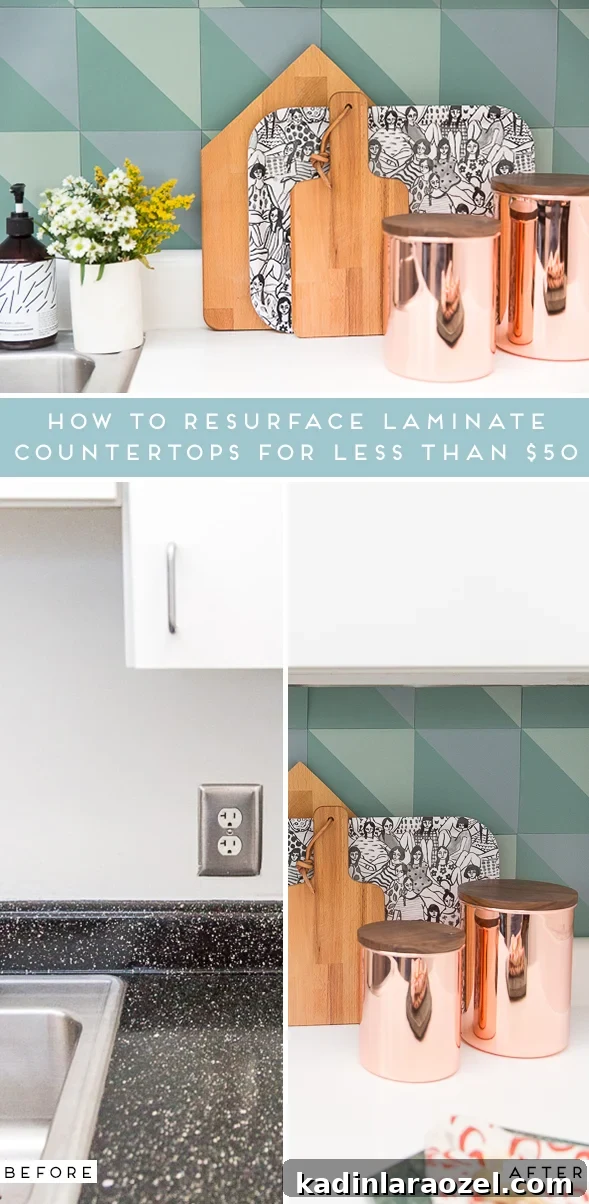
Final thoughts: Proper surface prep, patience between thin coats, and sufficient curing time are the keys to a successful countertop resurfacing. It’s a rewarding weekend project that can dramatically update your kitchen on a tight budget.
What do you think of the finished countertops? Have you tried painting or resurfacing counters before? Share any tips or questions you have about the process.