Make Velvet Geometric Color-Block Throw Pillows: Step-by-Step Guide
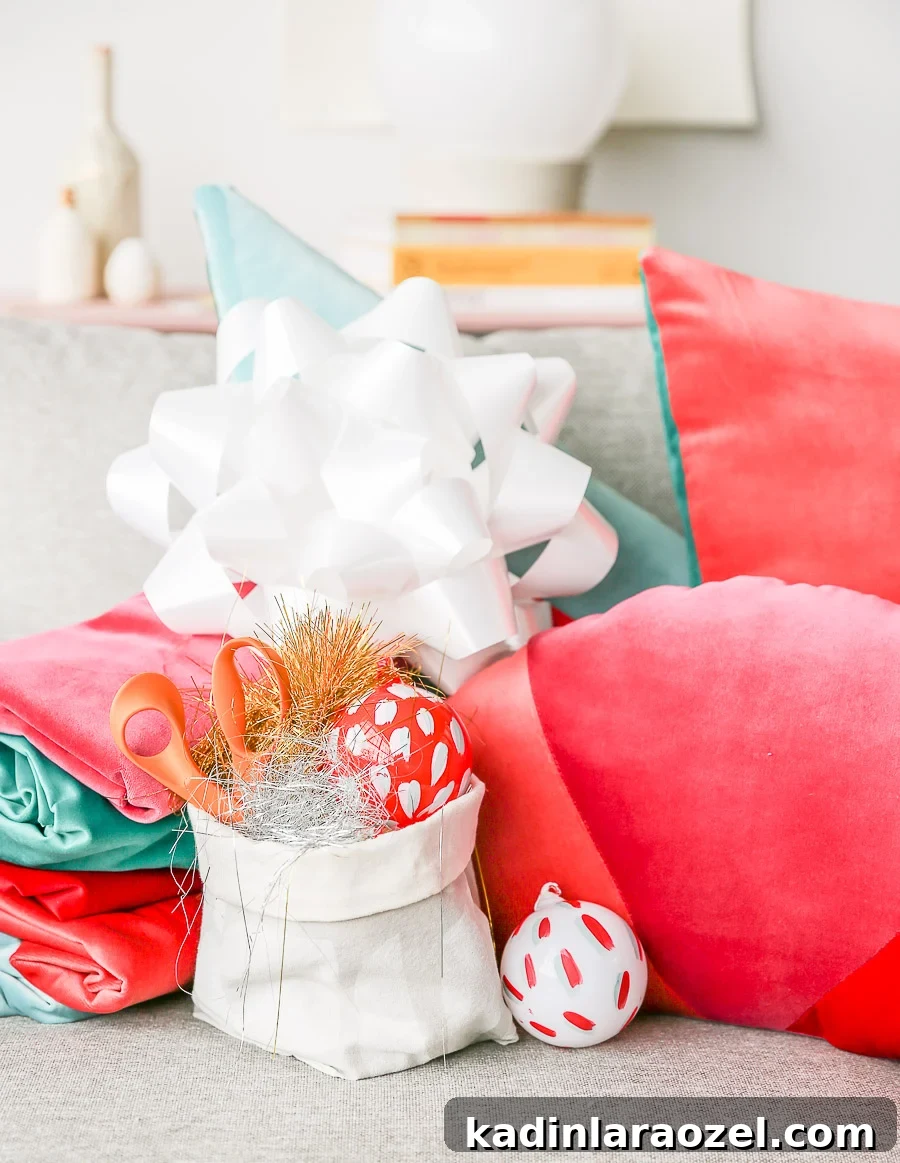
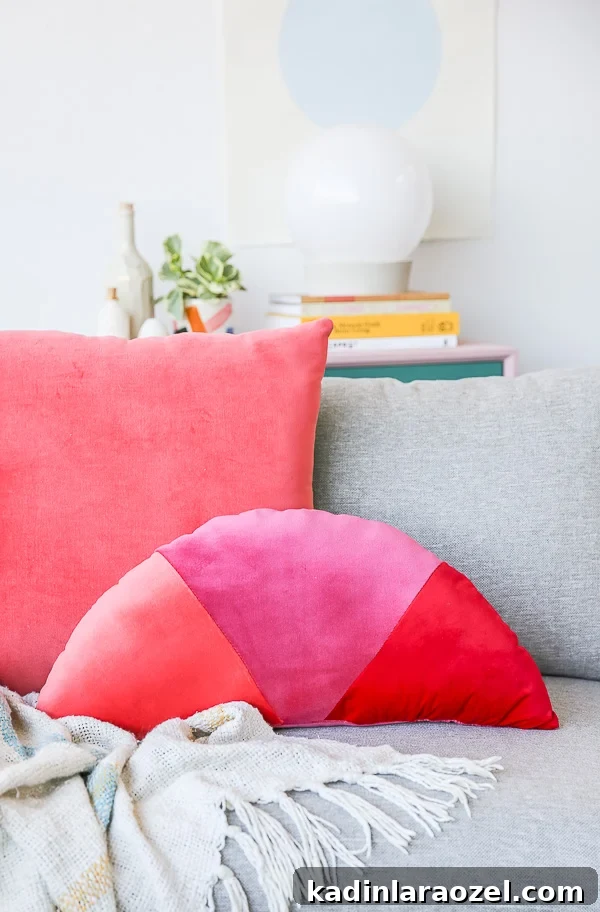
Velvet is having a major moment in home decor, so I decided to dive in with this DIY for geometric, color-blocked velvet pillows. These cushion designs refresh a neutral sofa with bold color and texture, and they’re simple enough to change whenever you want a new look. If you prefer a different material, you can substitute any fabric for velvet and follow the same steps.
These pillows are a subtle way to introduce holiday colors—reds, pinks, greens—without committing to seasonal decor; choose hues that will still work after the holidays for year-round appeal.
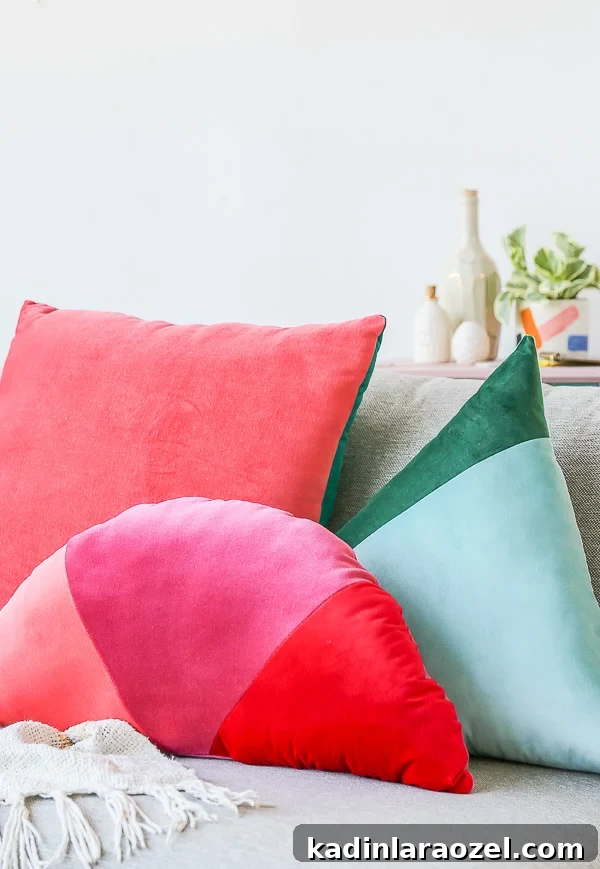
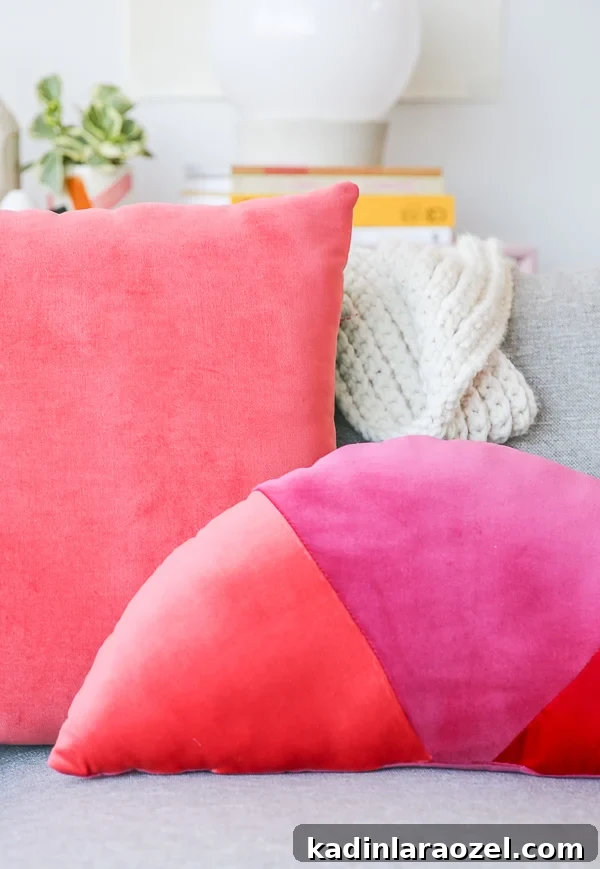
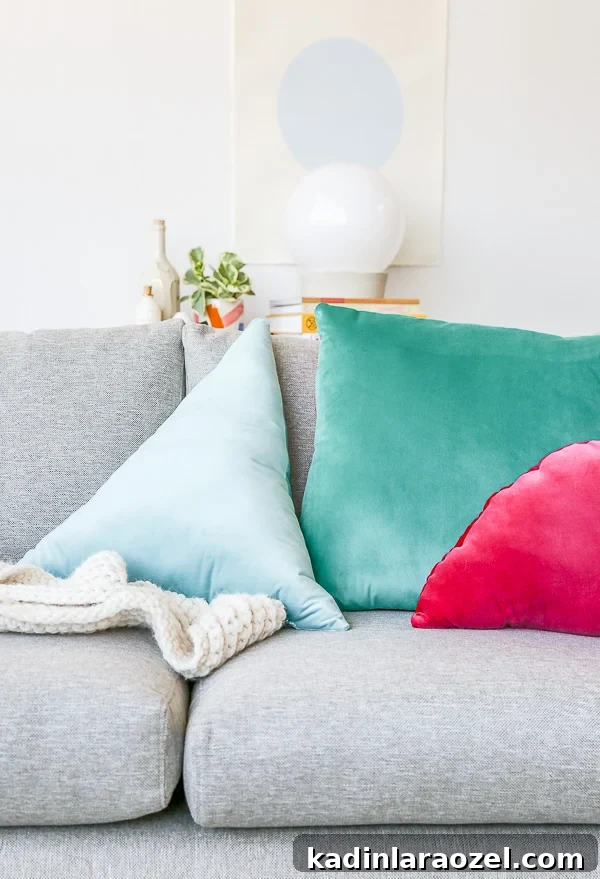
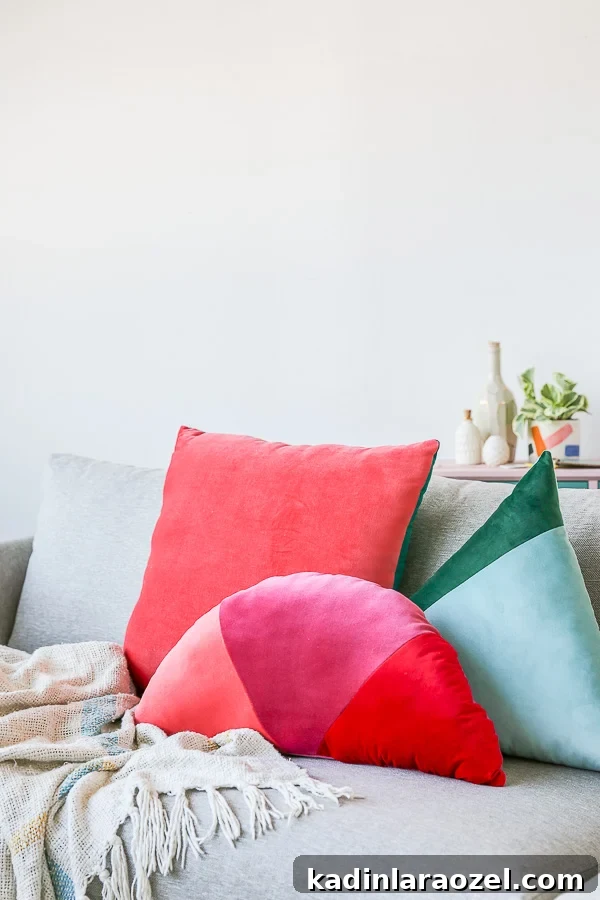
We made three different shapes for this project. I particularly love the half-circle design—its three sections remind me of a little pastry, which I affectionately call my “baby croissant.” Below is a clear, step-by-step tutorial so you can make your own.
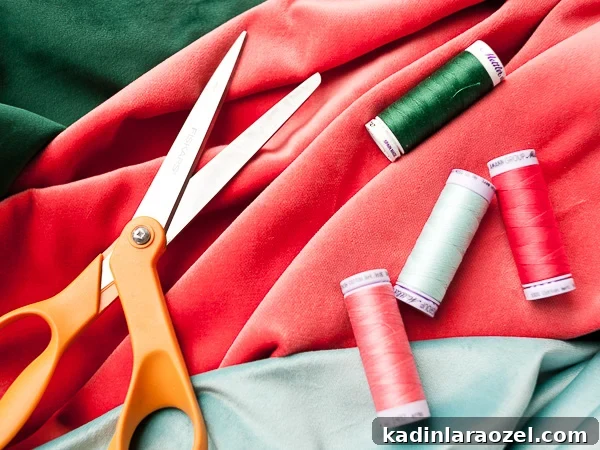
Materials and tools
- Sewing machine
- Total of 1/2 yard fabric (divide by color when color-blocking)
- Thread to match each fabric color
- Sharp fabric scissors
- Straight pins
- Sewing chalk or a fabric marker
- 12–20 ounces polyester polyfill (pillow stuffing)
- Wooden dowel or similar tool to push stuffing into corners
Note: If you’re color-blocking, the half yard is the total amount. For example, two colors would be a quarter yard of each. Use a reliable pair of scissors designed for both fabric and paper for accurate cutting and long-lasting sharpness.
Instructions
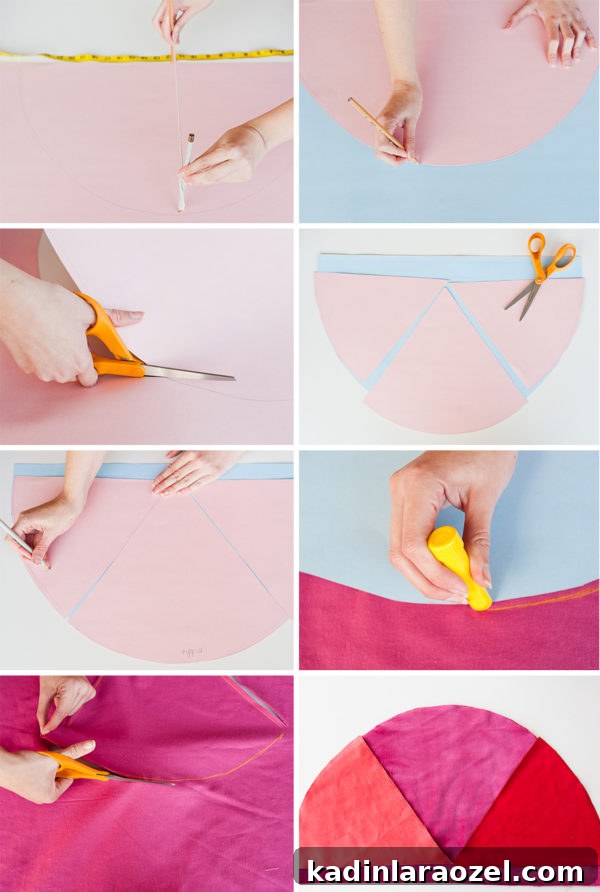
1. Create a template. Use a large sheet of paper or poster board to draw your pillow shape. For a half-circle pillow, first mark the base width, then use a string attached to a pencil to draw a symmetrical half-circle arc so both sides match.
2. Cut out the template. Trace and cut a second identical template for the back panel. Optionally add an extra inch to the bottom of the back piece for seam allowance or a more forgiving fit. Divide the front template into three wedge-shaped “slices” to create the color-blocked segments.
3. Trace and cut fabric. Place the templates on the wrong side of your fabric and trace each piece. Cut out four fabric pieces total: three front segments and one back panel.
4. Assemble the front. Lay out the three front pieces in their final order with right sides facing up. Working from right to left, fold the right piece over the middle piece and pin along the seam. Then fold the left piece over the middle piece and pin along that seam.
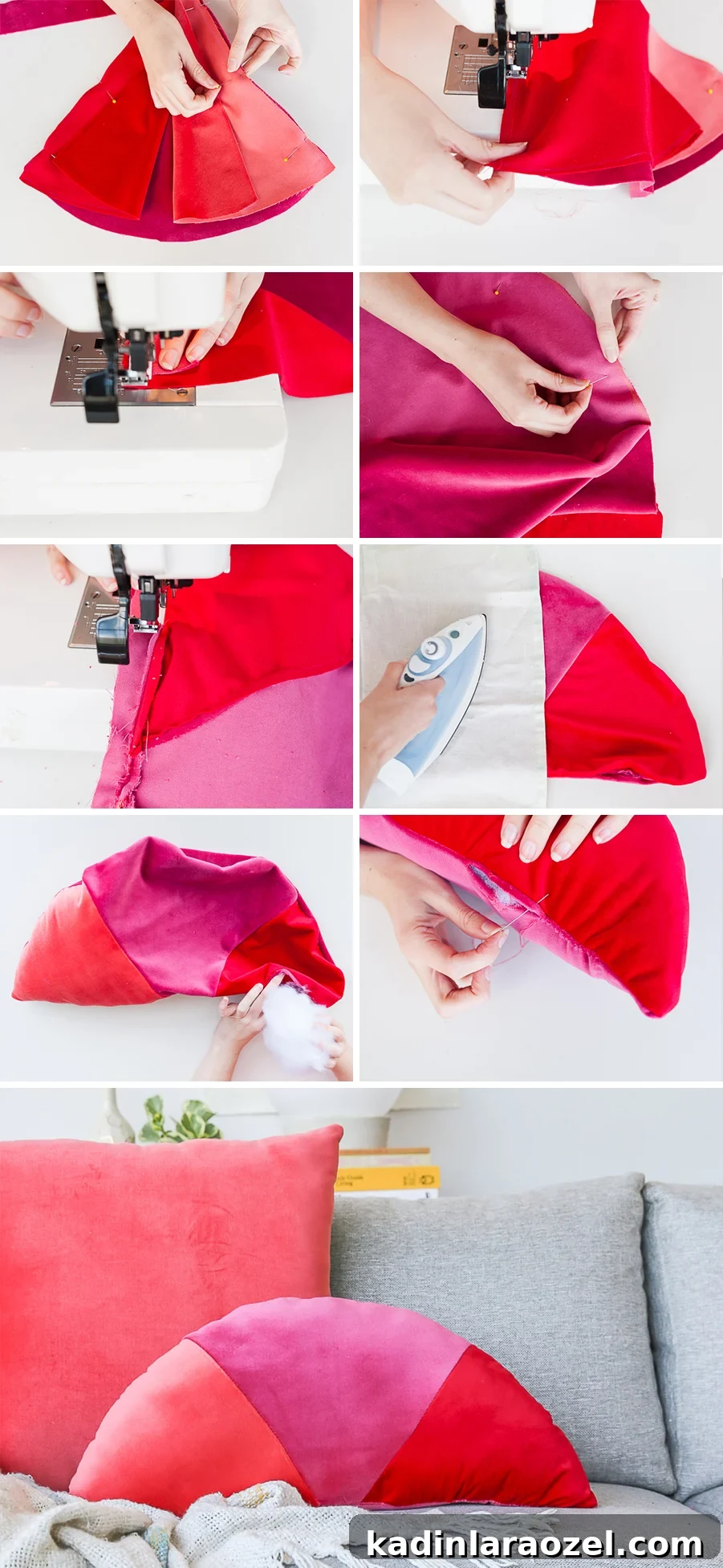
5. Stitch the seams. Sew straight seams along the pinned edges, backstitching at the start and end to secure the stitches. Remove pins to reveal the completed pillow front.
6. Attach the back panel. Place the front and back panels together with right sides facing in (wrong sides out). Pin around the perimeter, leaving a gap roughly the width of your wrist for turning and stuffing. Sew around the edge, again backstitching at the start and finish.
7. Turn and press. Turn the pillow right-side out. To protect velvet, press gently on a low heat setting with a clean towel or pressing cloth between the iron and the fabric.
8. Stuff and close. Fill the pillow to your desired firmness using polyester polyfill. Use a wooden dowel to push fill into corners and narrow sections. Hand-stitch the opening closed with a ladder stitch or small slip stitch for an invisible finish.
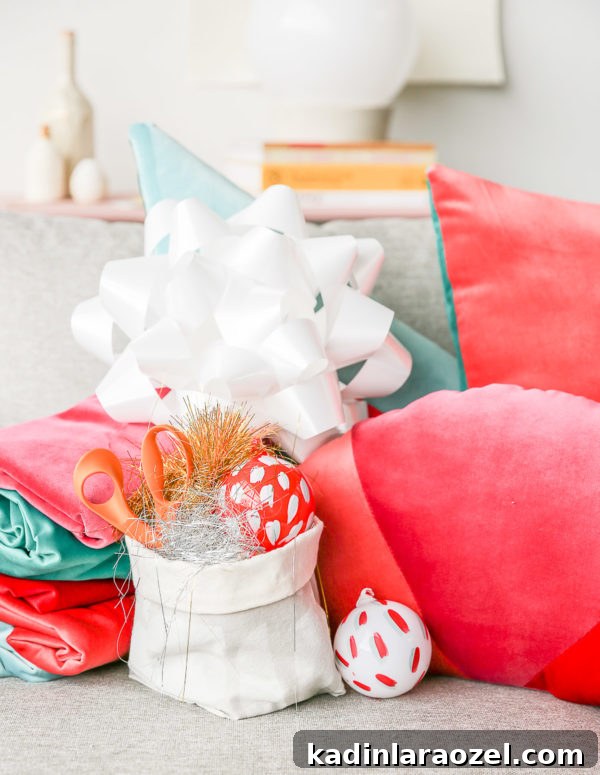
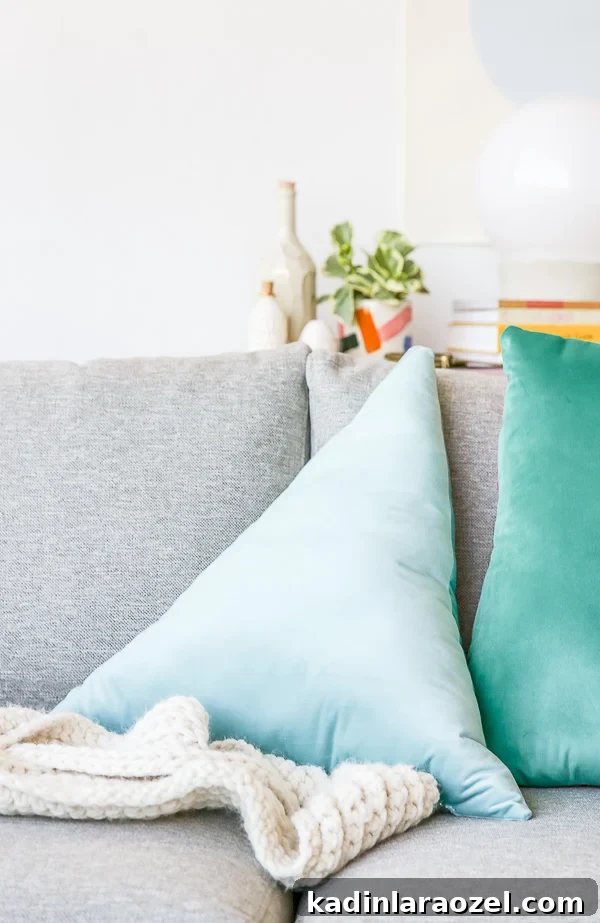
These pillows work beautifully for fall and winter, but with versatile color choices they can be used year-round. Select a palette that complements your space to keep them feeling fresh beyond a single season.
Photography: Amelia Tatnall Lawrence and Brittni Mehlhoff
Sewing: Liz Scoper
Styling: Brittni Mehlhoff
Are you a velvet fan? These geometric color-blocked pillows are an easy, stylish way to introduce texture and color into your home—customizable, comfortable, and handmade.
—
This post was created in partnership with Fiskars. All opinions are my own. Thank you for supporting the brands that help keep independent creative projects running.