Reupholster a Chair with a Fabric Seat: Step-by-Step Guide
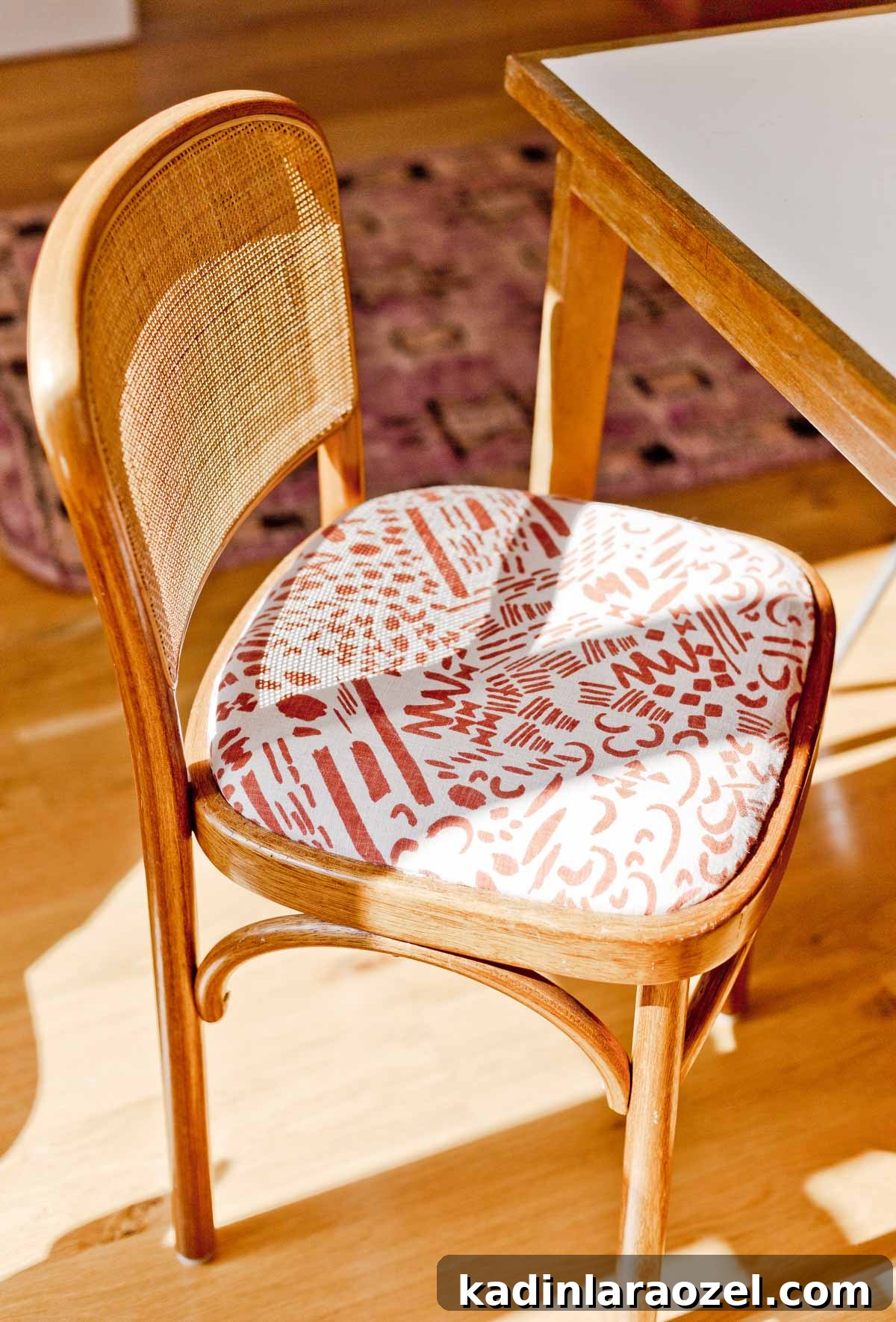
Learn how to reupholster a chair the easy way!
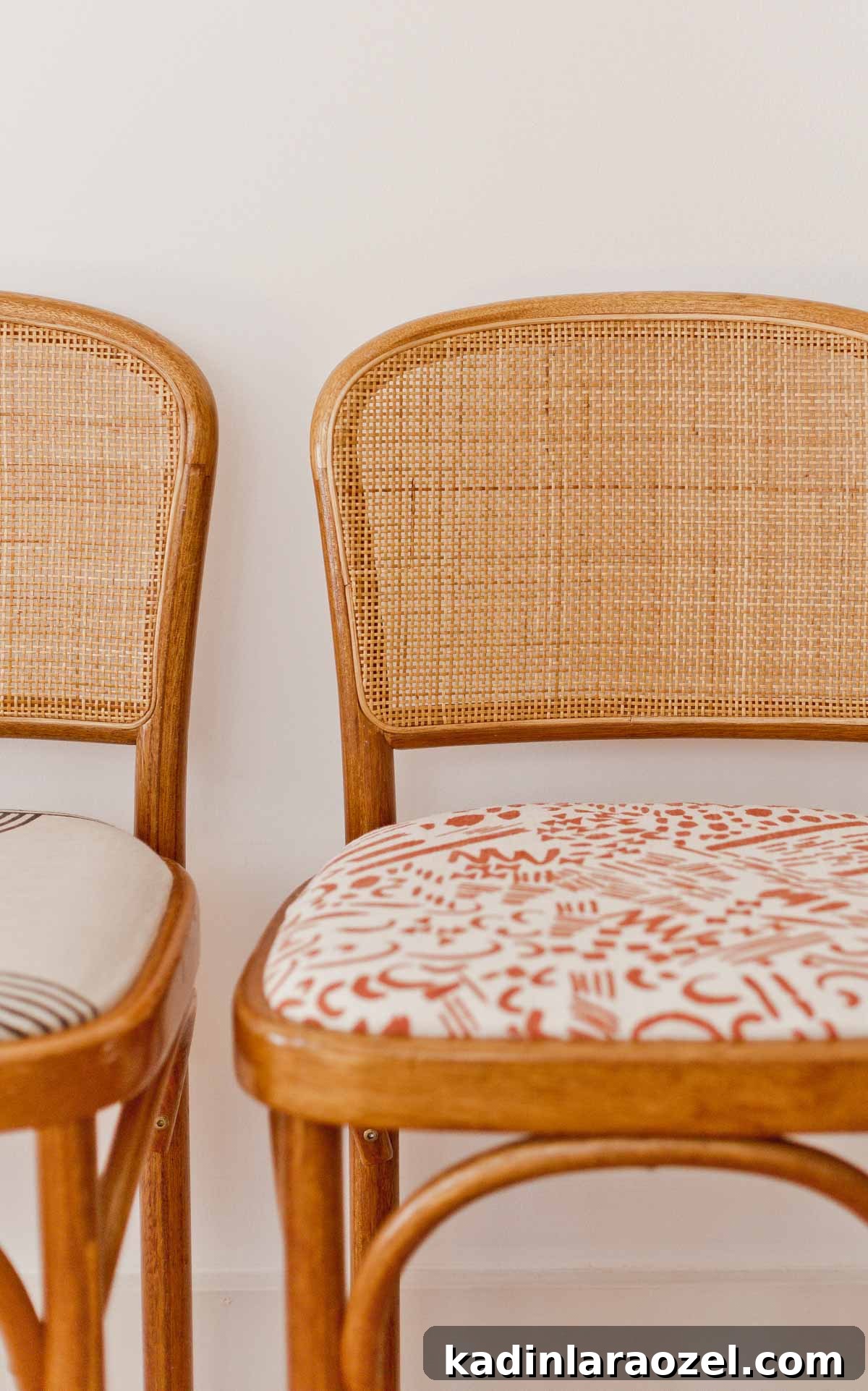
Reupholstering a chair—especially a dining chair with a fabric seat—is a practical DIY skill every home improver should know. It’s straightforward, requires only a few tools and materials, and can completely revive a piece of furniture once you learn a few simple techniques.
Below is a clear, step-by-step guide that walks you through reupholstering a fabric seat chair.
These instructions were inspired by a set of vintage chairs I found while sourcing pieces for a show-house makeover. The chairs had a beautiful vintage silhouette and open box-weave cane webbing, but their original seats were dull and dingy. Replacing the fabric gave them a fresh, modern look while keeping their character intact.
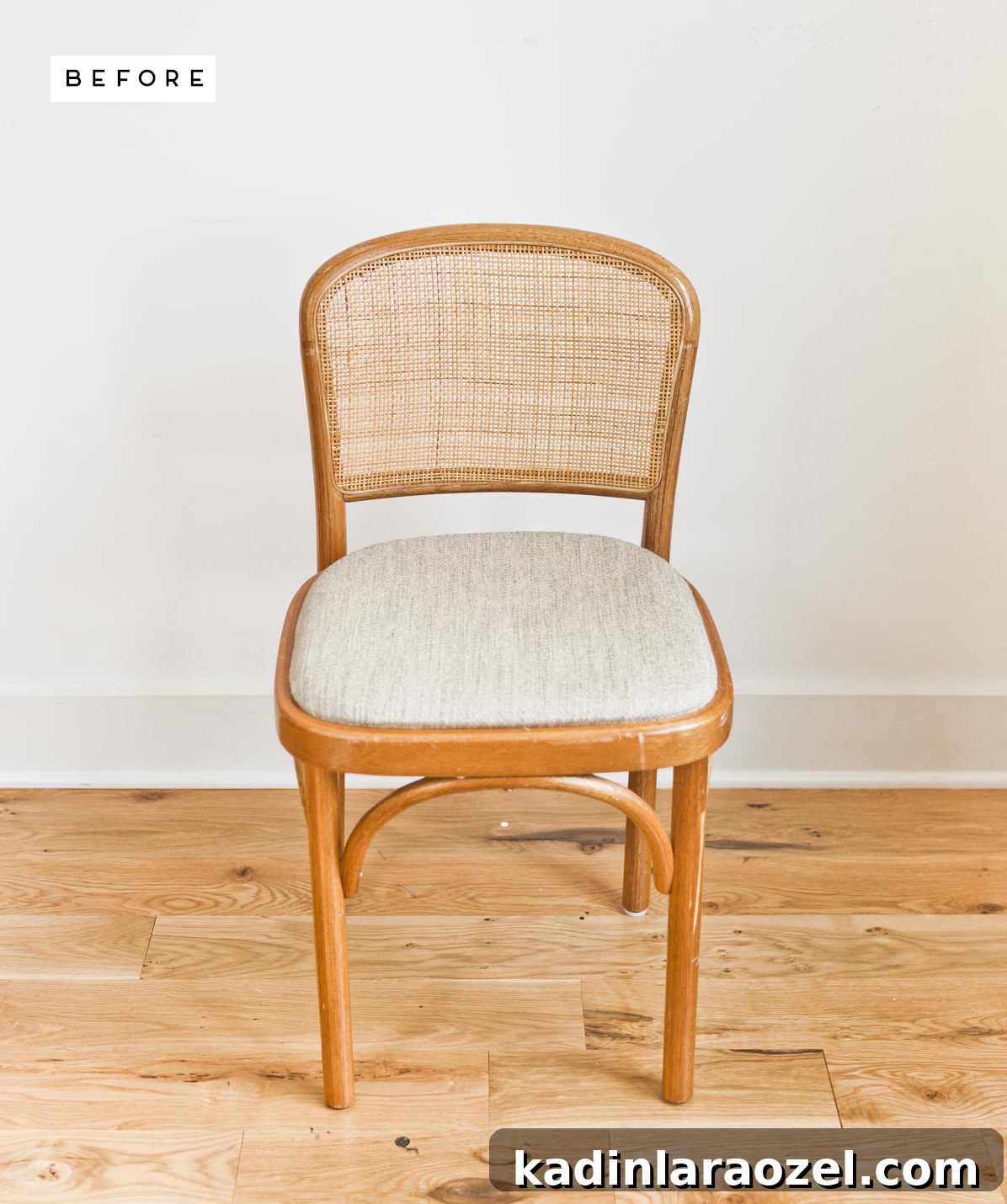
Materials for Chair Reupholstery
- Chair with a removable fabric seat
- Fabric slightly larger than the seat you plan to cover (allow extra for wrapping underneath)
- Heavy-duty stapler
- Heavy-duty glue or screws (depending on how the seat is attached)
- Iron
- Scissors
How to Reupholster a Chair
1) Remove the seat
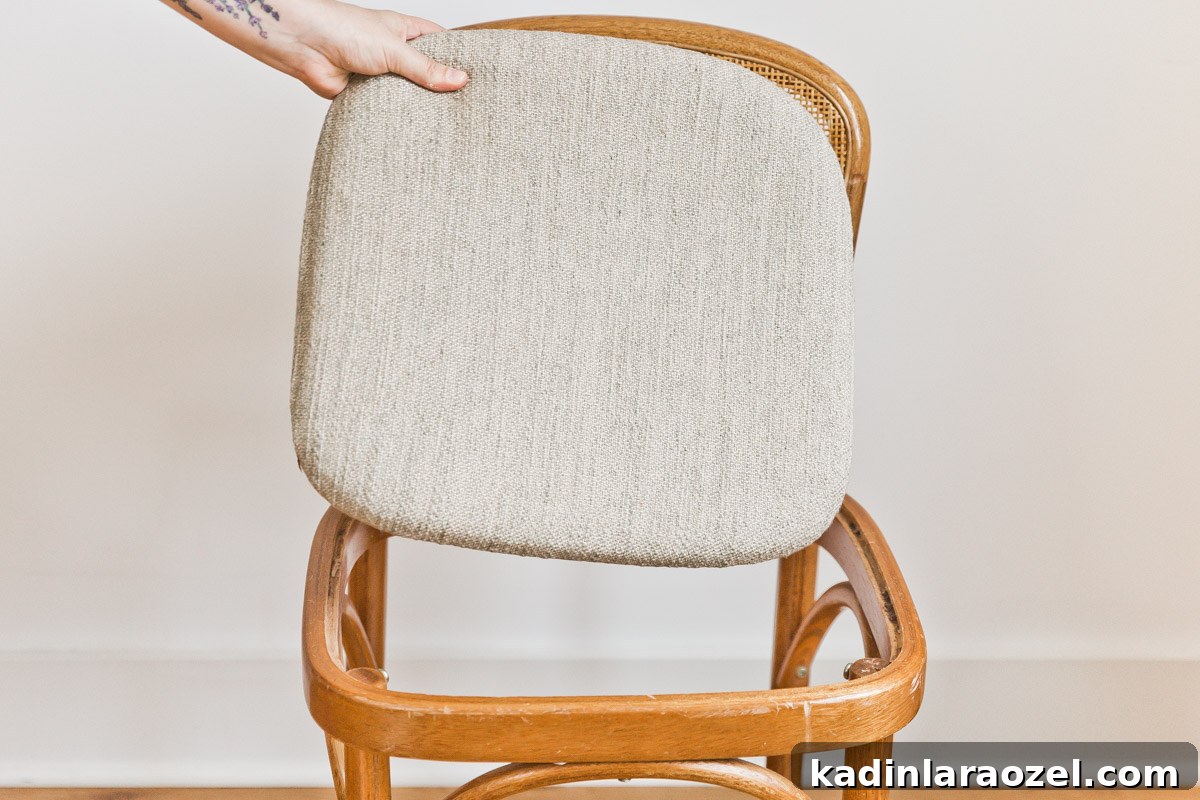
Start by wiping the chair clean. Most fabric seats are easy to remove: some simply sit in the chair’s lip and lift out with no tools. If the seat is snug, tap the underside gently with a rubber mallet to loosen it. If the seat is screwed in from underneath, remove the screws with a screwdriver and lift the seat free.
2) Clean the seat lip and remove residue
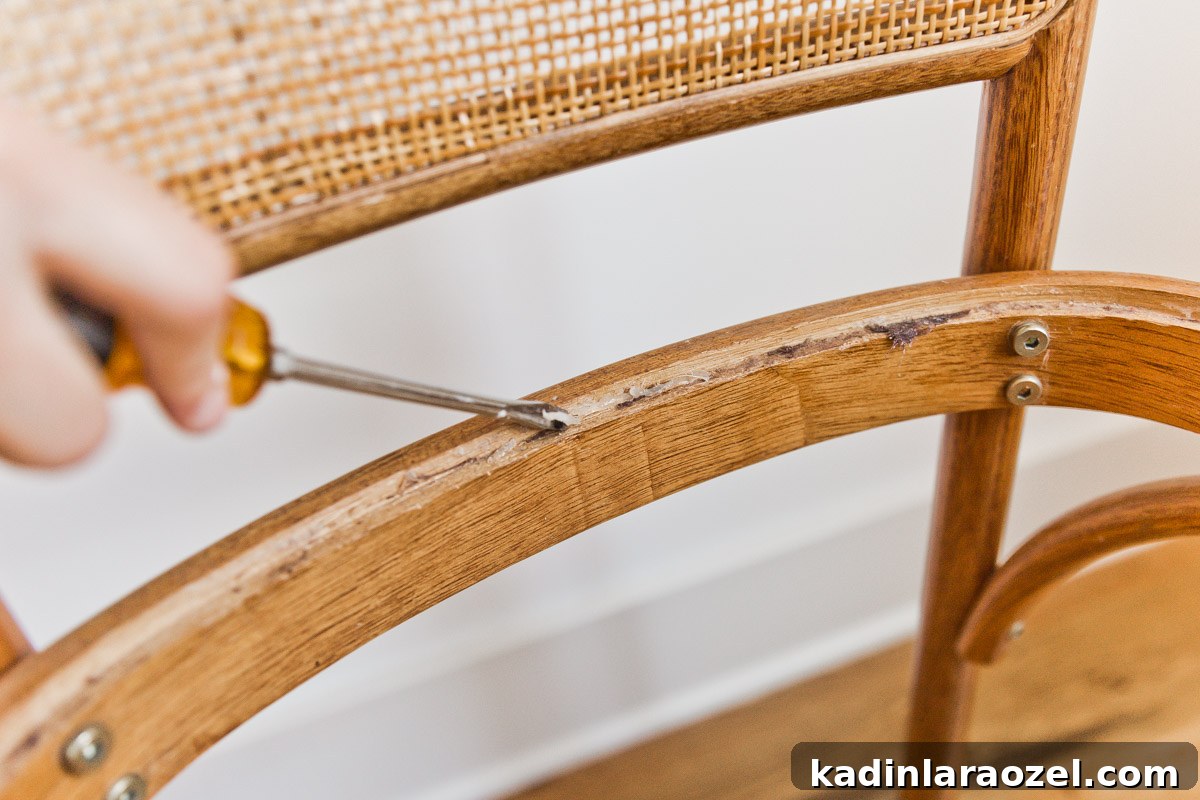
If there’s any old glue, fabric bits, or debris around the inner lip, scrape it away with a putty knife or a flat screwdriver so the new seat will sit flush and clean. Removing residue ensures a tidy finish and helps the seat reattach evenly.
3) Iron, measure, and cut your fabric
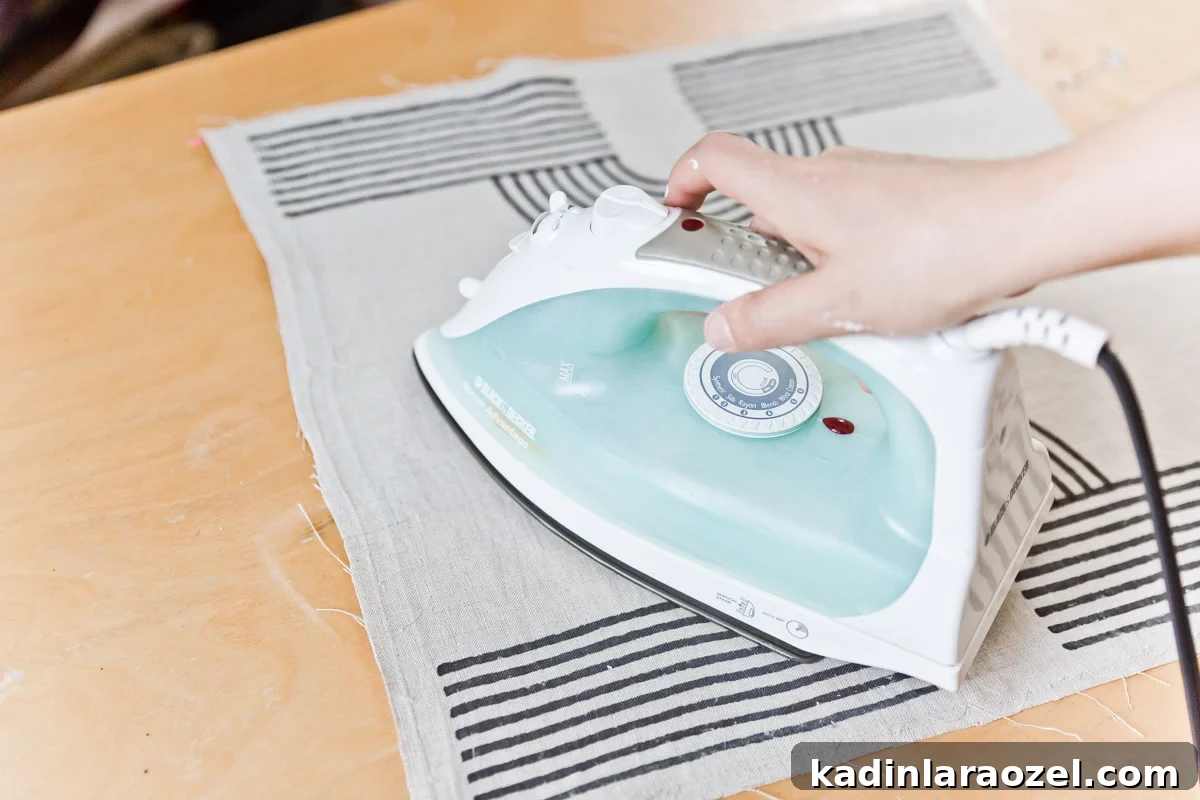
Press your fabric to remove wrinkles, then cut it so it extends about 2–3 inches beyond the seat all the way around. That extra margin gives you enough material to wrap under the seat and staple securely.
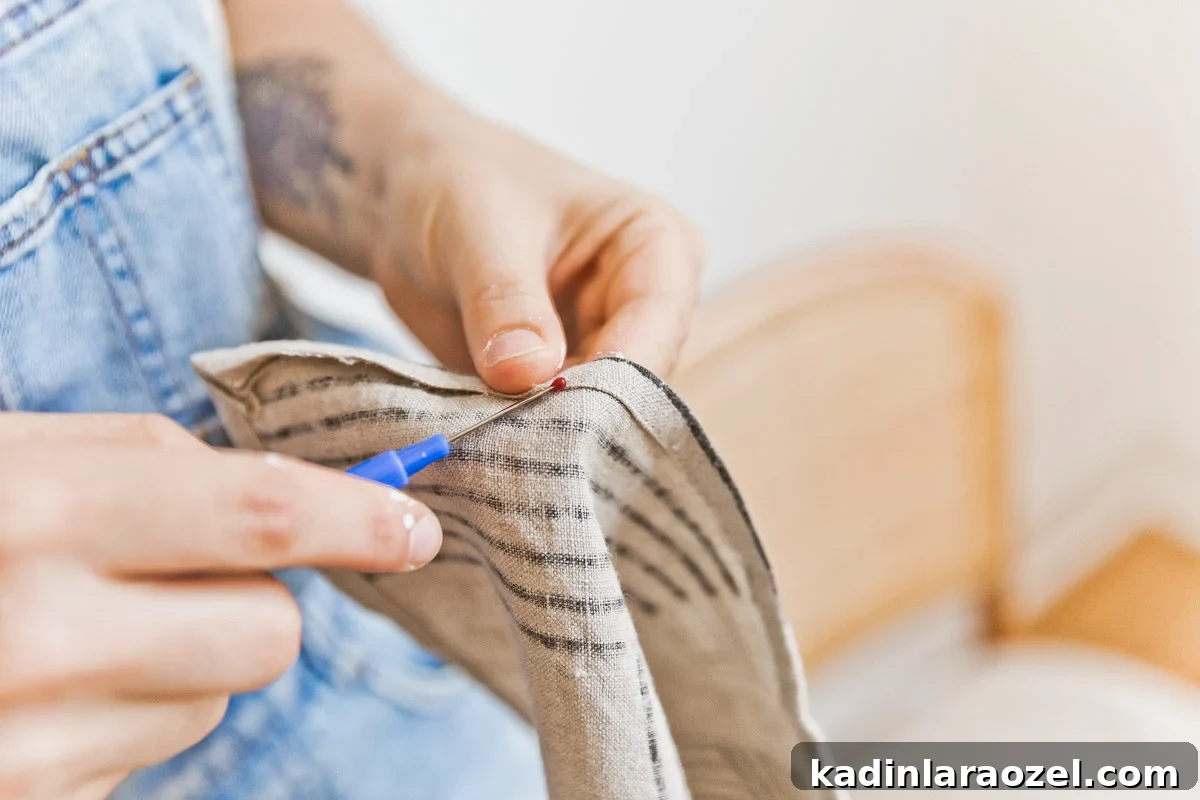
If your fabric pieces (or napkins, if you’re using them) are a little small, you can carefully join or alter them—just be sure the visible top is smooth and uninterrupted. In the project shown here, napkins and small yardage were used creatively to cover the seats.
4) Stretch and staple the fabric to the seat
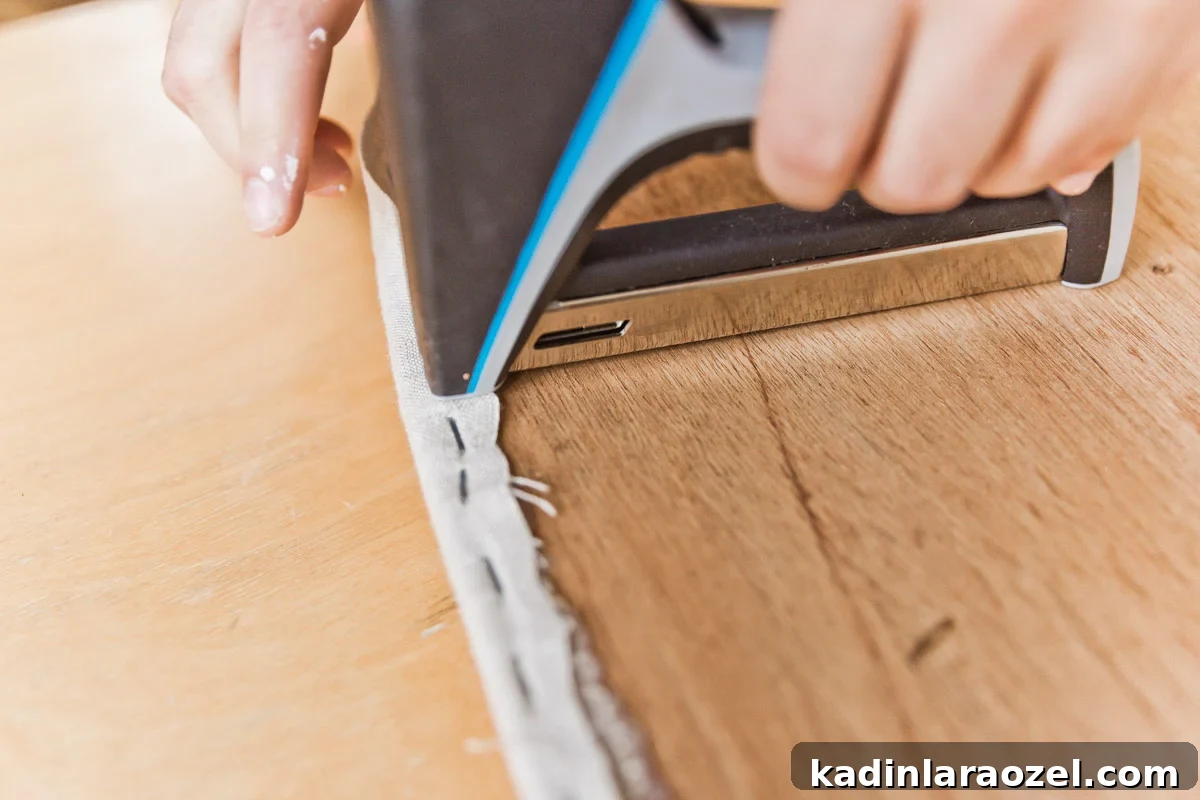
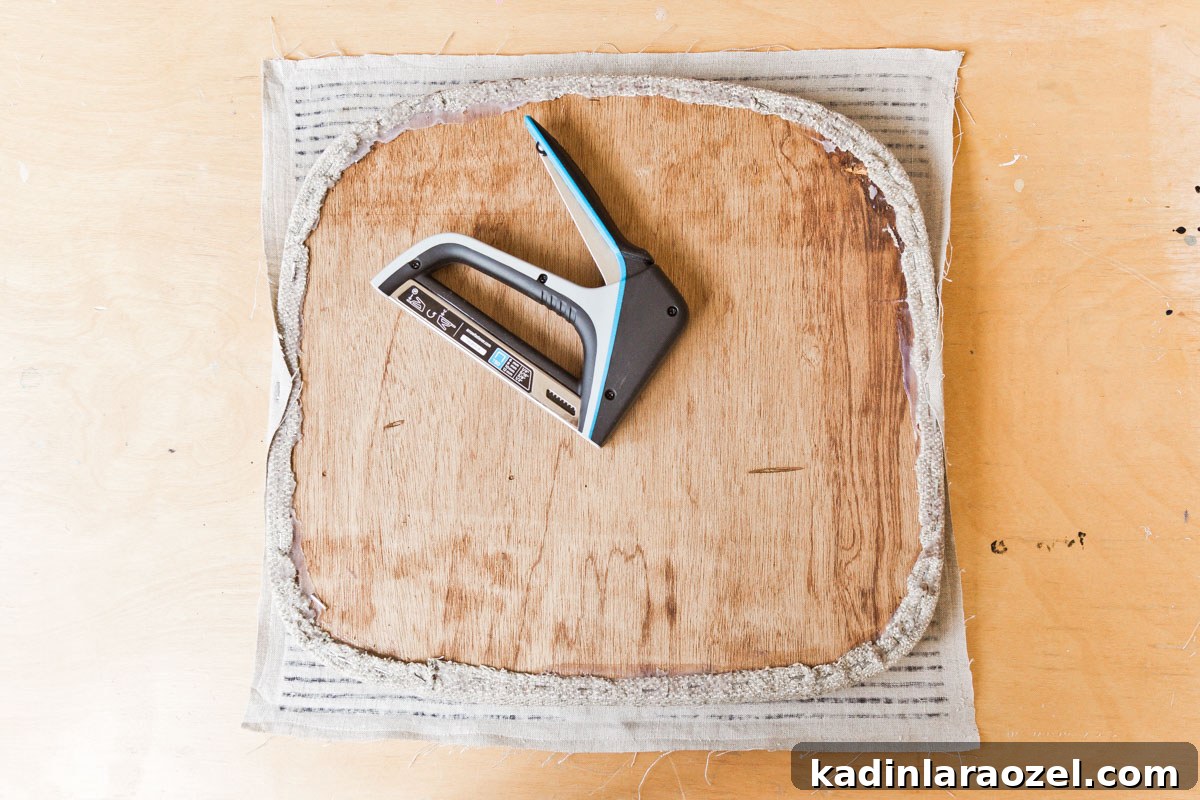
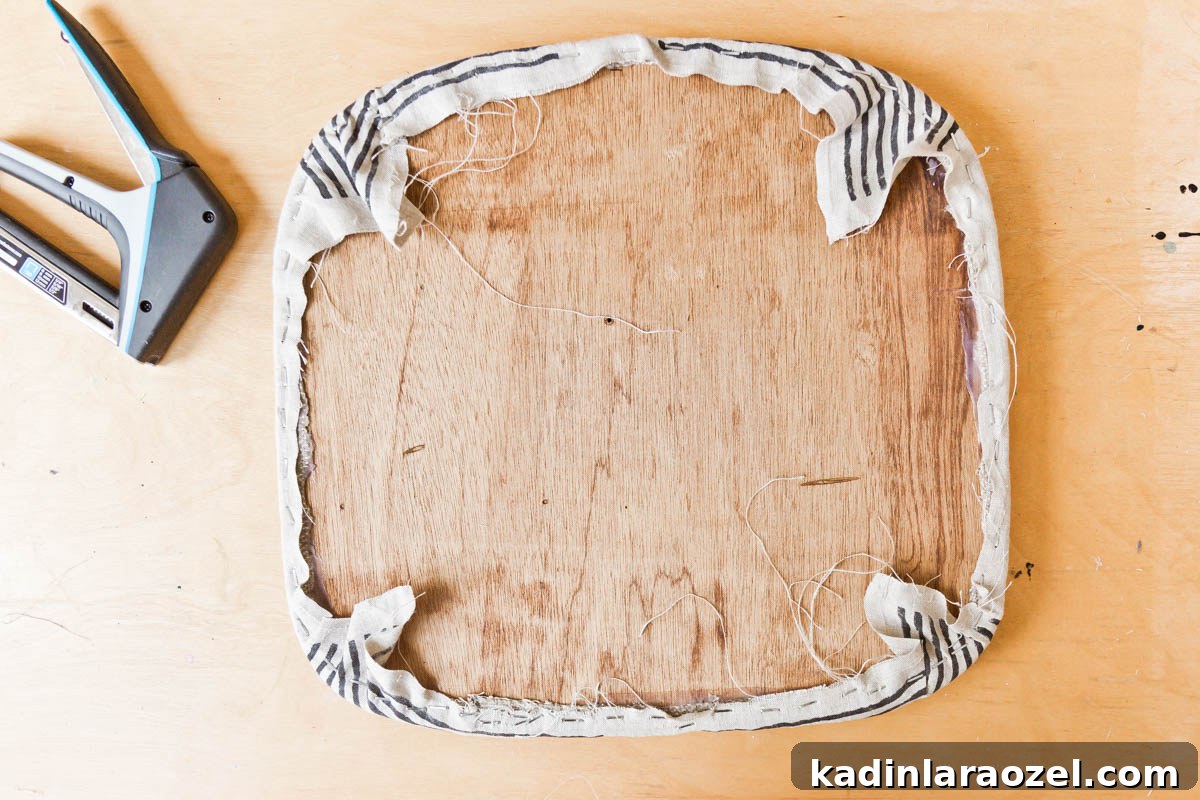
Place the fabric face down on a flat surface, then put the seat, face down, on top of it. Begin stapling the fabric to the underside of the seat using a cross-stretch method: start with a single staple centered on one side, then pull the fabric tight and place a staple centered on the opposite side. Repeat for the remaining two sides so you have one staple in the middle of each side. Continue working outwards, alternating sides and pulling tight, until the fabric is evenly stretched and secured across the seat.
When you reach the corners, fold the fabric neatly so it lies flat and staple through the fold. Trim or adjust folds to avoid excessive bulk underneath.
5) Trim excess fabric
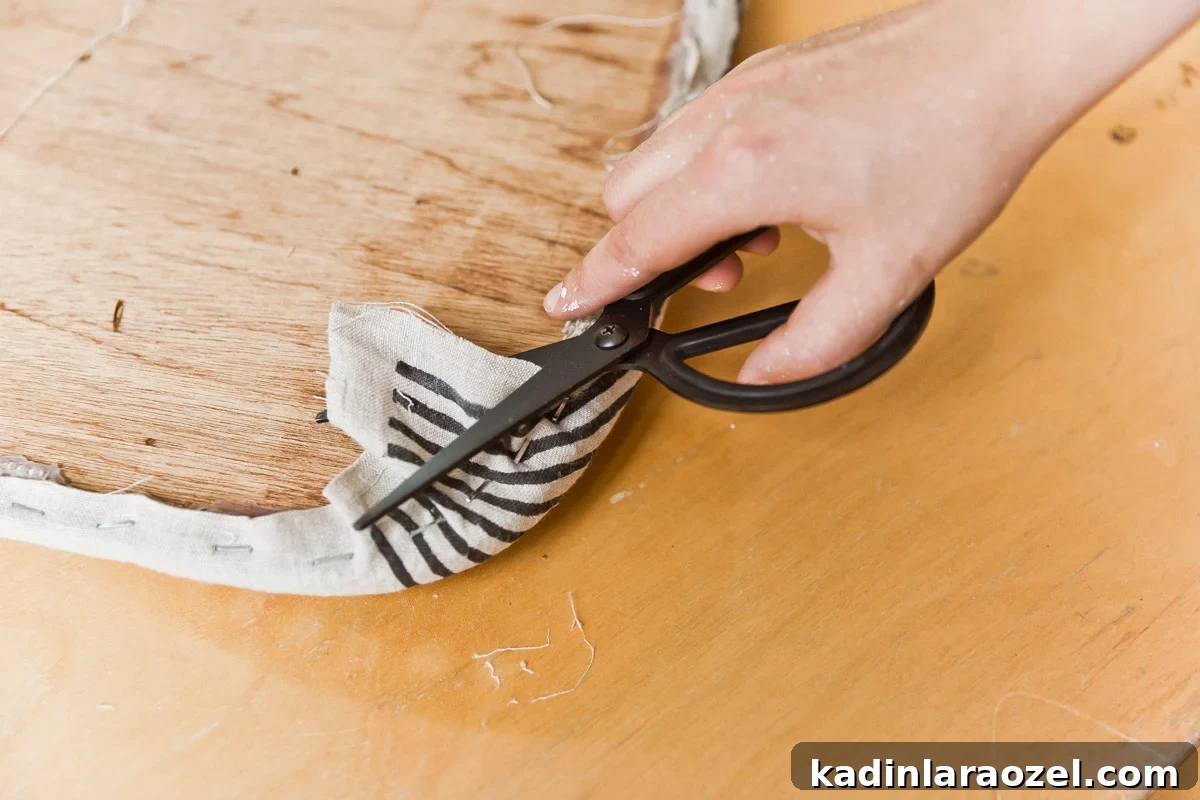
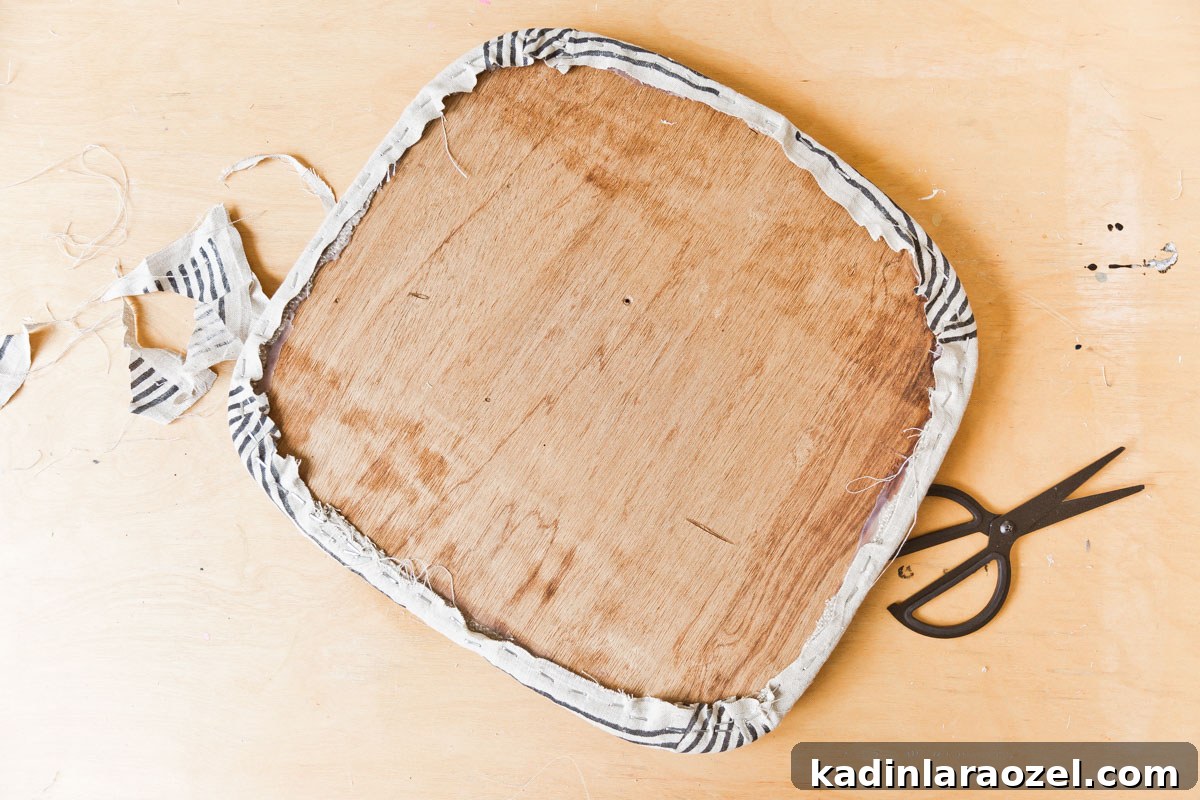
After stapling, trim away any excess fabric that creates bulk or prevents the seat from fitting back into the chair frame cleanly. Focus on the underside and the corners—neat trimming makes the finished seat look tidy and professional.
6) Reinstall the reupholstered seat
With the fabric secured and trimmed, reinstall the seat. Depending on the chair’s construction, you may:
- Set the seat back into the chair lip if it fits snugly;
- Apply a bead of heavy-duty glue around the lip to adhere the seat; or
- Reattach with screws from underneath, using screws that match the original length.
Once secured, the chair should look refreshed and much more modern—especially with well-chosen fabric. The vintage frames paired with bold or subtle textiles can completely change the visual impact of a dining set.
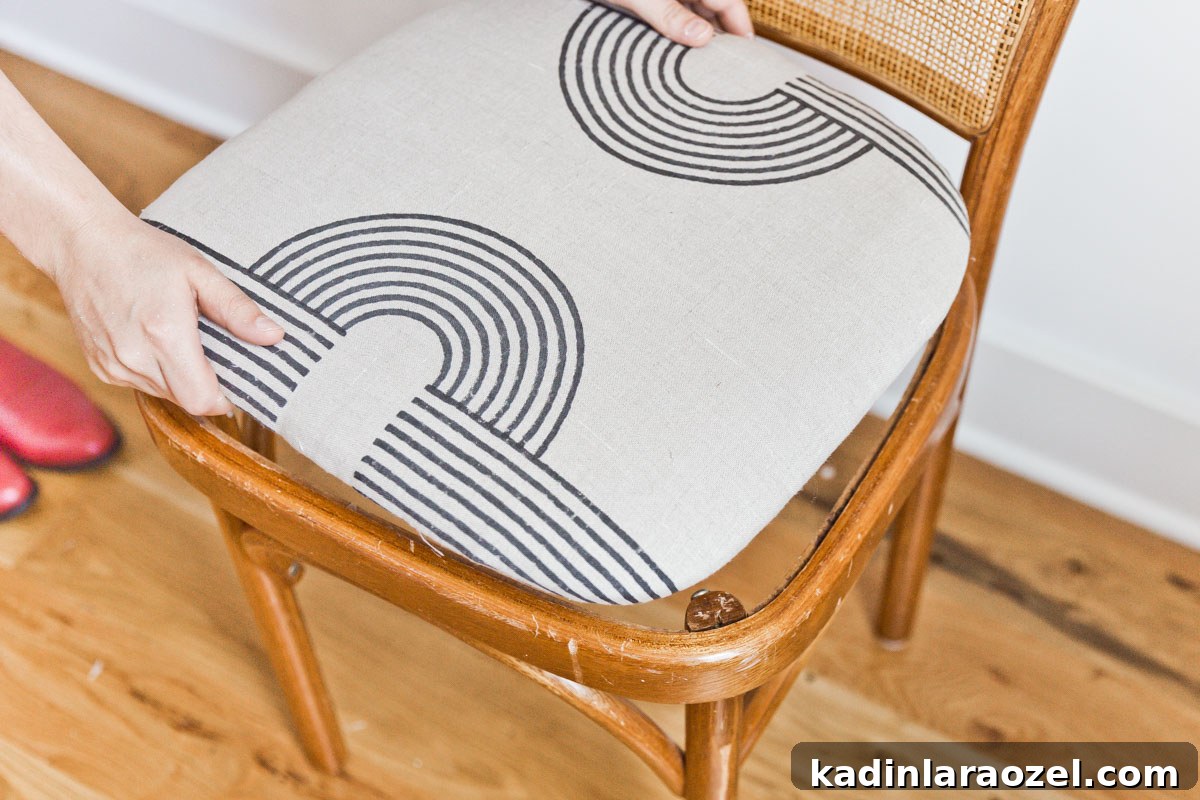
After reupholstery, you might also want to address any scratches or scuff marks on the wood. Simple touch-up methods—such as a walnut rubbing or a matching wood marker—can hide minor damage and improve the overall look. Test any touch-up method on an inconspicuous area first.
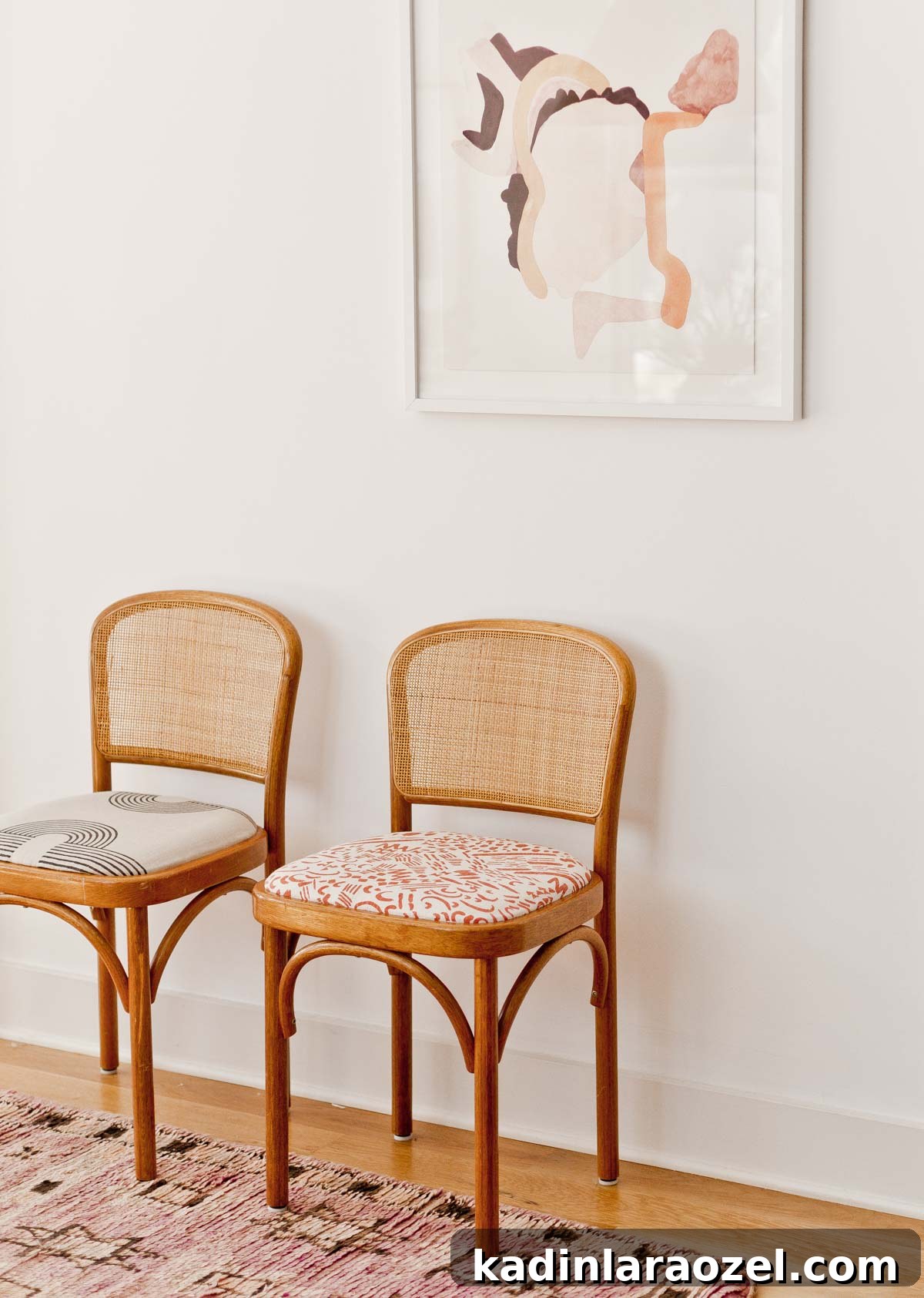
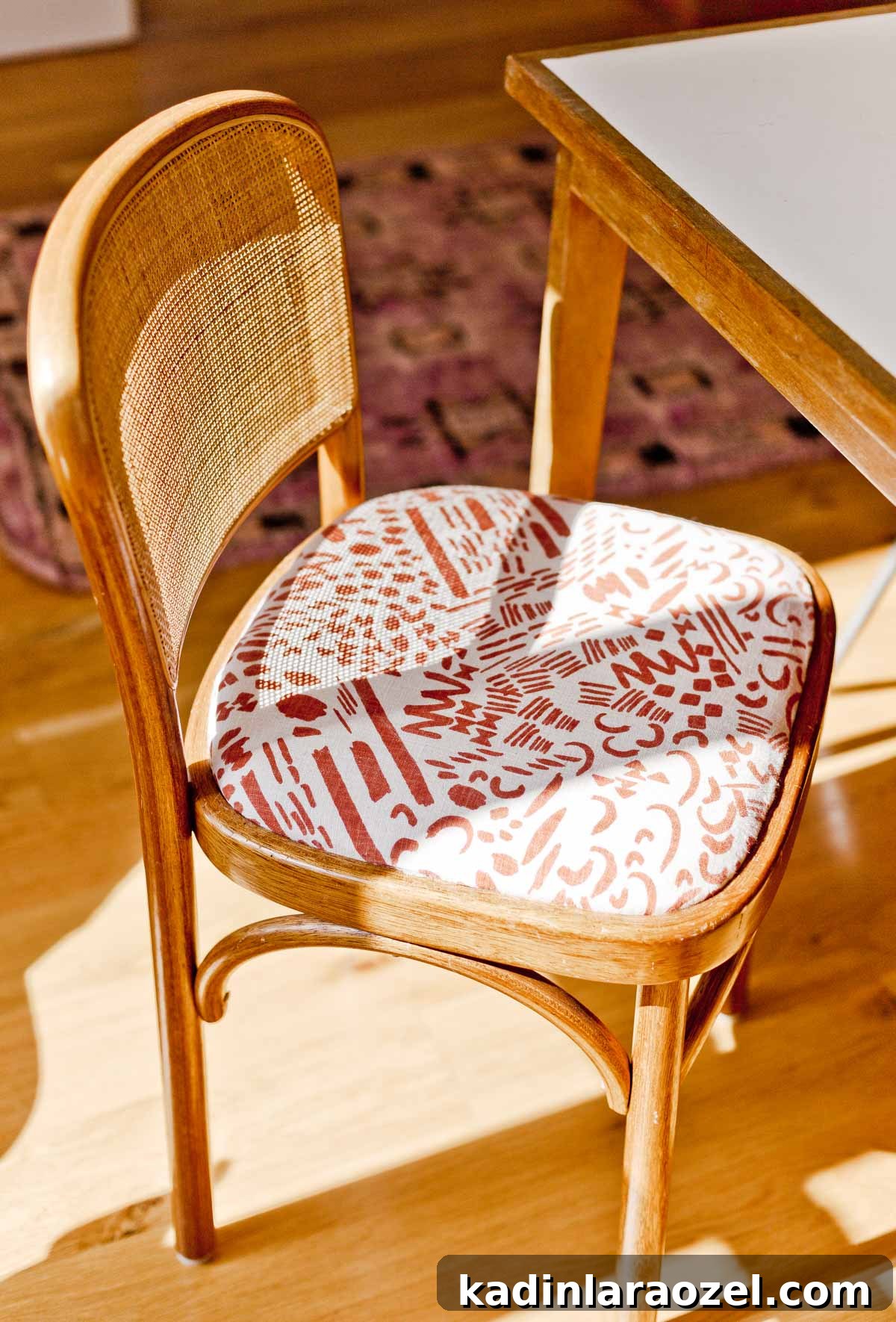
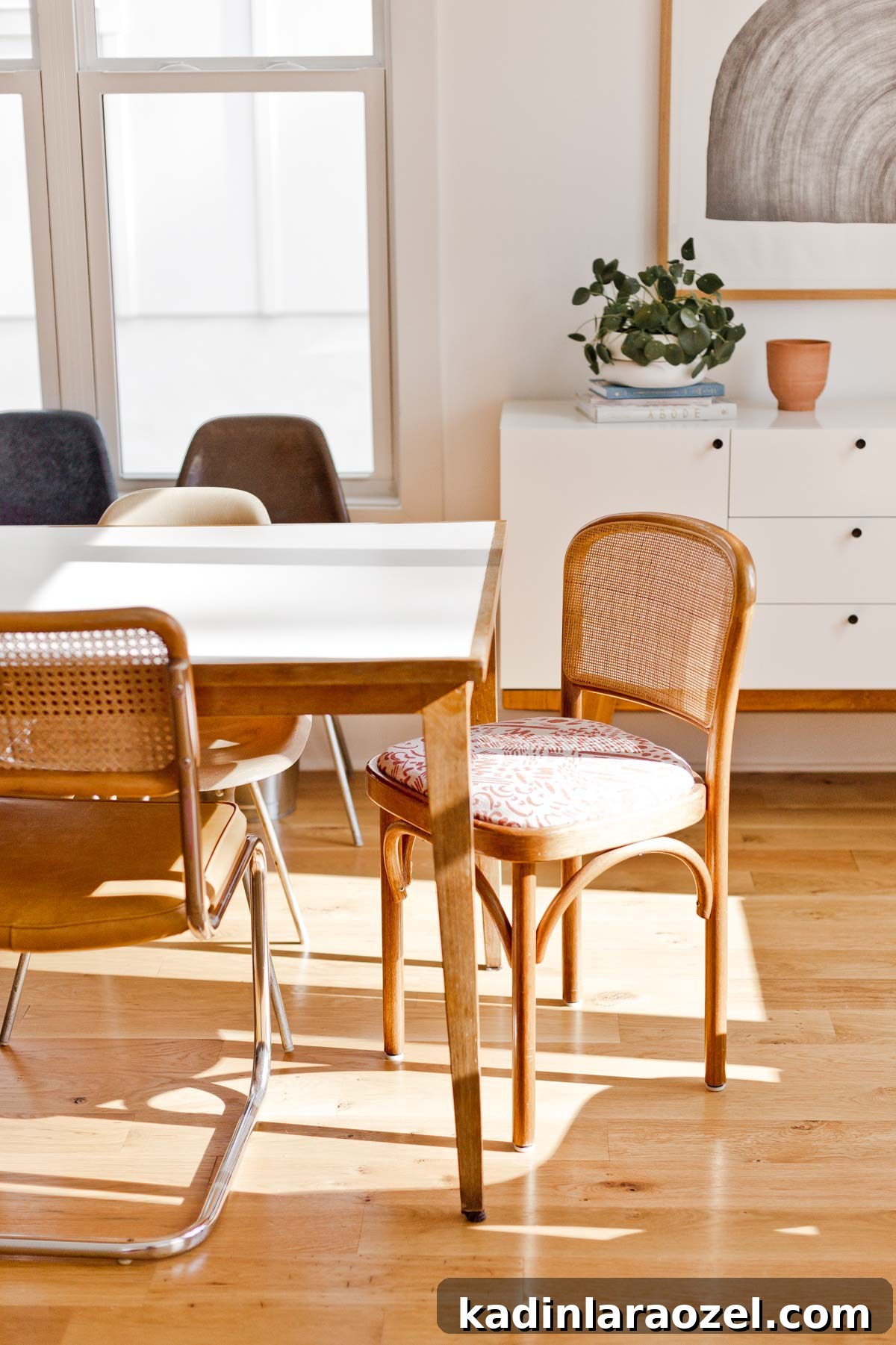
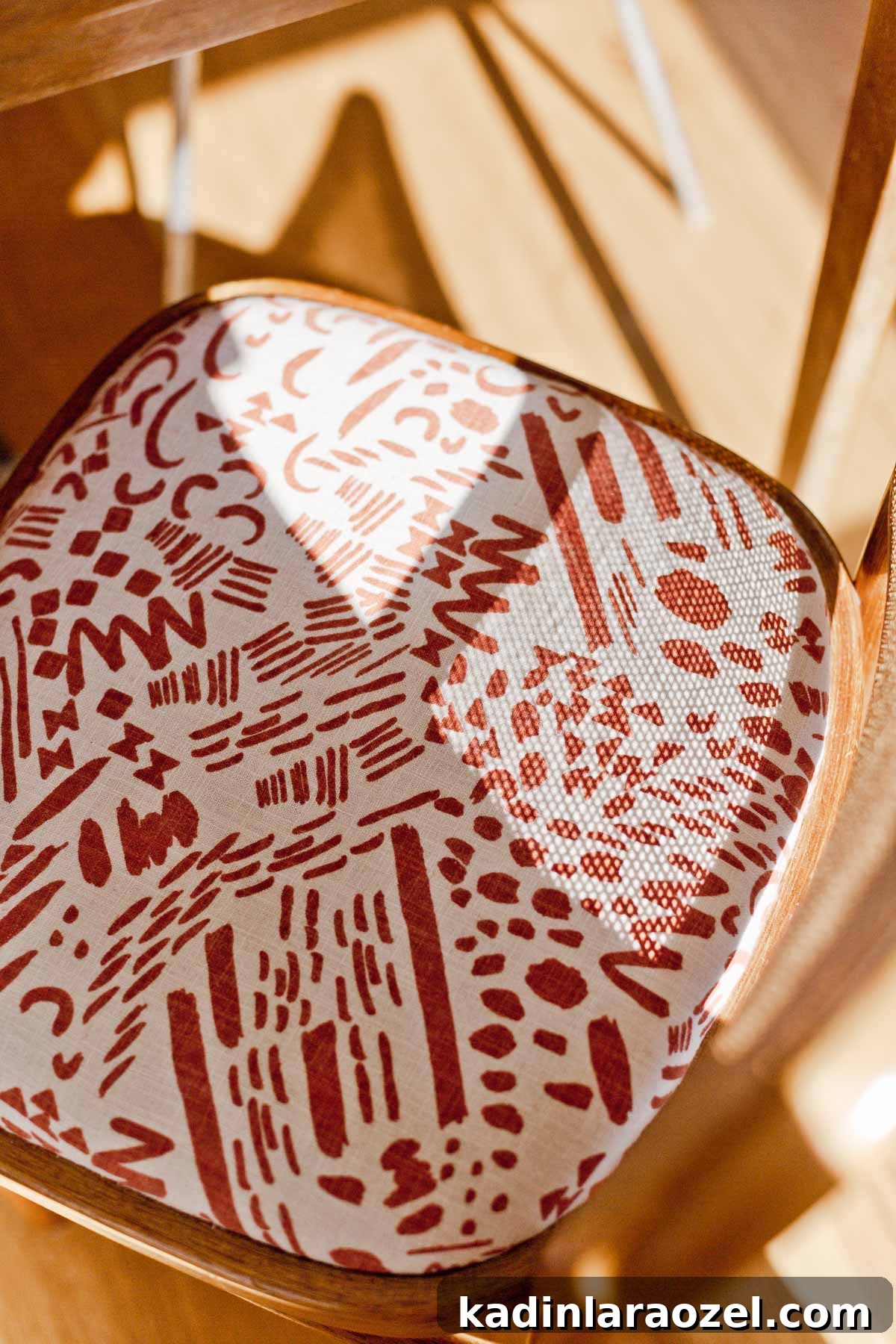
Have you tried reupholstering a fabric-seat chair before? If you have tips or questions—about cutting technique, staples, or choosing fabric—leave a comment. Also, which of these two fabrics do you prefer: the Block Shop cream-and-black linear pattern, or the Jenny Pennywood cream-and-rust abstract?