Drilled Natural Stone Jewelry: Step-by-Step Making Tutorial
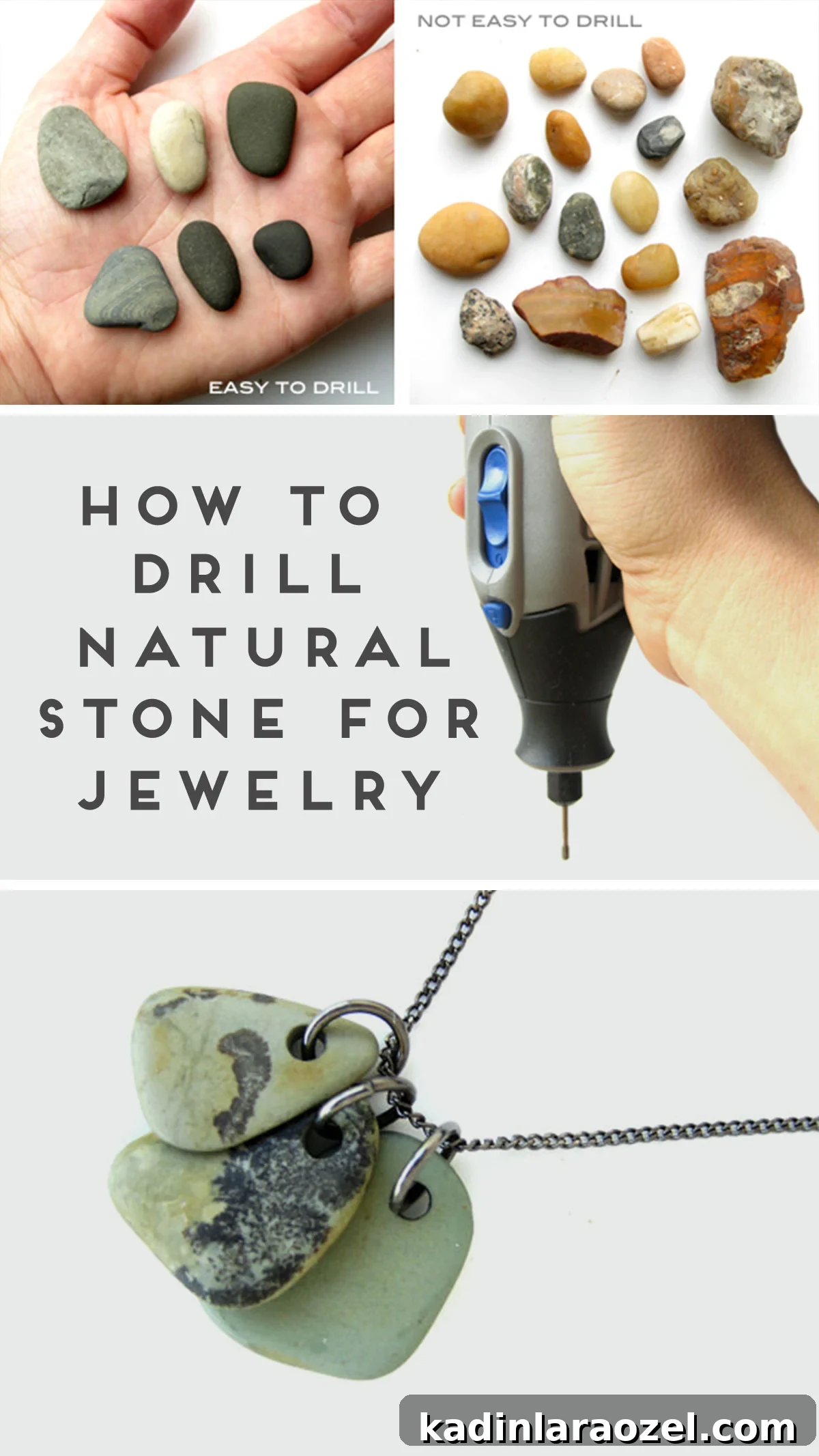
Want to learn how to drill holes in stone to create natural stone jewelry? You can—and it’s easier than you might think.
Stone jewelry appears at craft fairs, online shops, and boutiques, and it’s tempting to wonder how those tiny, perfectly drilled pebbles are made. You can drill through rock to make earrings, necklaces, charms, and more. I reached out to Jenny Hoople, a jewelry artist who works with natural stones, to share her method for drilling stones at home. The process is straightforward, so if you collect stones on walks or hikes, this guide is for you.
The following guest tutorial was written by Jenny Hoople of Authentic Arts.
Until recently I used pre-drilled pebbles purchased from other Etsy makers, but I wanted to learn to drill my own local Wisconsin stones. After researching and experimenting with a range of advice, I discovered a reliable, repeatable method. Drilling small river rocks for jewelry is not only possible, it’s quite manageable.
I often get asked how to drill stones, so here is the step-by-step process I use. Click through to follow along.
Choosing the Right Stone for Drilling
Almost any stone can be drilled, but for beginners I recommend starting with softer sedimentary rocks—sandstone, mudstone, limestone, and similar varieties. These are much easier to work with.
Harder igneous or metamorphic rocks tend to stand out among beach pebbles: they may not be as smoothly rounded as their neighbors, or they may show visible crystals or a glossy surface like quartz. Those qualities indicate a much tougher rock that will take far longer to drill.
If you’re unsure what type of stone you’ve found, try drilling a few similar pebbles. If a particular stone takes significantly longer, it’s likely igneous or metamorphic and may not be worth the extra effort for small jewelry pieces.
Equipment You Need to Drill Beach Stones
1. High-speed rotary tool (e.g., Dremel)
A powerful rotary tool is ideal because drilling stone is demanding work. A high-performance model gives better control and longevity for this type of project.
2. Hollow, diamond-tipped coring bits
Hollow diamond coring bits are faster and more effective than solid bits for making holes in pebbles. They cut more quickly, reduce the chance of cracking the stone, and allow you to create a clean circular hole without the need to switch through multiple bit sizes.
For small beach stones used in jewelry, a 2.5mm diameter coring bit works well. Brand-name bits for rotary tools are often expensive—look for quality diamond coring bits from jewelry or tool suppliers sold in small packs; they wear out with use, so having spares is helpful.
3. Proper collet nut for your rotary tool
The rotary tool’s standard collet may not fit a 2.5mm coring bit, so you’ll need the correct collet nut size. Hardware stores sell small sets of collet nuts; choose the one that fits your bits. Extra sizes are useful for future projects.
4. Small plastic container
Drilling with the stone submerged in a shallow amount of water cools the bit and lubricates the cutting surface. Water also reduces dust and prevents the stone from overheating, helping the diamond coating last longer. A simple cleaned plastic food container works well.
5. Small piece of wood
Place a thin piece of wood under the stone inside the container so you don’t accidentally drill into the container’s bottom. The wood acts as a sacrificial backing.
6. Safety goggles
Always wear eye protection. While drilling stones doesn’t produce dramatic shards, small particles and grit can still pose a risk. Protecting your eyes is a basic safety step.
7. Stones
Collect small pebbles roughly 1 inch in size and about 1/4 inch thick—these dimensions work well for necklaces and allow stones to sit neatly when strung together.
How to Drill Natural Stones for Jewelry
1. Put on your goggles.
2. Prepare the stone.
Hold the pebble firmly on the wood shim and place it just below the surface of the water in your container. The stone should be stable and kept submerged so water can reach the drill site.
3. Start the rotary tool.
Power the rotary tool with one hand and hold the bit perpendicular to the pebble with the other. Take care to keep the tool’s body and your hands dry—only the bit should be in contact with water.
4. Begin drilling.
Let the tool’s weight do the work; avoid pushing hard. Lift and lower the bit periodically while drilling to allow fresh water into the hole and let the stone’s sediment flush out. The water will become cloudy—this is normal. Maintain a steady, patient rhythm.
5. Finish when the bit breaks through.
When the bit emerges on the opposite side, the hole is complete. For small beach pebbles, drilling typically takes about two to three minutes per stone, depending on the rock’s hardness and your experience.
6. Optional: condition the stones.
To enhance color and reduce a dusty look, lightly rub dry stones with a small amount of unscented lotion once they are fully dry. Allow the lotion to absorb, then wipe away any excess with a clean towel so oil won’t transfer to clothing. This step is optional and should be done sparingly.
Once your stones are drilled and conditioned, use simple jewelry findings—eye pins, cord, or wire—to assemble necklaces, earrings, or charms. With a few basic tools and supplies, you can turn found stones into striking handmade pieces.

More DIY Jewelry Ideas
If you enjoyed this stone-drilling tutorial, there are many other jewelry projects you can try that use similar skills and supplies. Consider polymer clay earrings, rock chokers, handmade trinket dishes, simple wire necklaces, leather-and-brass pendants, rock-and-shell beaded necklaces, or metal-stamped bracelets—each project is beginner-friendly and lends itself to creative experimentation.
About Jenny: Jenny Hoople creates natural stone and beaded gemstone jewelry that celebrates color, authenticity, and handmade craftsmanship. She lives near Madison, Wisconsin and loves experimenting with color combinations and simple, meaningful designs.
Thank you to Jenny for sharing this practical, approachable method for turning found stones into wearable art.