Porch Tile Painting Guide: Transform Your Floor in One Weekend
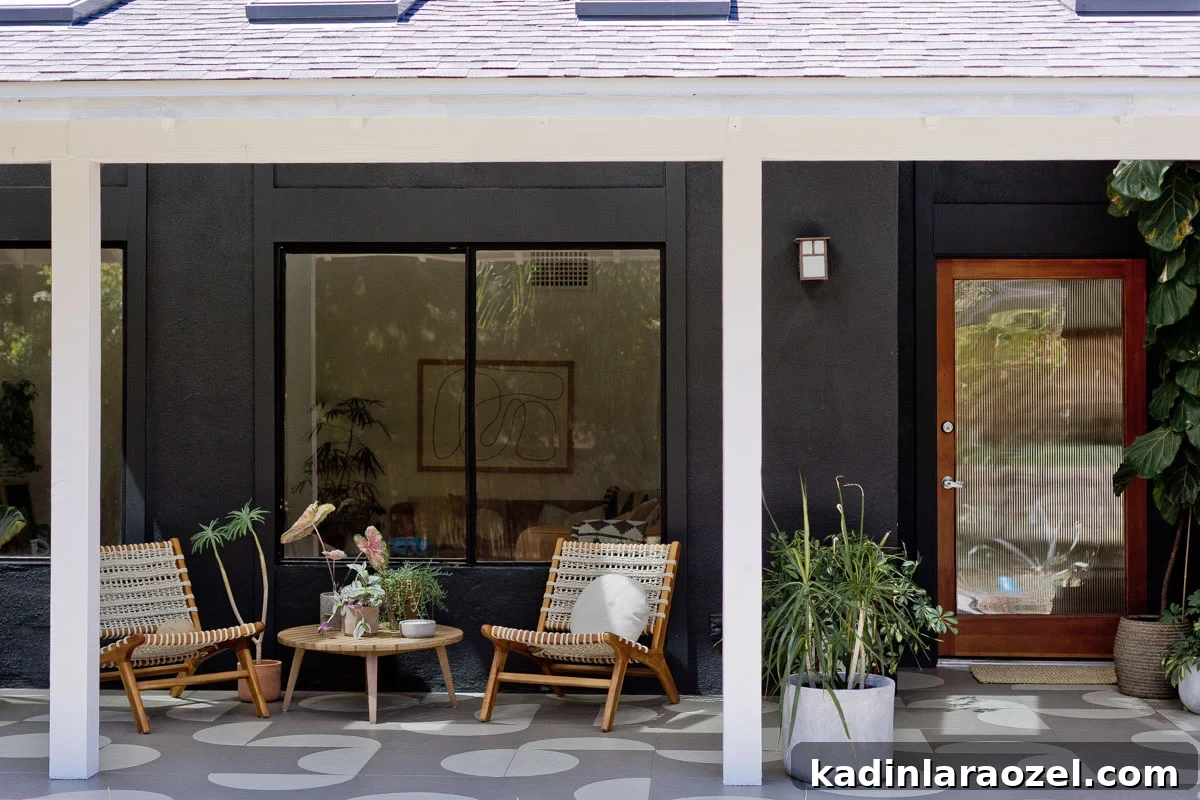
Want to learn how to paint floor tiles and transform a space on a budget? I’m sharing the full process here—it’s easier than you might think.
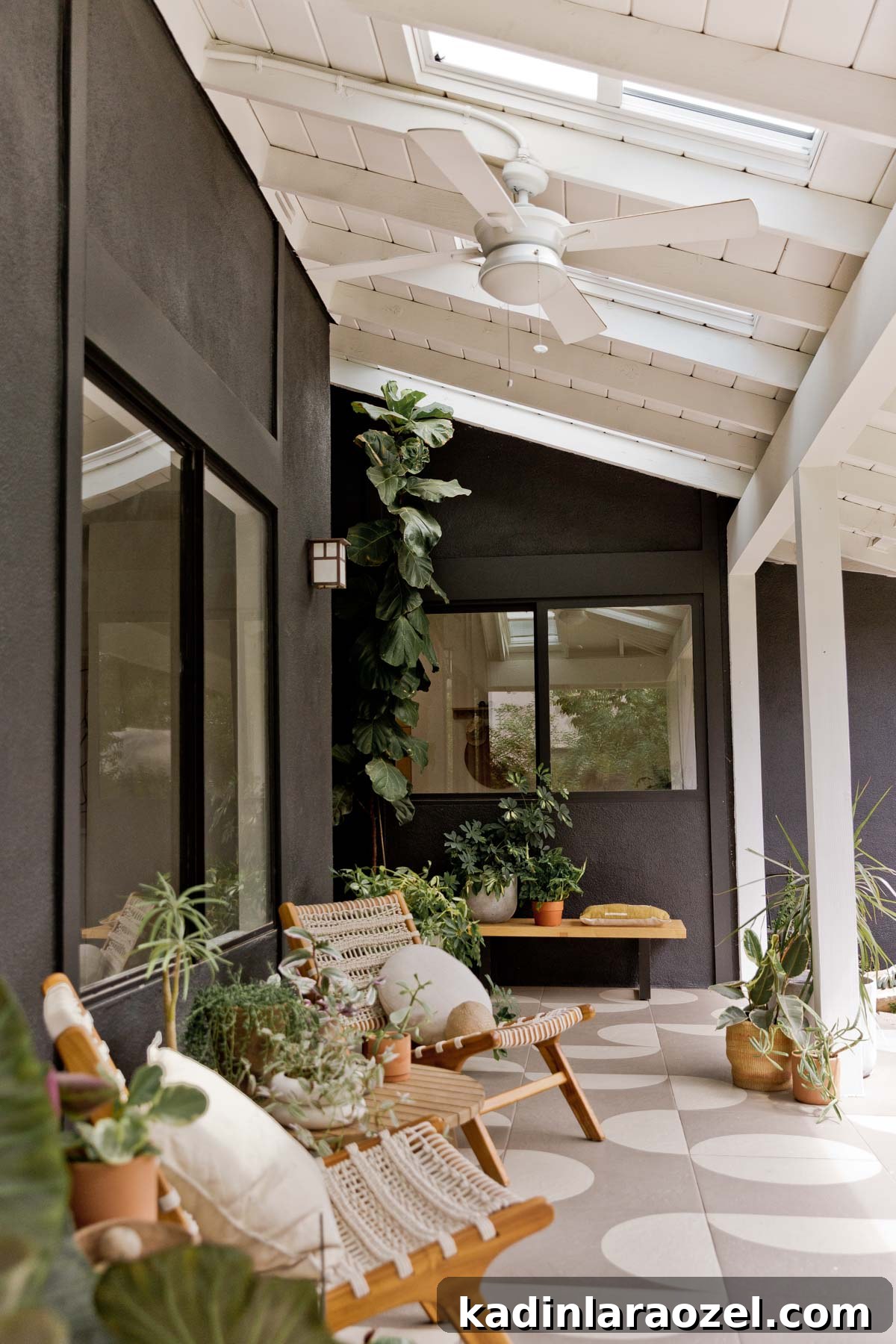
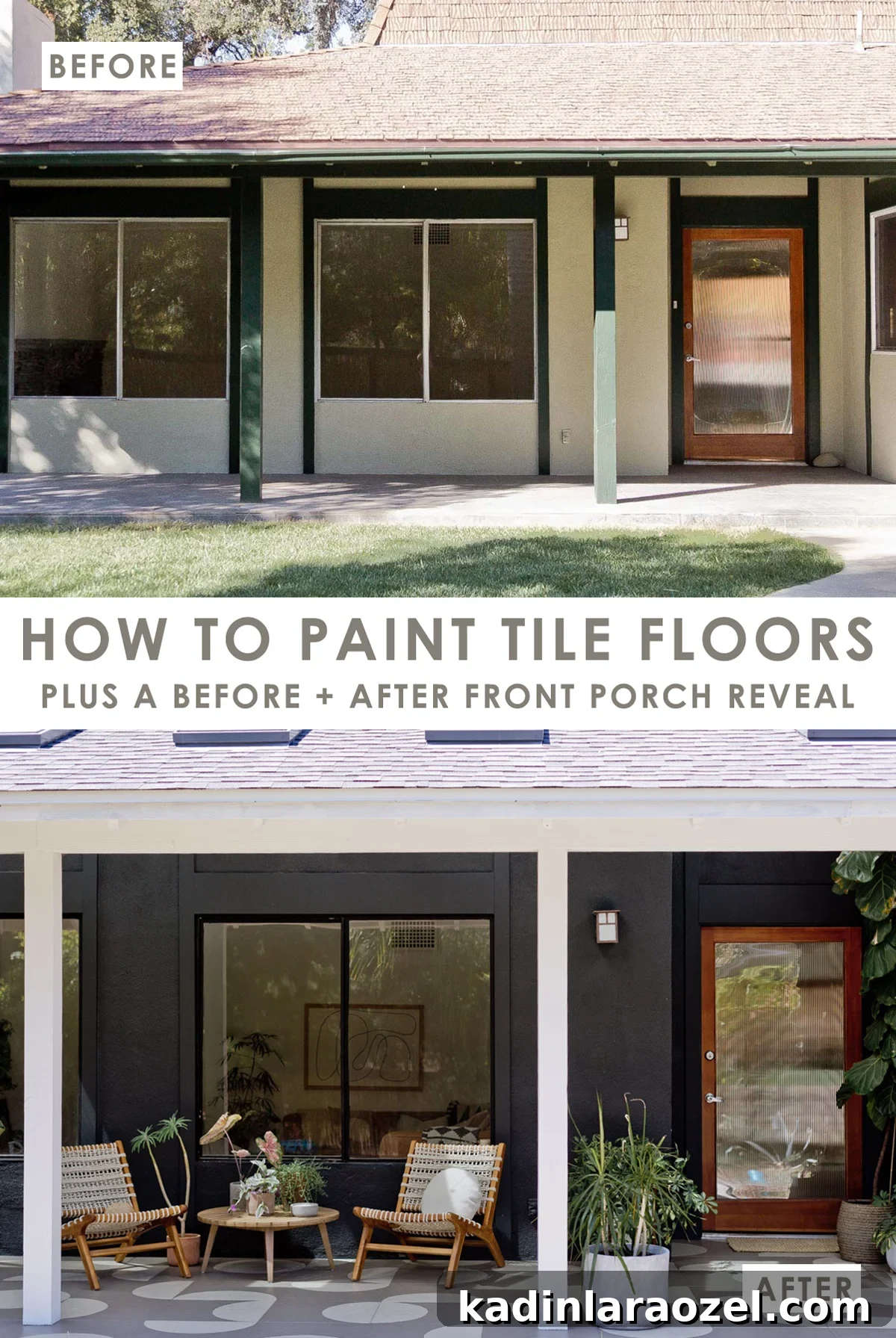
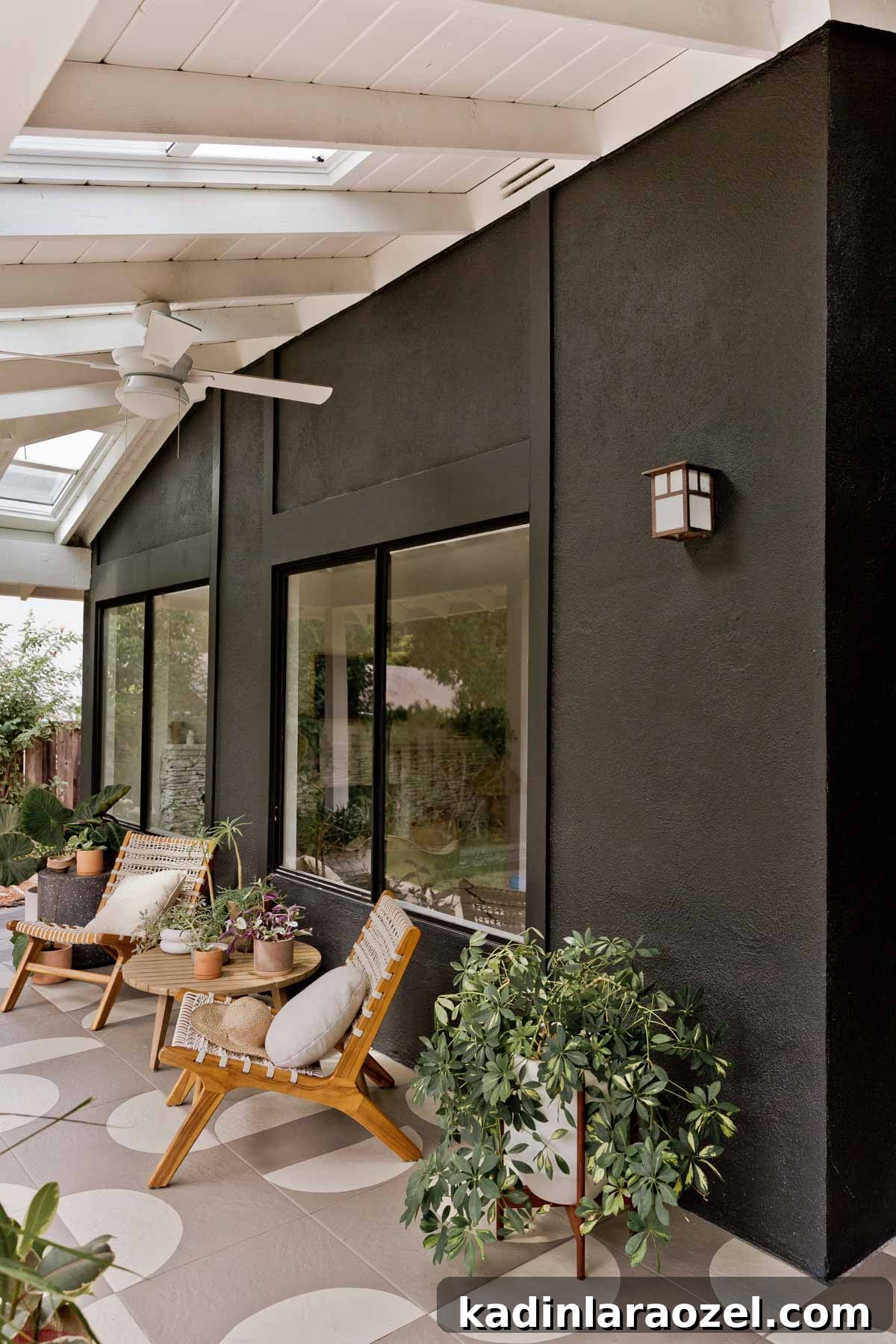
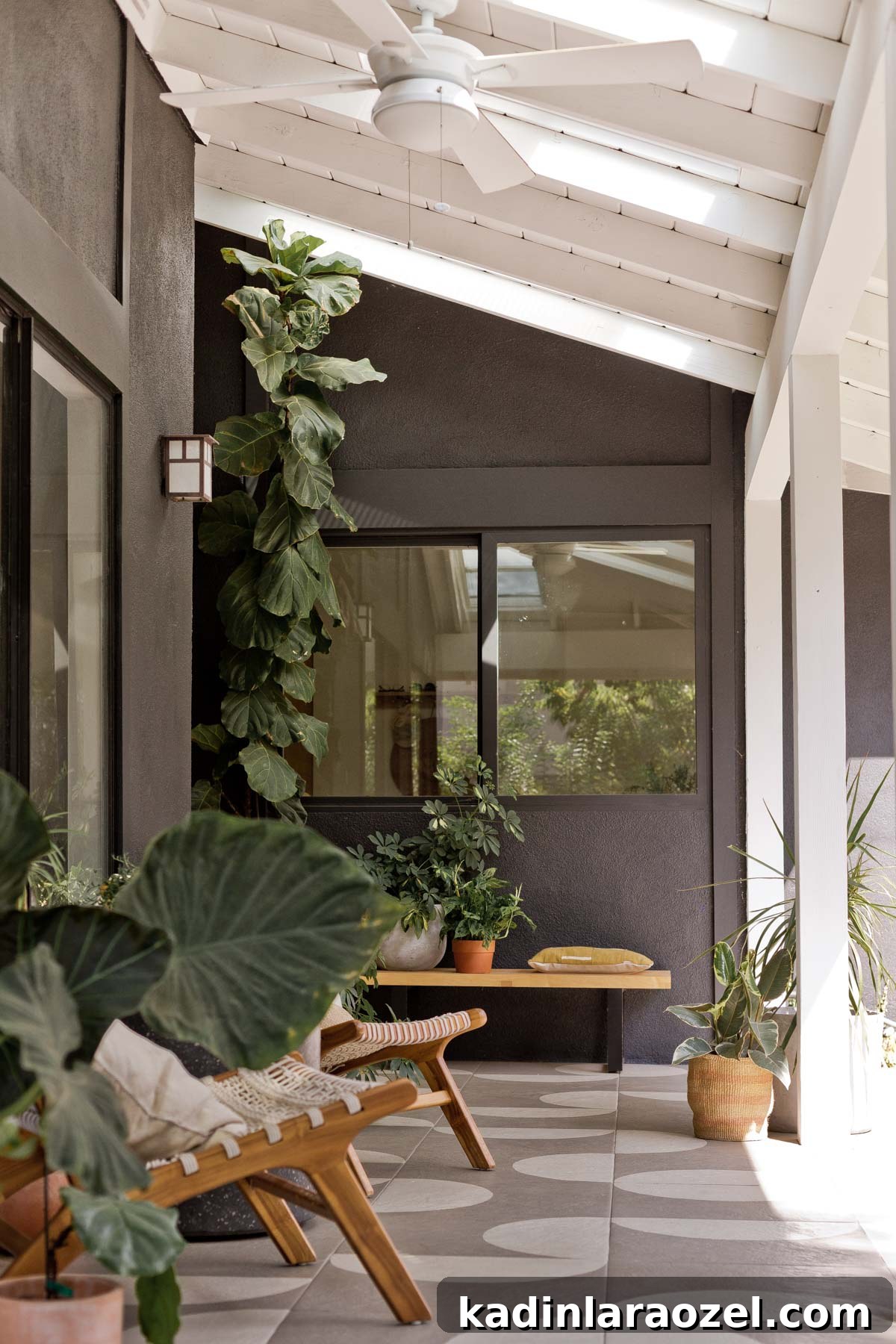
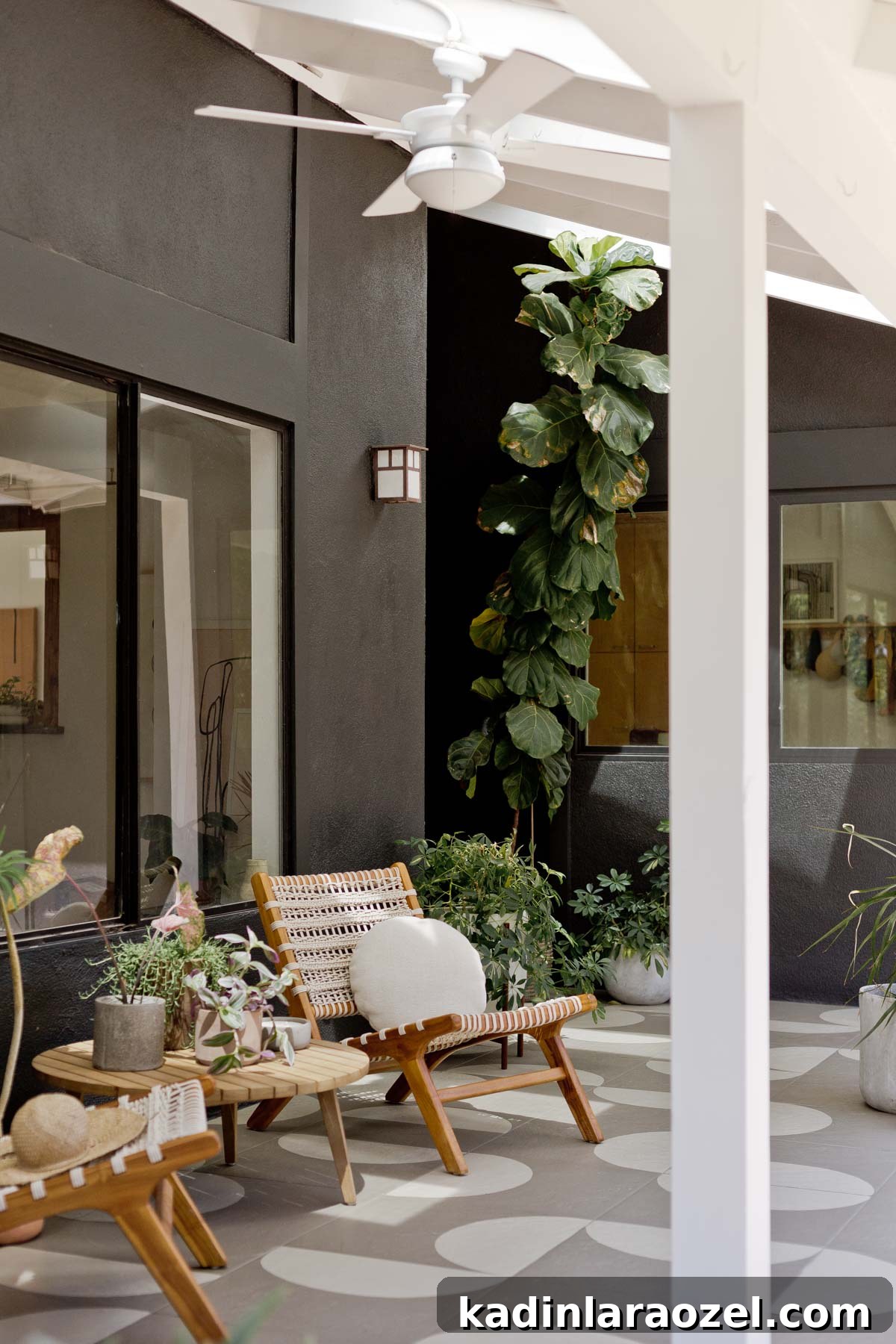
Painting tile floors is an affordable, high-impact way to refresh a front porch, back patio, or even an indoor room. After moving into our home I wanted to try it on the front porch because the original tile was stained and looked dull.
I had originally planned to replace the tile, but I decided to try painting it first. If it didn’t work out, I could still re-tile later.
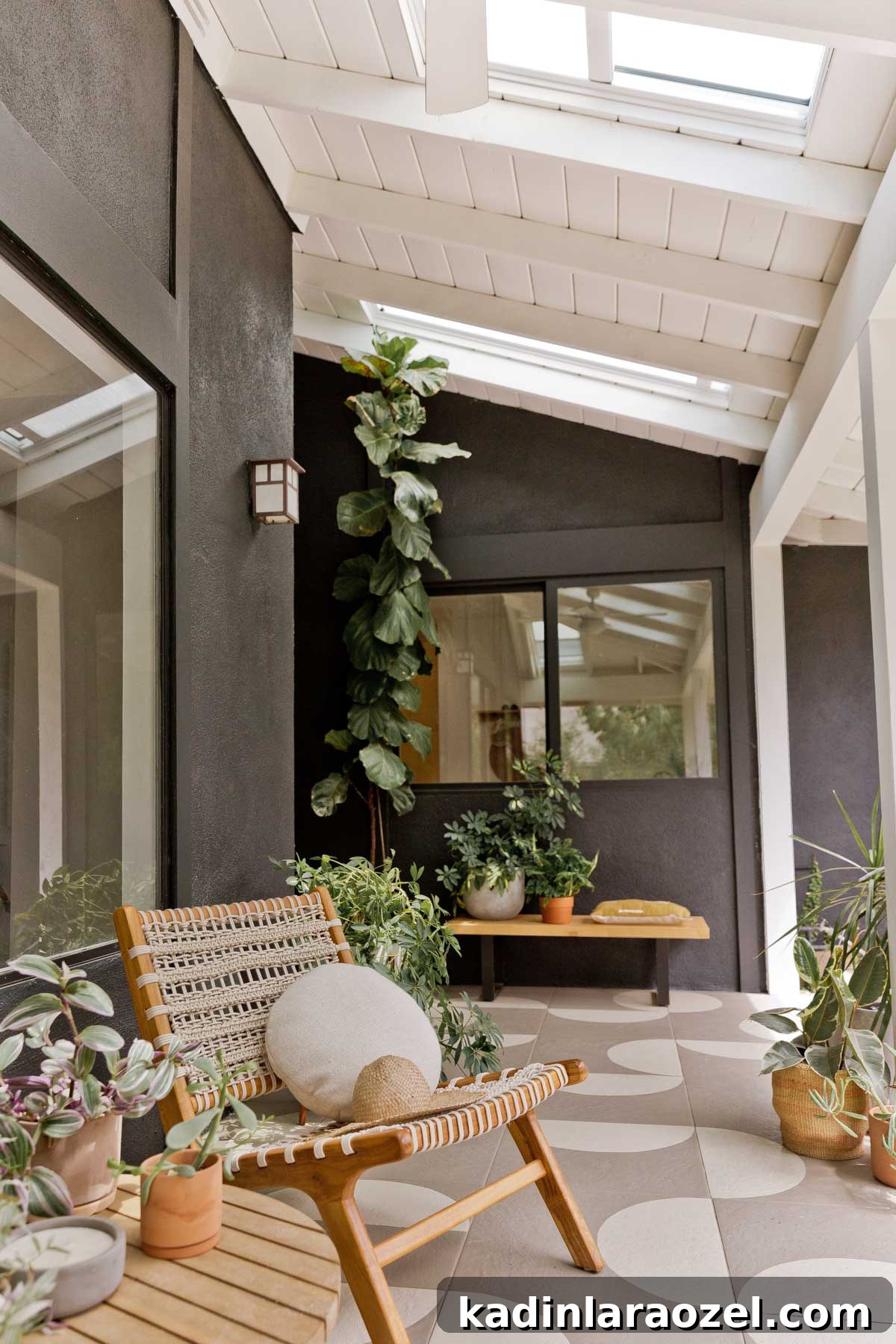
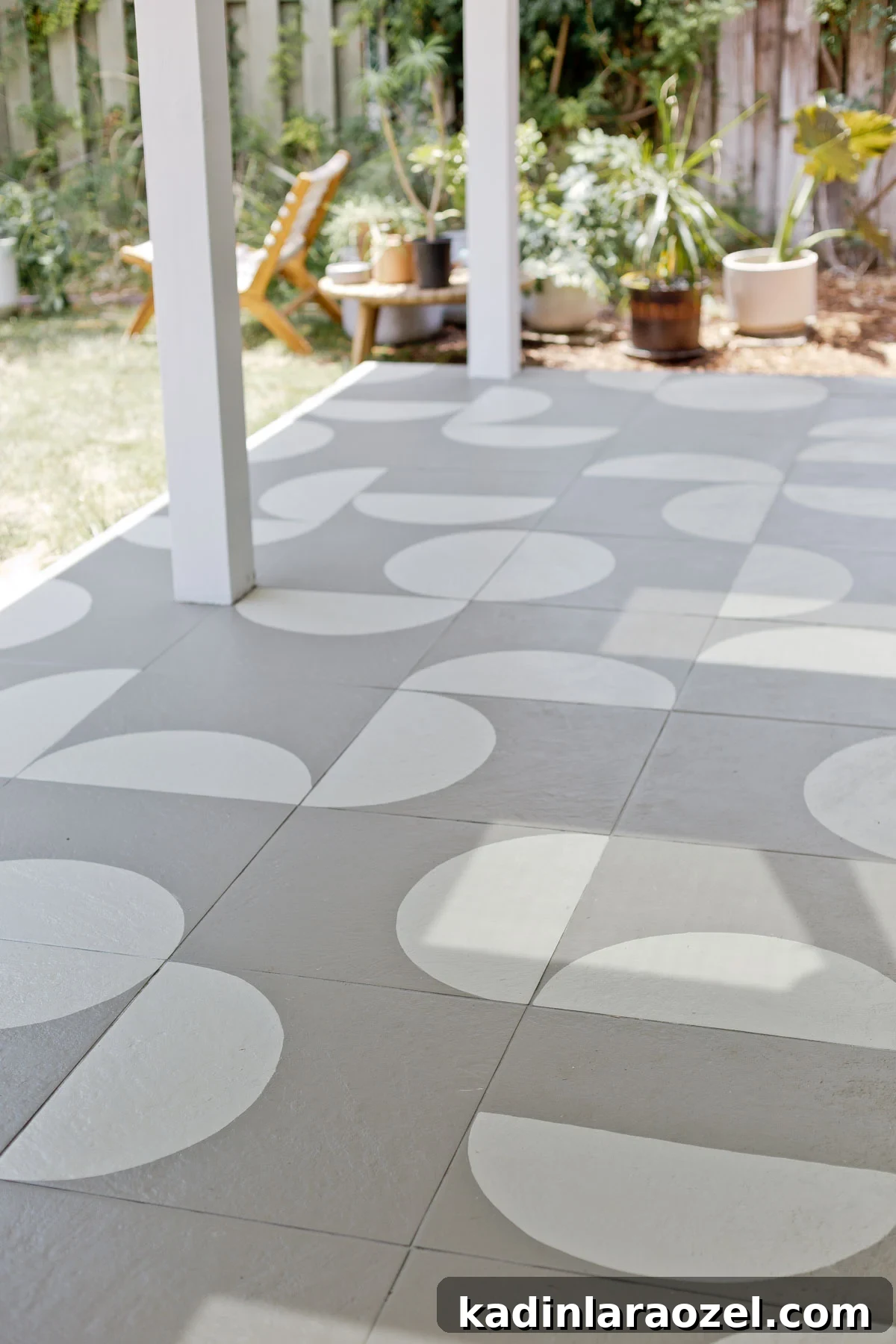
Now that the project is finished and has been in daily use for months, I’m thrilled with the result. The paint has held up well and the pattern brings personality and style to an otherwise basic porch.
If you’re curious about how to paint floor tiles in your own home, read on for a step-by-step tutorial and a clear cost breakdown so you know what to expect.
I’ve painted tile before—on a studio kitchen backsplash and in a small floor project. With more experience and advice from a professional painter, I learned how to do it the right way. Below are the supplies I used and each step I took.
Tile Painting Supplies and Equipment Needed
- Benjamin Moore Floor & Patio Low Sheen Enamel (floor paint)
- Paint roller and extension pole
- Paint brush
- Stencil material (I’ll explain how I made my own)
- Pressure washer or a hose for cleaning
- Flooring topcoat (optional)
- Garden kneeler or kneepads (optional but helpful)
What type of paint should you use to paint tile?
I used Benjamin Moore Floor & Patio Low Sheen Enamel based on the paint store owner’s recommendation. This product can be tinted to virtually any Benjamin Moore color, so you’re not limited to a few choices. I chose Carter Gray for the base and Finnie Gray for the half-circle pattern.
Whatever paint you select, be sure it’s specifically formulated for floors. Floor paints are designed to withstand foot traffic; standard interior or exterior paints are not.
Should you use a roller or a brush for stenciling?
I used both: a roller for most of the coverage and a brush for touch-ups and detail work. If you must pick one, choose a roller. It’s faster and easier to control the paint load, which helps prevent stencil bleed because you want thin, even layers.
How to Paint Tile Floors
1. Pressure wash and deep clean the surface
I began by pressure washing the entire porch to remove dirt, debris, and old paint drips. The paint store recommended waiting 48 hours after pressure washing to ensure porous tile fully dries. Moisture trapped beneath a fresh paint film can affect adhesion and finish later, so I followed that advice and waited two full days before painting.
If you don’t have a pressure washer, a strong cleaner like TSP or Krud Kutter is a good alternative to remove grime before painting.
2. Sweep and remove remaining debris
On the day I started painting I swept the porch thoroughly to remove any new leaves or dirt so the surface was clean before applying paint.
3. Paint the base coat
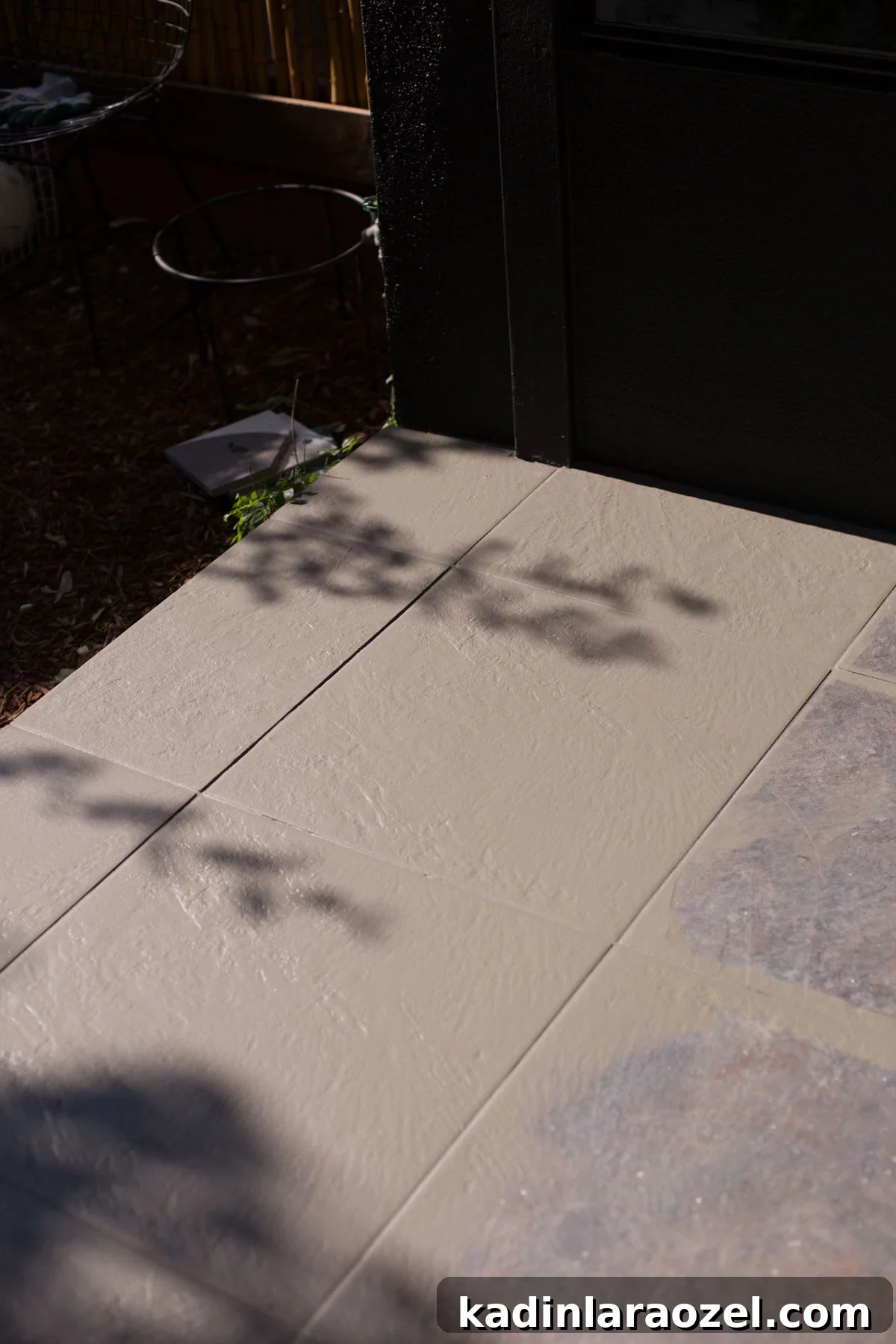
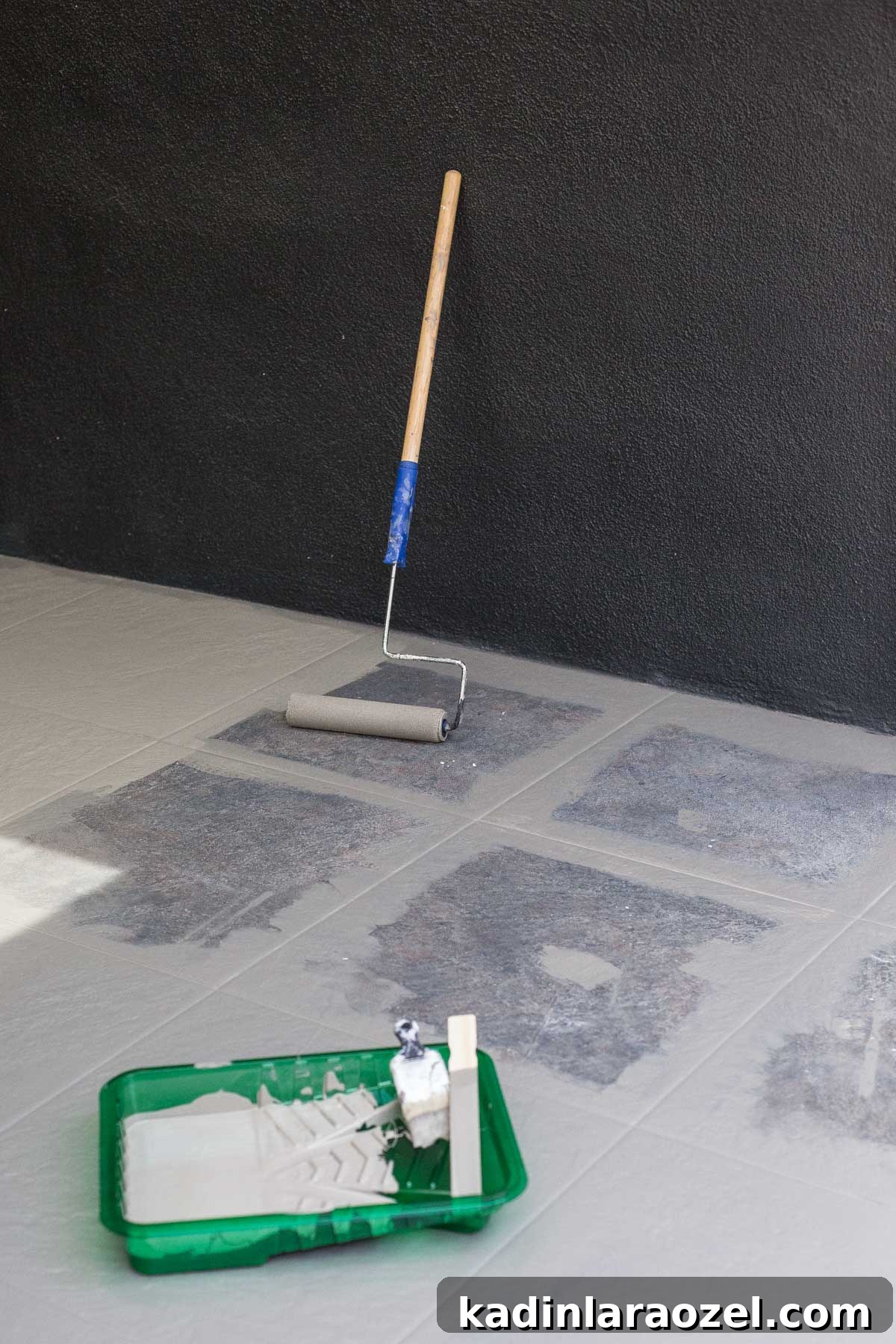
Using a roller with an extension handle, apply the base color evenly across the entire floor. I used Benjamin Moore Floor & Patio in Carter Gray. Follow the manufacturer’s drying times and apply a second coat—two coats are necessary for full, even coverage.
4. Make a stencil
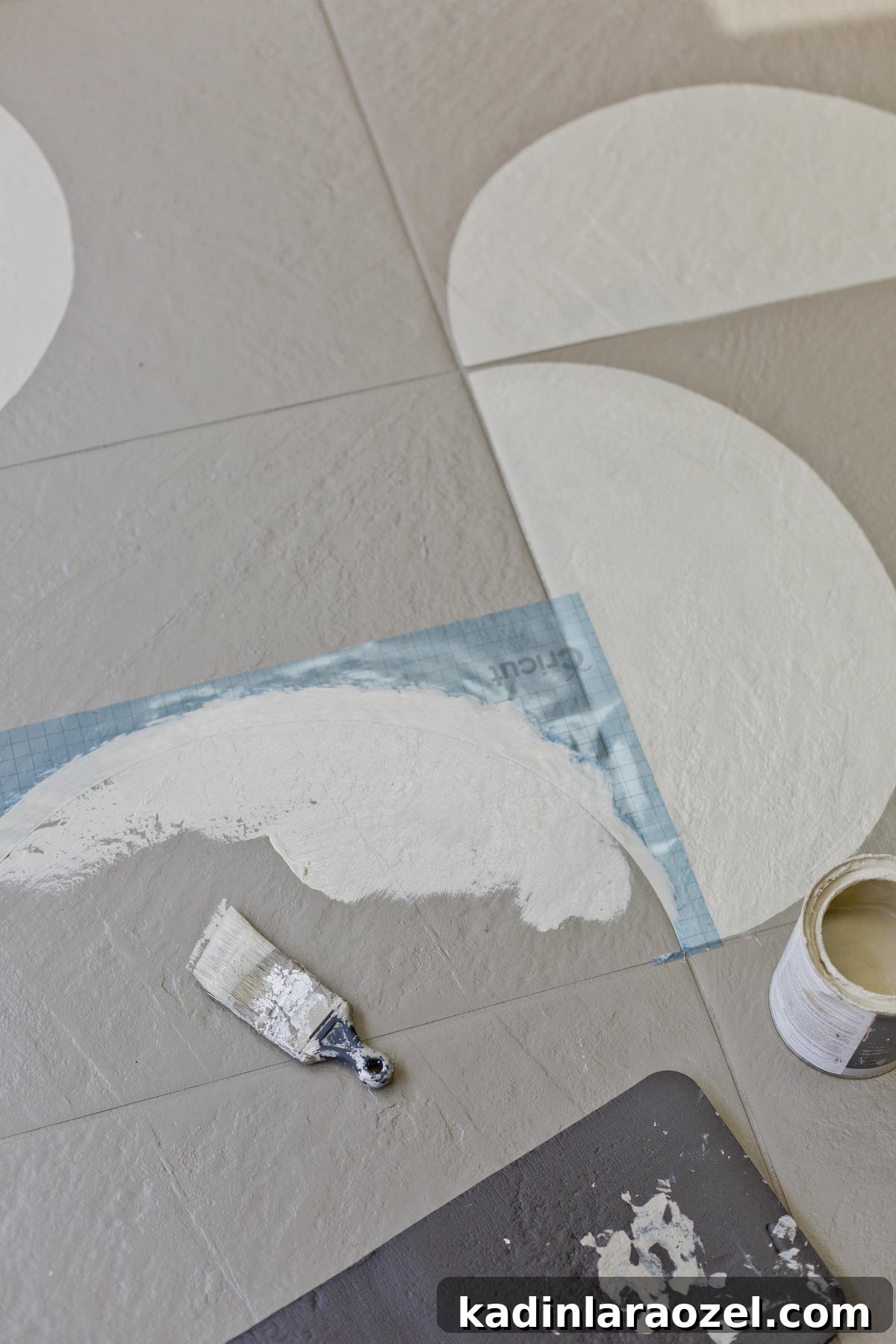
While waiting for the base coats to dry, I created a stencil for the pattern. I used a Cricut Maker and adhesive stencil vinyl so I could cut custom-sized stencils to match my tiles. My tiles are 21-inch squares, so I made half-circle stencils that measured 21 inches wide and shortened the height for a more organic look. I cut multiple identical stencils (five or six) so I could rotate them without waiting for paint to dry on each one.
5. Start stenciling the design
Peel the backing off each stencil and position it on the tile. I used a thin layer of paint applied with a roller and a small brush for the edges to avoid bleed. Plan the orientation of the stencils as you go to create the visual rhythm you want—randomizing directions can feel more organic, but you may prefer a uniform look.
For my half-circle design I used Benjamin Moore Floor & Patio in Finnie Gray. Stenciling requires kneeling, so a garden kneeler or kneepads make the work more comfortable.
6. Remove stencil and repeat
Remove each stencil while the paint is still wet and set it back on its paper backing to dry. Swap in a dry stencil and continue across the porch until the entire surface is covered.
7. Apply a second coat to the stenciled areas if needed
I hand-painted a second coat on the stenciled shapes for better coverage. For more detailed stencils, it’s often better to align the stencil again and apply a second thin coat rather than brushing over intricate edges.
8. Add a protective topcoat (optional)
After the paint has fully dried and cured, you can apply a clear topcoat for extra durability. I didn’t add a topcoat initially and the floor held up well, but a few tiny chips appeared over time. If you want maximum longevity and scratch resistance, apply a floor-appropriate clear sealer.
Is painted tile slippery?
Many people asked if the painted tile becomes slippery. Because our porch is covered and the climate here is very dry, it wasn’t a major concern. However, a sprinkler hit the tiles once and the surface was slippery while wet, and it also collected some dirt. We adjusted the sprinklers so they no longer hit the porch, which solved the issue.
If your porch gets regular rain or will be used when wet, consider a paint or topcoat formulated to increase traction.
How long does stenciling tile floors take?
It depends on the area size and drying times. My porch is roughly 25 feet by 8 feet (about 200 sq ft) and I completed the project alone. Including drying time it took a few days, but actual painting time was under 15 hours. Having an extra person would significantly reduce the time.
How much did the project cost?
Including paint and supplies, the project cost under $150. I used less than two gallons of paint (one gallon for the base and about a half gallon for the design). I already owned tools like the roller and brushes, but even buying those new would still be close to $150. For that price, this makeover is a huge value compared to retile options.
How is the painted tile holding up?
After three months of daily use the painted floor is holding up well. There are a few very small chips (smaller than a quarter) that likely came from debris missed during prep, but otherwise the finish remains solid.
Other painting projects to try
If you enjoy budget-friendly transformations, consider these projects I’ve done:
- Countertop resurfacing with paint for an affordable update.
- A fireplace makeover using paint for a dramatic change.
- A DIY backsplash to save money while adding pattern and personality.
Have any other questions about this tile painting project? Ask in the comments and I’ll be happy to help.