DIY Pencil Holder Makeover: Stylish Steps to Upcycle a Holder
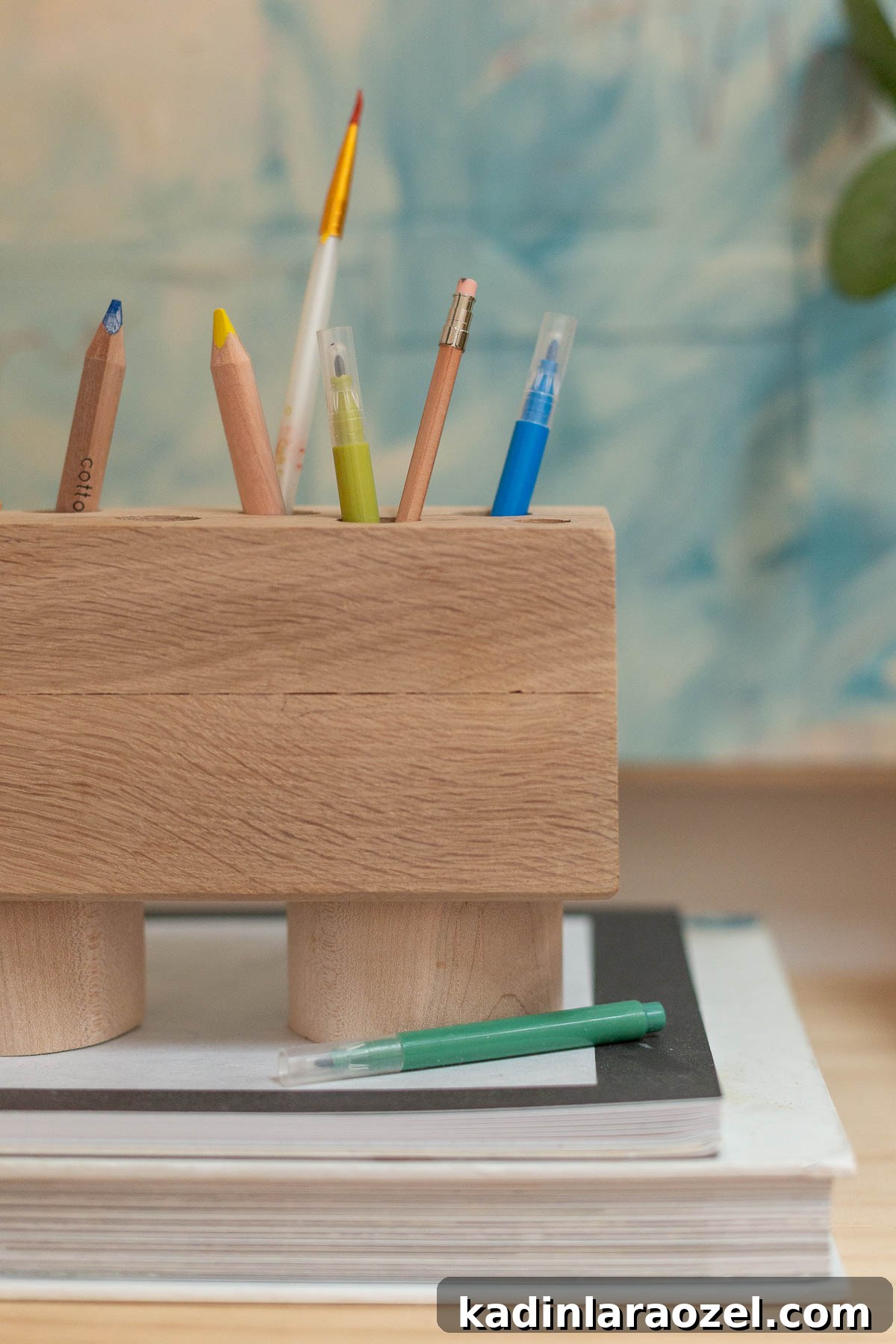
Is it a DIY pencil holder or a DIY makeup organizer? I’m not sure, but either way, I love it.
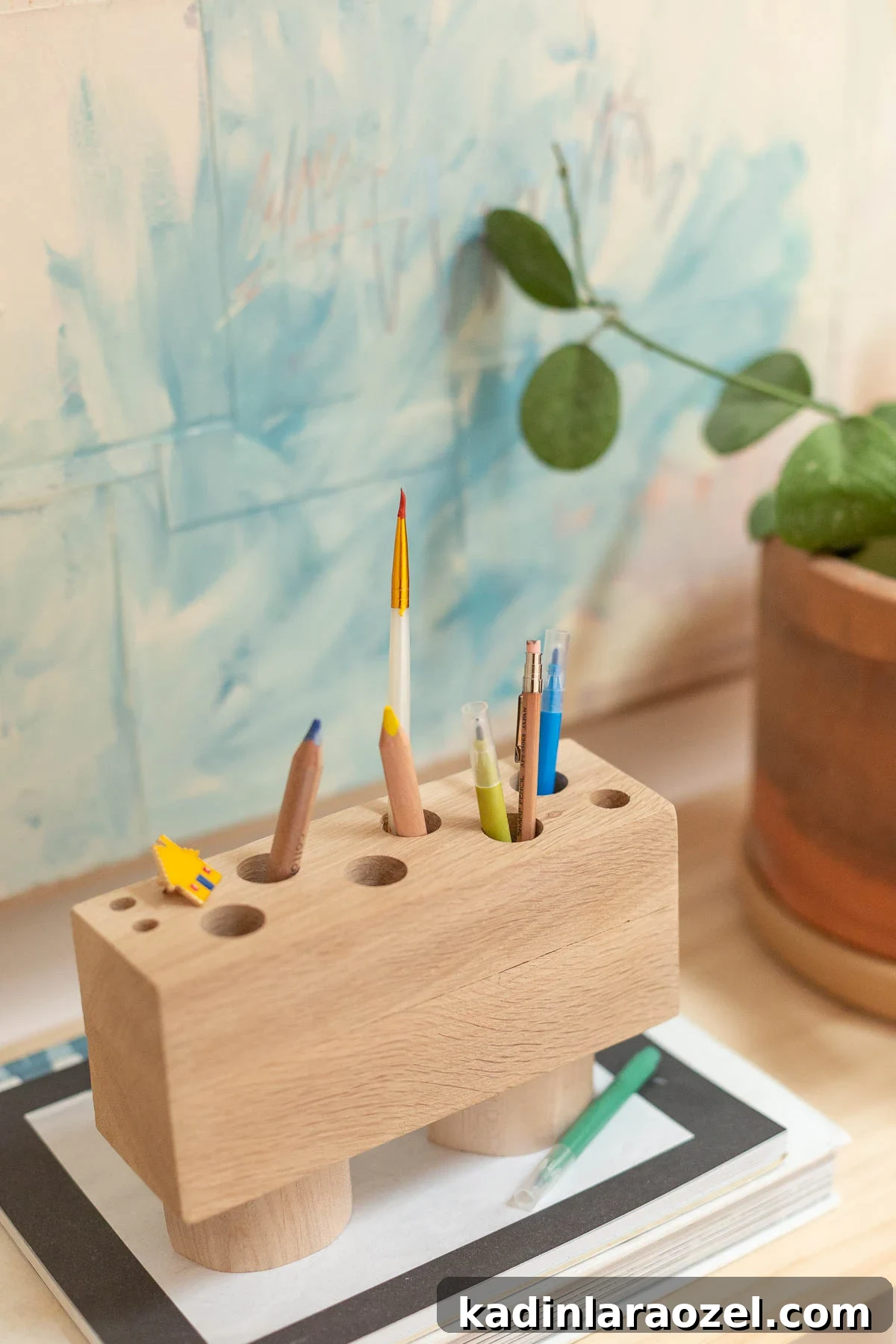
Keeping small items organized feels like a constant battle at my house, so any project that brings a little order—and looks nice doing it—is a win. I remade a simple organizer to corral pens, paintbrushes, makeup brushes, and eyeliners. It’s hard to decide whether it’s a pencil holder or a makeup caddy, but it’s both practical and attractive.
Back in early 2016 I built a basic pen-and-makeup holder from scraps. It functioned, but it wasn’t the most refined piece I’d ever made—partly because I was still new to power tools and woodworking. Years later I felt confident enough to redesign that old project: same idea, cleaner lines, and better materials.
This remake launches a new series called DIY Redo, where I revisit early projects and rebuild them with improved technique and design. Below I compare the old and new versions, and include a step-by-step tutorial so you can make your own.
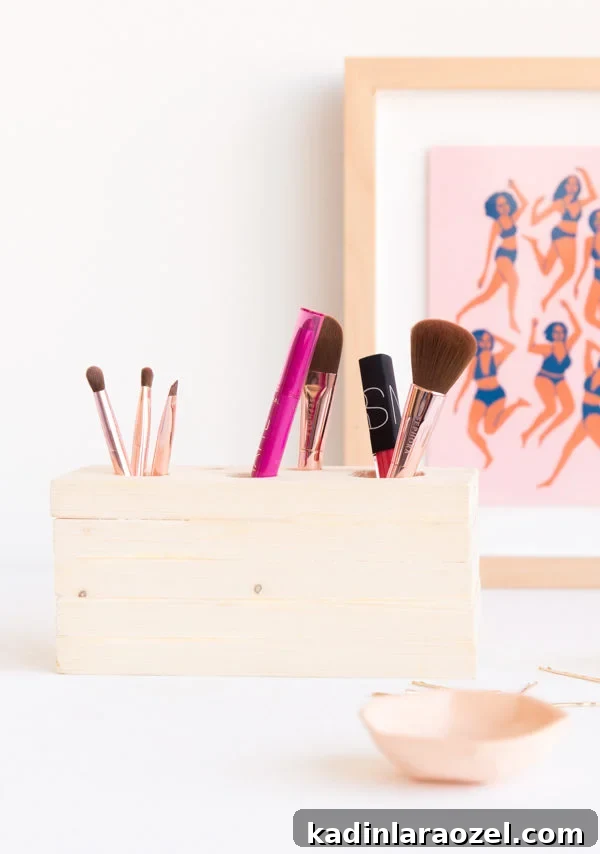
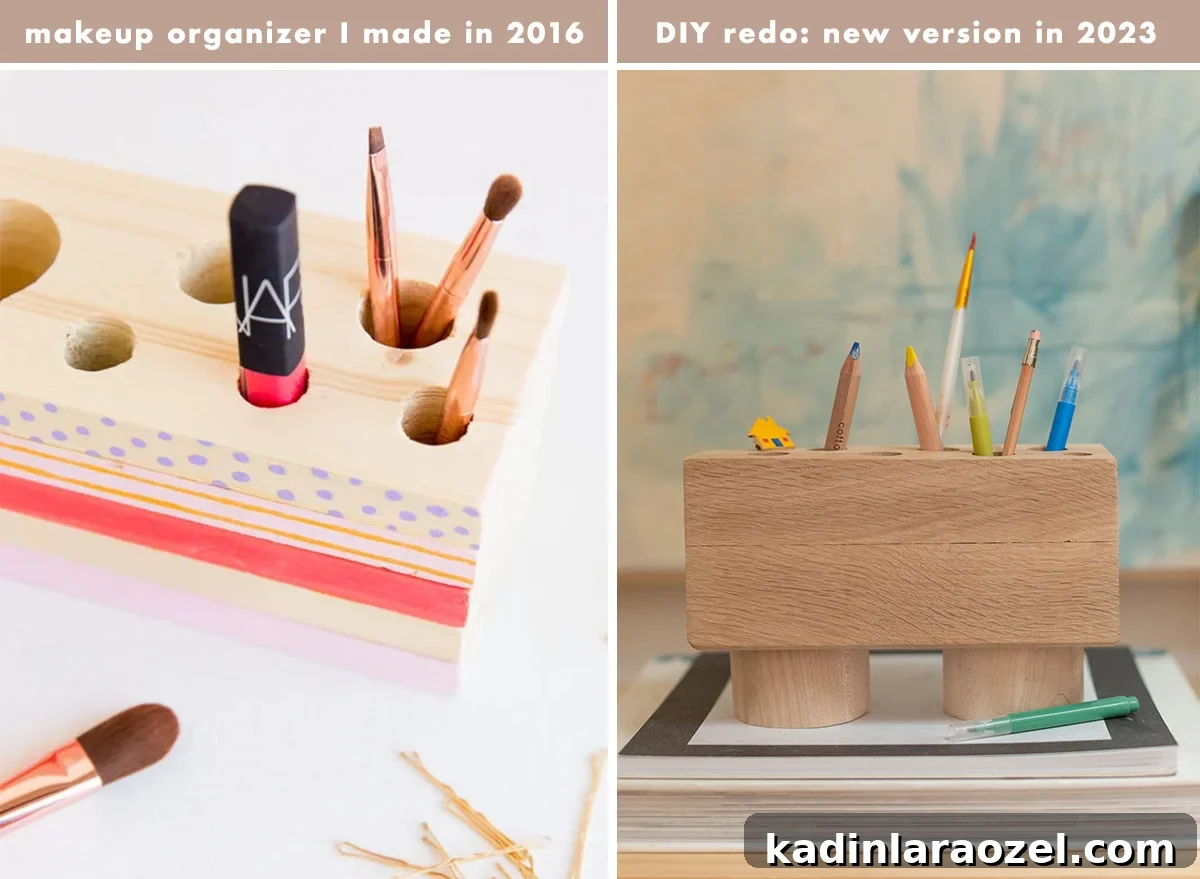
Here’s the original makeup brush holder I made in 2016:
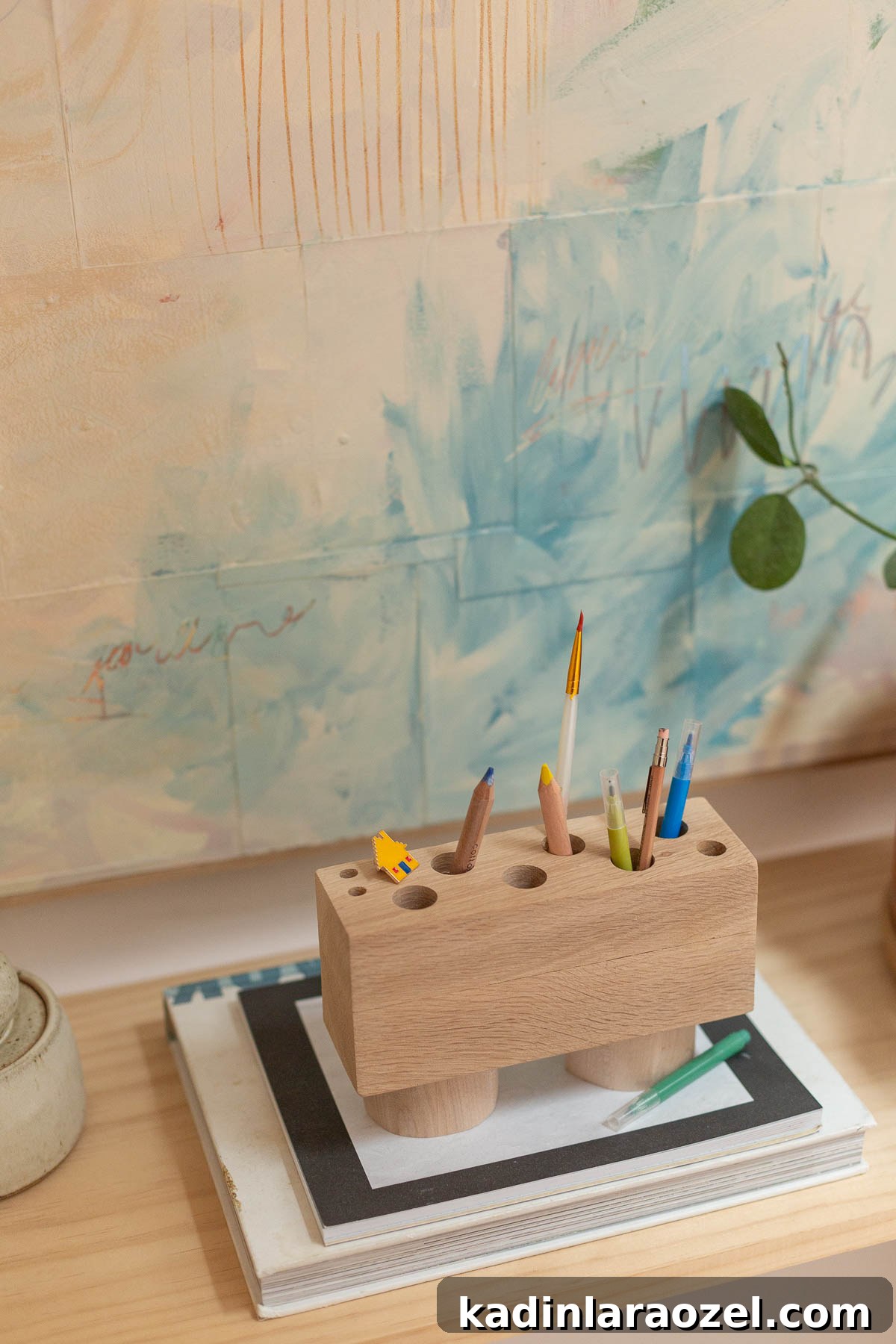
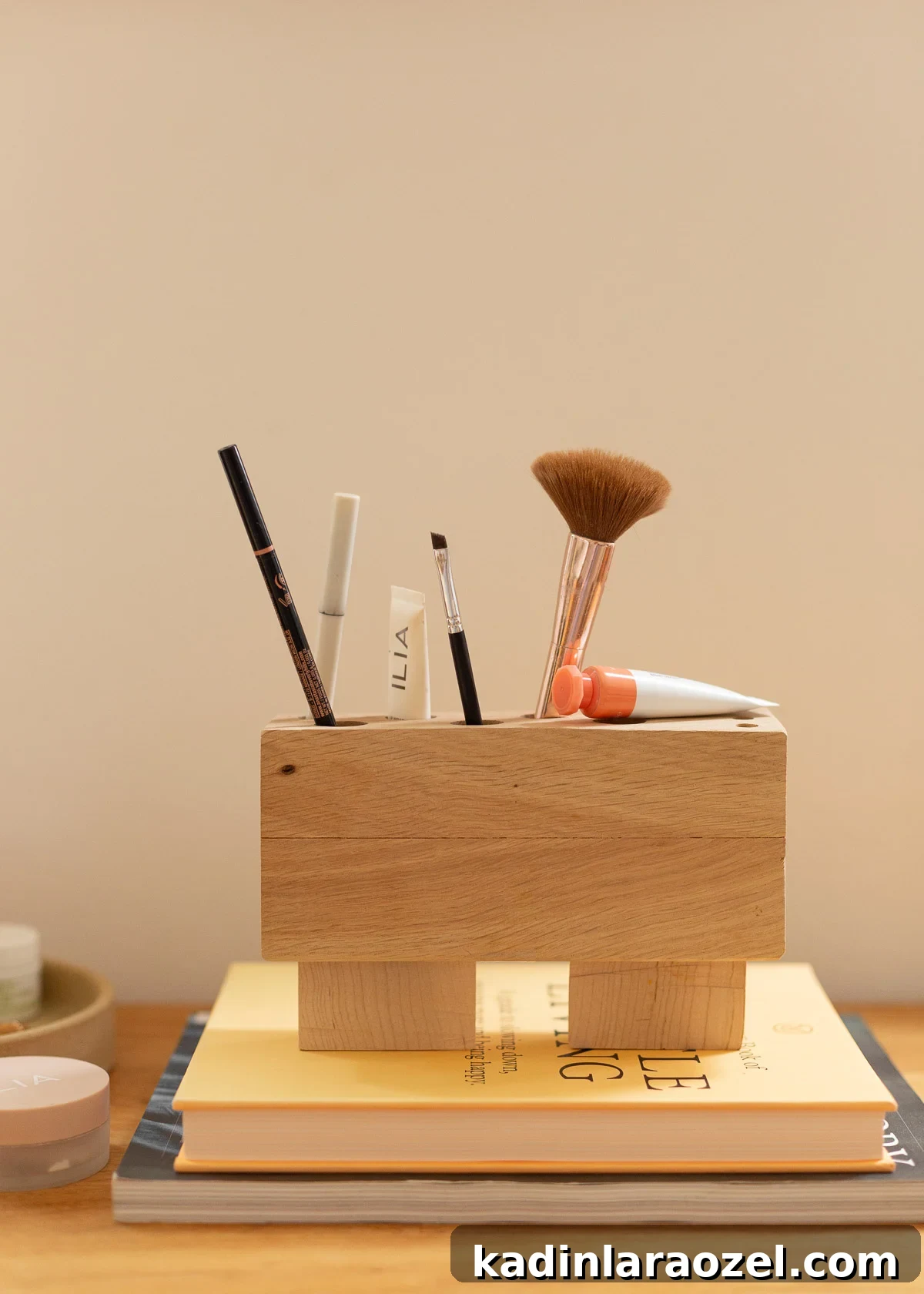
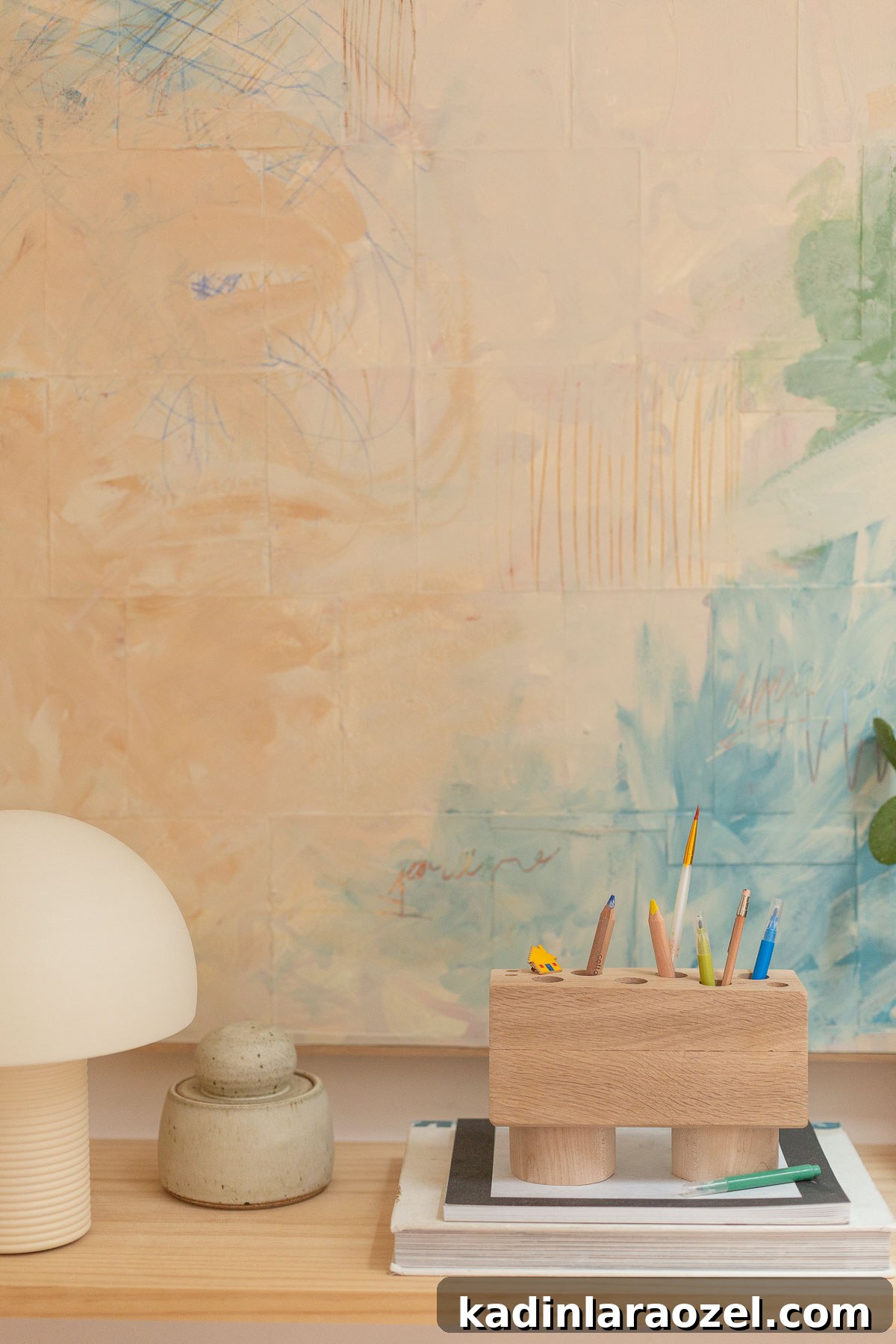
And here is the updated version:
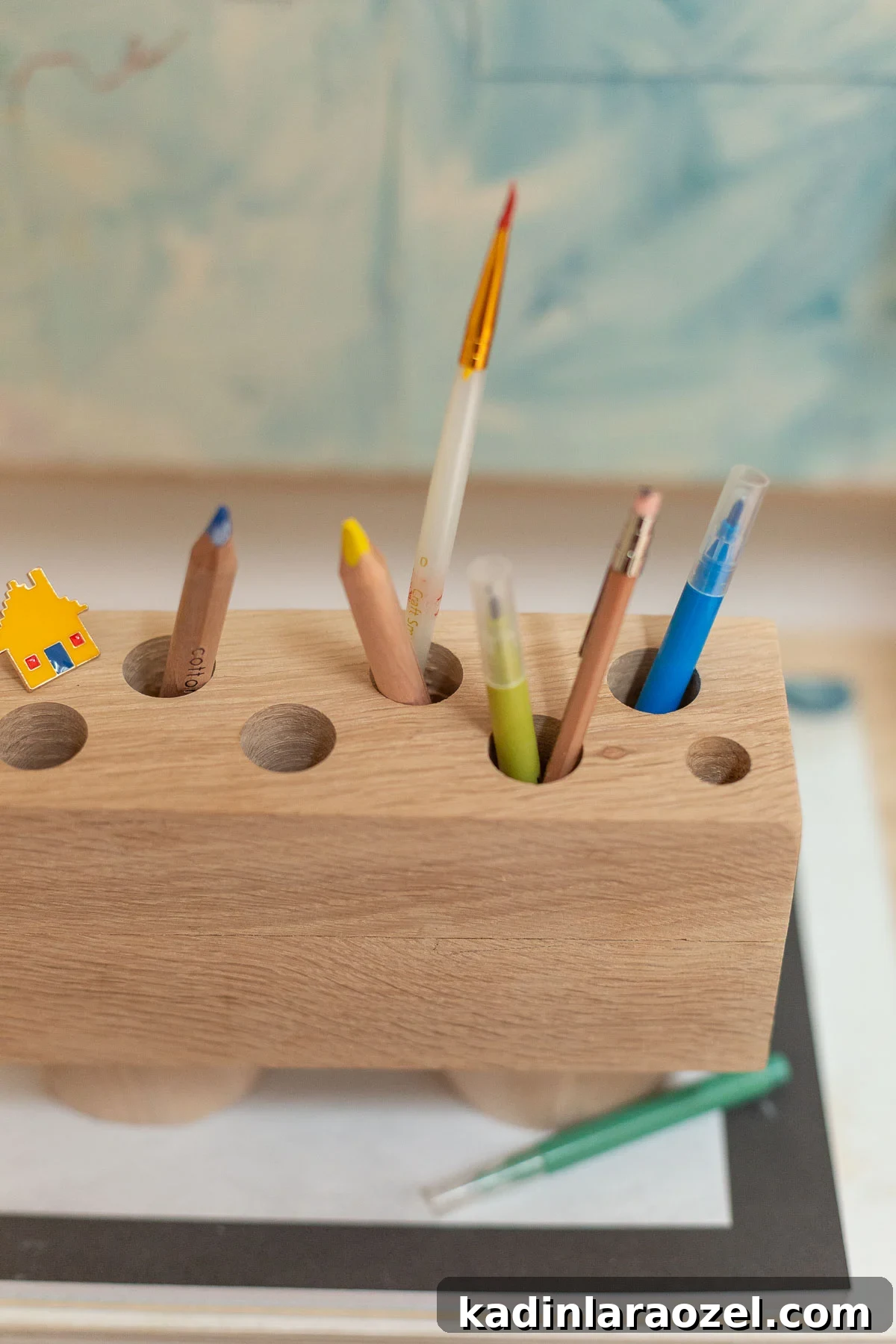
How does the new pencil holder compare to the old one?
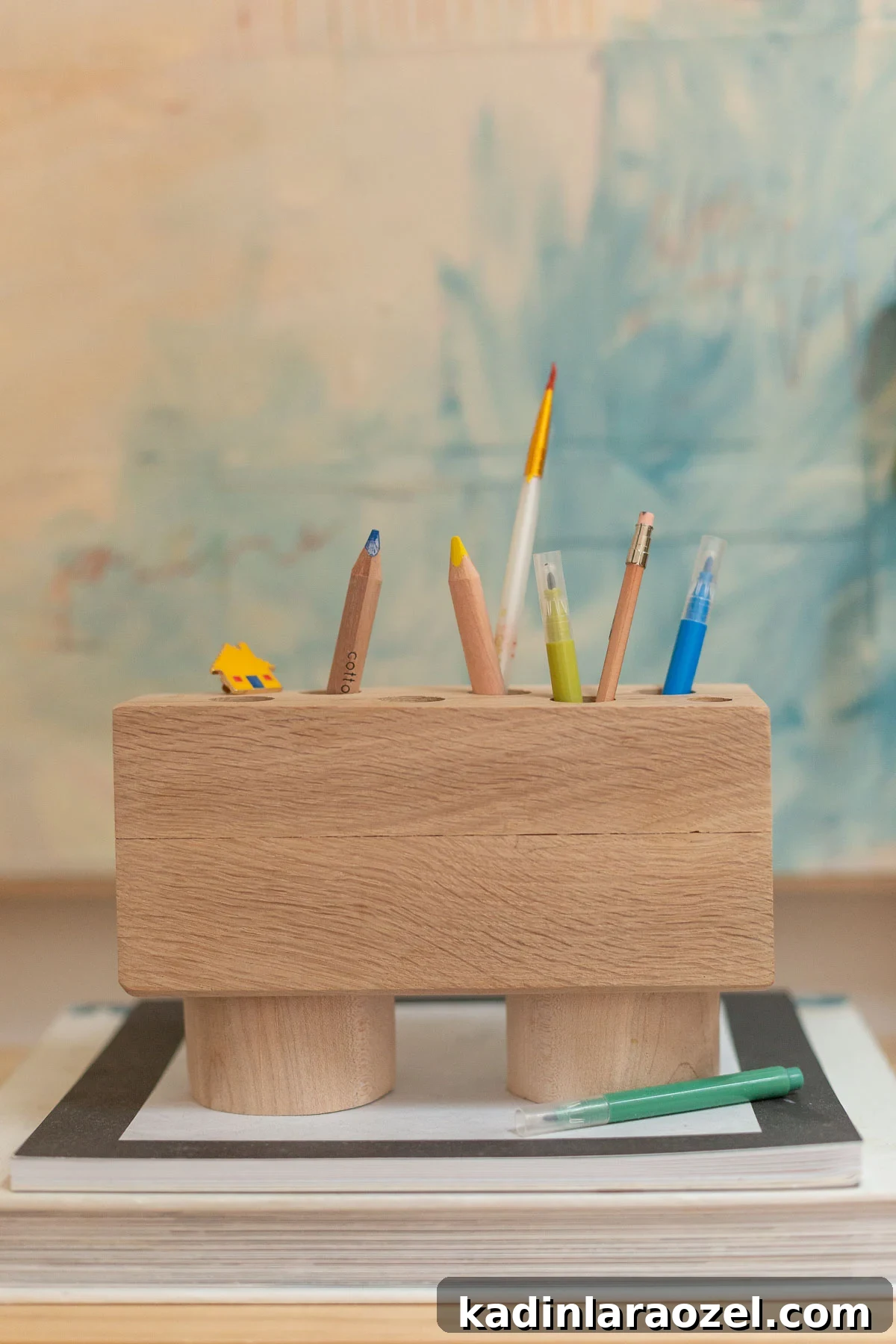
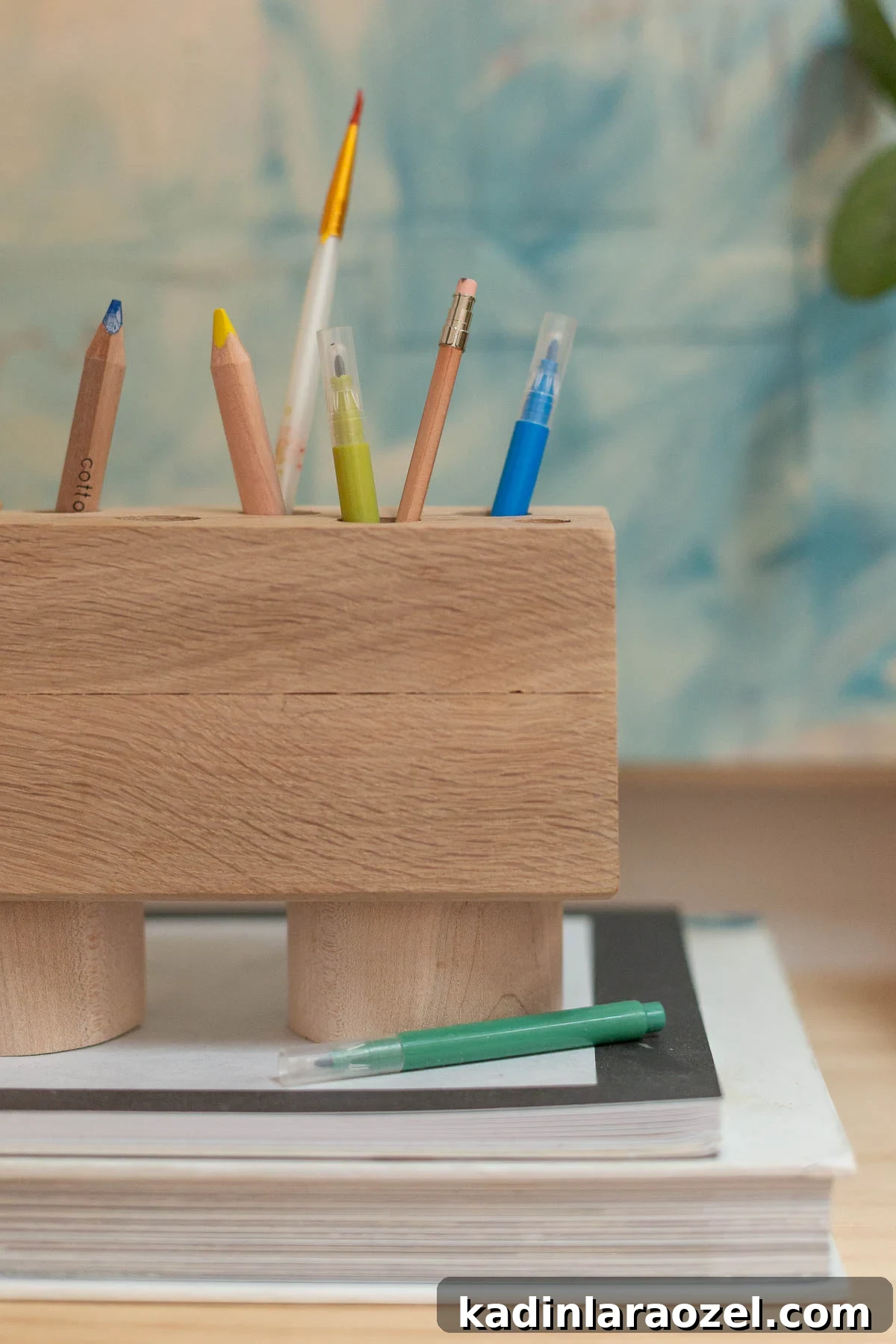
The original 2016 piece was made from five thinner stacked boards—probably pine—and had a painted finish. The updated version is more minimal and better made. I used two thicker boards of white oak (not counting the feet) which gives a cleaner look and greater durability. I also added feet to the base and left the wood natural instead of painting it.
Both designs are reversible, but the new one flips between rounded and flat slab feet instead of showing a painted pattern on one side. Overall, the remake is refined, simple, and versatile enough to sit in any room without looking out of place.
What wood should you use?
You can use almost any wood: softwoods like pine or common board are affordable and workable, while hardwoods like white oak, walnut, beech, or alder feel more premium. Choose based on budget and the look you want. For this project I used leftover white oak from a nightstand build.
Where to find hardwood for small projects
Large chain hardware stores don’t always stock smaller quantities of hardwoods, so look for a specialty lumber supplier in your area. Search for a local specialty wood store or small woodworking supplier to find boards suited for tabletop projects.
What can you store in this organizer?
This design works well as a pen and pencil holder, an art-supply caddy, or a makeup brush organizer. It’s especially useful because you can customize hole sizes and spacing to match the tools or brushes you plan to store. Size and proportions can be adjusted to make a tall, narrow caddy or a short, wide tray depending on your needs.
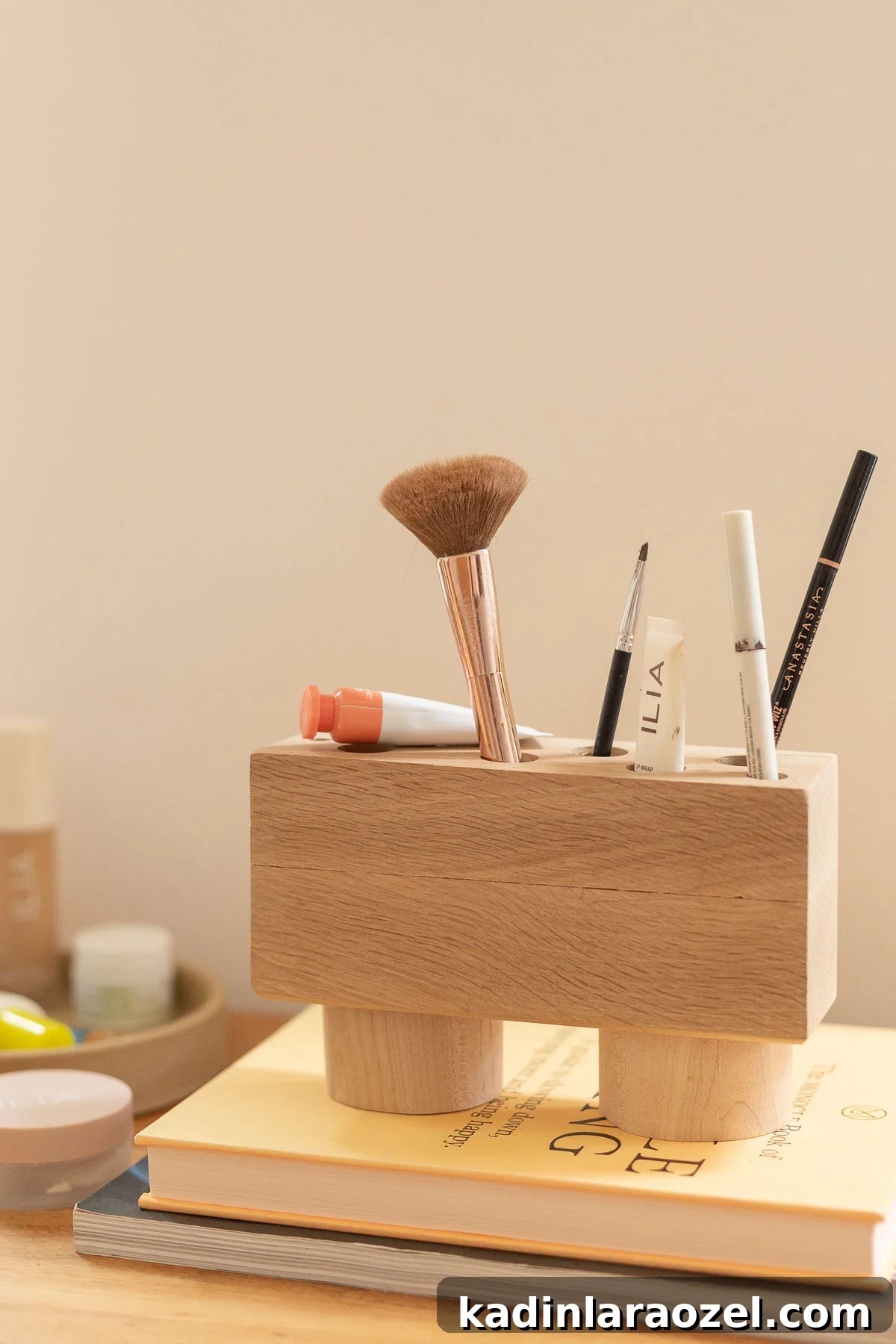
Below are materials, tools, and clear steps to build your own version.
Pencil Holder Materials
- Wood – I used thick white oak scraps leftover from a nightstand project. Any wood you already have or affordable boards from a home improvement store will work.
- Sandpaper block or power sander – I used a power sander. If the board needs shaping, start with coarse grit (80–100) after gluing, and finish with fine grit (220) for a smooth surface.
- Wood glue – A reliable brand like Titebond or other quality wood glue is recommended.
- Sealant or stain (optional) – Apply at the end if you want added protection or a different finish. I left mine natural, which suits white oak well.
Equipment / Tools
- Saw – Any saw will do. I used a miter saw for precise length cuts. Compact saws (like a small Dremel-style compact saw) are good starter options for those without larger tools.
- Drill bits, spade bits, and/or Forstner bits – Use several sizes to create mixed-diameter holes for different sized pens, brushes, and pencils. In my build I used 1 1/2″, 1″, and 3/4″ bits.
- Clamps – Securing glued pieces and clamping the base while drilling improves accuracy and safety. You may need multiple clamps depending on your piece size.
How to Make a DIY Pencil Holder / Makeup Caddy
1. Measure and cut the wood.
Decide the final length, height, and thickness. Cut all pieces to the same length. I found 8 inches to be a practical size for desktop use; if you need a longer piece (12″ or more), many home improvement stores will cut it for you.
If you use thinner boards, consider stacking more layers like the original stacked design. The thicker the pieces, the fewer layers you’ll need.
2. Sand pieces and arrange the stack.
Lightly sand each piece and wipe them clean. Stack the boards to test alignment and order—if a board has slight warp, you may only be able to arrange it one way so the faces line up well.
3. Glue and clamp the wood together.
Apply wood glue along the mating faces (a squiggly bead works well), spread it, press the boards together, and clamp tightly. Let the glue cure for an hour or two before removing clamps—follow glue manufacturer recommendations for full cure time.
4. Make and sand the legs.
While glue dries, cut feet from a dowel or scrap wood. For a reversible look, cut some feet rounded and others flat. Sand to ensure they’re smooth and equal in height.
5. Drill holes in the top panel.
After glue has fully set, clamp the block securely to your work surface and drill holes with the chosen bits. Vary hole sizes to accommodate different tools. Take your time and keep the workpiece clamped to prevent spinning or tear-out.
6. Sand the base and refine edges.
Sand out any imperfections, blending joints and smoothing edges. Use coarser grits (80) for heavy shaping, then progress through 120, 180, and 220 grit for a polished finish.
7. Attach the legs.
Glue the feet to the bottom of the base and clamp until set. Painter’s tape can also hold the legs in place if you prefer not to clamp. Once dry, give the whole piece a final light sanding and, if desired, apply a sealant or finish.
Project Summary
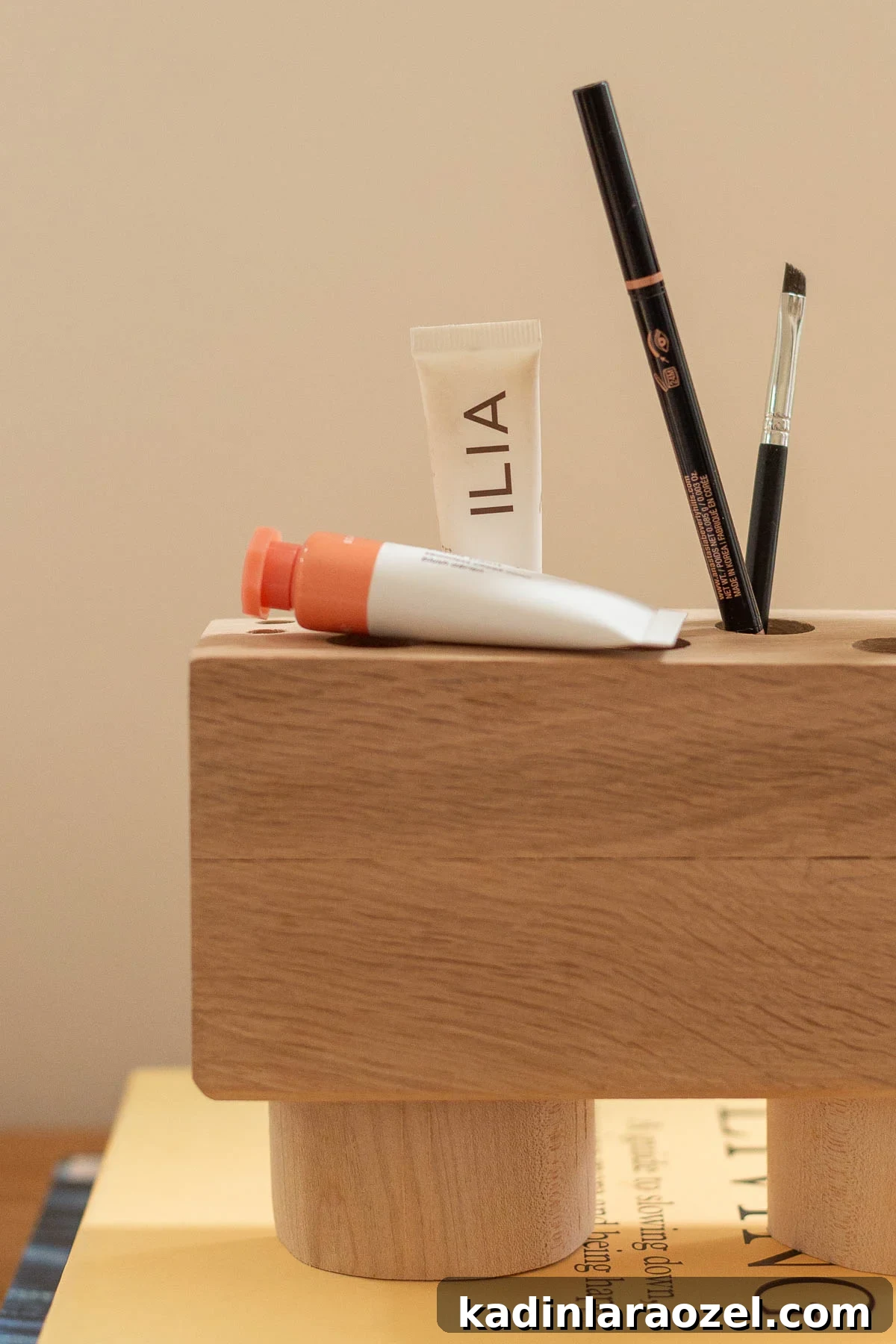
This simple build produces a durable, customizable organizer from just a few materials. It’s a small woodworking project that’s easy to adapt: change hole sizes, overall length, or finish to suit your workspace or vanity. Whether you use it for art supplies or makeup tools, it’s a functional piece with a minimal aesthetic.
Which do you prefer—the original painted version or the updated white oak remake?