DIY Built-In Bookshelves: Step-by-Step Guide to Build Them Yourself
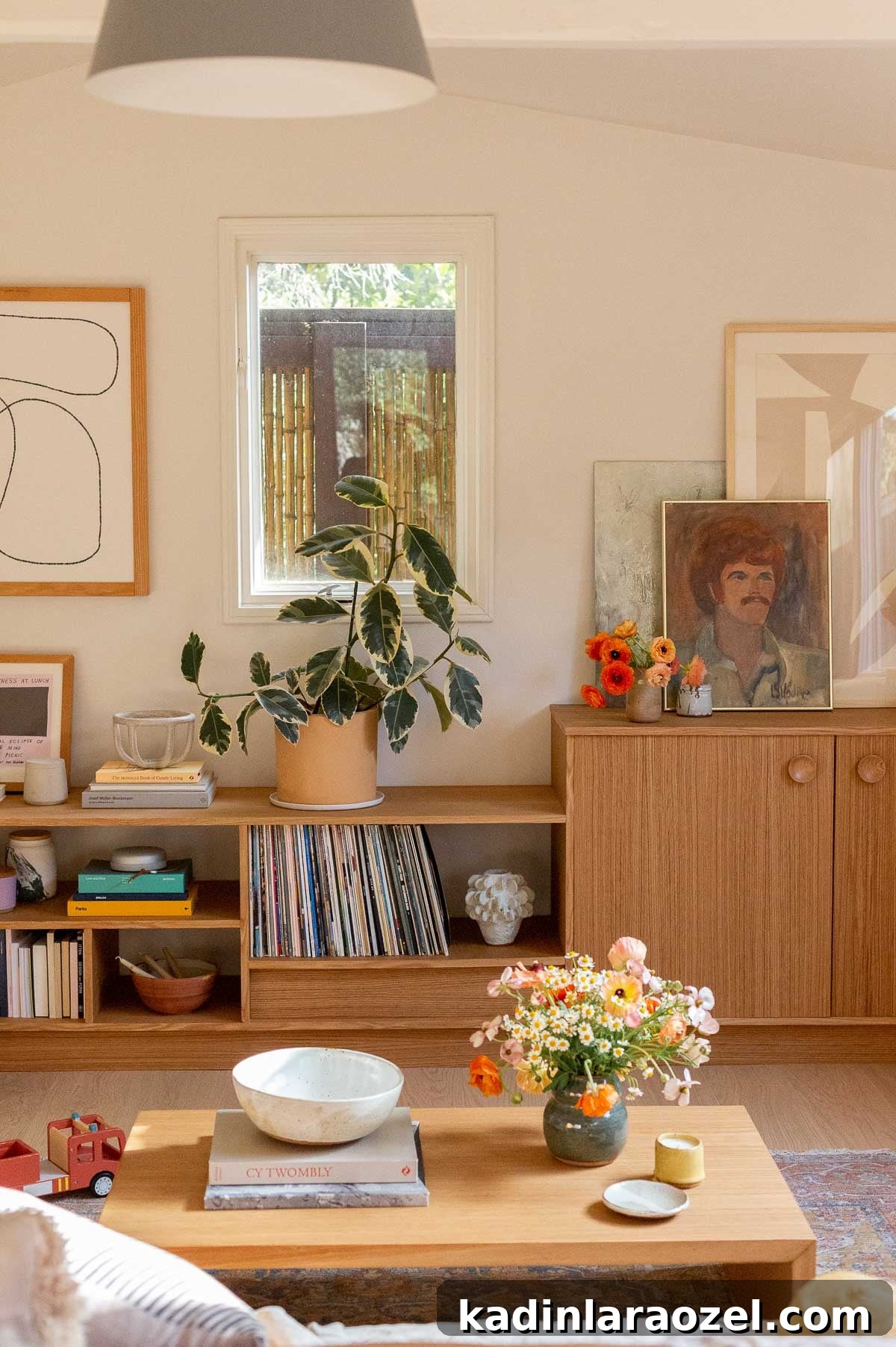
How we built the DIY built-in bookshelves that transformed our space.
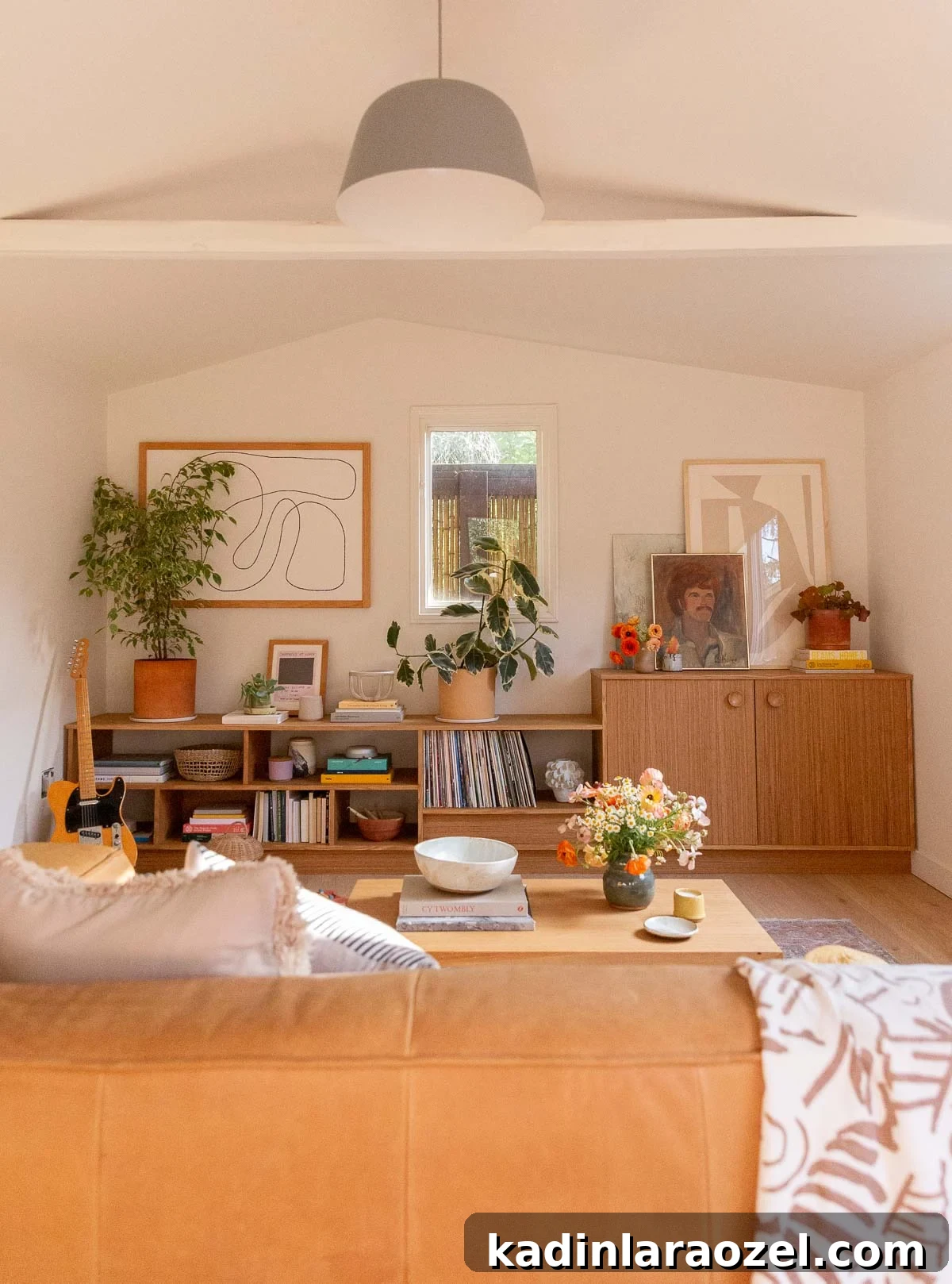
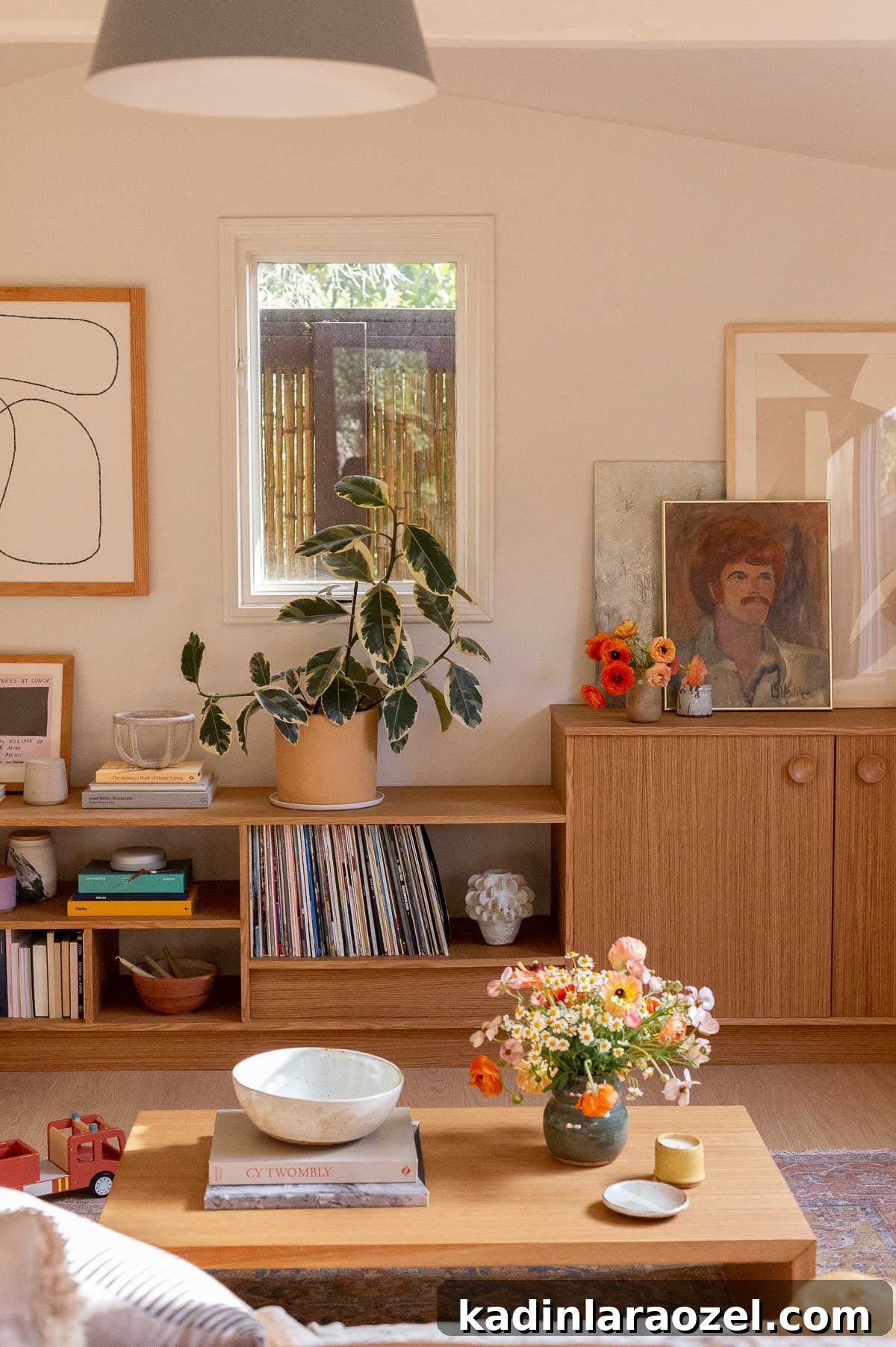
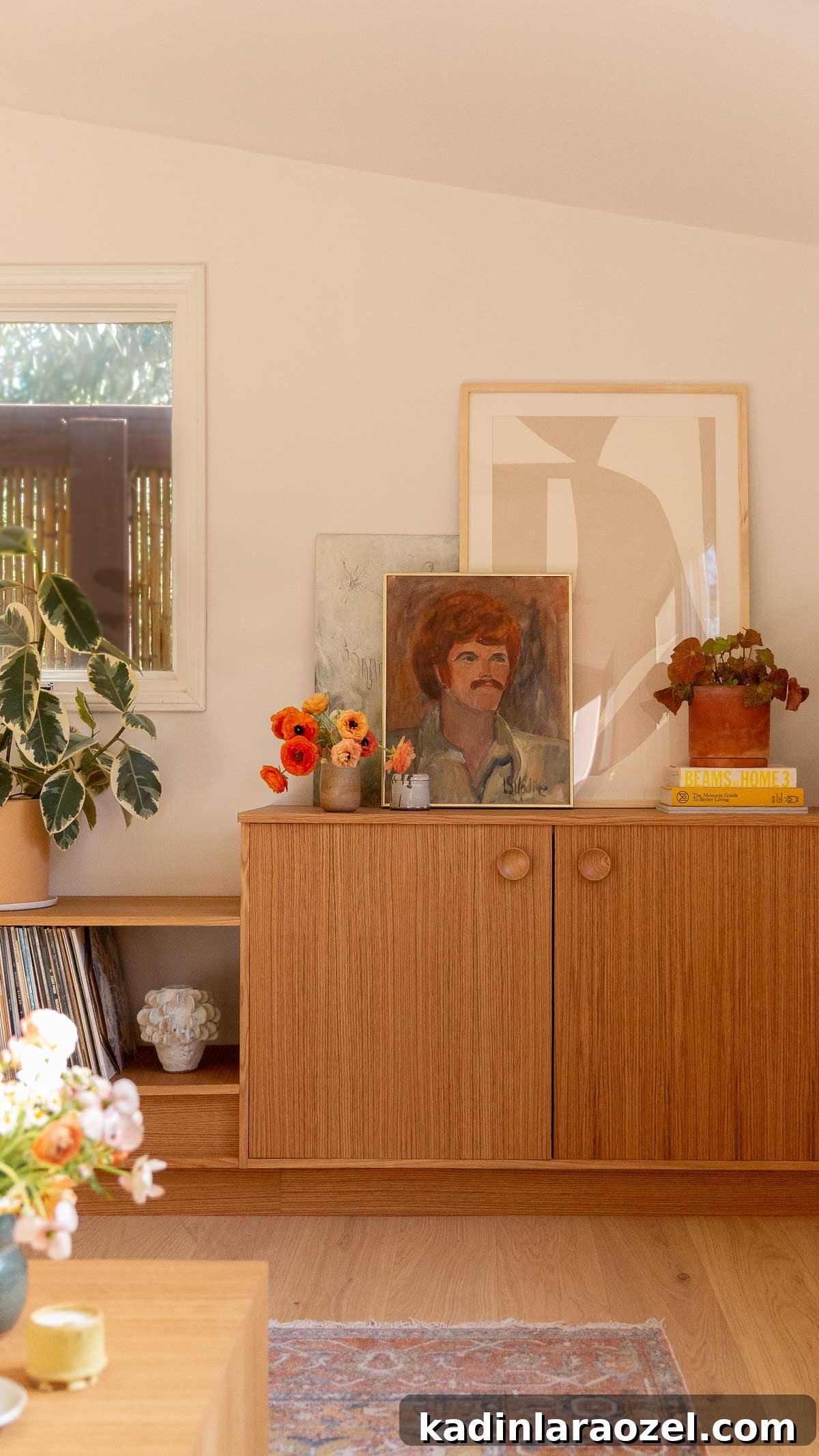
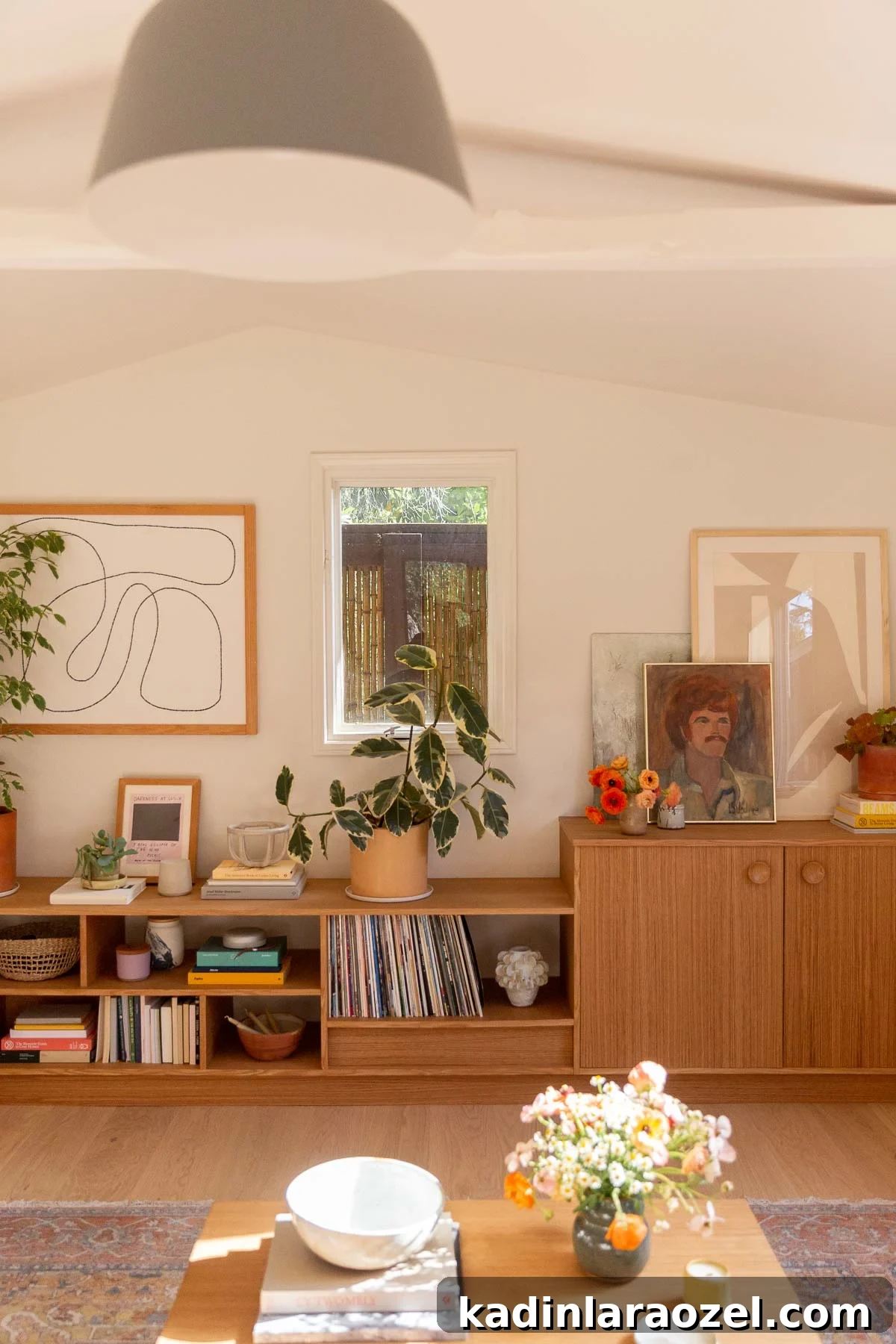
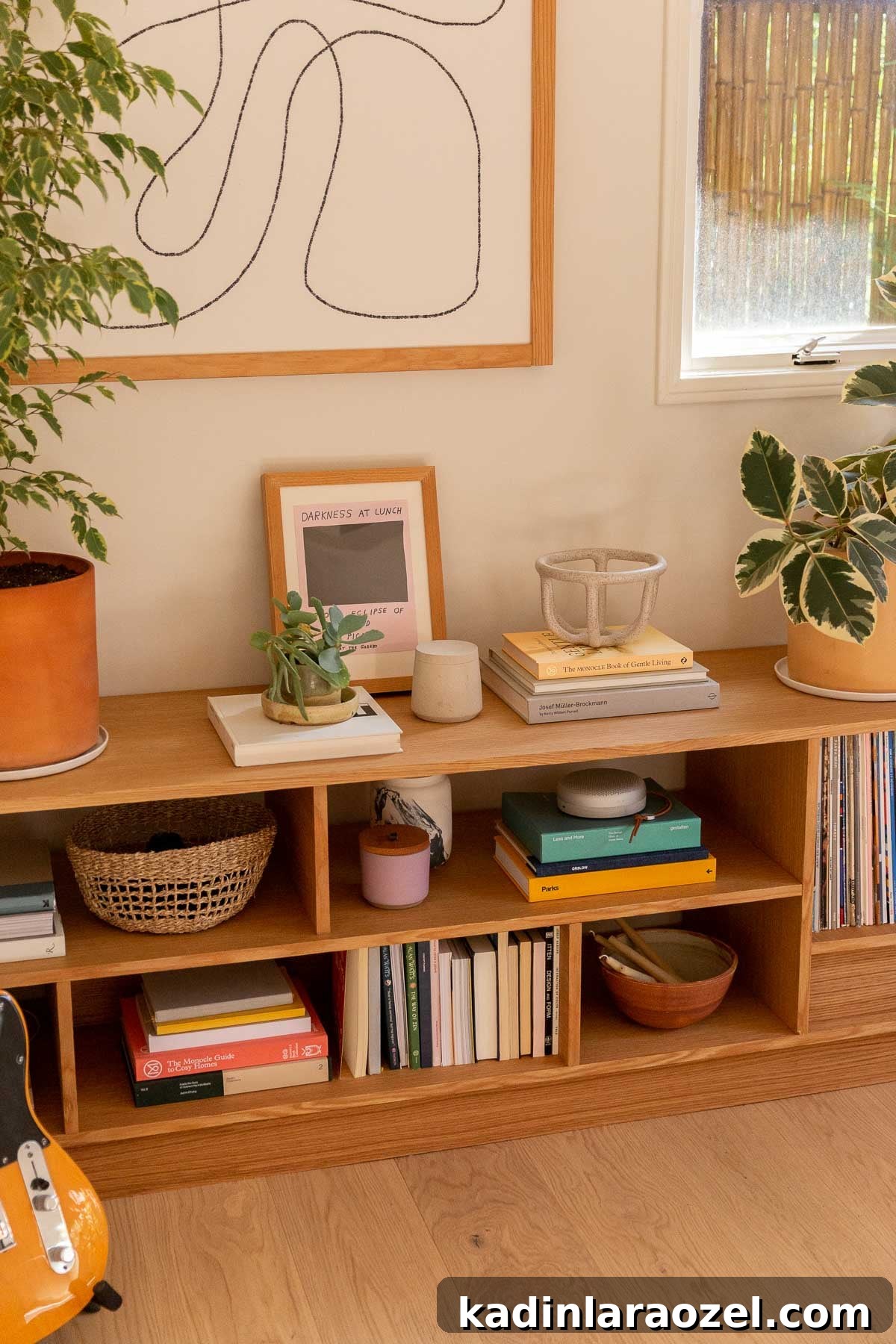
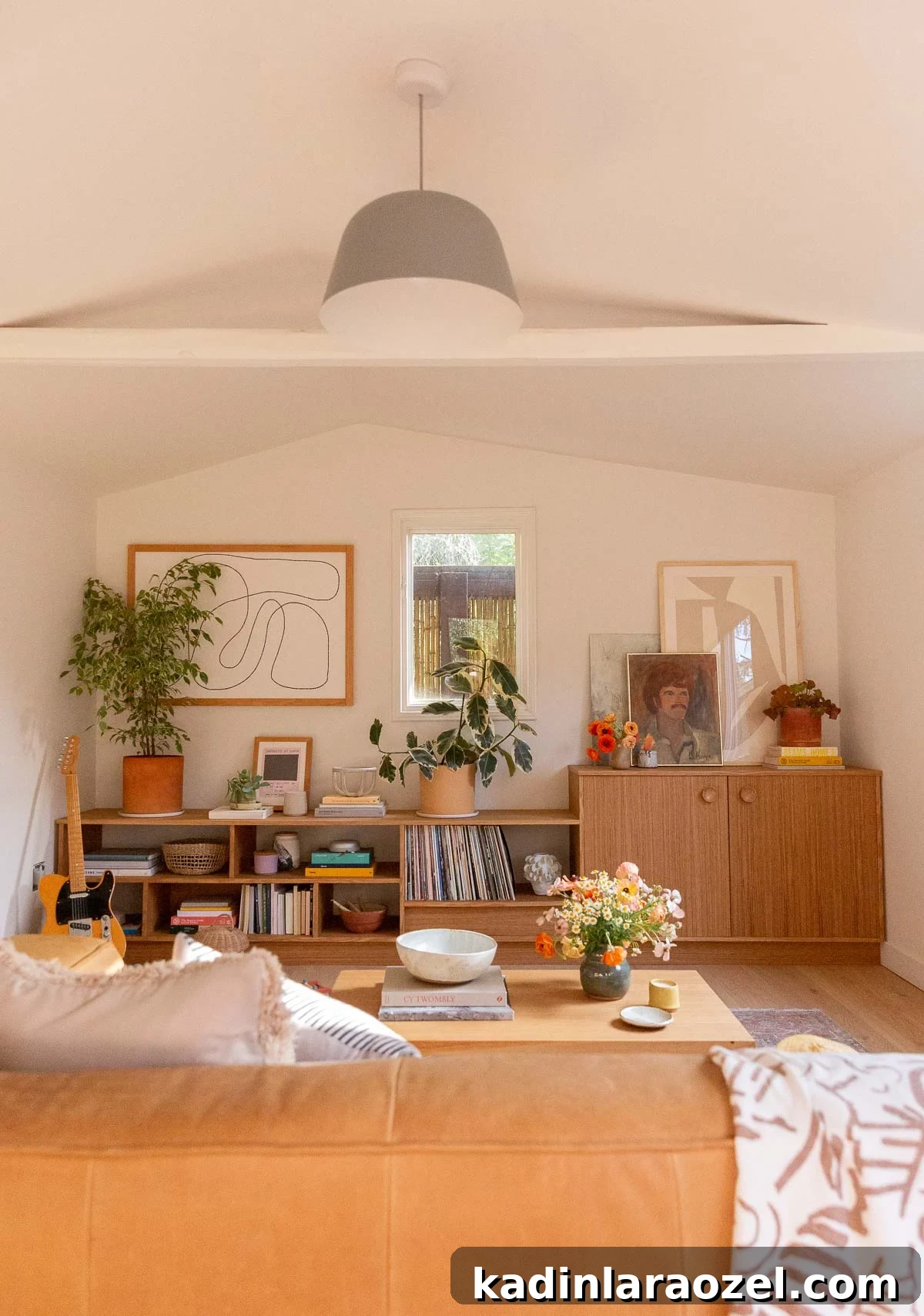
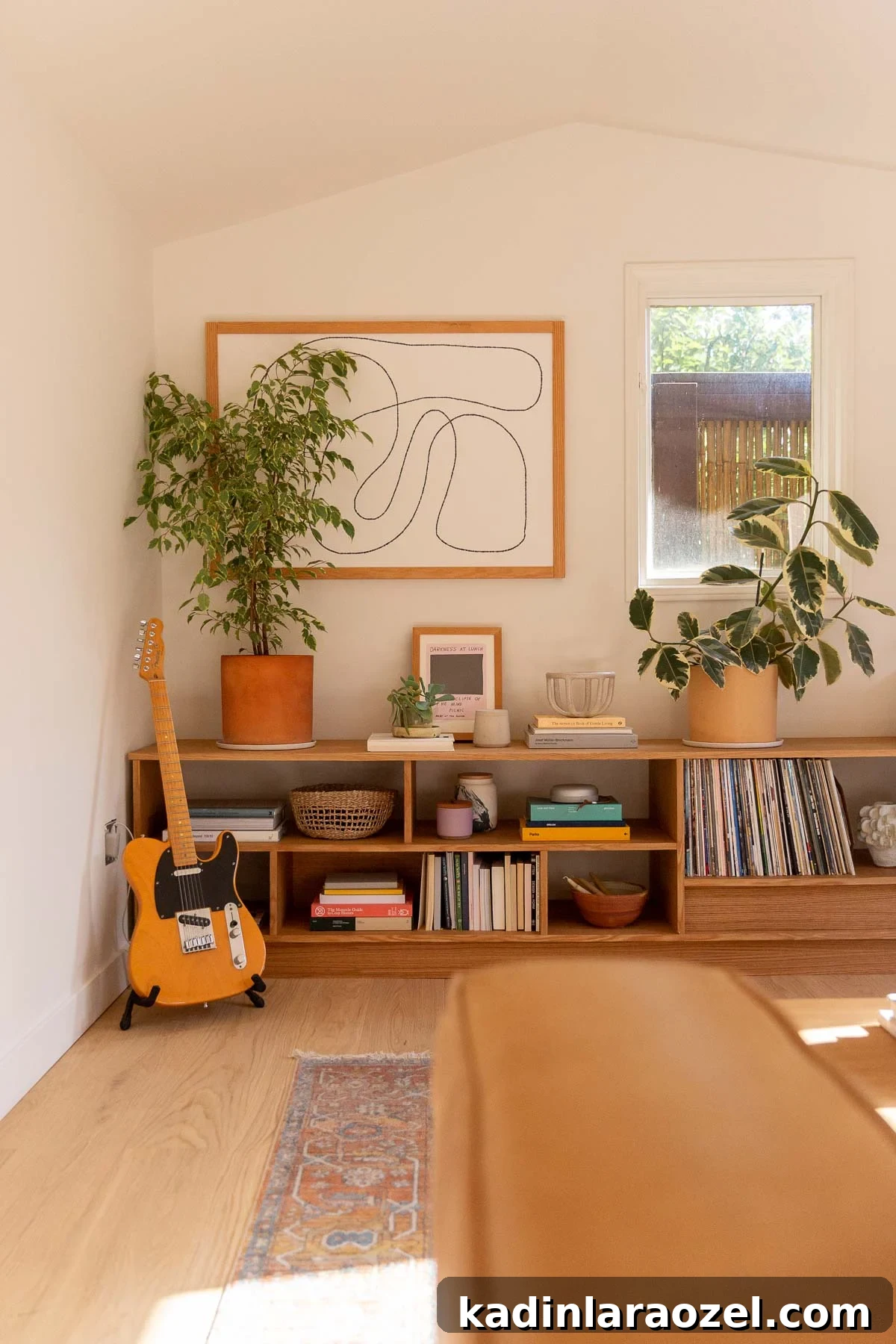
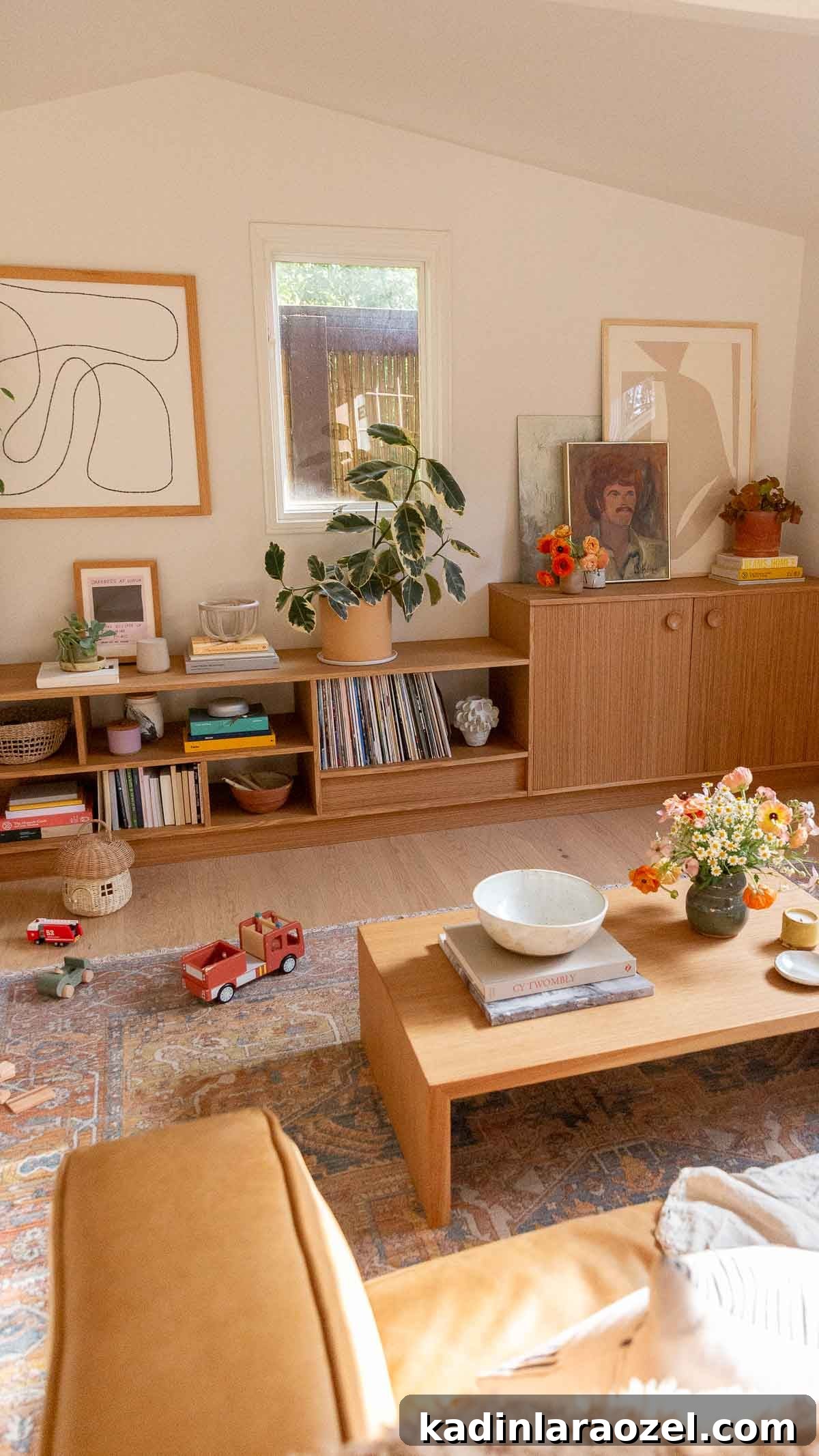
This room took the longest to come together and, as a result, is now probably my favorite space in the house. A major reason is the built-in bookcase. The warmth added by the hardwood floors and the new shelving is night and day compared to how the room started.
Beyond looks, functionality guided the design: spacious shelving for records, books, and decorative items (with baskets for organization), plus enclosed cabinet space to hide items we didn’t want on display.
Below I walk through how we built these built-ins, what we learned along the way, and a budget breakdown so you can estimate costs for your own project.
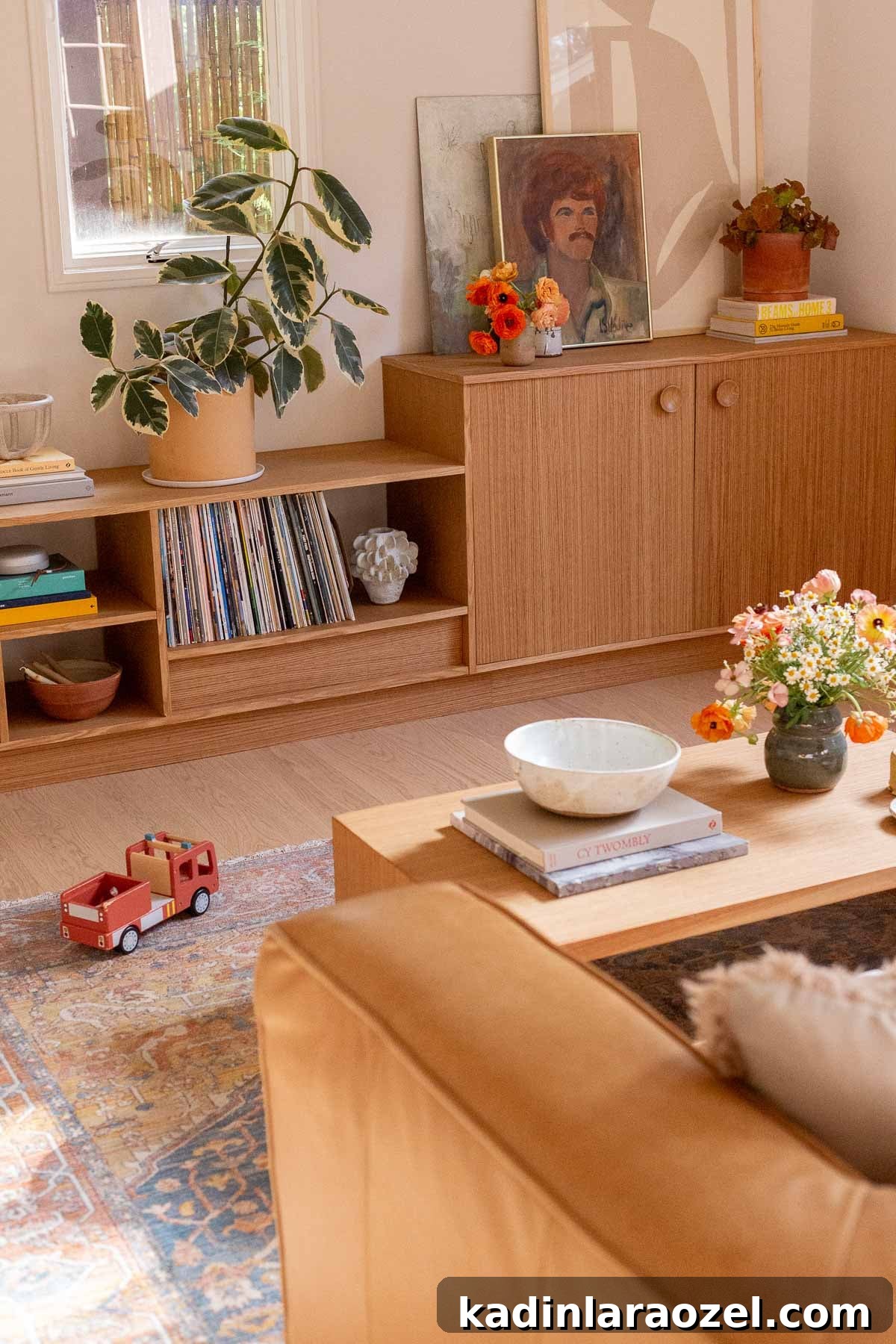
How to make a built-in bookshelf
This is a more complex project than a simple shelf—there are a lot of moving parts and many valid ways to approach it depending on tools, materials, and the size of your build. I’ll cover the main steps and the choices we made so you can adapt the process to your situation. If anything is unclear, ask and I’ll clarify.
Jeff led the build while I helped with staining, assembly, and finish work. We used white oak veneer plywood (ply with white oak faces) because it gives the look of solid oak for a fraction of the cost.
See the budget section at the end for full cost details.
Taking measurements
Start by measuring the space: overall width, depth, and height. Sketch your design on paper or use modeling software to visualize it. We used a 3D modeling app to plan cuts and dimensions—this helps reduce surprises during assembly.
Use a cut-planning tool to optimize plywood sheet usage and determine how many sheets to order. When planning cuts, pay attention to grain direction so adjacent faces match if that visual continuity is important to you.
Making your cuts
Cut panels using a circular saw with a straight edge, track saw, or table saw. We used all three at different stages, but a single reliable saw is enough for most home builders. If you don’t own the tools you need, renting is a practical option.
Edge banding
For exposed plywood edges we used iron-on edge banding. It saves money and gives a finished look, but matching grain and trimming carefully is important. Choose consistent grain pieces when cutting edge banding so the seams are less noticeable.
Apply iron-on edging with a hot iron, press with a flat surface, and trim the excess with a trim tool. Save some edge banding for edges that become mitered at corners, so you can finish those after assembly if needed.
Assembly
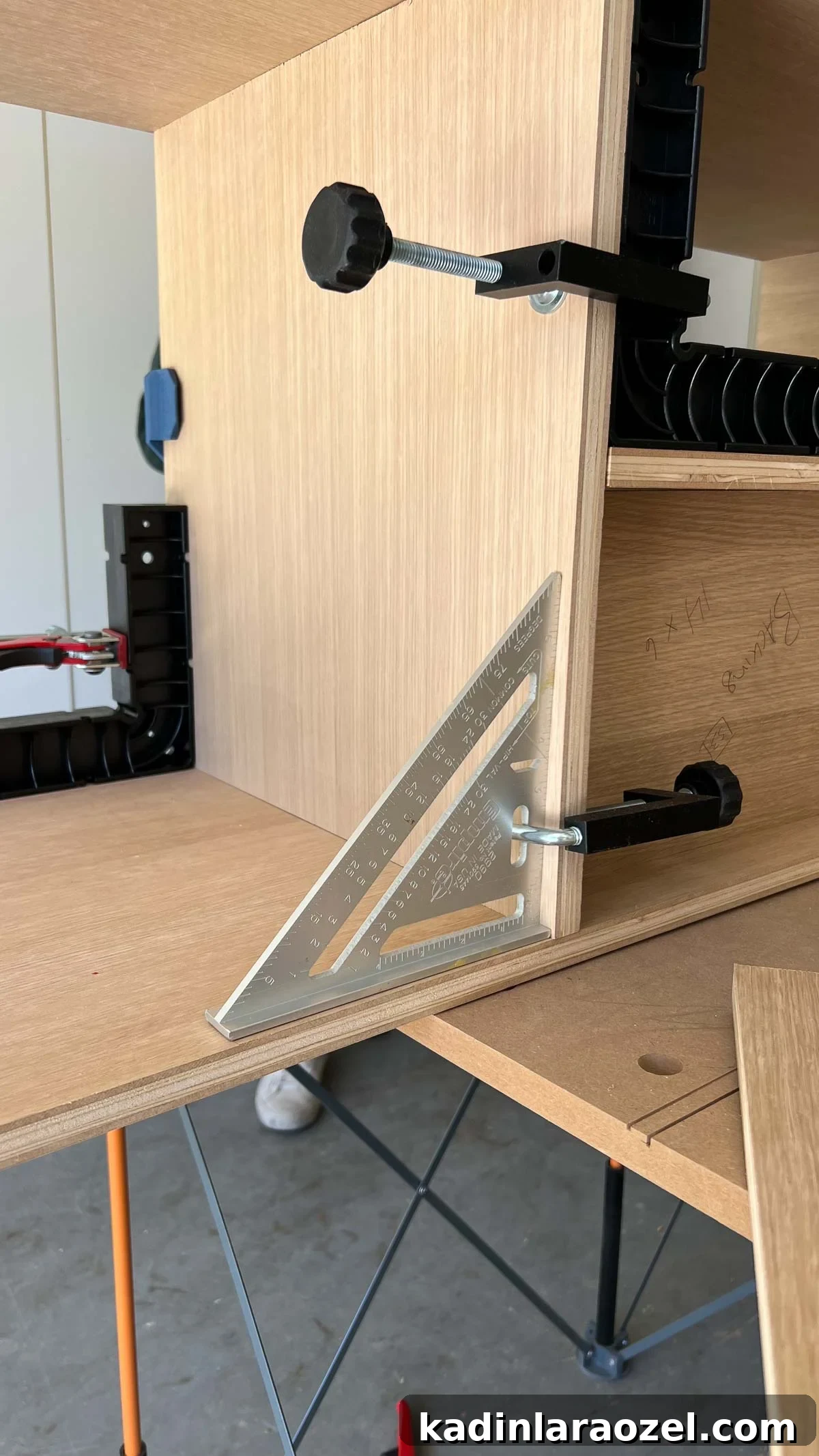
Assemble panels with a helper when possible, especially for large units. We used pocket holes for shelf connections where a back was present, and screws from the bottom where pocket holes weren’t practical. A pocket hole jig (Kreg jig or similar) makes this process much faster and cleaner.
Frequent use of squares and levels is essential—measure and adjust as you go. Reference your sketches or model often so parts align as intended.
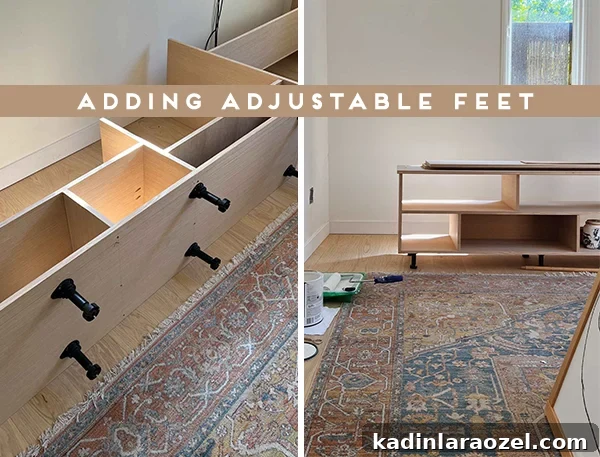
Adding feet and toe kick
We added adjustable feet to the cabinet base so the unit could be leveled precisely. After installing and adjusting the feet in place, we covered them with a matching white oak toe kick built from leftover plywood pieces. This conceals the hardware and gives a polished, built-in look.
At this stage we dry-fit the pieces in the room to confirm fit, then removed them for final sanding and finishing.
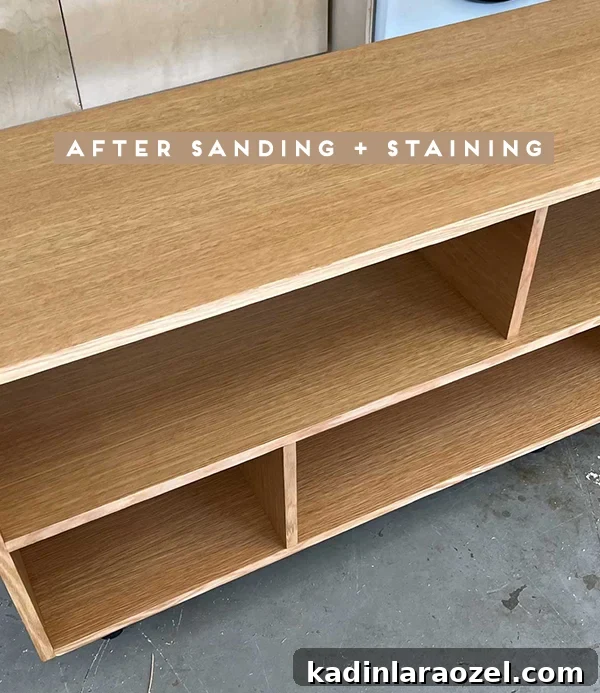
Sanding and staining
Before final assembly or after dry-fit, sand pieces (we used 120 grit) and apply your chosen finish. We used a hard oil finish to warm the white oak. If possible, stain or finish pieces before final assembly—this is easier and more consistent than trying to reach every surface after the unit is fully built.
- We used Rubio Monocoat (Pure color) with the accelerator to reduce drying time.
Installing the bookshelves
For ease of handling we built the open shelving and the lower cabinet as separate units, then joined them in the room. This made installation simpler for a large unit. Once each section was positioned and leveled, we attached the two pieces together and, if desired, secured the whole assembly to the wall for extra safety.
Finish by adding the toe kick and making any final adjustments to doors, shelves, and hardware. Then style the shelves to suit your space.
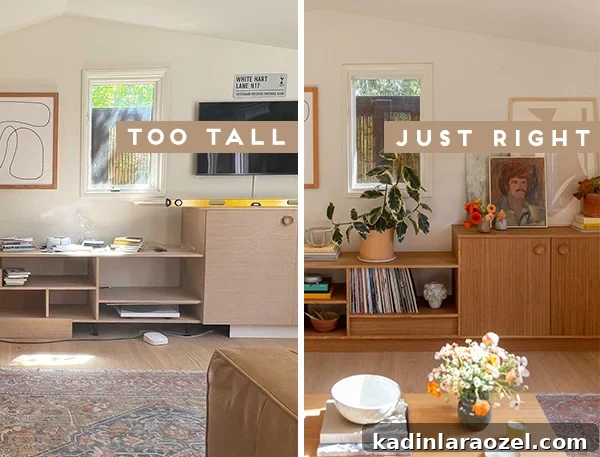
Mistakes and lessons learned
We made a few missteps worth sharing so you can avoid them:
- Scale and proportion: I misjudged how tall the taller cabinet would feel next to the window. We had to re-cut and rebuild that section to improve balance. It cost time and materials, but it was worth fixing.
- Grain direction: We overlooked grain orientation on a few pieces. Matching grain across visible faces creates a higher-end look, so plan cuts with grain in mind.
- Finish before final assembly: Staining or finishing before assembling makes the process far easier. Finishing an assembled unit is possible but tedious and less even.
- Cut oversized when unsure: If you have extra material, cut slightly oversized and trim to fit rather than risk cutting a piece too small. Recutting costs time and material.
Budget breakdown
The total cost for our built-in bookcase was $985. Here’s the breakdown:
- White oak veneer plywood sheets: $200 each × 4 = $800
- White oak edge banding: $70
- Stain and accelerator: $60
- Adjustable feet: $30
- Screws and miscellaneous supplies: $25
Tool costs are not included since we already owned the necessary tools. If you need to buy tools, expect higher costs; renting tools is a cost-effective alternative for one-off projects.
Can you do this for less?
Yes. Use a more economical plywood—standard cabinet-grade or construction plywood can be far cheaper than white oak veneer. For instance, basic plywood sheets can cost around $22 each, which could reduce the total project cost to a few hundred dollars if you make other modest substitutions for edge banding and finish products.
Styling inspiration
- Simple principles for arranging books and objects on shelves
- Ideas for minimalist bedside or living area styling
- Ways to style a small bar or beverage station
- Examples of organic modern living room layouts
If you have questions about tools, materials, or specific steps, ask and I’ll be happy to help walk you through them.