Create Stunning Large-Scale Art for Less Than $15
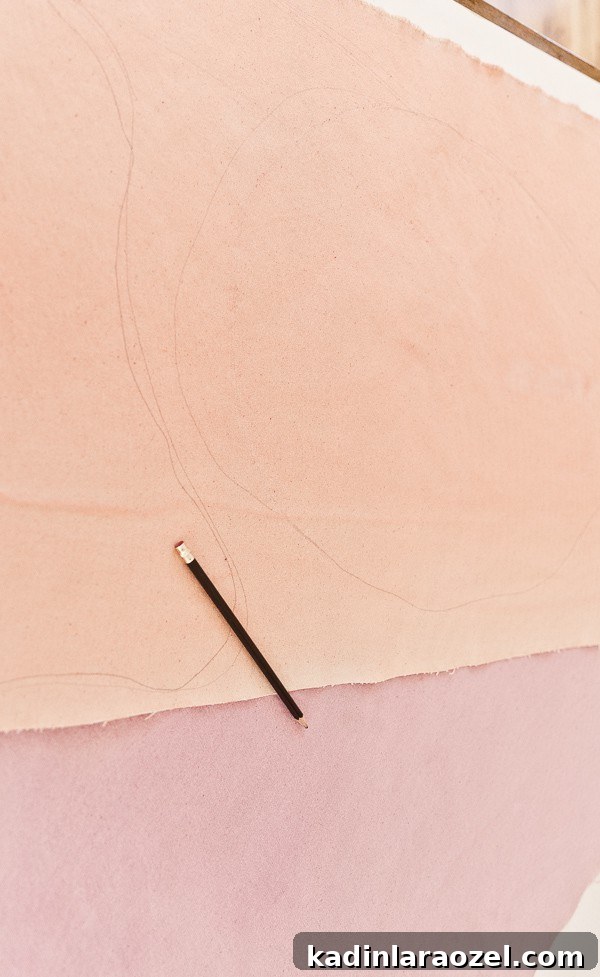
Large wall art projects like this one make it simple and affordable to create your own artwork instead of buying it — and the result looks great.
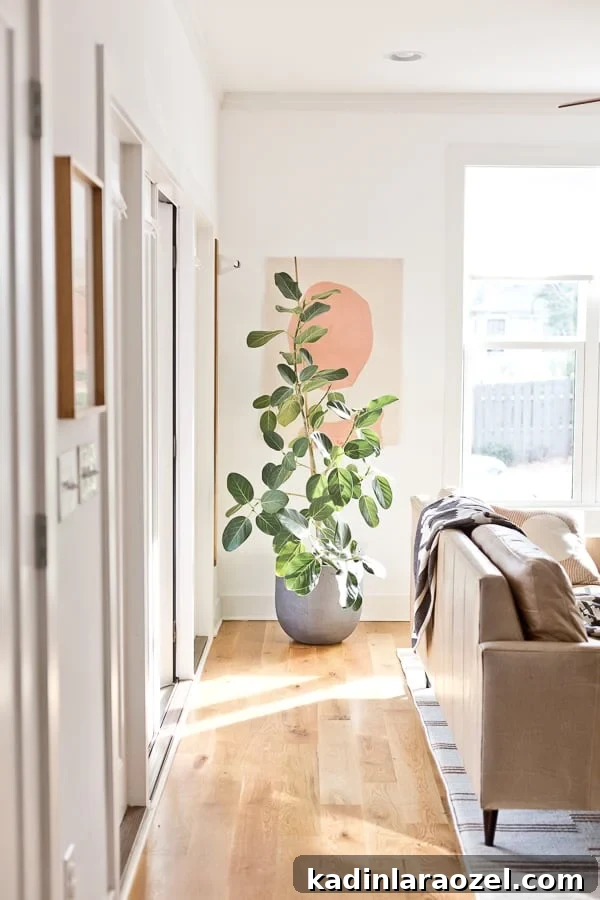
I’m a big fan of canvas projects and easy DIY art, so today I’m sharing a large wall art idea I made back in 2018 that I never published. It’s held up well over the years, and after getting asked about it repeatedly on Instagram, I finally dug up the original step-by-step photos and put together this tutorial.
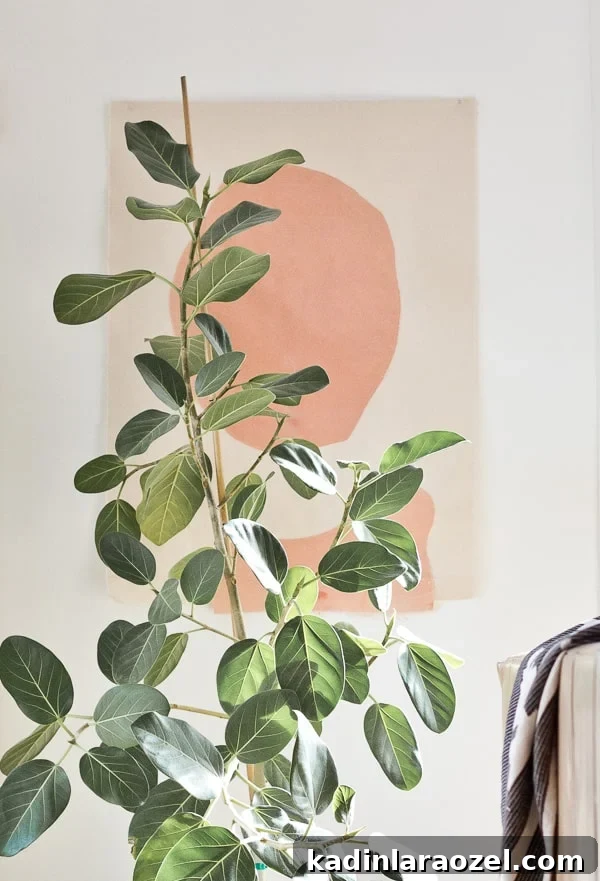
Materials for Large Wall Art
- Unprimed/raw canvas* (one or more yards, depending on final size)
- Acrylic paint and water
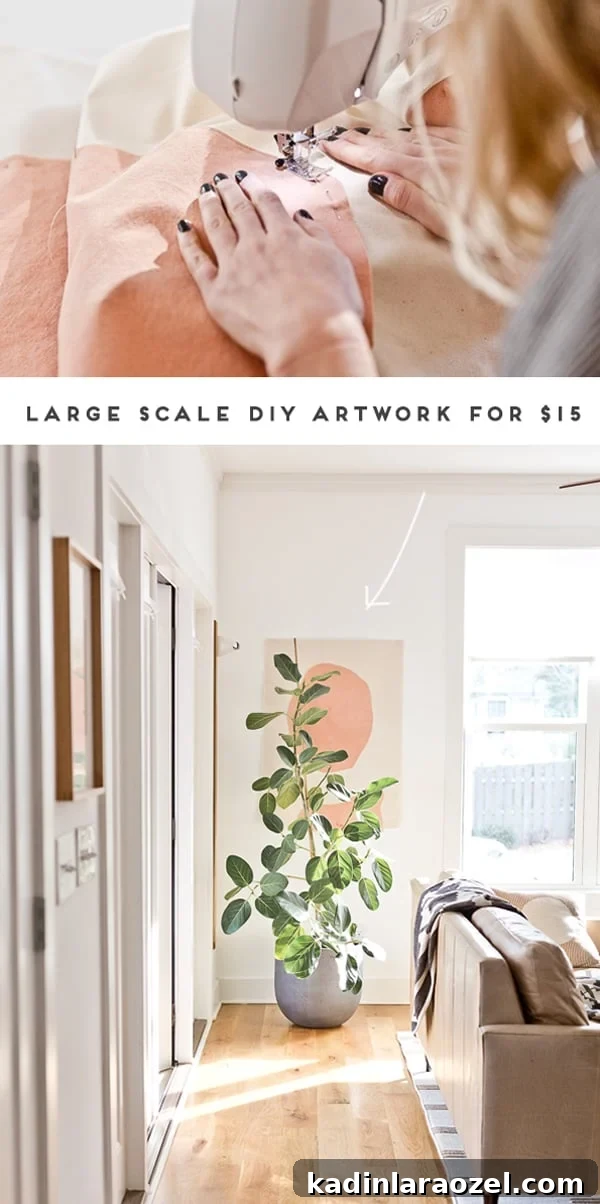
- Pencil
- Thread
- Straight pins
- Sewing machine
- Grommets or dowel rod (optional)
Which canvas should you use?
Medium-weight cotton canvas is ideal for this project, though lighter or heavier options will also work. Keep in mind your sewing machine’s capacity: very heavy canvas may be difficult to stitch through. If you don’t plan to sew, a no-sew option is possible (details below).
How much canvas is required?
That depends on the size of the finished piece. Account for the background panel plus extra material for the layered shapes. When buying canvas, pay attention to both yardage and width: some sellers offer wider widths (for example, one yard might be 36″ × 72″), which could be enough for a large piece, while narrower widths may require purchasing more yards. Double-check dimensions before ordering.
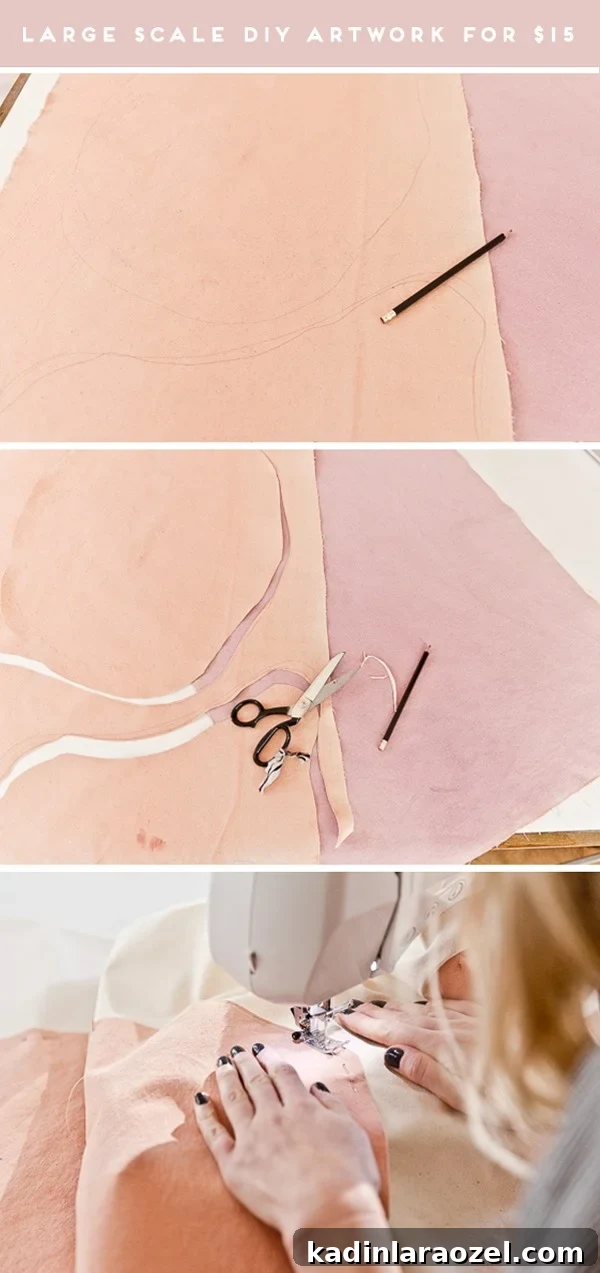
Step-by-step: How to Make Large Wall Art with Canvas
1. Cut the canvas
Cut a large piece of unprimed canvas slightly larger than your desired finished dimensions. For this design the side edges remain raw; the top edge will be finished and you can choose whether to finish the bottom edge.
Iron any wrinkles out after cutting so the surface is smooth for the next steps.
2. Paint a wash for the shapes
Decide on the colors you want to use for the layered shapes. Mix a paint wash using roughly one part acrylic paint to three parts water and apply it to the canvas pieces that will become the shapes. In my version I left the background raw and painted the shapes in a peachy-pink wash for contrast. If the canvas wrinkles when wet, iron it once the paint is dry.
3. Draw shapes
When the painted canvas is fully dry, sketch the shapes you want with a pencil. Keep the shapes simple and large-scale so they read well from a distance.
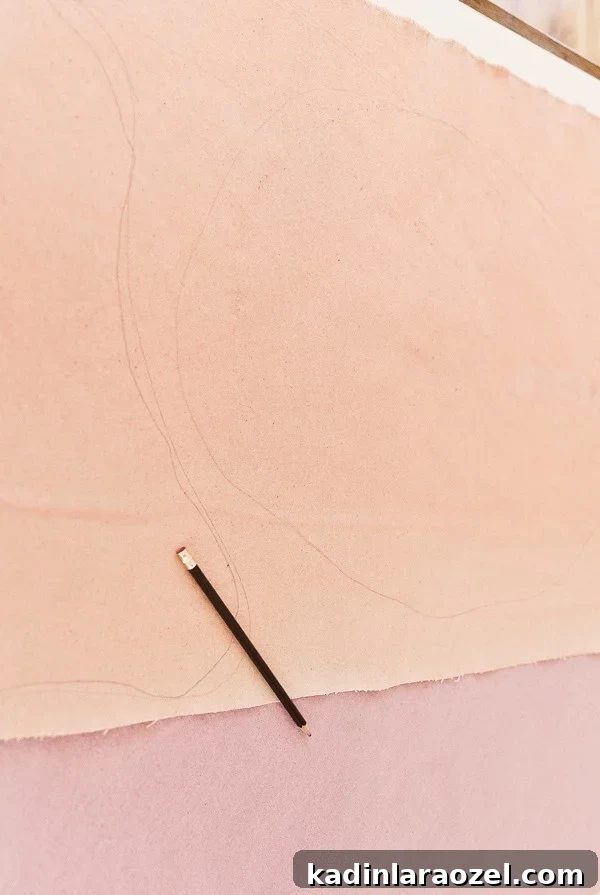
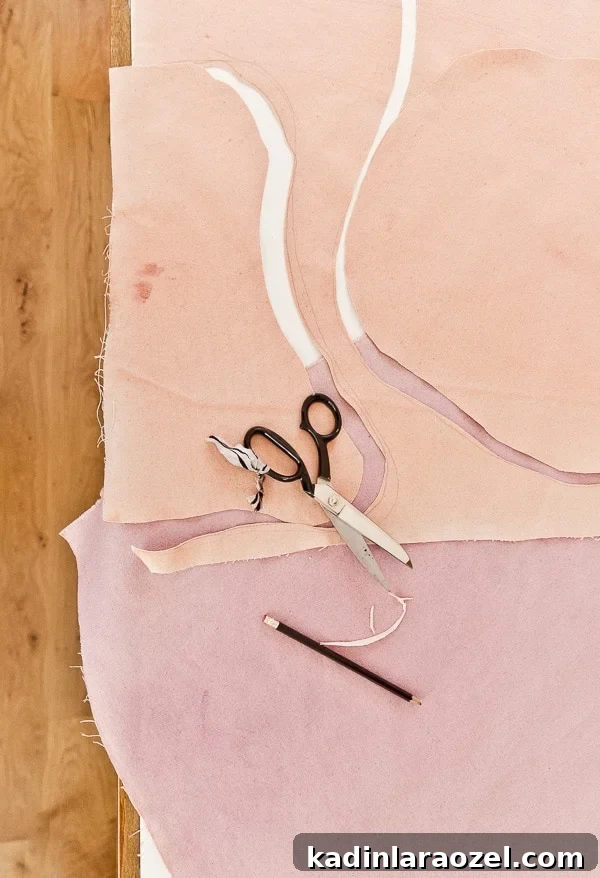
4. Cut out the shapes
Use a sturdy pair of scissors to cut the shapes from the painted canvas. Erase any visible pencil marks from the edges so the pieces look clean.
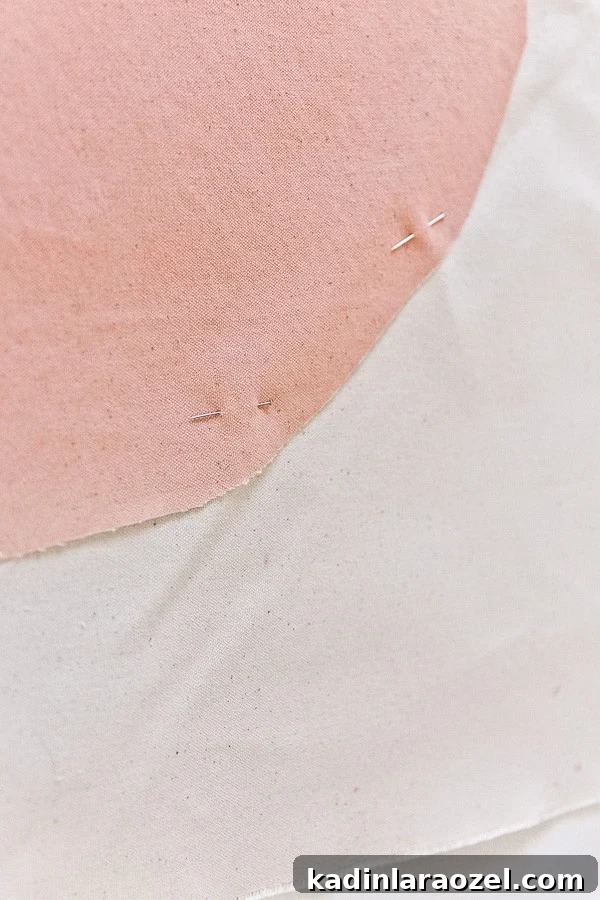
5. Pin the composition
Lay the background canvas flat and arrange the cut shapes until you’re happy with the composition. Pin each shape in place using straight pins so nothing shifts during sewing.
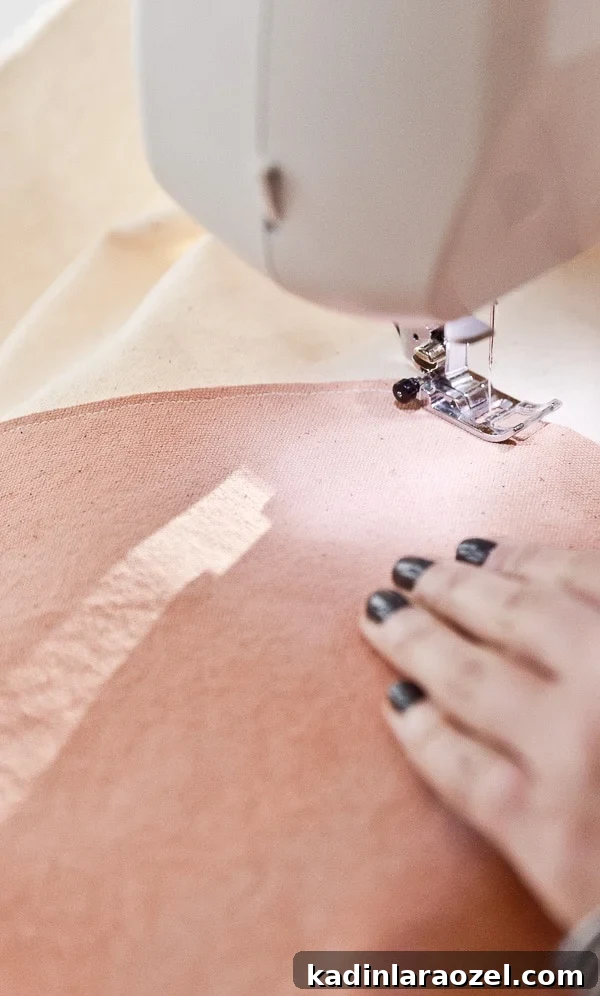
6. Sew the pieces
Using a regular sewing machine, stitch each shape to the background. Maintain an even distance from the outer edge of each shape — I kept mine under 1/4 inch from the perimeter. This technique leaves a raw edge around each shape, which adds texture and depth. If you prefer a cleaner edge, consider adapting your stitching approach.
7. Finish the top edge
After stitching the shapes, finish the top edge for hanging. There are a few reliable methods:
Make a pocket for a dowel
Fold over a 1–2 inch pocket at the back top and sew it to create a channel for a dowel rod, which you can then hang on hooks or a nail.
Fold and stitch a simple hem
Fold the top over 1–2 inches, sew a straight line across, and hang the piece with nails or thumbtacks. That’s what I initially did, and it’s held up fine for years.
Fold, sew, and add grommets
Fold the top over, sew across, and install grommets spaced across the top. Hang by rope, twine, or hooks through the grommets for a more finished look.
8. Finish the bottom edge (optional)
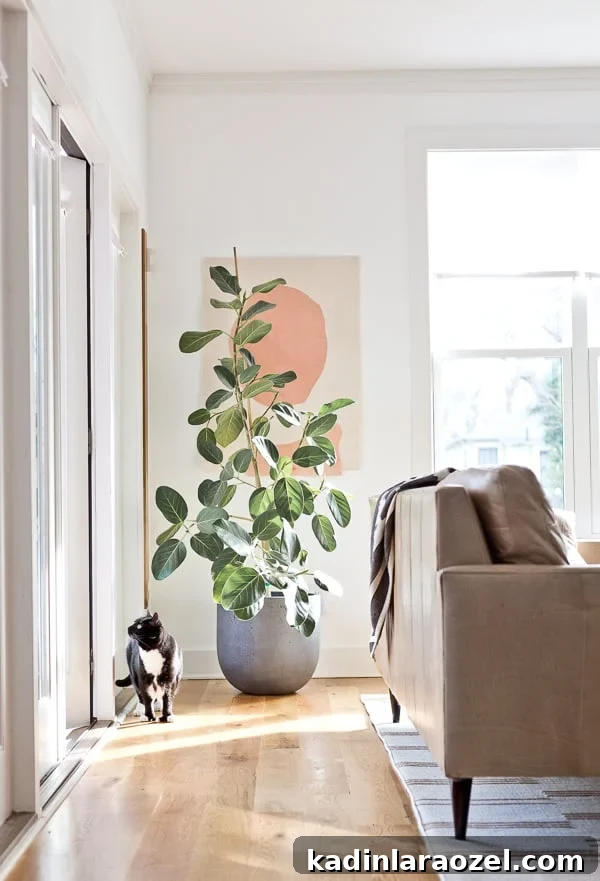
If you want a neat lower edge, fold under 1–2 inches and sew a straight seam about 1/2 inch from the edge. I originally finished the bottom edge but later removed the seam for a slightly undone look and extra length — a stylistic choice that worked well behind a large plant.
No-sew option
If you don’t sew, you can still create this layered canvas artwork. Use iron-on adhesive like Stitch Witchery or another fusible web to attach the shapes to the background and to hem the top and bottom. It won’t have sewn thread lines, but it will hold together cleanly and is a good alternative for non-sewers.
Do you need a quilting arm?
No. A standard domestic sewing machine works fine for this project — that’s what I used.
Why sew pieces instead of painting directly on canvas?
You can absolutely paint a design directly onto the canvas, and that will be simpler and potentially more budget-friendly. I prefer sewing layered shapes because the physical layers and raw edges add texture and visual depth, a bit like an abstract quilt. My grandma was a quilter, so that influence probably explains my preference. If you prefer a painted look, go for it — both approaches work well.
Other DIY canvas project ideas
- More DIY art ideas made with canvas
- Hanging wall organizer made from canvas
- Canvas lunch bags for back-to-school projects
- Wine bags made from waxed canvas
- Christmas tree skirt made from canvas drop cloth
How to Make Large Scale Artwork with Canvas for Less than $15
Author: Brittni
Large wall art like this is budget-friendly and approachable to make at home. It’s an easy way to create a custom, large-scale piece without spending a lot, and the sewn layers bring texture and dimension that painting alone may not achieve.
Materials
- Unprimed/raw canvas (one or more yards)
- Acrylic paint and water
- Pencil
- Thread
- Straight pins
- Sewing machine
- Grommets or dowel rod (optional)
Instructions (summary)
- Cut a piece of unprimed canvas slightly larger than the final dimensions and iron out wrinkles.
- Paint a diluted acrylic wash (about 1:3 paint to water) on the canvas you’ll use for shapes. Let dry and iron if necessary.
- Draw large shapes with pencil on the painted canvas.
- Cut the shapes with a sturdy pair of scissors and remove pencil marks from the edges.
- Arrange and pin the shapes to the background canvas.
- Sew each shape around the perimeter, keeping a consistent distance from the edge (I used under 1/4″).
- Finish the top edge by creating a dowel pocket, folding and stitching a hem, or adding grommets for hanging.
- Optionally hem the bottom edge or leave it raw for an undone look.
Notes
Canvas type: Medium-weight cotton canvas is ideal; make sure your sewing machine can handle heavier weights.
Amount needed: Depends on the final size and the canvas width; check yardage measurements before buying.
Sewing: Emma Spear
Step photography: Amelia Lawrence
Styled after photos: Brittni Mehlhoff
Have you tried a large-scale art project like this? What did you learn from the process?