Affordable DIY Kitchen Backsplash: Studio Remodel Before & After
This post is sponsored by 3M. All opinions are my own, and any additional products used were selected by me.
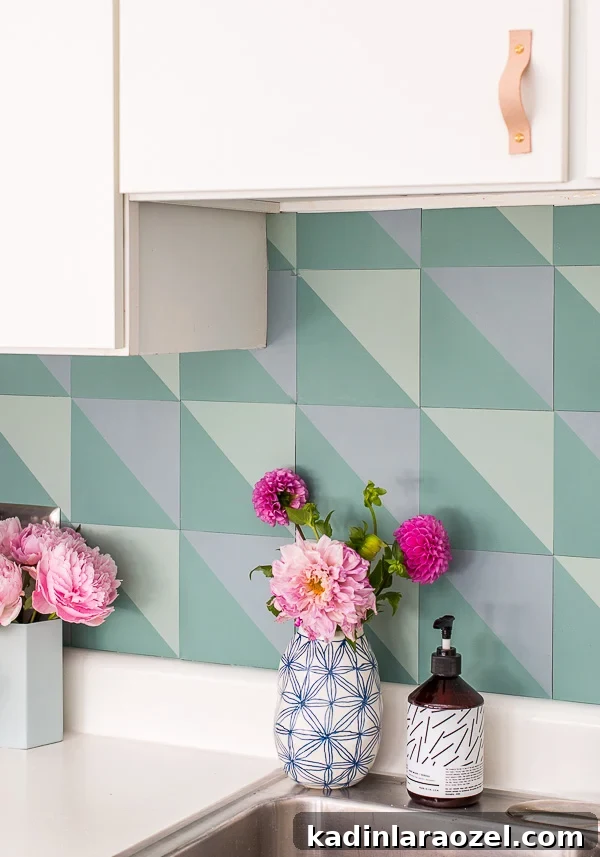
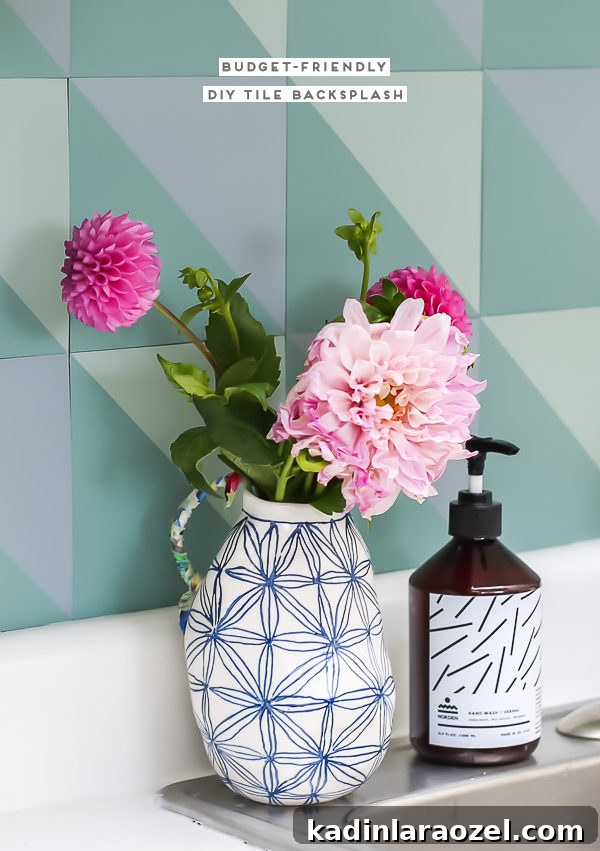
With the studio kitchen leaning heavily toward white—white cabinets, white countertops—I wanted a splash of color and pattern for the backsplash. Instead of spending on custom cement tiles, I created a budget-friendly alternative that gives the same patterned look.
I partnered with 3M and used ScotchBlue™ Painter’s Tape to make peel-and-stick vinyl tiles resemble the popular cement tile designs. It may sound unconventional, but I achieved the exact colors and pattern I wanted and kept the total cost under $50.
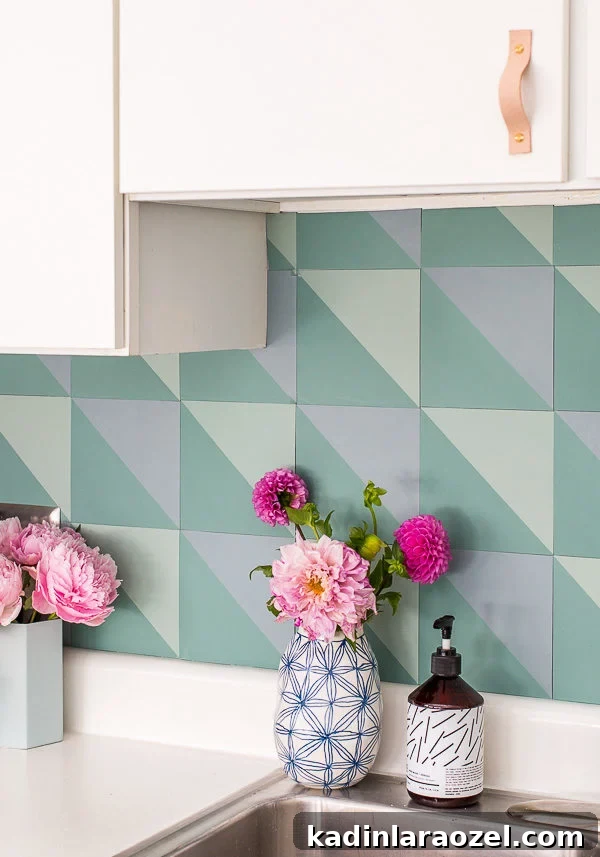
Before we dive into the how-to: the materials for this entire project were under $50. Because the tiles are peel-and-stick, I installed them myself in about two hours once the tiles were ready—easy and fast.
The cement tiles I liked were quoted at over $650 for the area I needed, and they required professional installation. For a fraction of the price I achieved a similar feel and got to customize the colors and pattern myself.
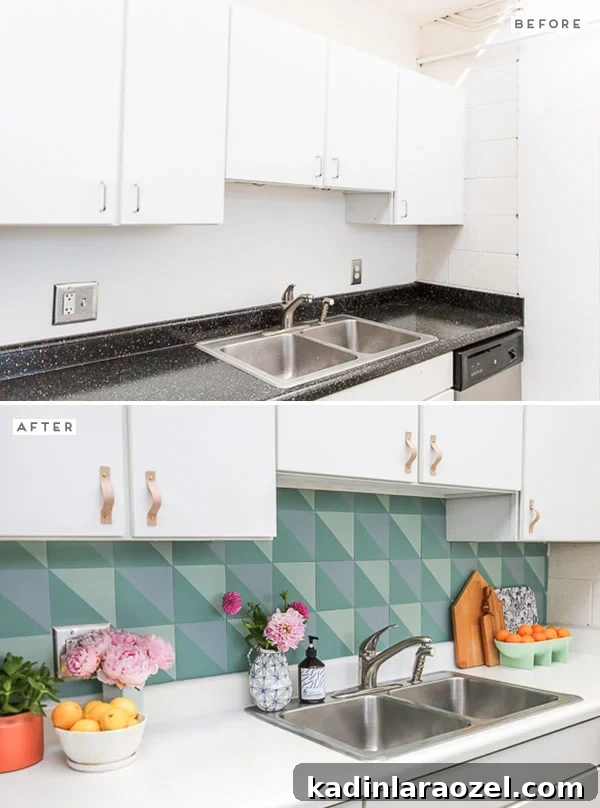
I’m planning larger kitchen changes later—countertops, sink, faucet—but for now this backsplash is a great, affordable update. Above is a side-by-side before and after. Between those photos I also swapped the cabinet pulls for DIY leather handles and painted the countertops. (I’ll share countertop resurfacing details soon.)
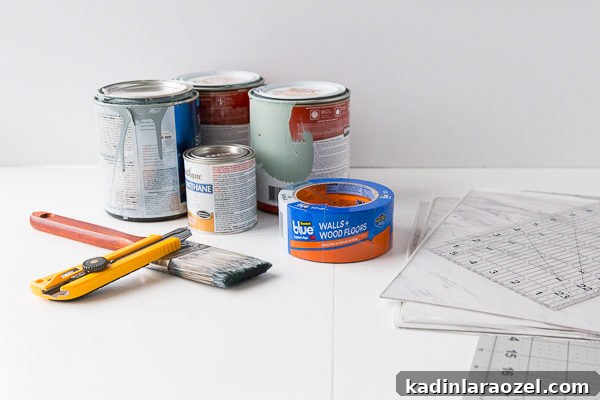
Materials
- ScotchBlue™ WALLS + WOOD FLOORS Painter’s Tape
- Peel-and-stick vinyl tiles, 12×12 (the ones shown are what I used)
- Flat or eggshell interior paint in 3 colors
- Matte-finish interior polyurethane
- Soft-bristle paint brush (to avoid brush marks)
- Ruler or straightedge (I used a 6″ craft ruler)
- Sharp blade or box cutter
If you’re unsure which painter’s tape to use, ScotchBlue’s tape selector tool helps pick the right tape for your project.
Instructions
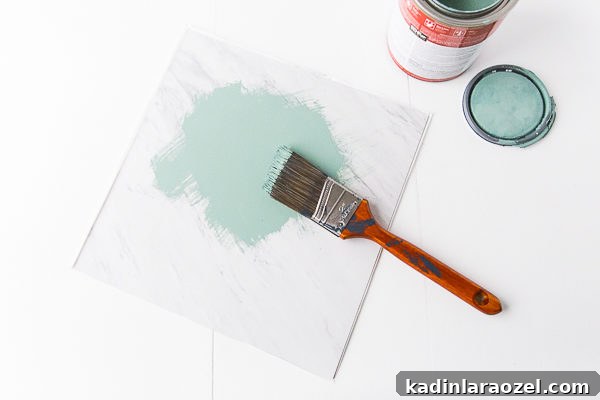
1. Paint the tiles a solid base color. I alternated between an earthy green and a gray-blue, which become the background for the pattern.
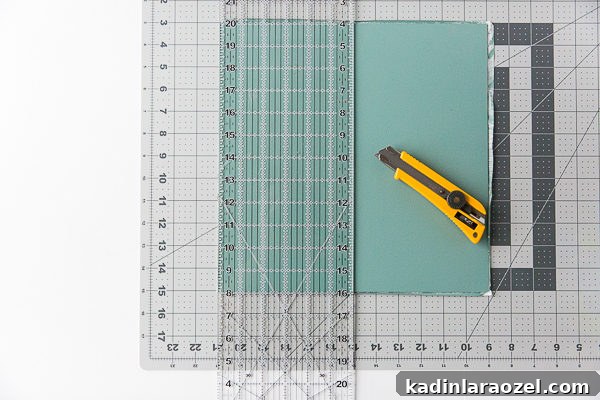
2. Let the painted tiles dry at least 24 hours. Then cut 12×12 tiles into four 6×6 squares. A 6″ ruler makes scoring easy: align the ruler, lightly score the tile along the edge, then bend the tile at the score line to break it cleanly.
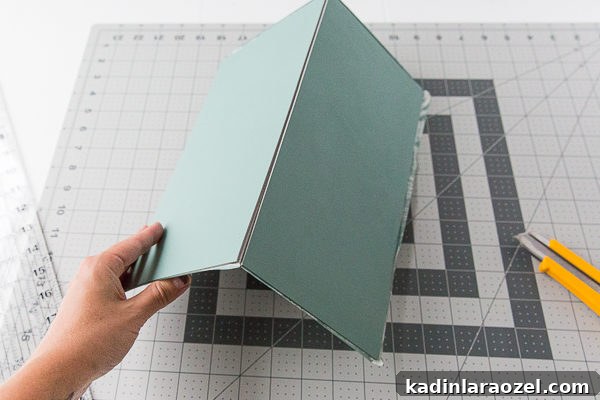
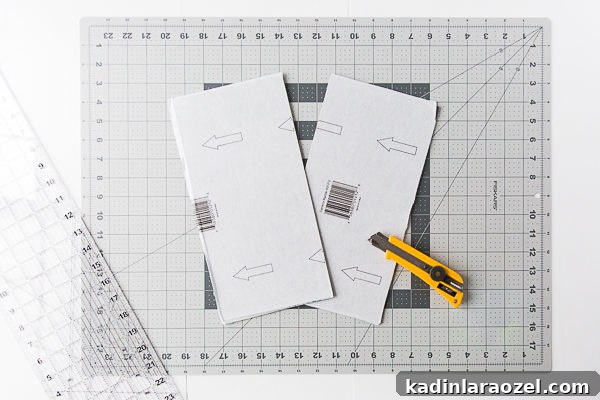
When you bend the tile it will separate, but you’ll need to score the paper backing to fully separate the pieces.
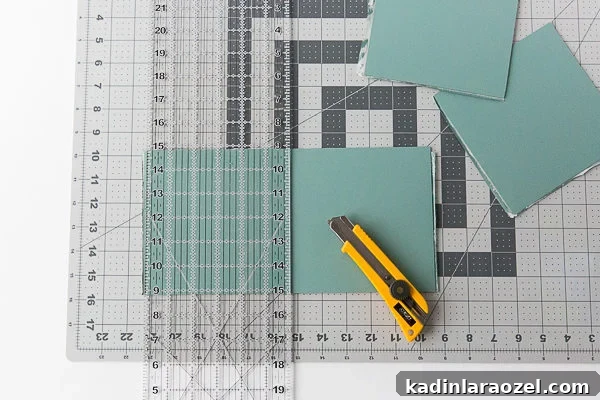
3. Repeat the scoring and bending process to turn each 12×12 tile into four 6×6 tiles.
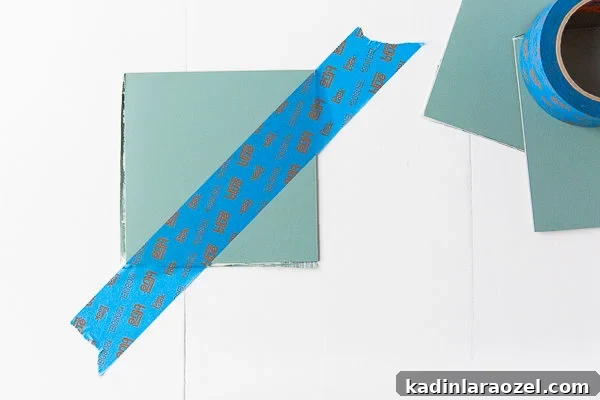
4. Once the base paint is fully dry, use ScotchBlue™ WALLS + WOOD FLOORS Painter’s Tape to mask a simple geometric shape. For my triangle pattern, place a strip from corner to corner and press the tape firmly to create a crisp edge. This tape is designed for freshly painted surfaces that are at least 24 hours old.
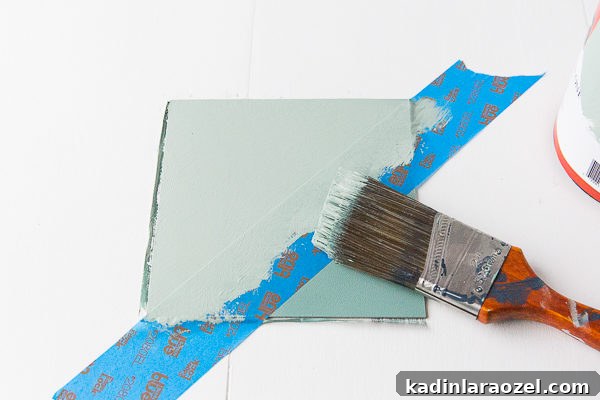
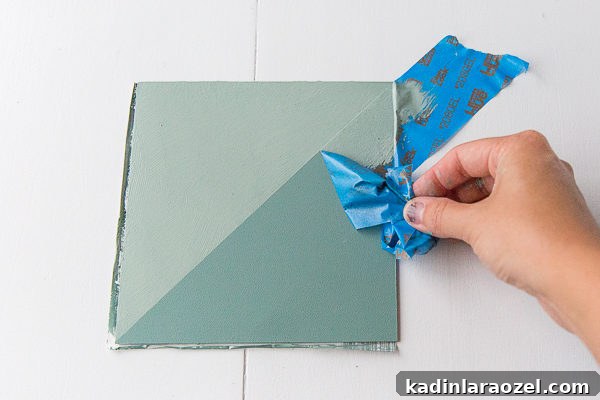
5. Paint the exposed triangle with a contrasting color. Before removing the tape, remove any excess paint from the surface with a dry brush. Then slowly pull the tape back on itself at a shallow angle—removing the tape right away tends to give the sharpest line.
6. Repeat for all tiles. I used roughly 50 tiles to cover my backsplash. After the pattern paint is dry, apply a thin coat of matte polyurethane to seal and protect the tiles.
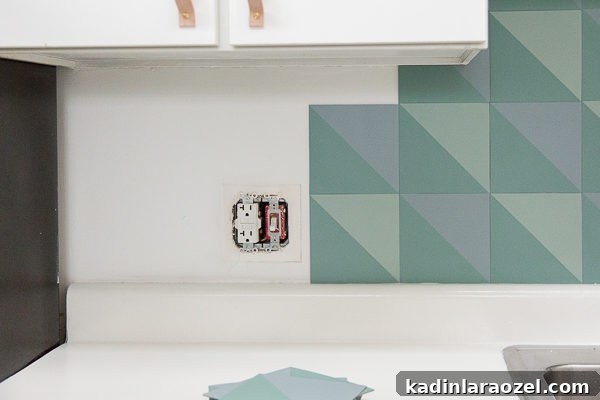
7. Prepare the wall by cleaning it and removing outlet covers. Use a level line as a guide if desired. Peel the paper backing from each tile and press it firmly onto the wall, working row by row. For tiles that need trimming around outlets or edges, mark and score them the same way you cut the original tiles.
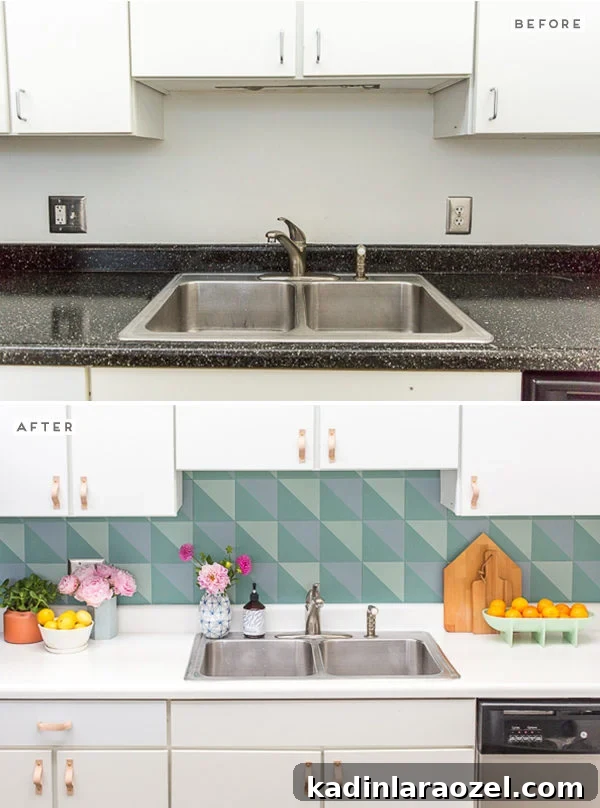
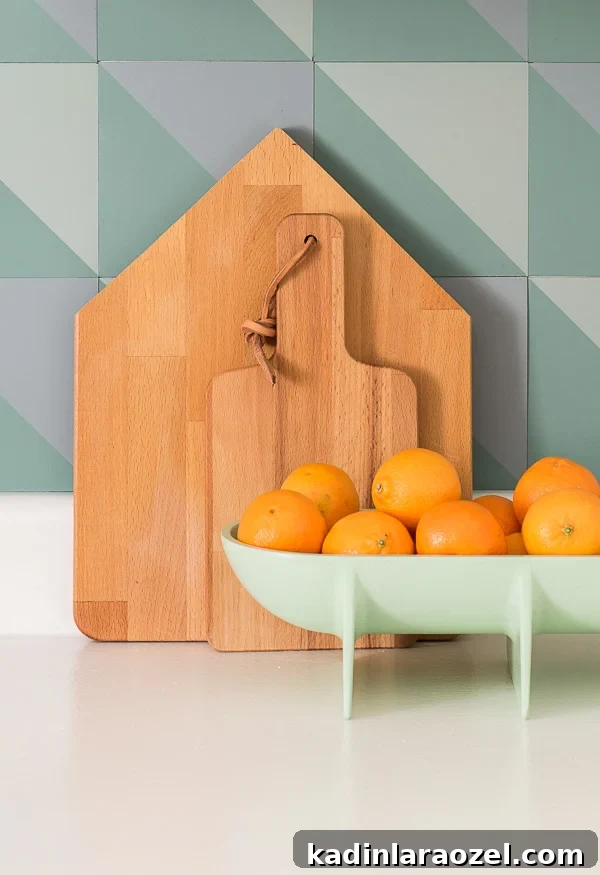
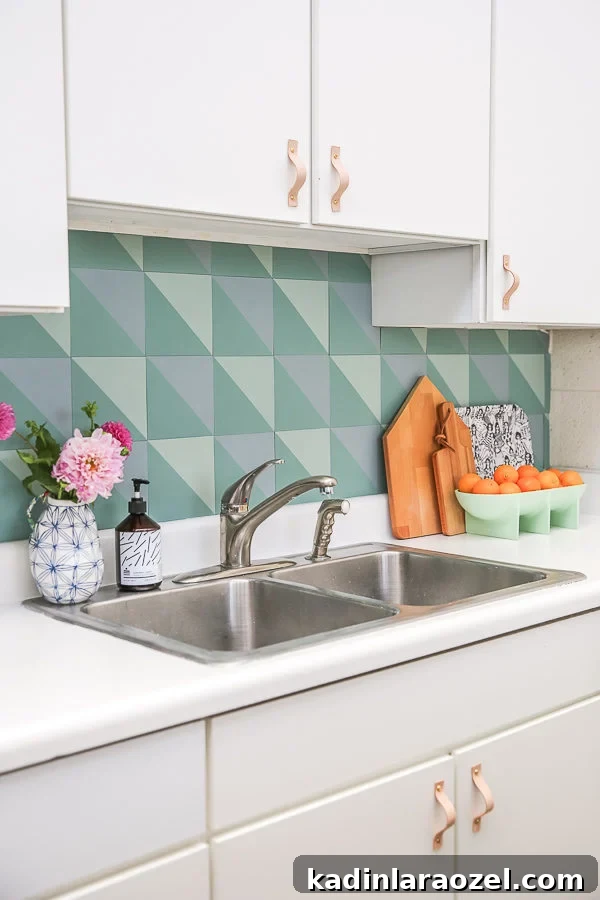
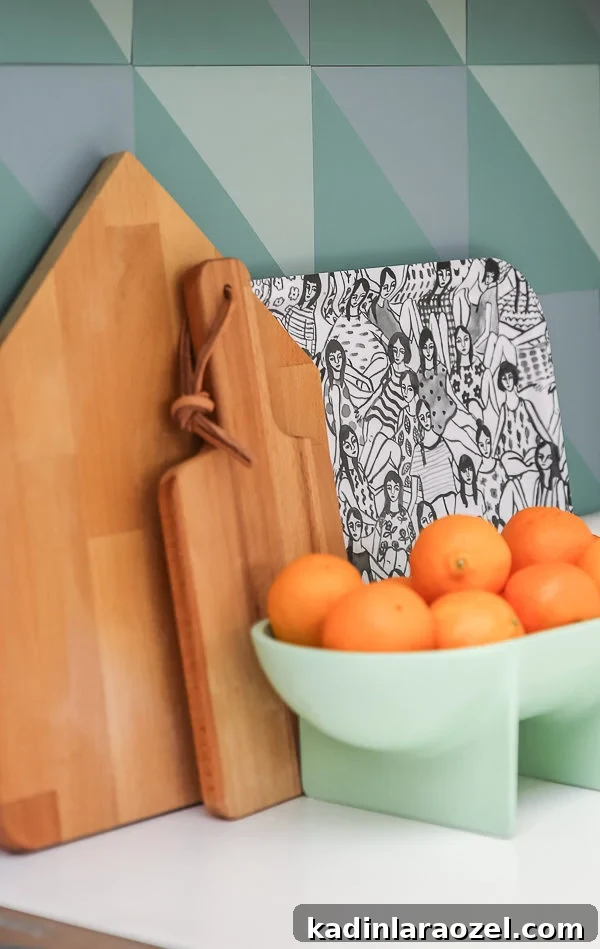
This technique is a fun, affordable way to get a custom backsplash look without the expense of cement tile. It’s also adaptable—imagine using similar patterns on a floor or in another room.
P.S. I’m considering adapting this idea for floors—would you want a tutorial if I test floor patterns? Tell me what patterns you’d like to see.
—
This post is in partnership with 3M. All opinions are my own, and additional products used in the project were chosen by me. Thanks for supporting the brands that help keep Paper & Stitch running.