Woven Wall Hanging Cake Piping: DIY Technique for Textured Frosting
Hello again — I’m back from my trip and excited to dive into a new project. I have many photos from Amsterdam, Paris, and London to share soon, but for today I’m focusing on cake decorating.
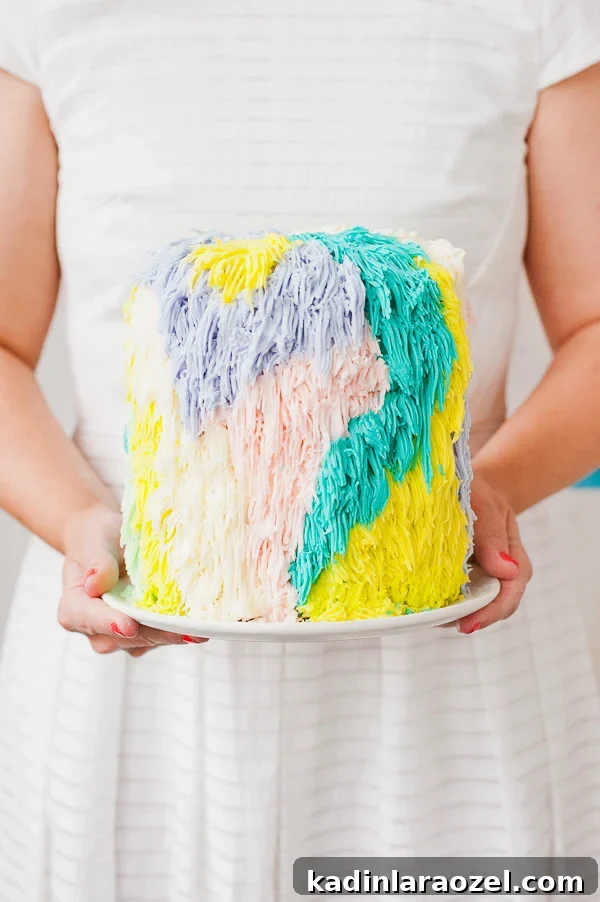
This post shows a simple, modern piping technique inspired by woven wall hangings and fringed pillows. It’s an easy, approachable way to decorate any layered cake—homemade or store-bought—and creates a tactile, boho-chic finish that looks impressive with minimal effort.
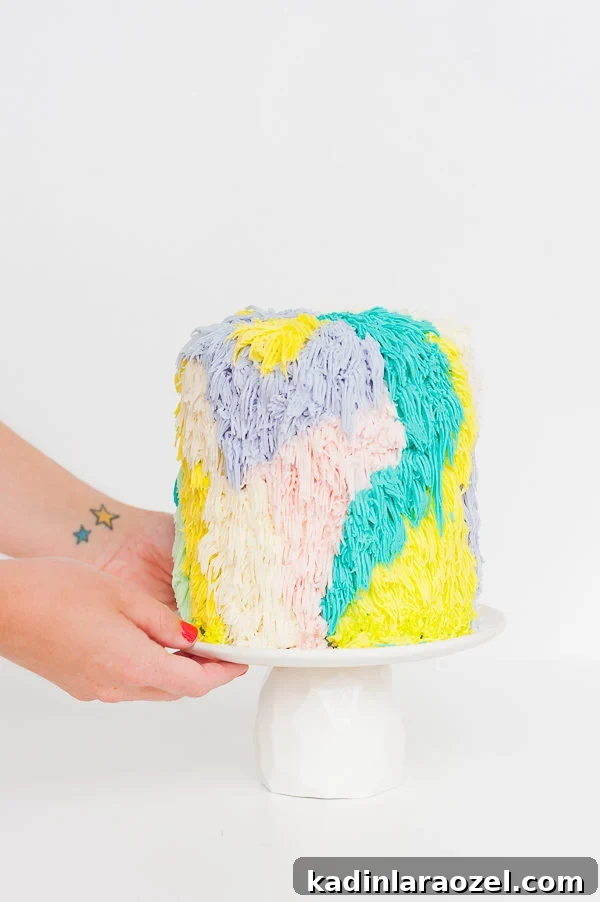
Below you’ll find the buttercream recipe that makes enough to crumb coat and frost a four-layer 6-inch cake, plus a step-by-step guide to piping the woven fringe effect.
Buttercream Icing
Makes enough to crumb coat and frost a four-layer 6-inch cake.
- 4 sticks (about 1 pound) softened unsalted butter
- 2 pounds confectioners’ sugar
- 2 teaspoons vanilla extract
Instructions for Buttercream
Using a stand mixer fitted with the paddle attachment, beat the softened butter until smooth and creamy. Add the powdered sugar one cup at a time, mixing well between additions to avoid dust clouds. Once combined, add the vanilla and mix until fully incorporated and silky. Divide the frosting into separate bowls and tint each portion with gel food coloring to achieve the palette you want.
Suggested Cake Tools
- Piping bags
- Star piping tip (Wilton 233 or similar for textured fringe)
- Couplers so you can switch colors while keeping the same tip
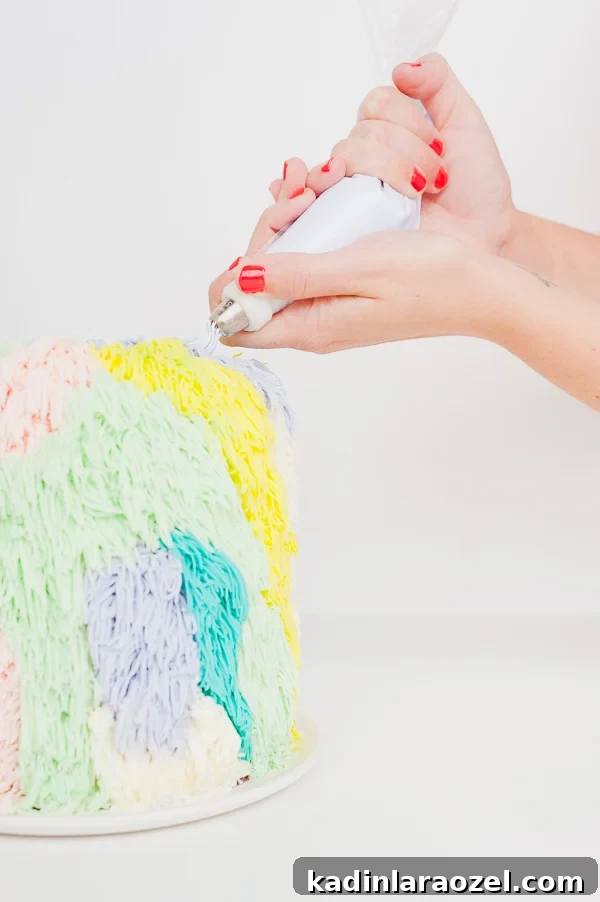
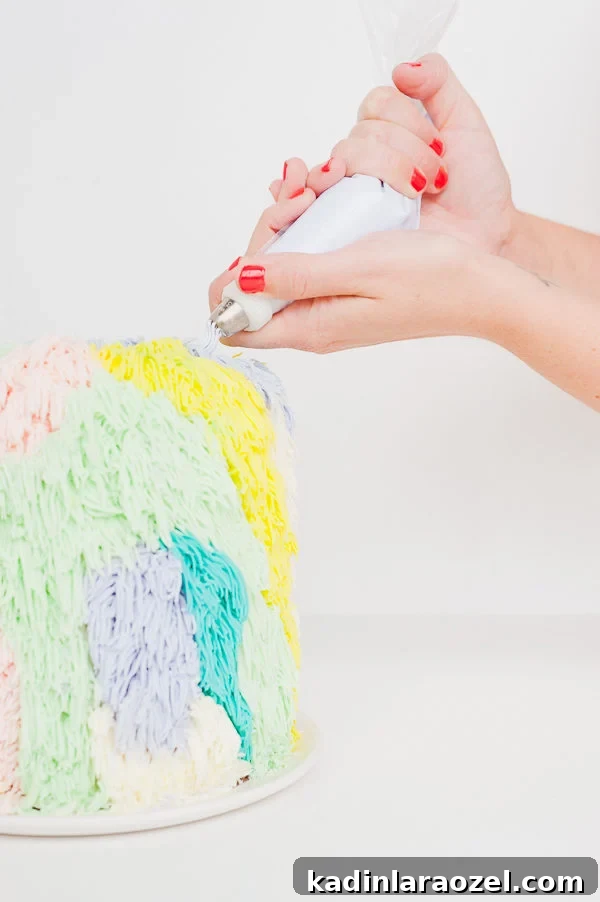
Instructions for Piping the Woven Fringe Effect
Place your cake on the stand or serving plate you’ll use to keep it stable—once you start decorating it’s difficult to move. This technique works especially well on a lightly crumb-coated, four-layer 6-inch cake, but you can adapt it to other sizes.
Fit couplers into multiple piping bags and fill each bag with a different colored buttercream. For the look shown here, use a soft, harmonious palette—examples include white, soft pink, light purple, teal, mint, and a pale yellow-green.
Lightly sketch or mark the pattern you want on the cake with a toothpick or the back of a knife. These guide marks help you place the fringe shapes evenly. Attach your star tip to one coupler at a time and pipe short vertical dabs from the bottom to the top of each marked shape. Piping upward helps the piped pieces overlap naturally and gives the finish a woven, layered appearance.
Continue switching the tip among the different colored bags, filling each marked area with varied lengths and colors to create visual texture and depth. Alternate color placement and pipe some strands longer than others to mimic the organic, imperfect look of woven textiles.
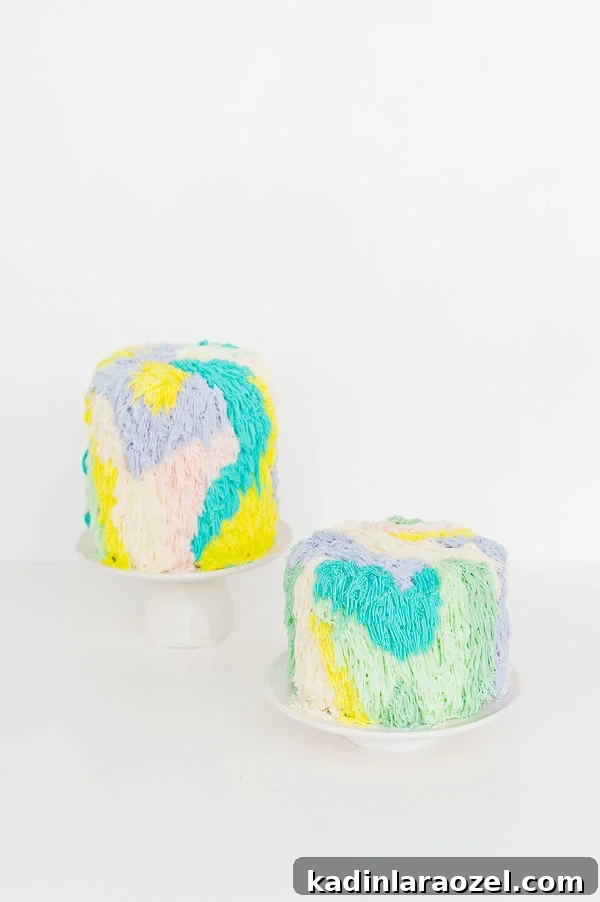
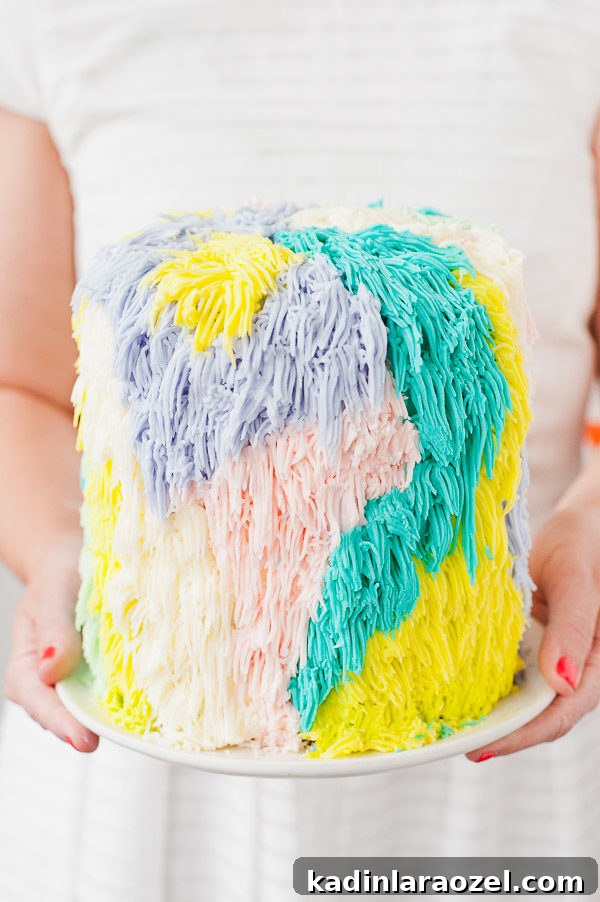
Recipe by Anissa Saxton
Photography by Amelia Tatnall
Art direction by Brittni Mehlhoff
Final Thoughts
This piping technique is forgiving and flexible—perfect for bakers at any level who want a fresh, textural cake design. Try different color combinations to suit seasons or events: muted earth tones for a rustic celebration, soft pastels for a baby shower, or brighter jewel tones for a bold statement. If you try it, I’d love to hear what colors you chose and how your cake turned out.