Are Painted Ceilings Worth It? Pros, Costs, and Style Tips
Painted ceilings are appearing everywhere right now. While painting a ceiling isn’t always the most practical design choice, it undeniably makes a bold statement. Are you into this interiors trend, or are you wondering how it even started?
I’ve spent a lot of time in the South and often noticed the coastal tradition of blue-painted porch ceilings. That specific shade—called Haint Blue—is believed in Southern folklore to ward off “haints” or spirits. It might sound a bit fanciful, but it’s interesting to see this painted-ceiling practice move beyond that regional superstition into broader design trends and a much wider color palette.
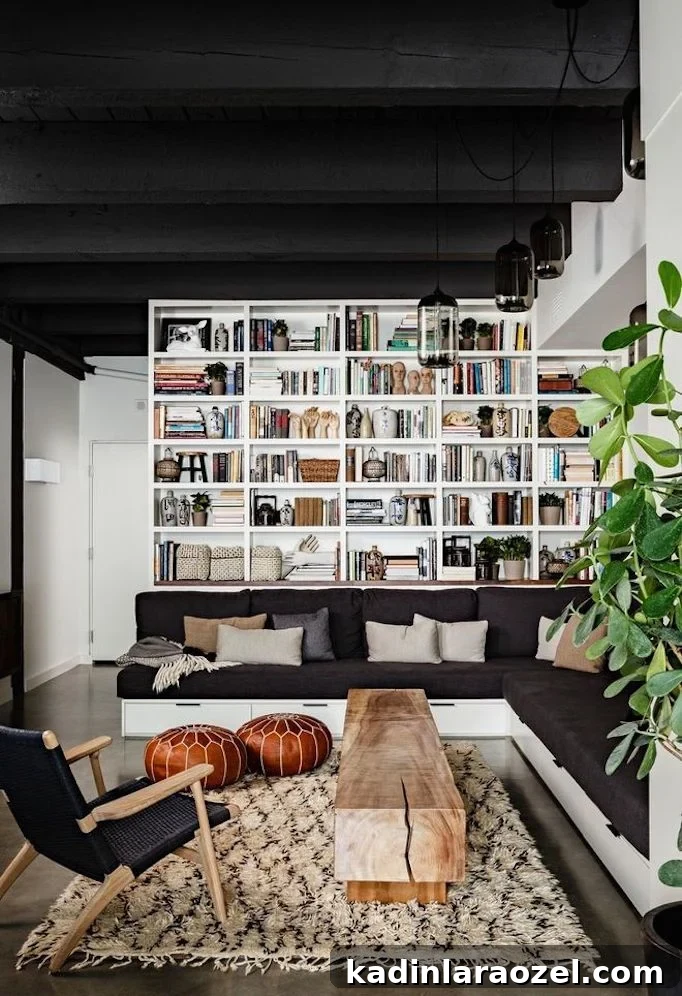
Black ceilings have grown in popularity too. They can hide imperfections, make large rooms feel cozier, or focus attention on a particular area or view. Bright colors like mustard, yellow, green, and sky blue are used to introduce personality and playfulness. Designers also use painted-ceiling techniques to create illusions—lowering perceived height, highlighting architectural details, or making a space feel more intimate.
There’s a time and place for painted ceilings, in my view, and how it’s executed matters. Below are 11 examples that show different approaches. After you look through them, I’d love to know whether you’d say “yay” or “nay” to painted ceilings.
1. (image above) This striped painted ceiling is full of pop energy. I like it—though it’s not for everyone. The minimal furniture and accessories in the room help the ceiling read as a deliberate design move rather than a chaotic one. (Image via SFGirlByBay)
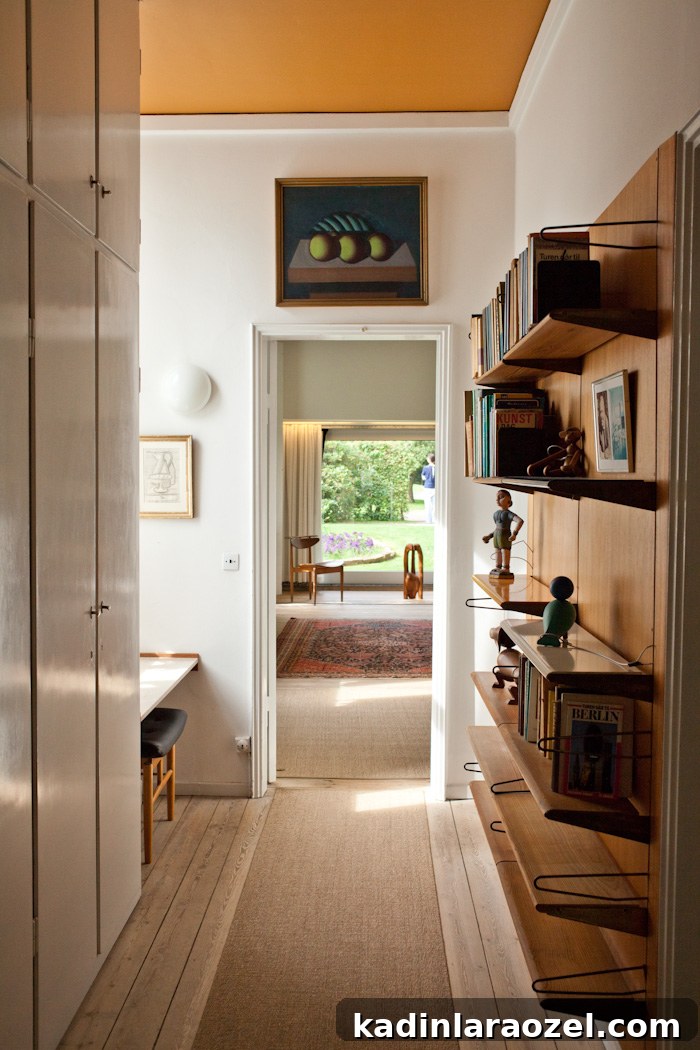
2. The Finn Juhl House in Copenhagen uses a warm mustard ceiling that instantly offsets Denmark’s often-gray skies. The color warms the interiors and creates a welcoming atmosphere. (Image via Remodelista)
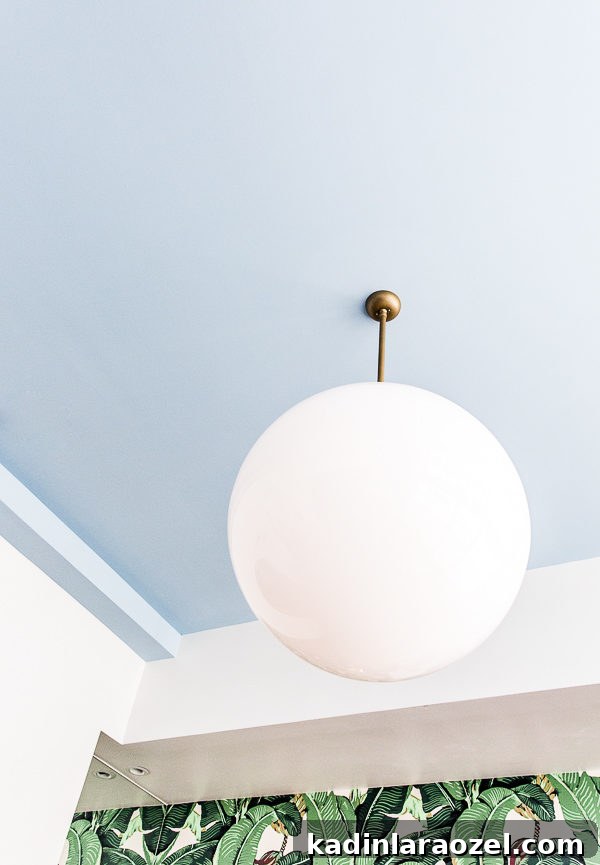
3. This powder-blue ceiling was spotted at The Dwell Hotel in Chattanooga. The pale blue keeps the room feeling light and airy while complementing the playful decor. (Image by Paper & Stitch)
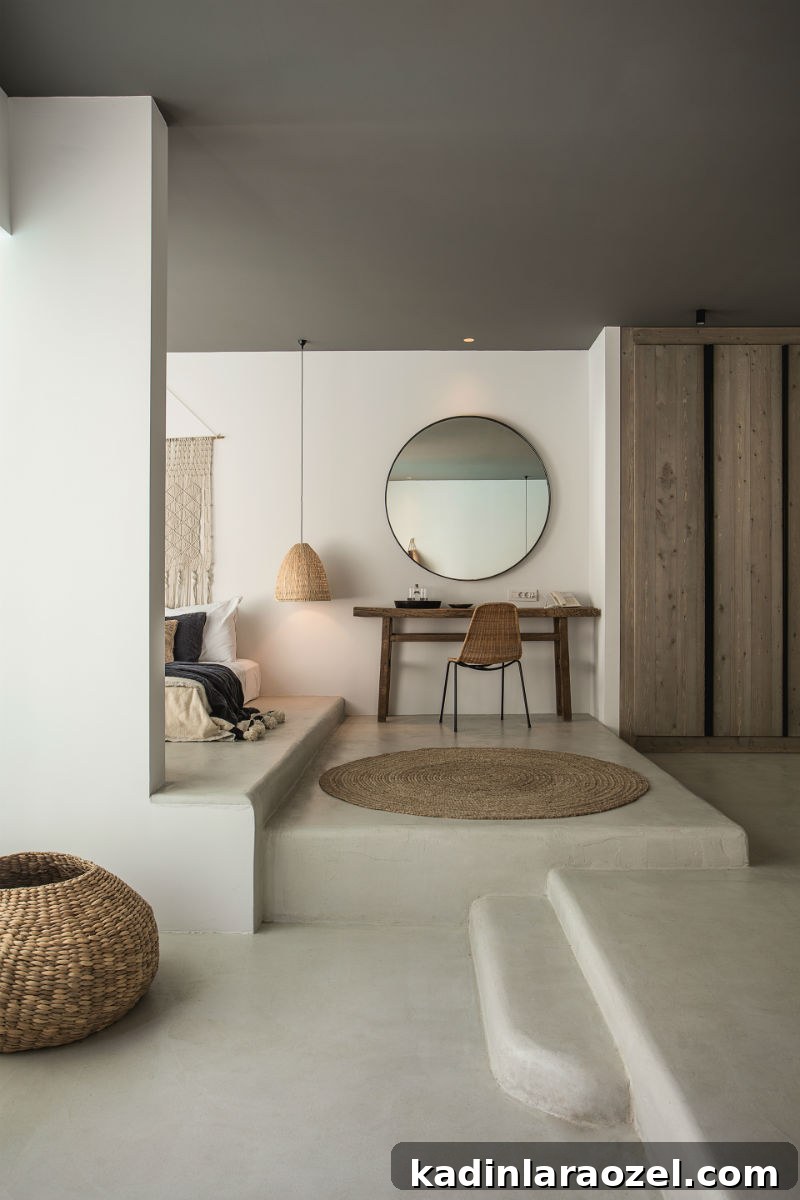
4. Casa Cook Rhodes in Greece leans on light neutrals. Dark gray ceilings add depth and warmth against the white backdrop, making the space feel cozier while emphasizing its clean lines. (Image via Booking.com)
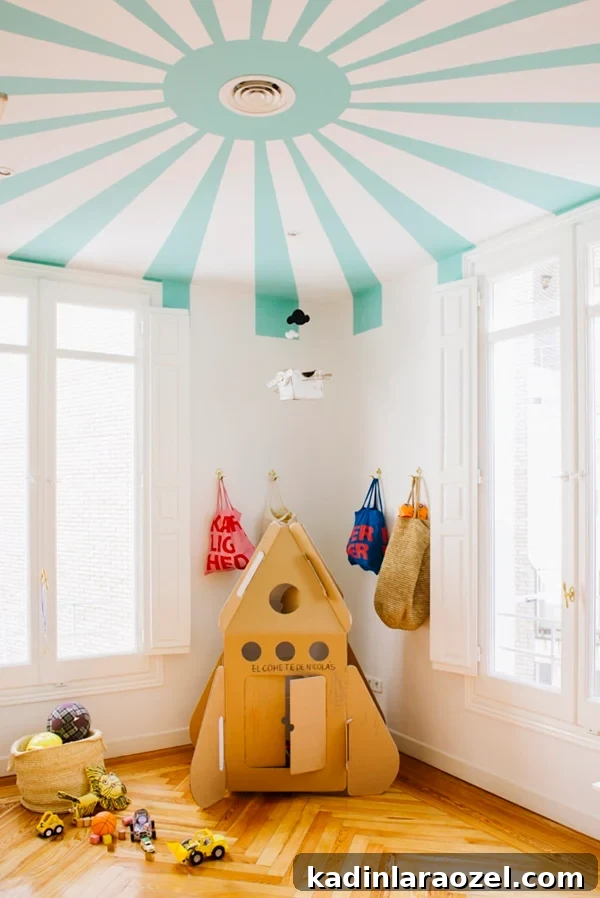
5. For kids’ rooms, playful ceiling treatments—like a circus-tent design—bring instant charm and imagination. It’s a fun, age-appropriate way to use color overhead. (Image by Petit and Small)
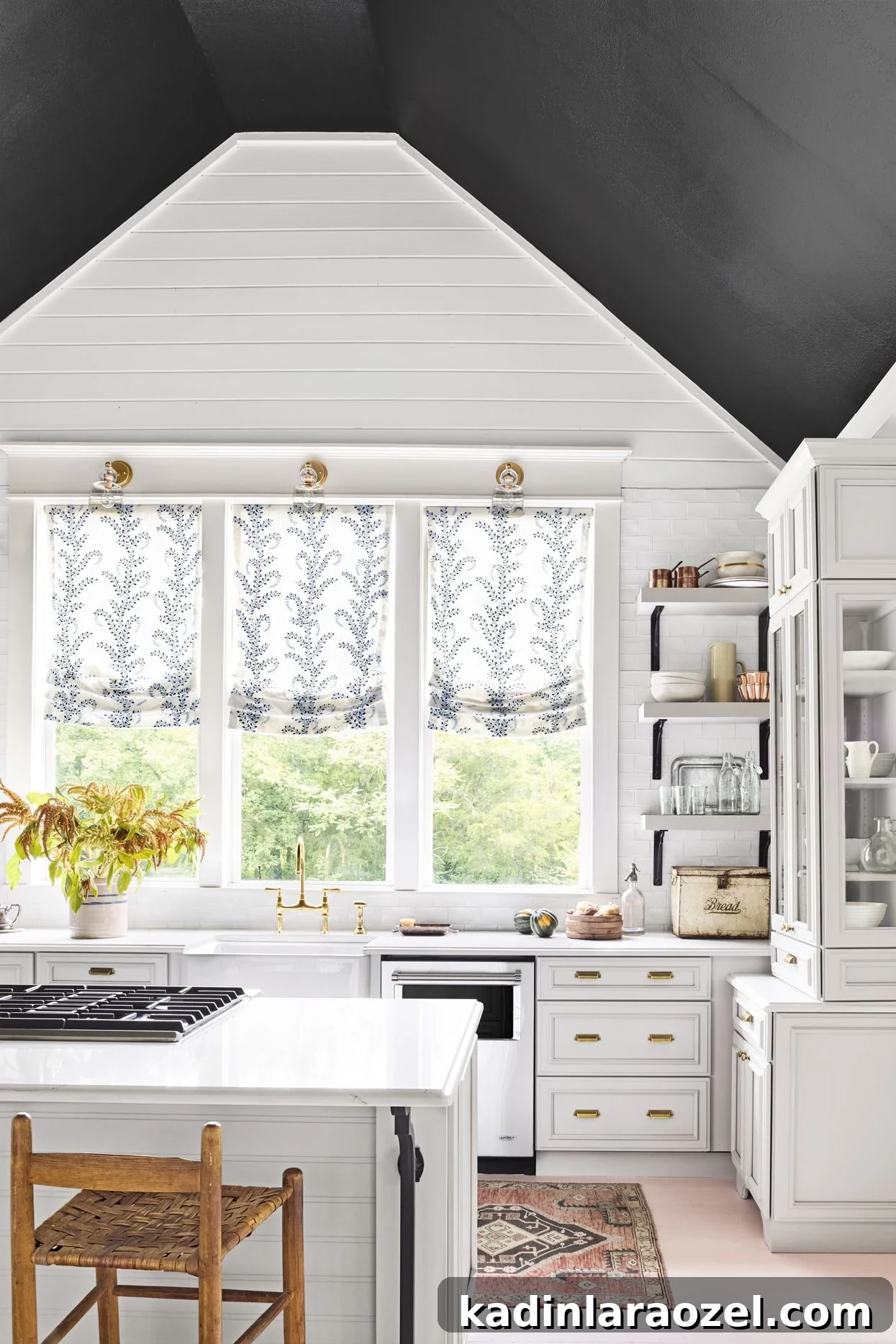
6. In Holly Williams’ Tennessee home, the original vaulted kitchen ceilings were painted black to visually ground the tall, airy room and highlight its architectural silhouette. While an all-white look would feel lighter, the dark ceiling creates striking contrast and draws attention to the room’s shape. (Image by Annie Schlechter for Country Living)
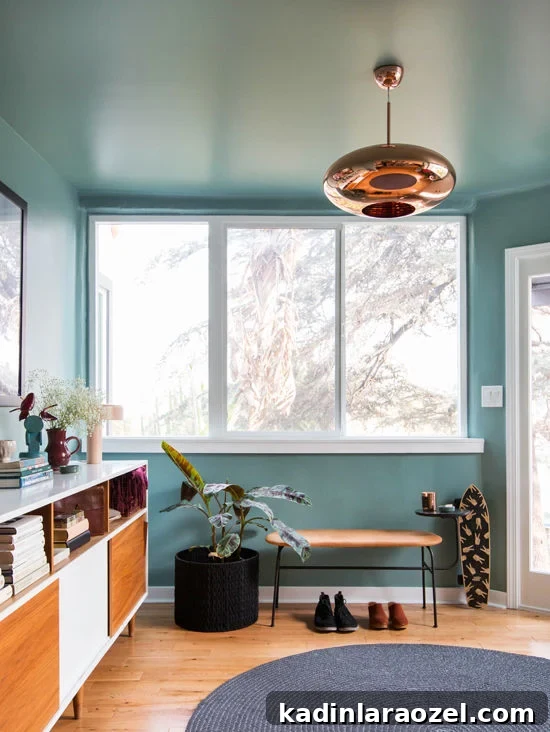
7. Bri from designlovefest painted a monochromatic entryway—ceiling and walls—in Behr’s “In The Moment.” Extending the color across planes creates a cohesive, enveloping feel. (Image by Tessa Neustadt for designlovefest)
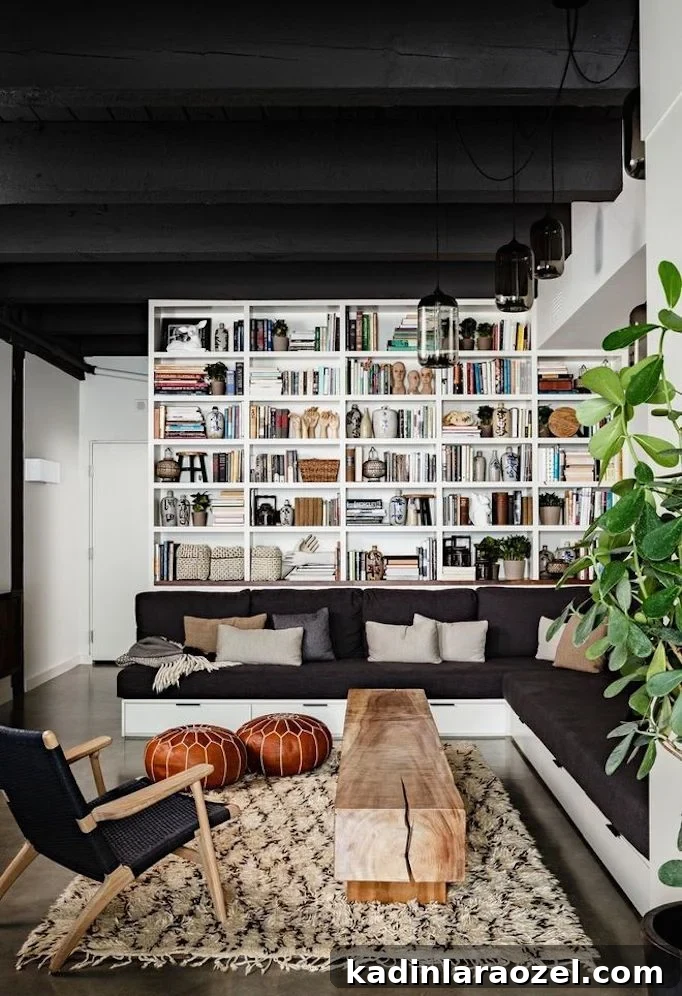
8. A dark ceiling is a smart way to disguise noisy or imperfect finishes—like vents, wiring, or textured plaster—and can downplay beams or other architectural elements you don’t want to emphasize. It’s especially useful in industrial-style spaces. (Image via Jessica Helgerson Interior Design)
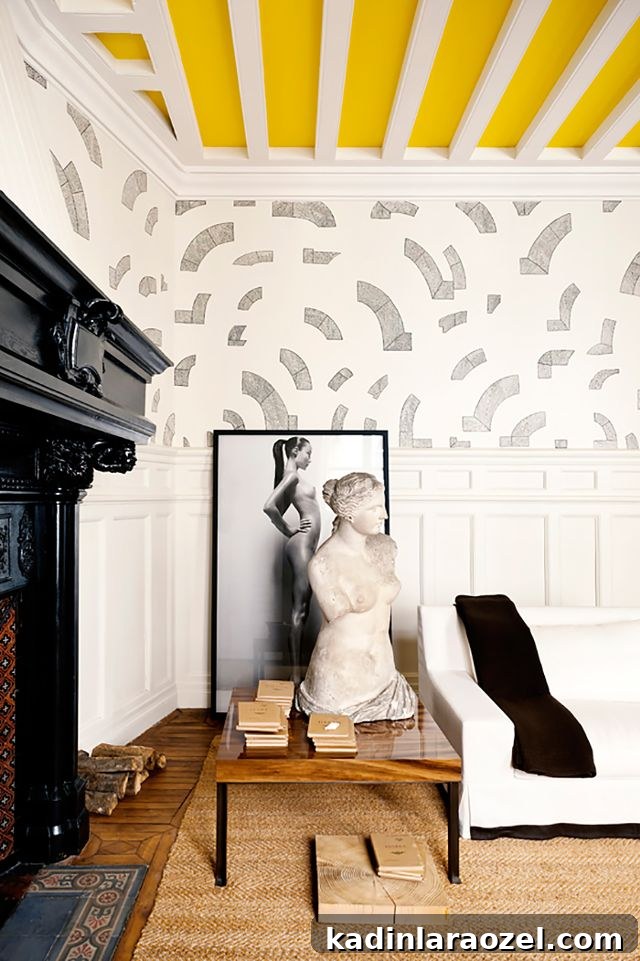
9. In this Gilles and Bossier room, a bright ceiling injects color into an otherwise neutral space and brings attention to the beam details. A lighter, livelier hue can lift the mood without overwhelming the room. (Image by Matthieu Slavaing via MyDomaine)
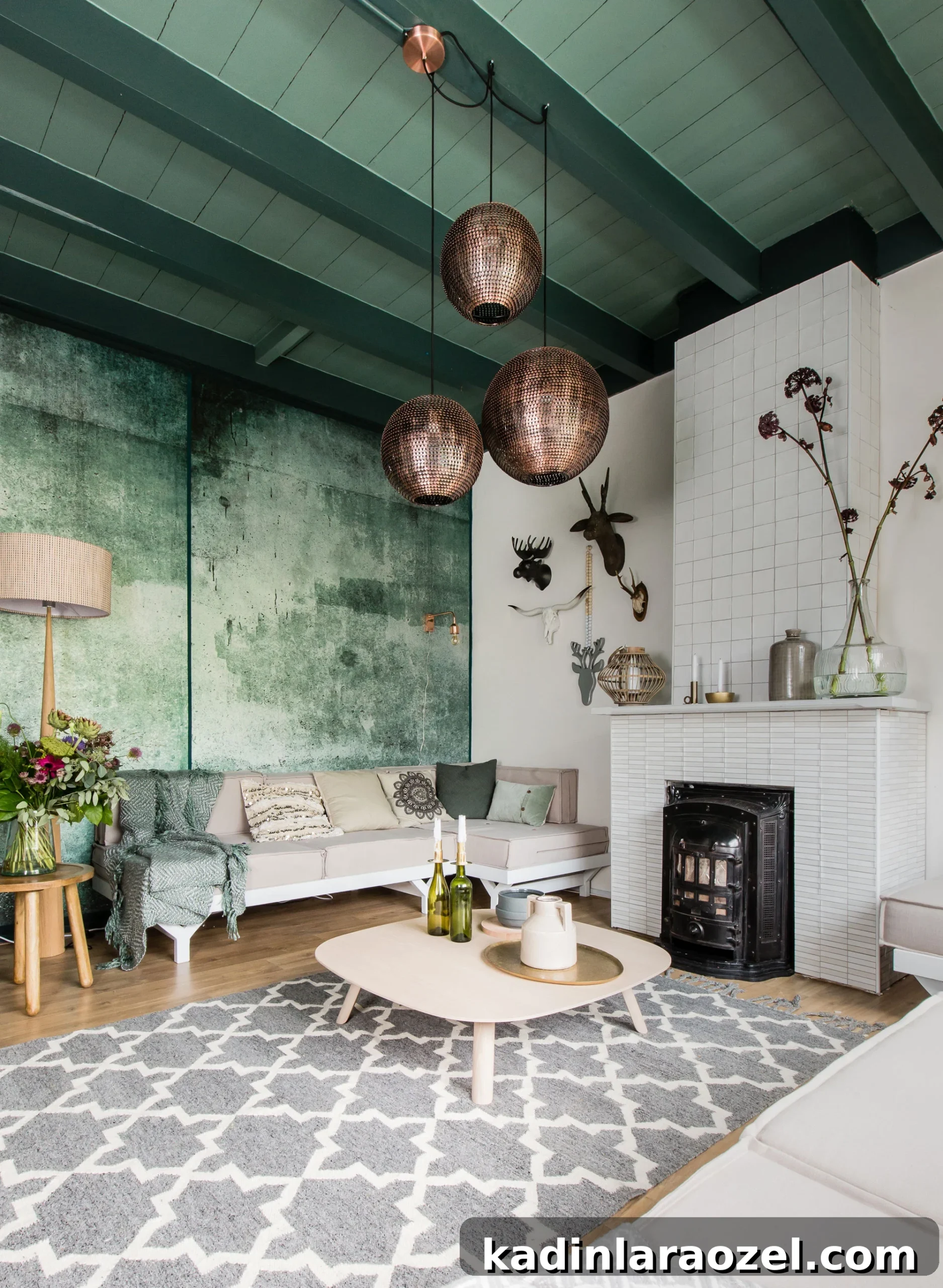
10. When ceilings feel too high, painting them in the same family as the walls can visually lower the room while showcasing beams and paneling. The green-and-copper pairing in this example is especially striking—green complements the warm metallics beautifully. (Image via vtwonen)
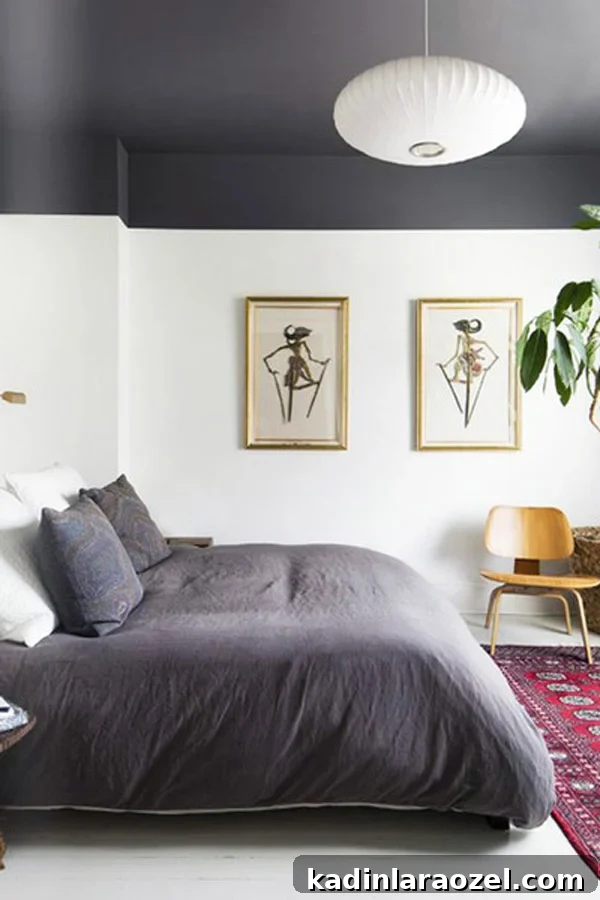
11. This ceiling treatment extends the paint down the wall to create the illusion of molding—an elegant trick that makes the painted ceiling feel intentional and refined. (Image by The Little Evic)
So, what do you think—yay or nay on painted ceilings? If you’re a fan, would you try this trend in your own home, and where would you start?