How to Paint Tile Floors: Step-by-Step Tutorial and Tips
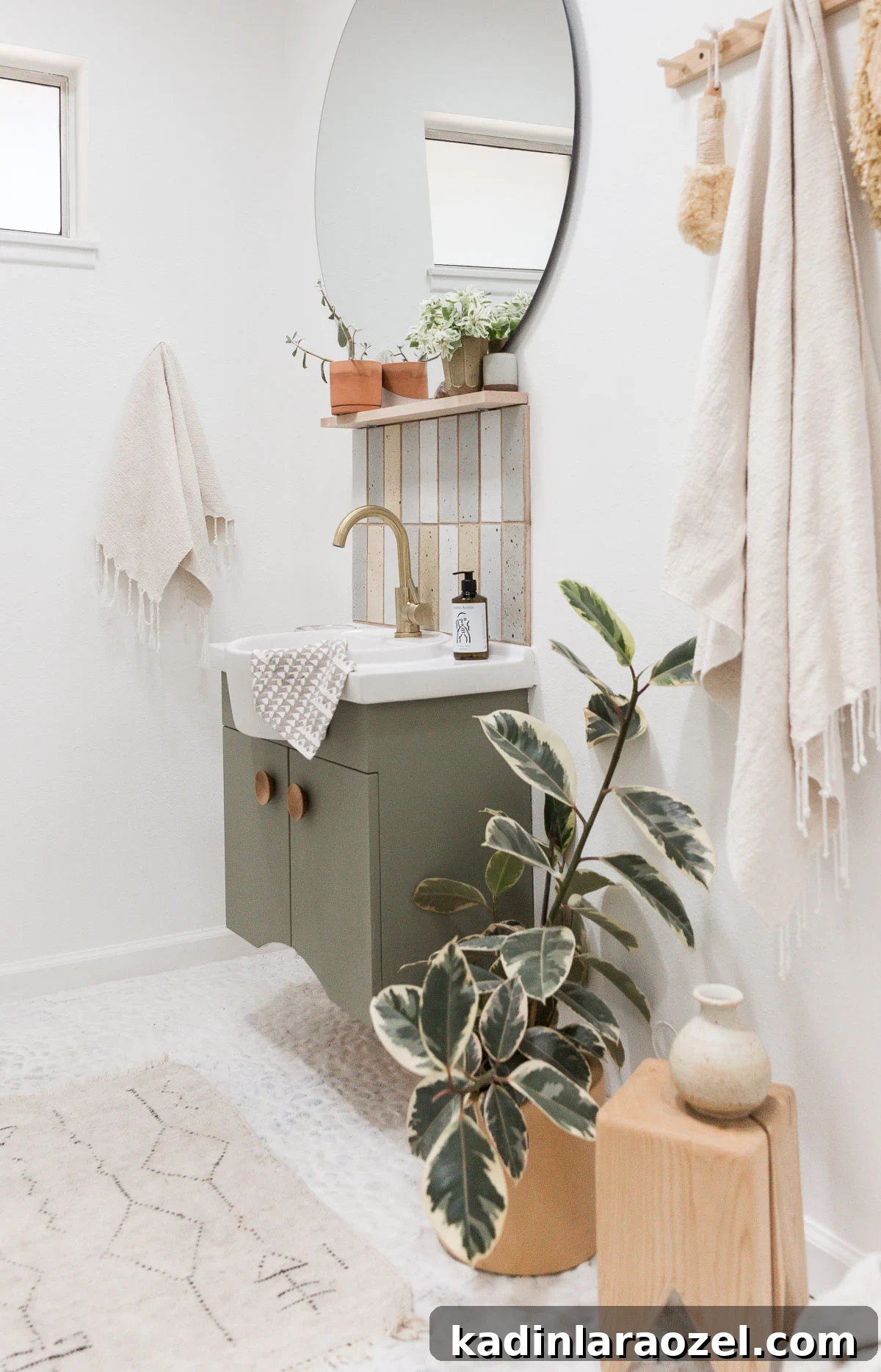
Painting a tile floor is easier than you might think—and very budget-friendly.
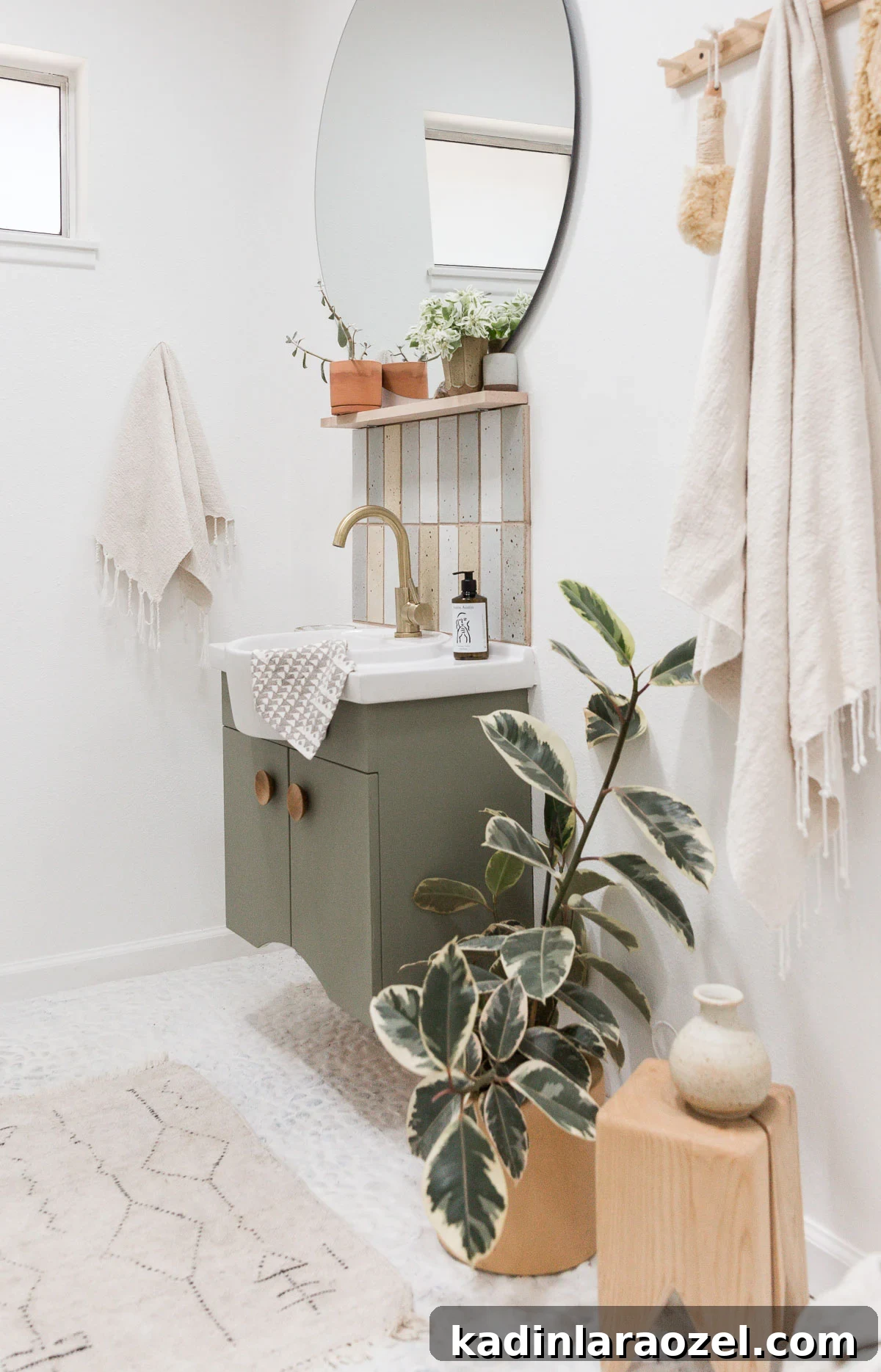
I’ve painted floors before, but tackling river-rock tile in our bathroom felt like a different challenge. I experimented with a new paint and adjusted my process to fit the textured surface.
Ultimately the results exceeded my expectations—especially after I discovered a simple technique during the project that added depth and subtle color variation to the finished floor.
Below you’ll find before-and-after photos, a budget breakdown, and a clear step-by-step tutorial so you can try this yourself.
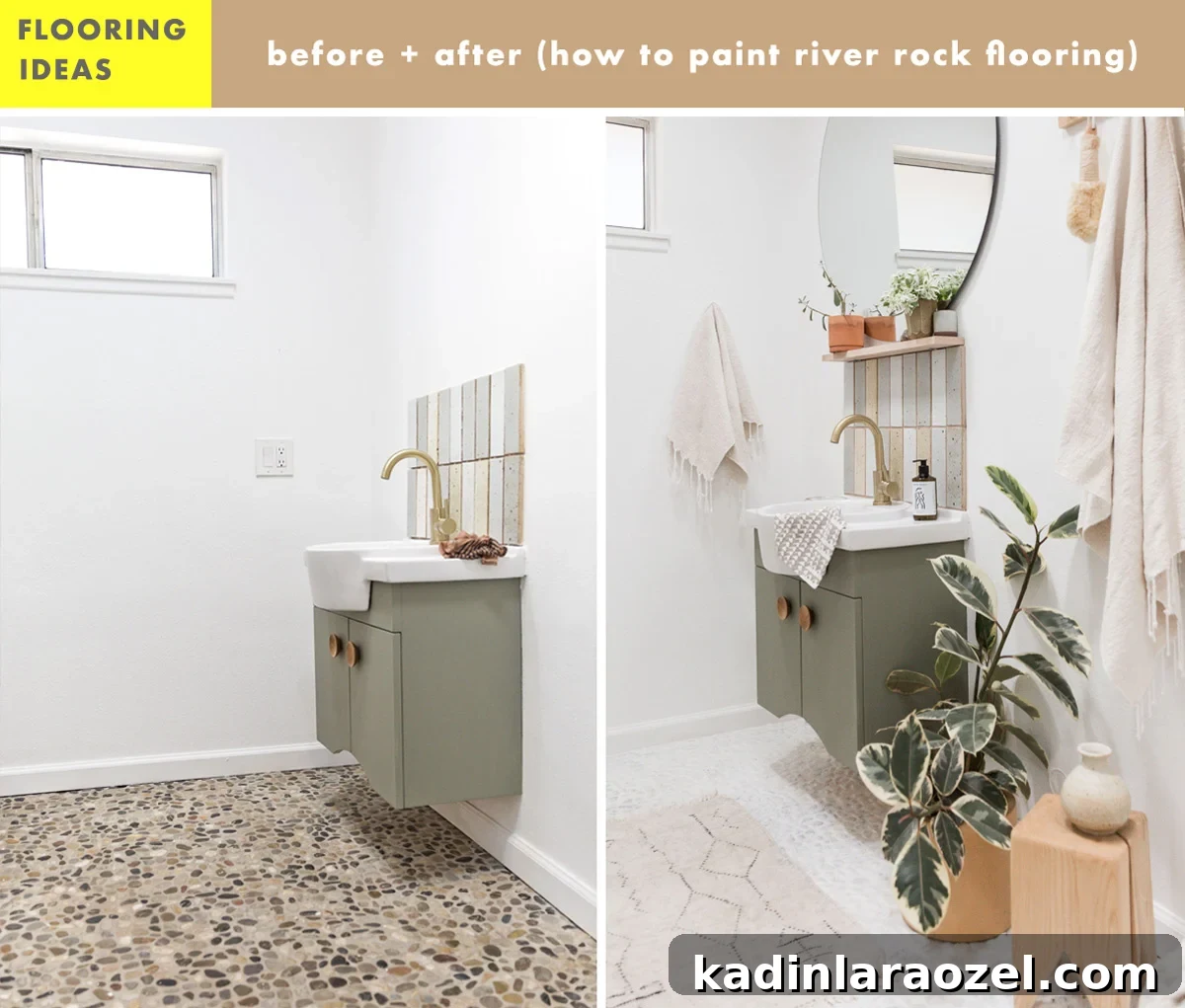
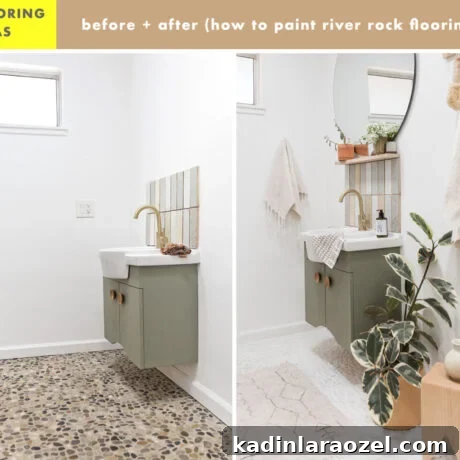
Painting floor tile: before and after
Here’s a side-by-side look at the floor before and after painting. The transformation is dramatic, and the cost is surprisingly low.
This whole refresh cost under $100 and made the room feel brand new while we wait for a full renovation with new tile.
Budget breakdown
I already had a paintbrush, rags, and a degreaser, so I only purchased the paint kit and sealant. My out-of-pocket cost was just $70.
If you needed to buy every item on the supplies list, the total would still be under $100. Here’s a typical breakdown:
- Cleaner/degreaser (Krud Kutter or similar) — about $10
- Rust-Oleum Home Floor Coating Kit (base and topcoat) — about $70
- Paintbrush (2″ or larger) — about $7
- Rags or old t-shirts — free
TOTAL: $87
Now that you know the price, what do you think of the transformation? Would you try this in your home?
Supplies needed for painting flooring
- Cleaner/degreaser — any effective product will work; I used Krud Kutter because it cleans and degreases in one step.
- Floor coating kit — I used a Rust-Oleum Home Floor Coating Kit (matte ultra white). The kit includes both a base coat and a top coat. Other colors and finishes are available.
- Paint brush — any 2-inch brush or larger; larger brushes speed up the job.
- Rags or old t-shirts — for dabbing up excess paint and blending; these will be disposable after the project.
How to paint tile floors (including river rock)
1. Clean and degrease
Start by sweeping thoroughly, then clean the floor with a degreaser. A good degreaser removes oils and dirt so the paint adheres properly.
2. Apply the base coat
Use a two-step system: a base coat followed by a top coat. The kit takes the guesswork out of product compatibility and makes application straightforward.
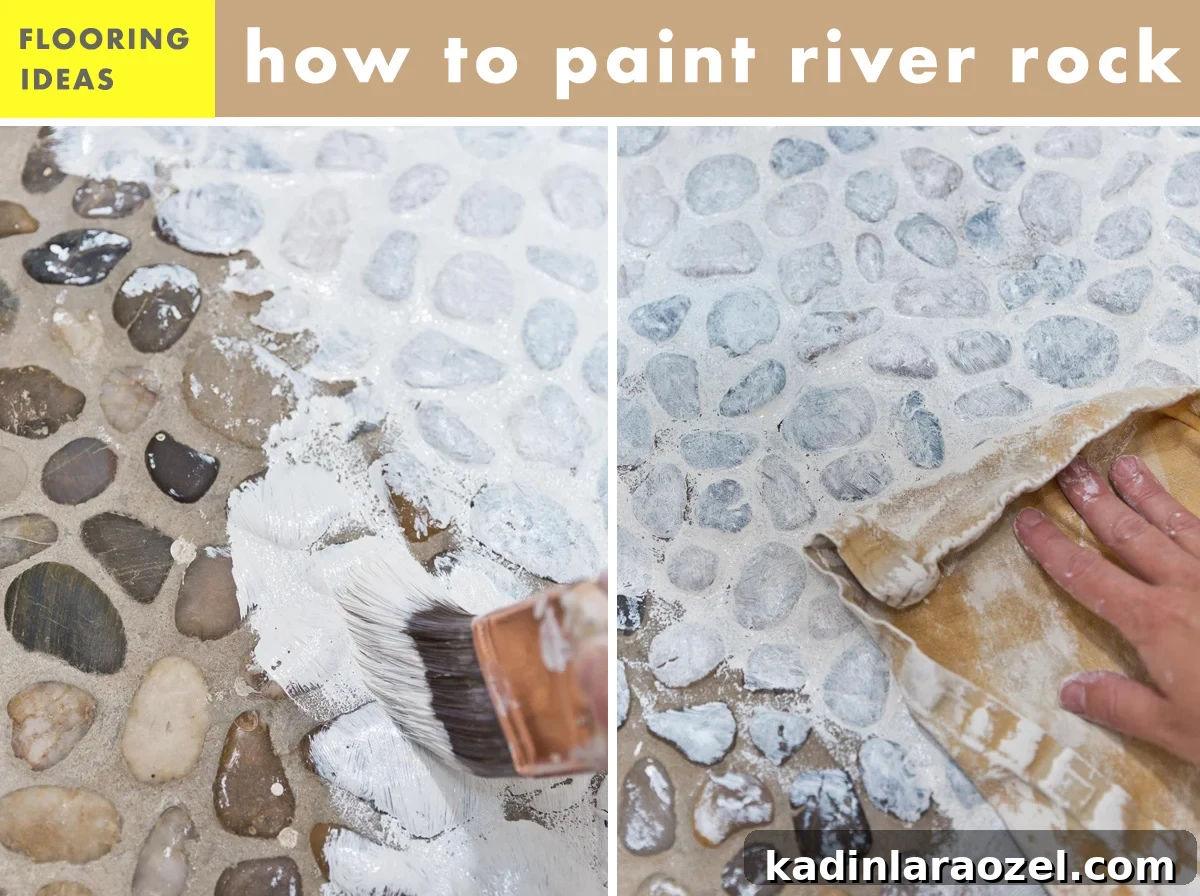
I applied the base coat with a brush. Work in manageable sections—1–2-foot areas at first, then you can increase to 3–4-foot sections once you’re comfortable. The longer you leave the paint before blending, the less will lift when you dab it.
3. Remove excess paint with a rag (the key step)
While the base coat is still wet, gently pat the surface with a rag to lift some paint and smooth brush marks. This step lets some of the original rock color show through and creates subtle variation and visual depth.
For textured surfaces like river rock, this rag-dabbing technique softens the finish so it reads as more natural and lived-in instead of flat or sterile.
4. Repeat
Repeat applying the base coat and dabbing with a rag until the entire floor is covered. Allow the paint to dry between passes according to the product instructions.
5. Apply the top coat
When the base coat is sufficiently dry, apply the top coat using a roller or brush. The Rust-Oleum kit I used recommends applying the top coat about six hours after the base coat and suggests two coats of topcoat for durability.
Let the floor cure fully before walking on it—follow the drying and curing times on the paint can.
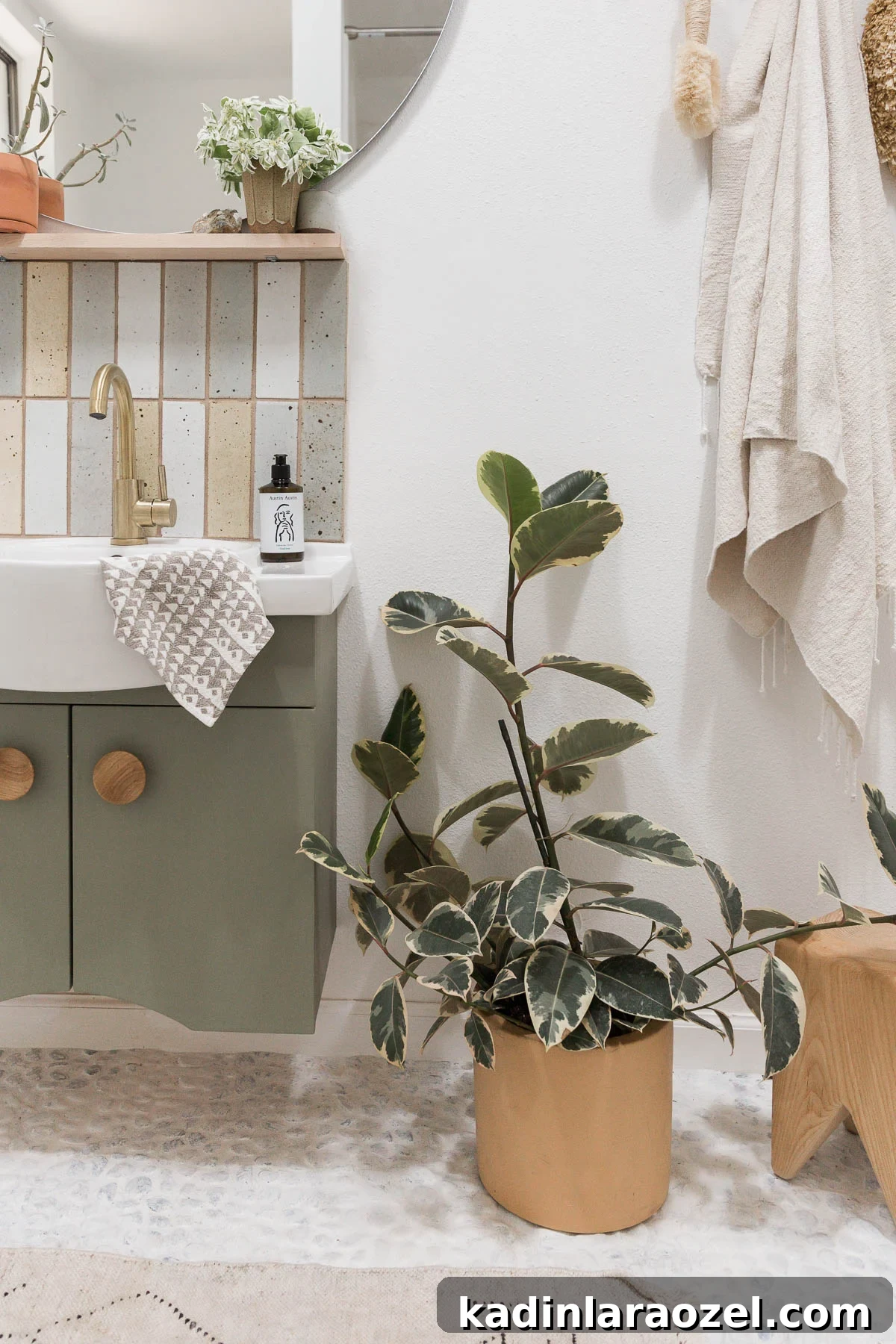
Is this paint made specifically for tile?
The floor coating kit I used is formulated for multiple floor types and, according to manufacturer guidance, can be used on tile, concrete, vinyl, wood, linoleum, laminate, and more—making it suitable for painted tile and grout.
Do grout lines require a special paint?
No special grout paint is necessary. The floor coating adheres well to both the stones (or tile) and the grout when surfaces are properly cleaned and prepped.
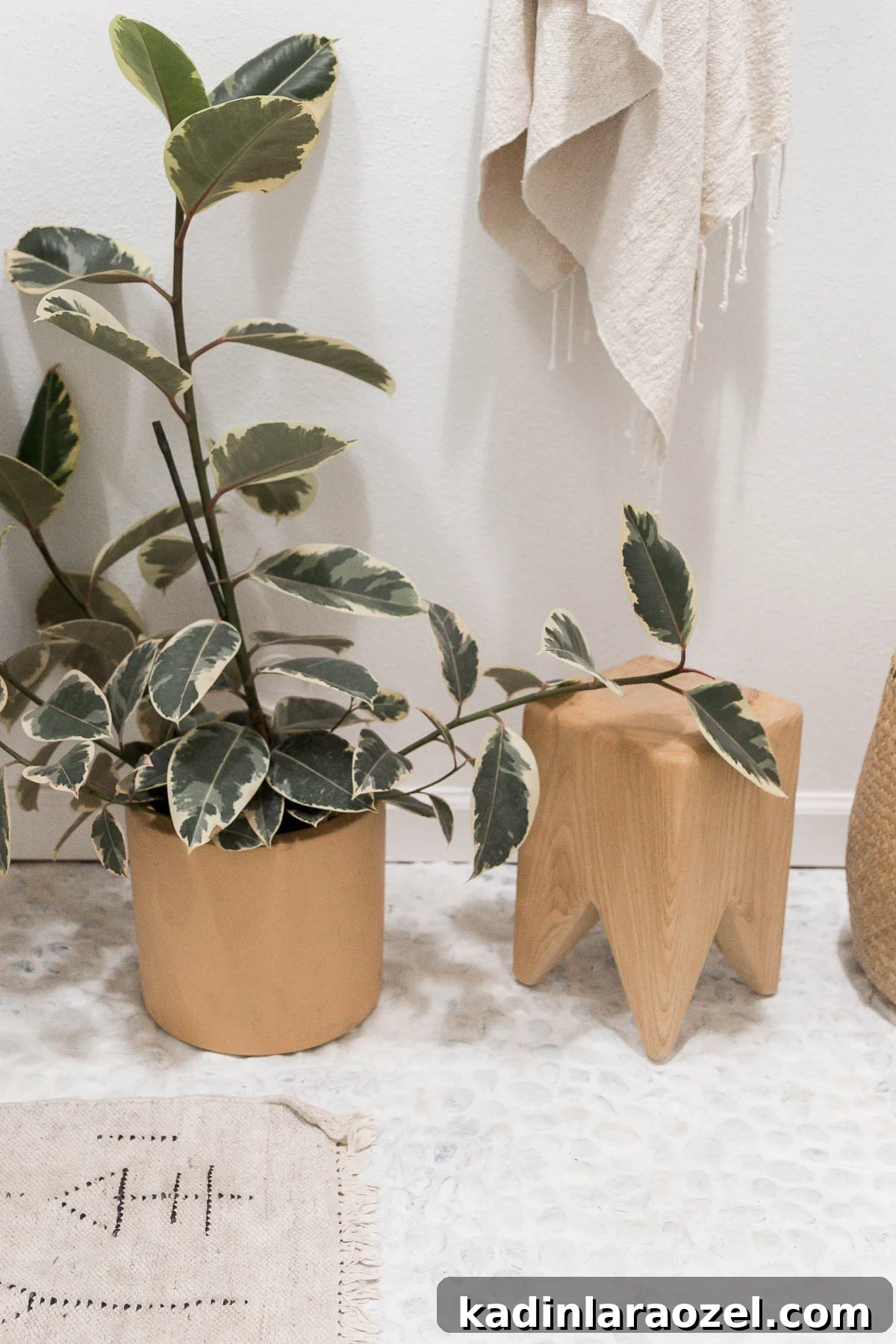
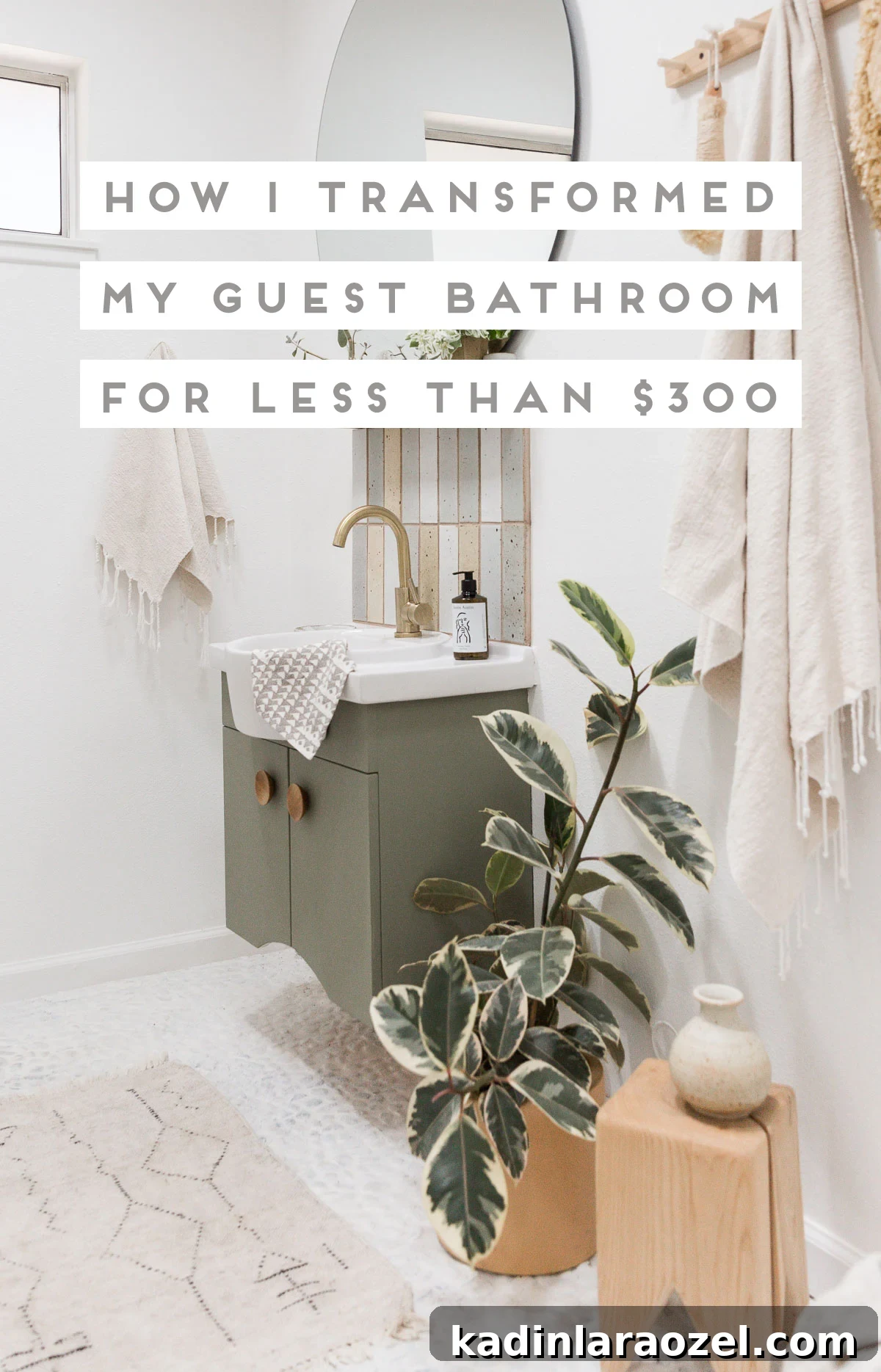
Painting Tile Floors (Tutorial)
Summary: Painting river rock or textured tile is achievable with good prep, a two-step floor coating system, and a simple rag-dabbing technique that preserves natural variation. The result is a refreshed bathroom at a fraction of the cost of full re-tiling.
Ingredients / Materials
- Cleaner/degreaser (Krud Kutter or similar)
- Floor coating kit (base coat + top coat; the kit I used was matte ultra white)
- Paint brush (2″ or larger)
- Rags or old t-shirts for dabbing excess paint
Instructions
- Clean and degrease the floor thoroughly so paint will adhere well.
- Apply the base coat in small sections with a brush. Work systematically across the room.
- While the base coat is still wet, gently pat with a rag to lift excess paint and remove brush strokes. This creates depth and lets some underlying stone color show through.
- Repeat base-coat application and rag-dabbing until the floor is uniformly covered. Allow drying time as directed by the product.
- Once dry, apply the top coat per the kit’s instructions. Many kits recommend applying the top coat about six hours after the base coat and using two coats for best protection.
- Allow the floor to cure fully before walking on it, following the manufacturer’s curing schedule.
If you try this technique, you’ll likely be surprised at how fresh and elevated the room looks for a modest investment. The rag-dabbing trick is especially effective on uneven or textured floors to avoid a flat, painted appearance and to keep a bit of the tile’s natural character showing.
More DIYs to try
If you liked this bathroom refresh, check out other budget-friendly bathroom ideas and DIY tile floor projects for more inspiration and step-by-step instructions.