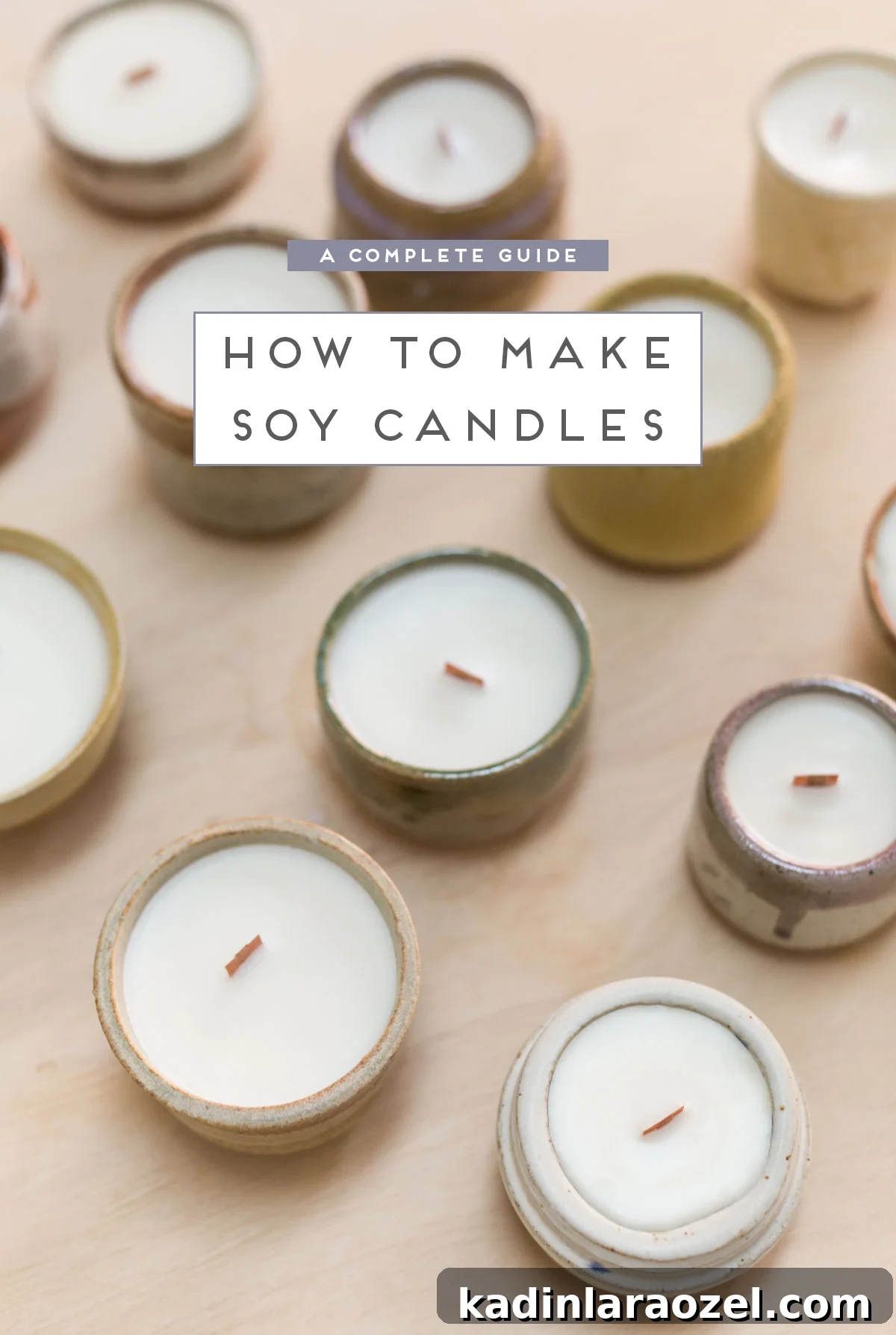
Complete Guide to Crafting Soy Candles at Home
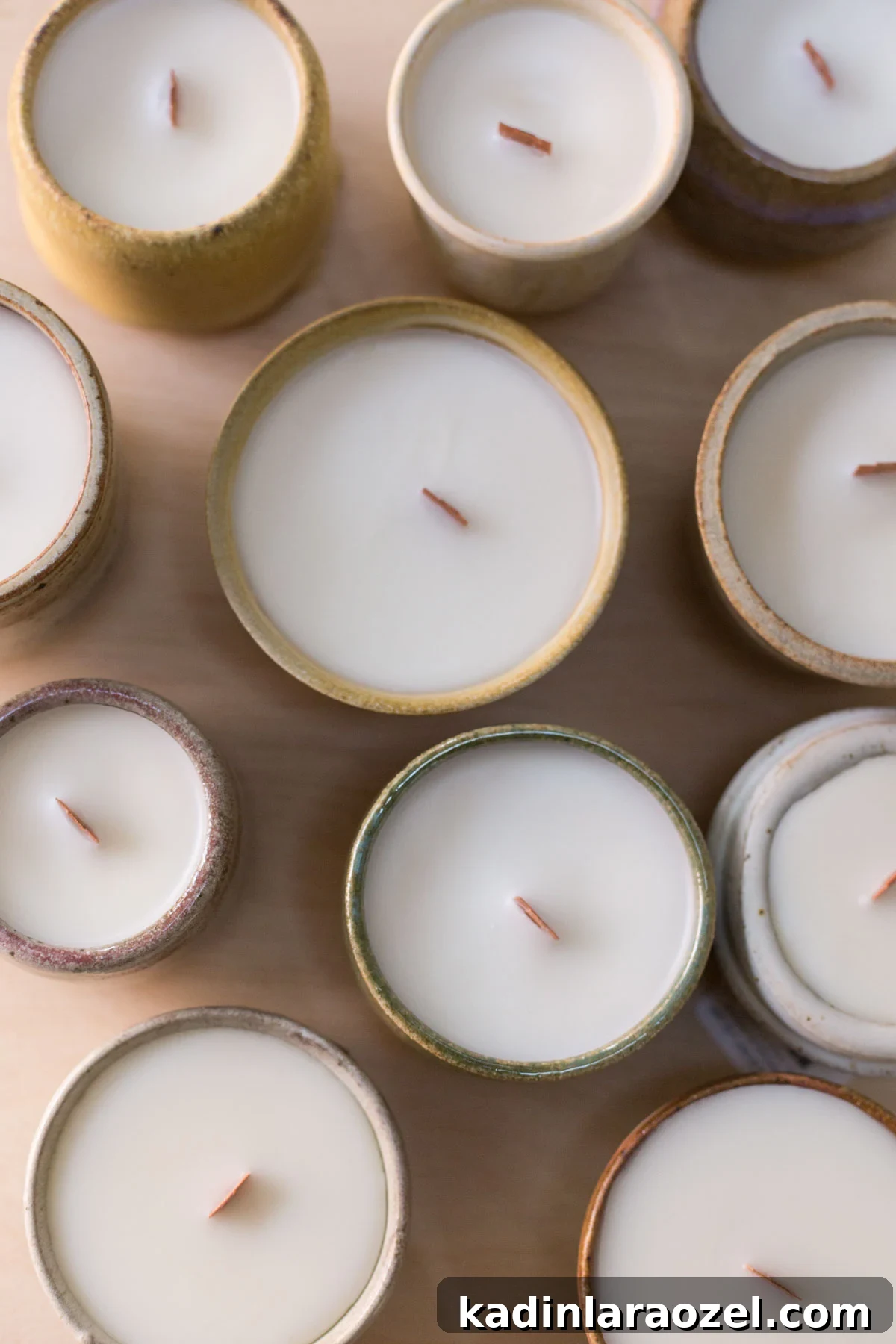
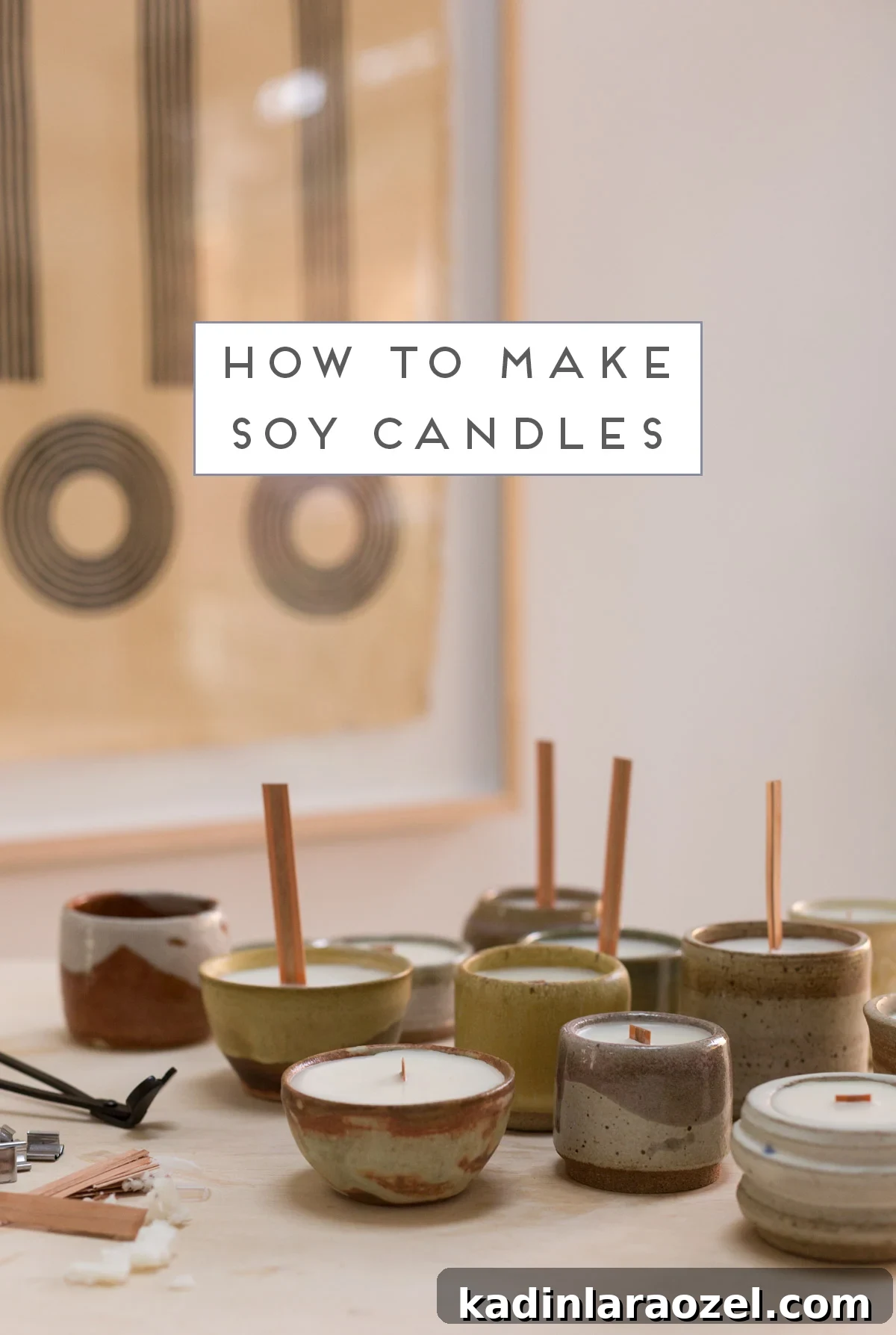
Once you learn how to make soy candles, you’ll keep making them. I began in 2014 and still make them regularly.
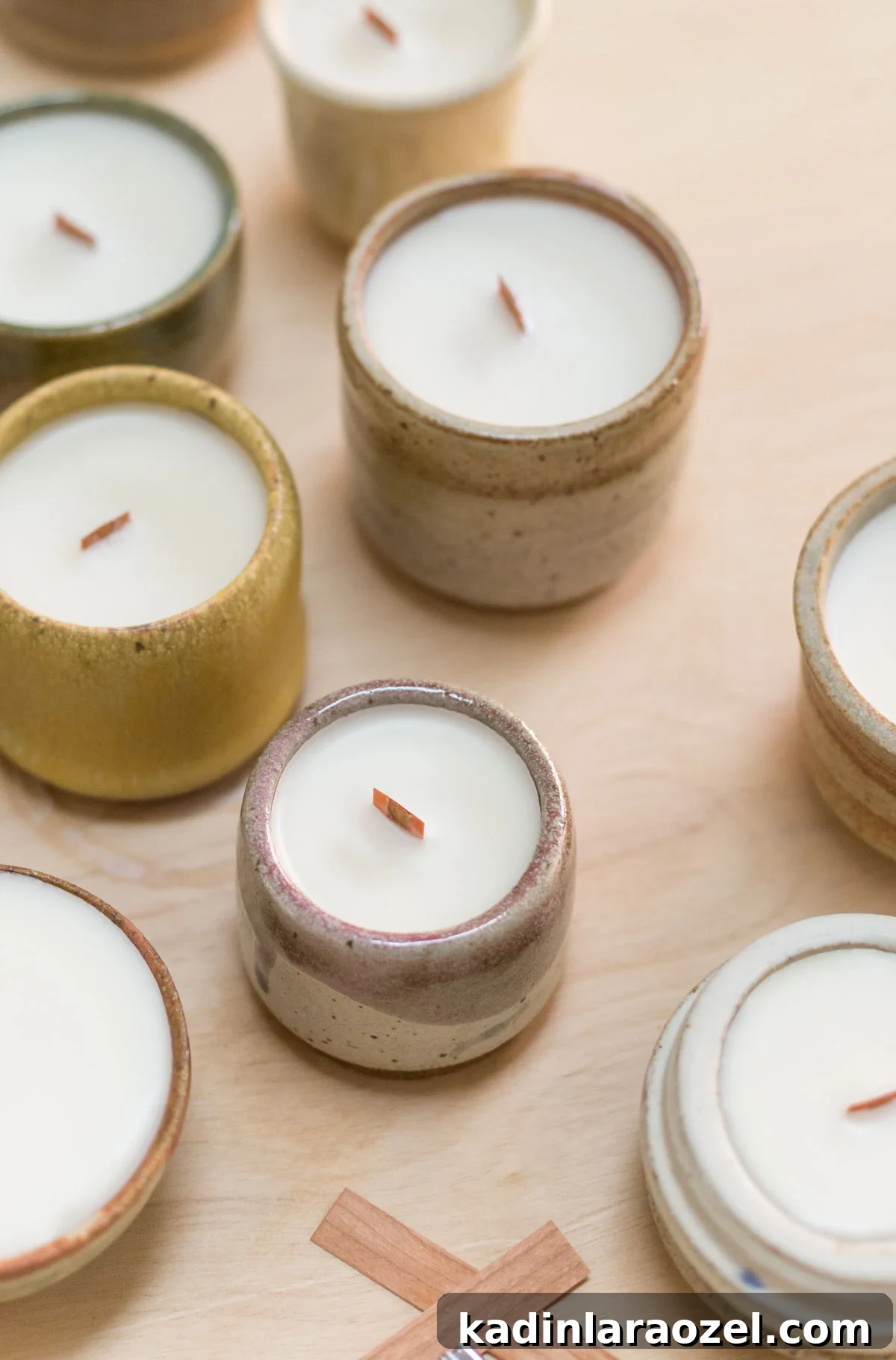
Over the years I’ve made DIY soy candles many times—gifts for friends and family, teacher gifts, and candles for our home. They make especially thoughtful presents for Mother’s Day and the holidays.
One of the best things about soy candle making is how simple it is. The process is far easier than it looks, and once you try it you’ll likely keep making candles whenever you have some wax and a pretty container.
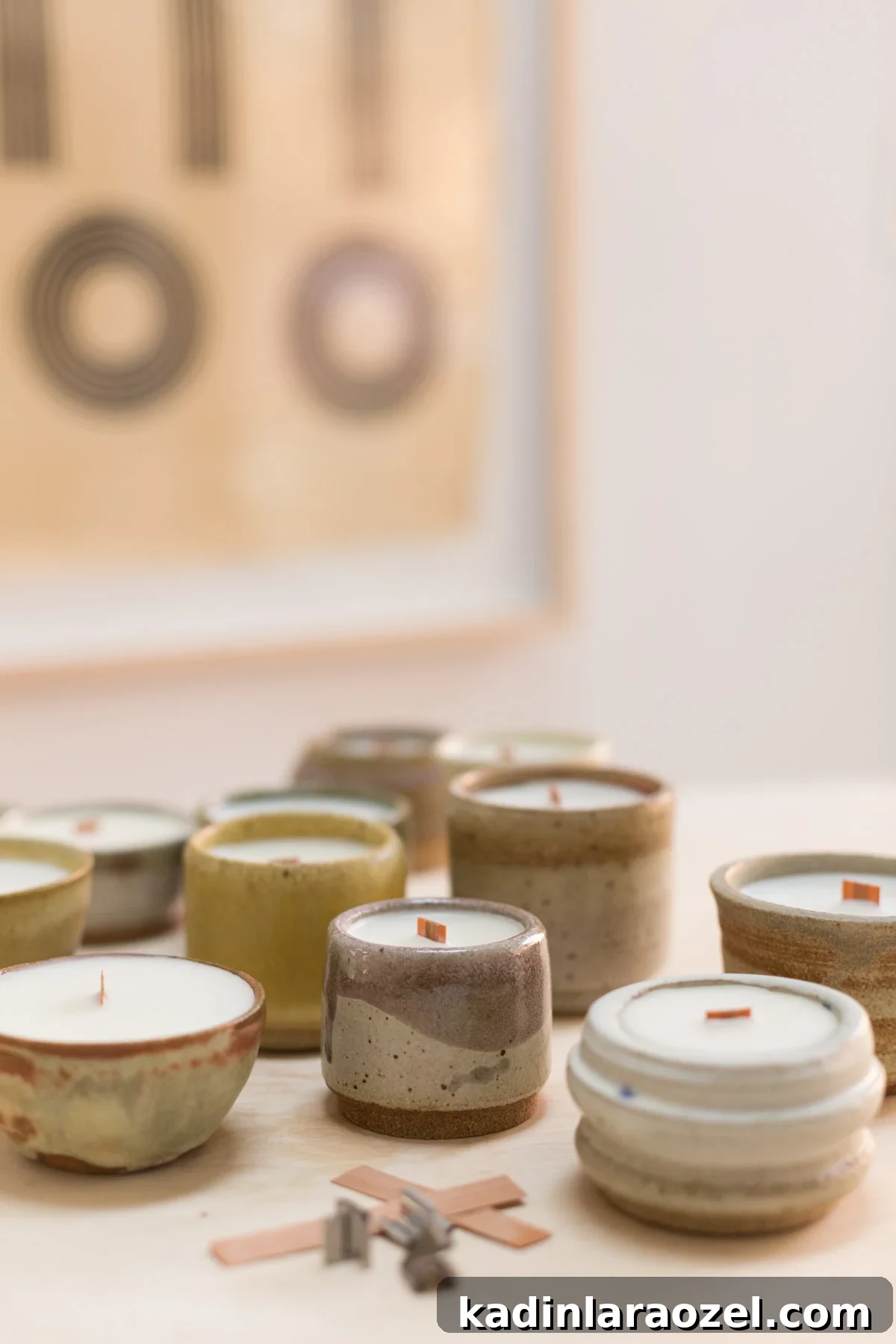
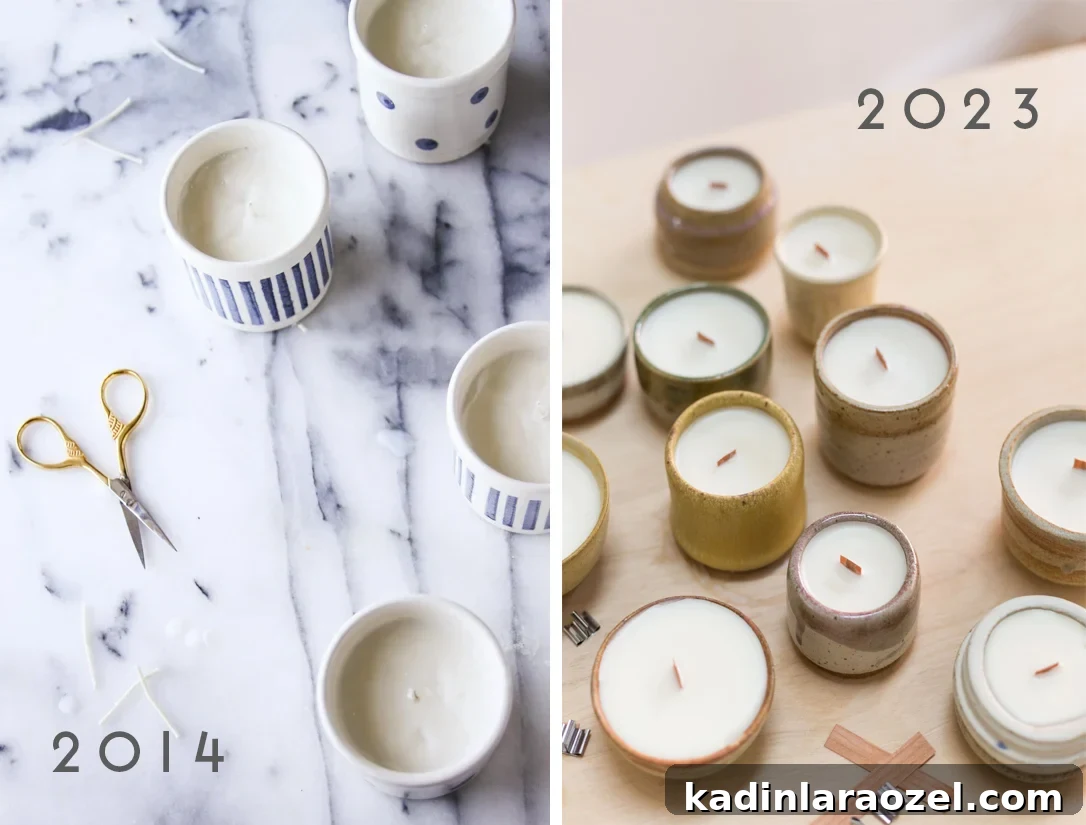
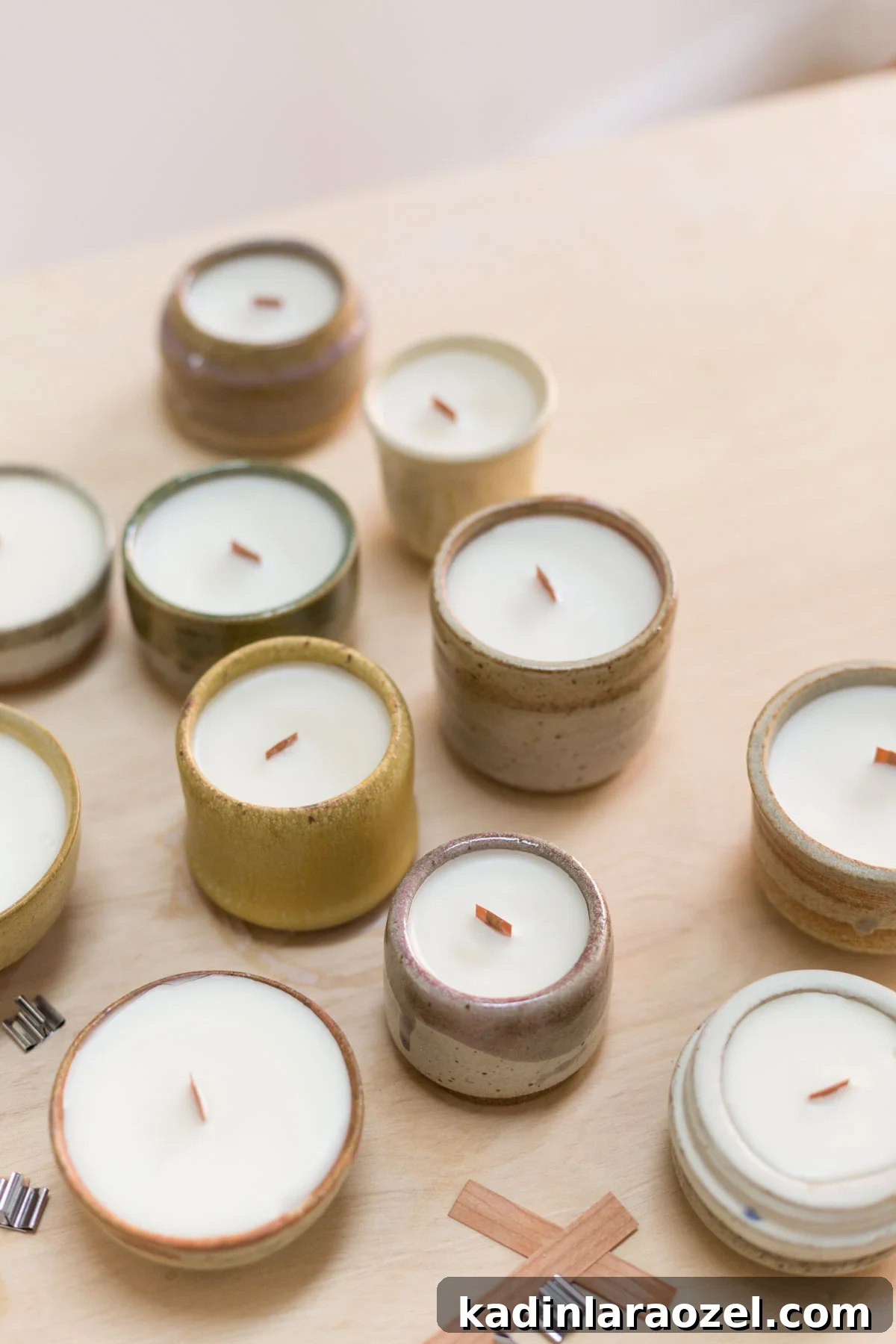
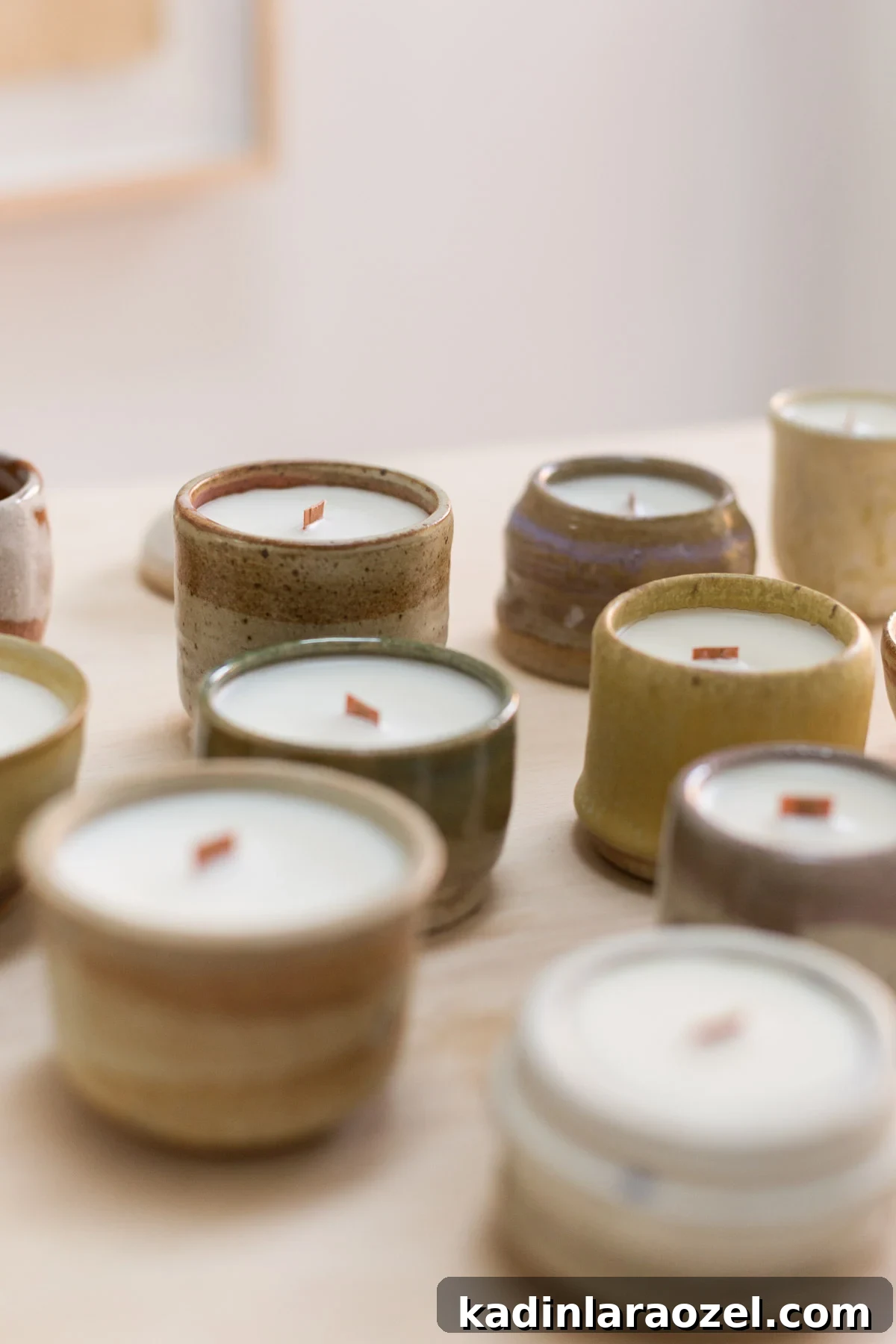
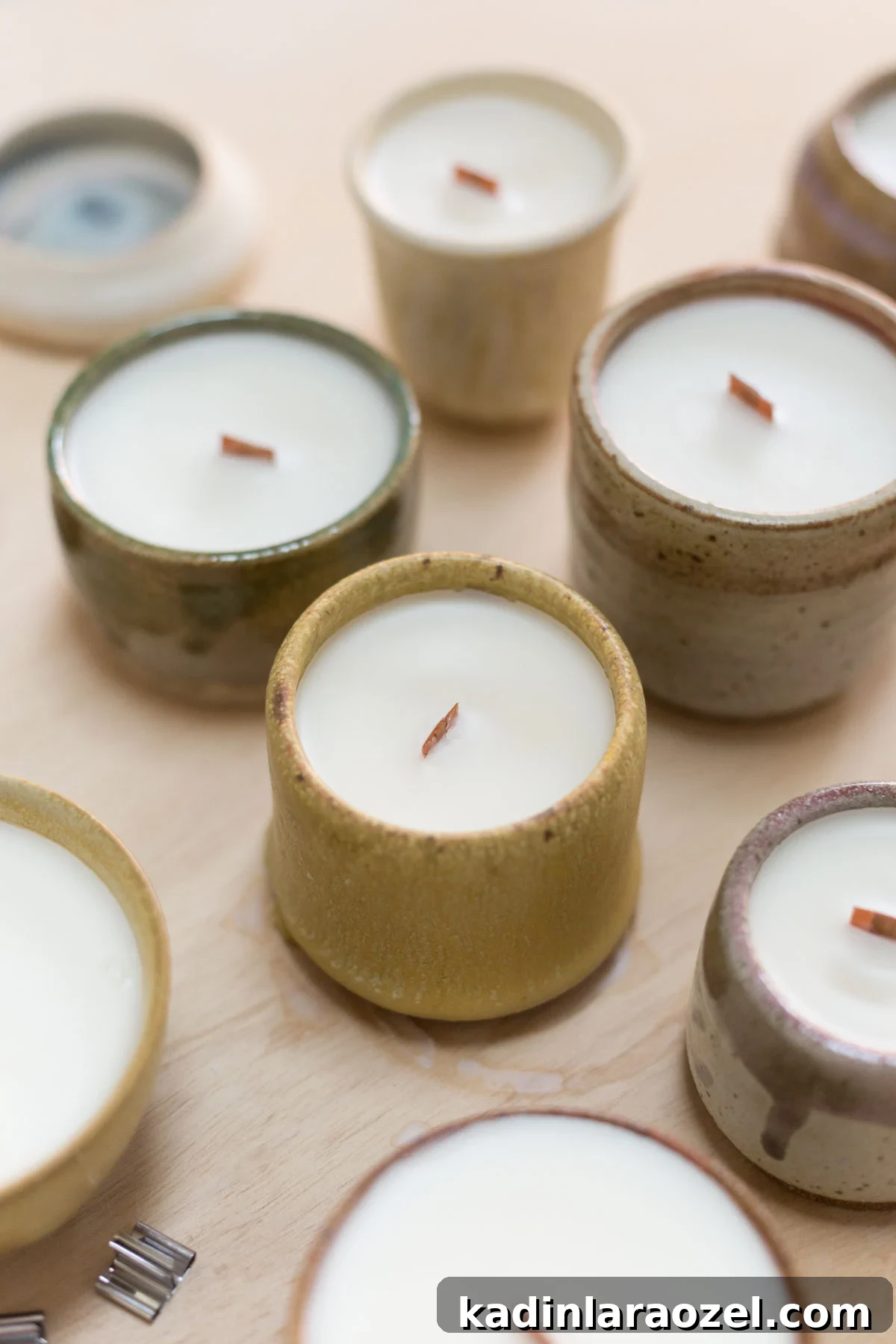
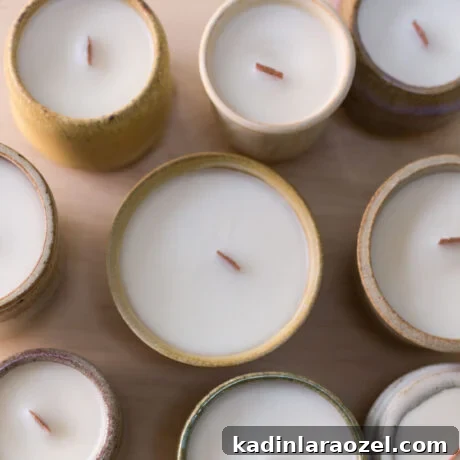
Recently I found a stash of small, beautiful pottery vessels that were perfect for candles, so I made a big batch for my son’s teachers and school staff. They were very well received and I managed to photograph a few before gifting them, which inspired this updated tutorial with new tips and photos, plus a side-by-side comparison of my first candles and current ones.
Why I Love Making Soy Candles
There are many reasons, but here are a few highlights:
- You need only a few basic supplies to make multiple candles at once—perfect for gifts or keeping around the house.
- You can create scented or unscented candles depending on preference.
- Choose whether to leave them uncolored for a natural look or add color for a bold result.
- Customize containers to match your style—this is one of the most fun parts.
With those benefits in mind, I updated this complete guide to walk you through every step and offer variations—scented vs. unscented, colored vs. uncolored, and how to get a smooth professional-looking surface on your candles.
Materials List for DIY Soy Candles
- Small decorative containers*
- Soy wax flakes (a 1 lb bag will make up to nine small votives)
- Candle wicks with metal tabs or natural/wood wicks
- Fragrance oils or essential oils (if scenting your candles)
- Wooden spoon for stirring
- Candy thermometer or other thermometer to check wax temperature (optional)
- Pouring pot or heat-safe container for melting wax
- Larger pot for boiling water (to use as a double boiler)
*I collected handmade pottery locally, but thrift stores, garage sales, and online marketplaces are great places to find small vessels. You can also reuse old candle containers by removing the old wax and wick; some containers you don’t use can be repurposed as planters.
How to Make Soy Candles
1. Prepare the pots and set up the double boiler.
Fill the larger pot with a few inches of water and heat it on medium. Place your pouring pot or heat-safe container with the soy wax flakes into the water so it melts gently like a double boiler.
2. Melt the wax and stir.
As the flakes melt, stir occasionally with a wooden spoon. Continue until the wax is fully melted and becomes clear and transparent.
Once transparent, you can add dye if you want colored candles (see the color section below).
3. Let the melted wax cool slightly.
Remove the pouring pot from the water and let the wax cool for a few minutes. An ideal pouring temperature is around 130–140°F if you have a thermometer.
4. Add fragrance, if desired.
After removing the wax from heat and letting it cool a bit, add your chosen fragrance or essential oils and stir thoroughly. Essential oils and fragrance oils have different strengths: a good starting point for small to medium candles is about 15 drops of fragrance oil or 20 drops of essential oil. A common ratio is one ounce of fragrance per pound of wax.
Note: melted wax smells stronger than the finished candle will, so keep that in mind when adding scent.
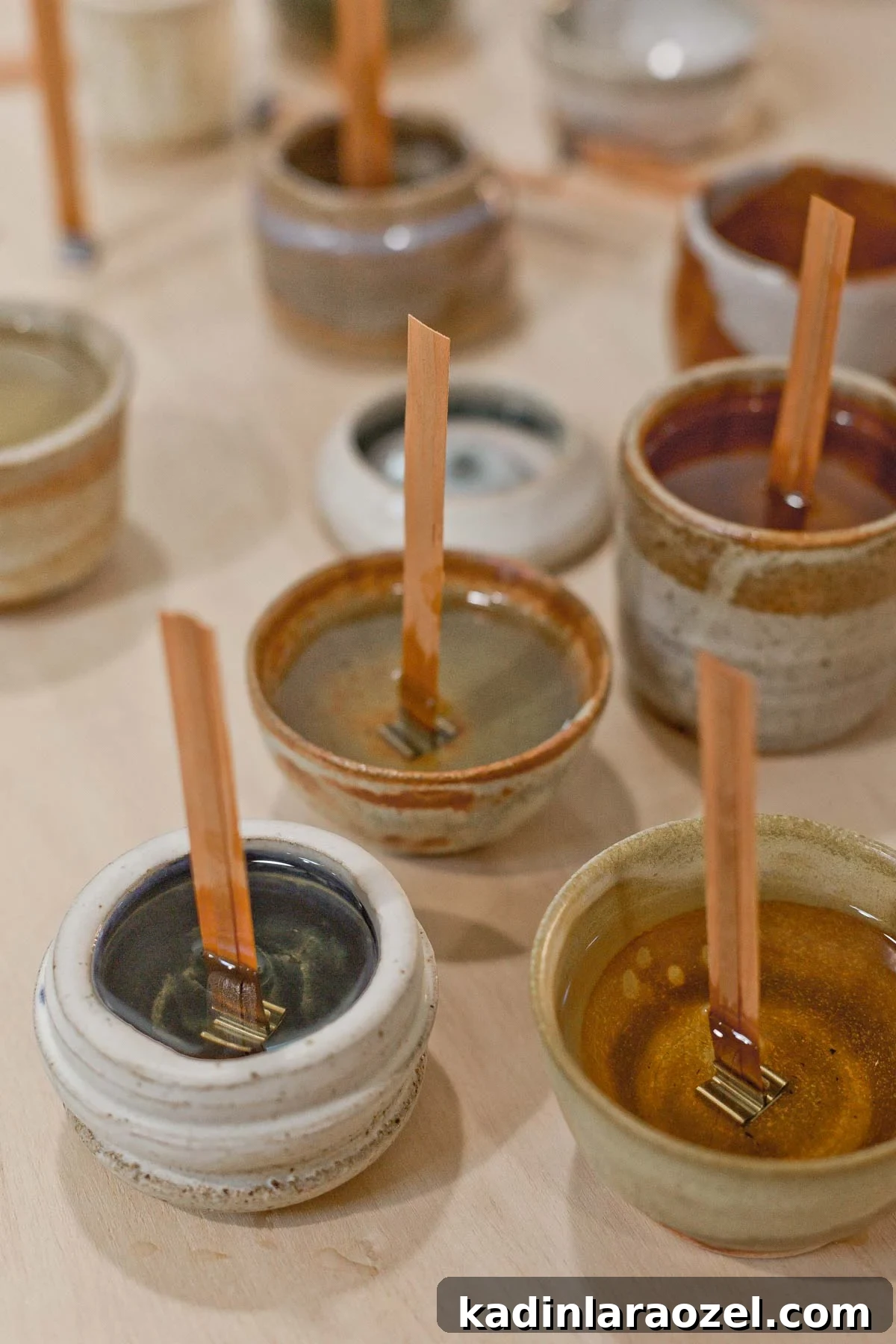
5. Attach wicks to containers.
While the wax cools, fix a wick to each container. Many wicks come pre-assembled with a metal tab. I often use a small dab of melted wax to secure the tab in the center of the container; hot glue or adhesive tabs also work.
6. Pour the wax into the containers.
Pour the wax carefully into each container, trying to avoid disturbing the wick. Let the candles cure undisturbed for 12–24 hours—overnight is usually ideal—until fully set and opaque.
7. Trim the wick and finish.
Once the wax is completely hardened, trim the wick to about 1/4 inch. Keep trimming the wick before each burn to ensure even, safe burning.
How to Get Smooth Candle Tops
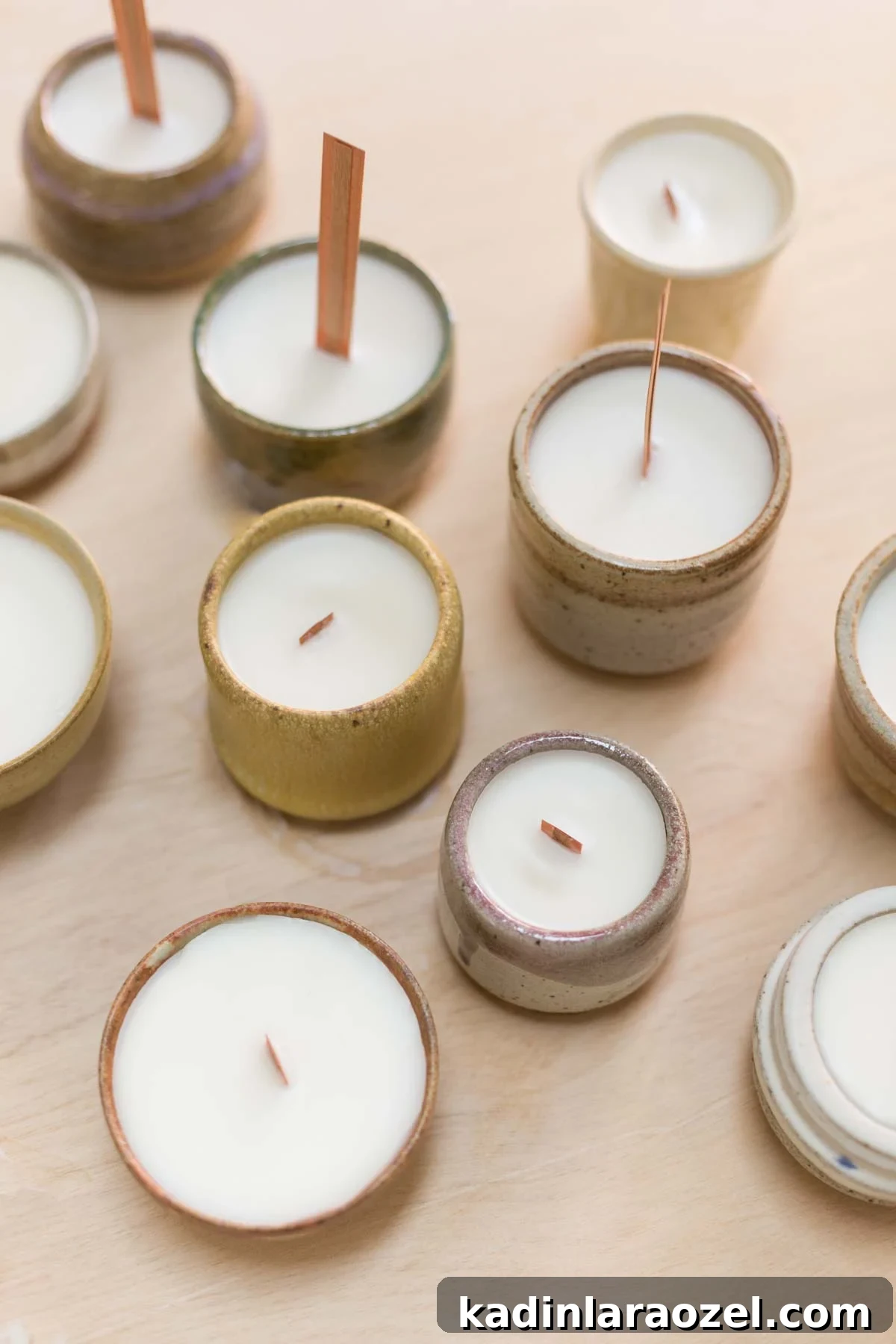
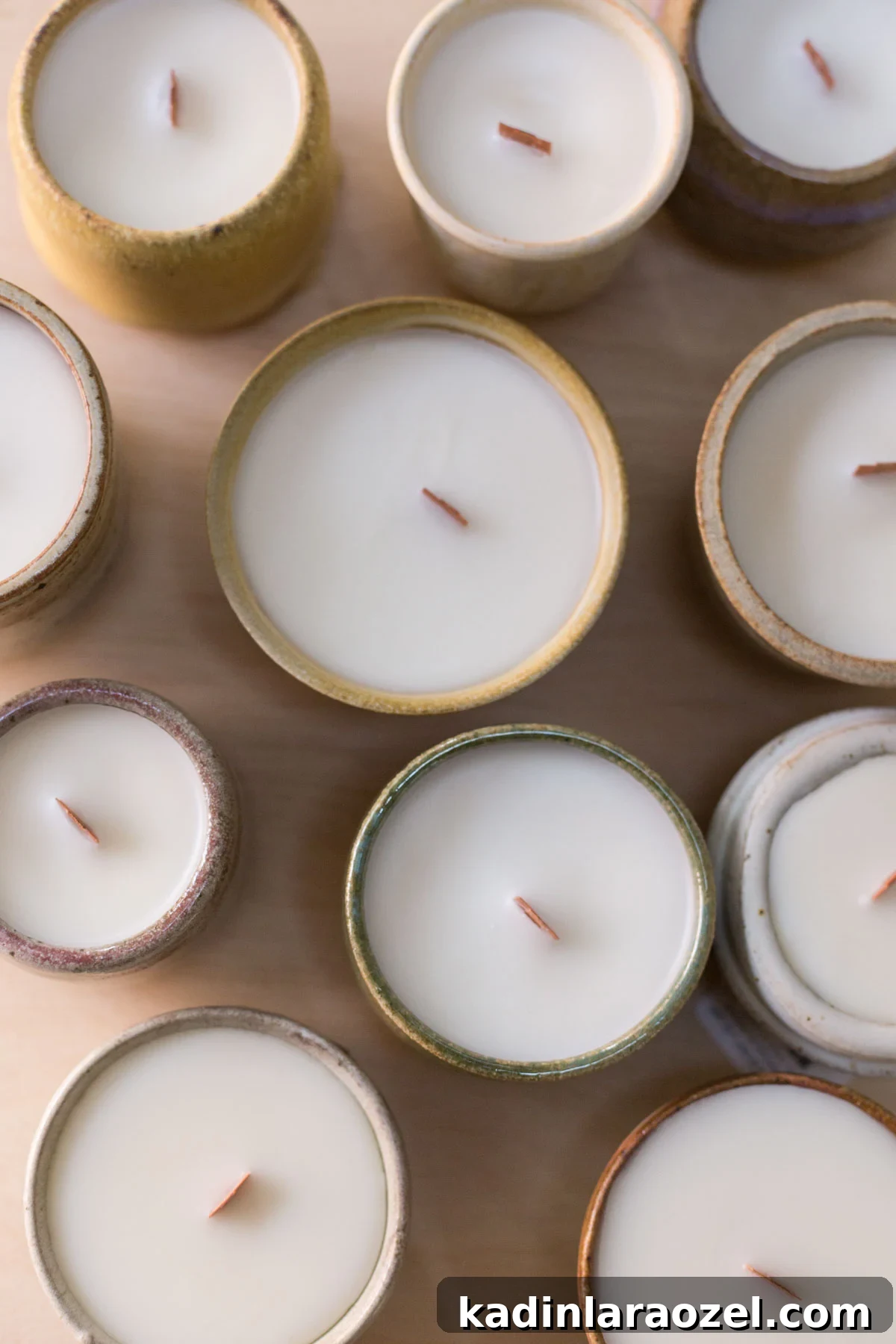
If you want a perfectly smooth surface like professional candles, the trick is a heat gun. An embossing heat gun is ideal because it’s compact and directs heat without blowing air around too much.
After letting your candle set for 24 hours, gently wave the heat gun in a circular motion over the entire surface to melt any cracks or craters. Avoid holding the gun directly over the wick. Once the top surface has melted uniformly, let the candle re-harden (about an hour) and you’ll have a smooth, even finish.
This technique makes a noticeable difference compared to older batches I made before learning it.
How to Add Color to Soy Candles
Use candle-specific dye blocks or liquid dyes designed for wax. Dye blocks tend to produce richer, darker colors while liquid dyes usually create pastel or lighter shades. Add dye when the wax is fully melted and stir thoroughly before adding fragrance.
Can I use crayons to color soy wax?
No. Crayons contain additives that don’t burn cleanly and aren’t suitable for candle making.
Wick Centering Devices: Necessary or Not?
Wick centering devices can help keep the wick centered while the wax sets, but they’re not required. If you have one, it’s helpful; if not, you can center the wick manually and secure it with a dab of wax or adhesive.
What to Do with Leftover Soy Wax
If you have leftover melted wax, use it to make smaller candles or tea lights. If the wax hardens, you can break off chunks to use in a wax warmer or oil burner (if scented). Many makers simply keep leftover wax in the melting container and reuse it for the next batch.
The Complete Guide to Making Soy Candles
Brittni
Making soy candles is simple, but there are a few details you’ll want to know before you start. This guide covers the full process plus variations like scented vs. unscented and how to achieve smooth tops.
Ingredients
- Small decorative containers*
- Soy wax flakes — 1 lb bag makes up to nine small votives
- Candle wicks with metal tabs or natural candle wicks
- Fragrance oils or essential oils (if scenting)
- Wooden spoon for mixing
- Candy thermometer (optional)
- Pouring pot or other heat-safe container
- Larger pot for boiling water
Instructions
- Add a few inches of water to a large pot and heat it on medium.
- Place soy wax flakes in a pouring pot and set that pot into the larger pot of water (double boiler).
- Stir the wax occasionally as it melts until it becomes clear and fully liquid.
- Remove from heat and let the wax cool for 5–10 minutes; aim for about 130–140°F if using a thermometer.
- If scenting, add fragrance or essential oil after the wax has cooled slightly and stir well. A starting point is roughly 15 drops fragrance oil or 20 drops essential oil per small candle; one ounce fragrance per pound of wax is another guideline.
- While the wax cools, attach a wick and metal tab to each container using a dab of melted wax, hot glue, or adhesive tab.
- Pour the wax into containers, avoiding the wick. Let candles set undisturbed for 12–24 hours until fully opaque and hardened.
- Trim each wick to about 1/4 inch before the first burn and maintain this length for safety and even burning.
Notes
How to Get Perfectly Smooth Candle Tops
After 24 hours, use a heat gun (an embossing heat gun works well) in a circular motion across the top to melt away cracks or craters. Avoid the wick zone and allow the surface to re-harden for a smooth finish.
How to Add Color
Use candle dye blocks for richer colors or liquid dyes for lighter, pastel tones. Add color to fully melted wax and stir thoroughly before adding scent.
Can I use crayons?
No—crayons contain additives that don’t burn properly and are not suitable for candle making.
Wick Centering
Wick centering tools are helpful but optional. Many kits include a centering device if you prefer to use one.
Leftover Wax
Use leftover melted wax for smaller candles or tea-lights, or save hardened pieces for a wax warmer. Alternatively, keep leftovers in the melting container to reuse for your next batch.
Share your results and tag the creator if you like.
I hope this soy candle tutorial is helpful. If you have questions, ask away—posts like this often get updated as readers share their experiences.
Have I convinced you to try making soy candles yet?