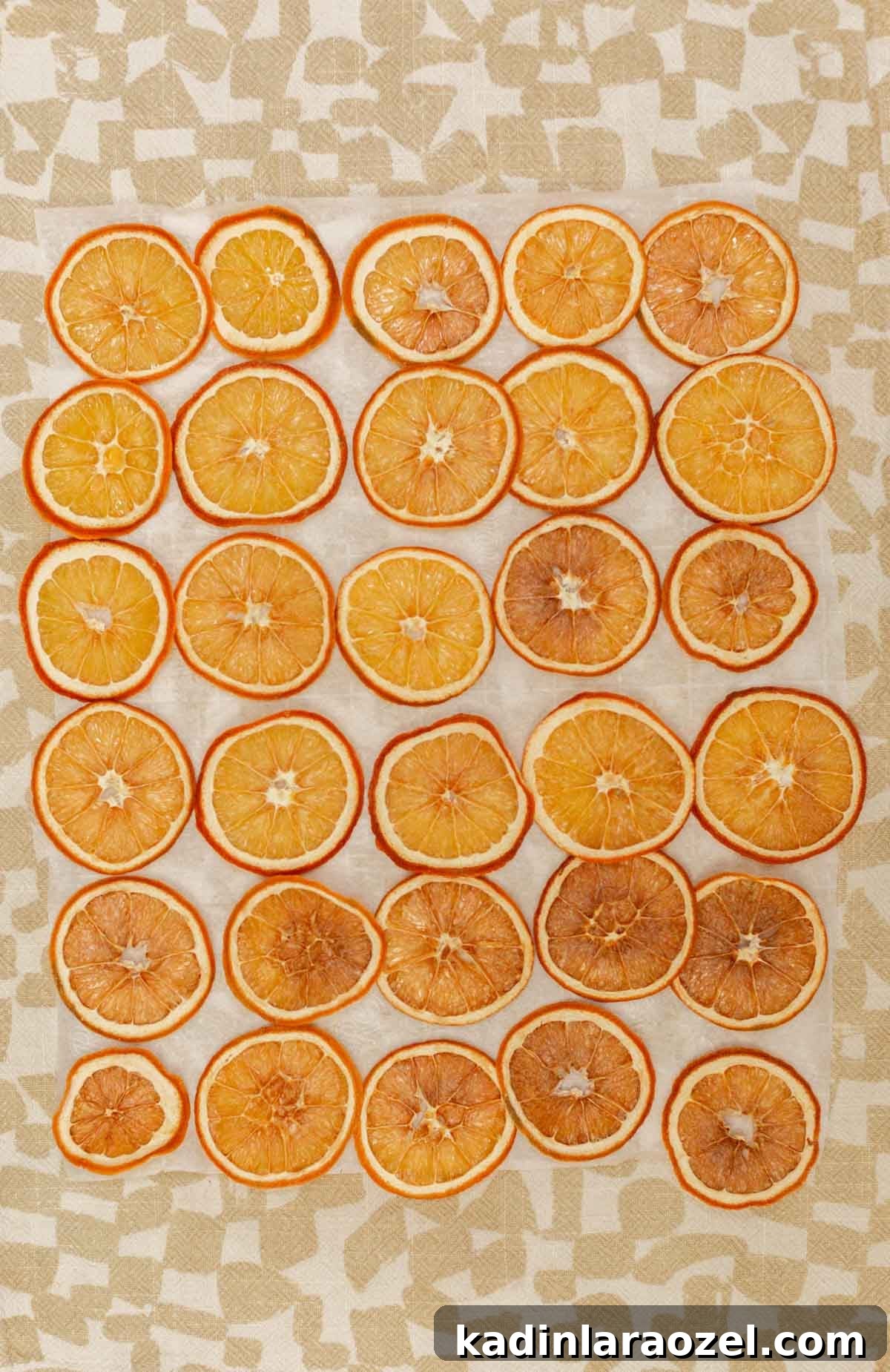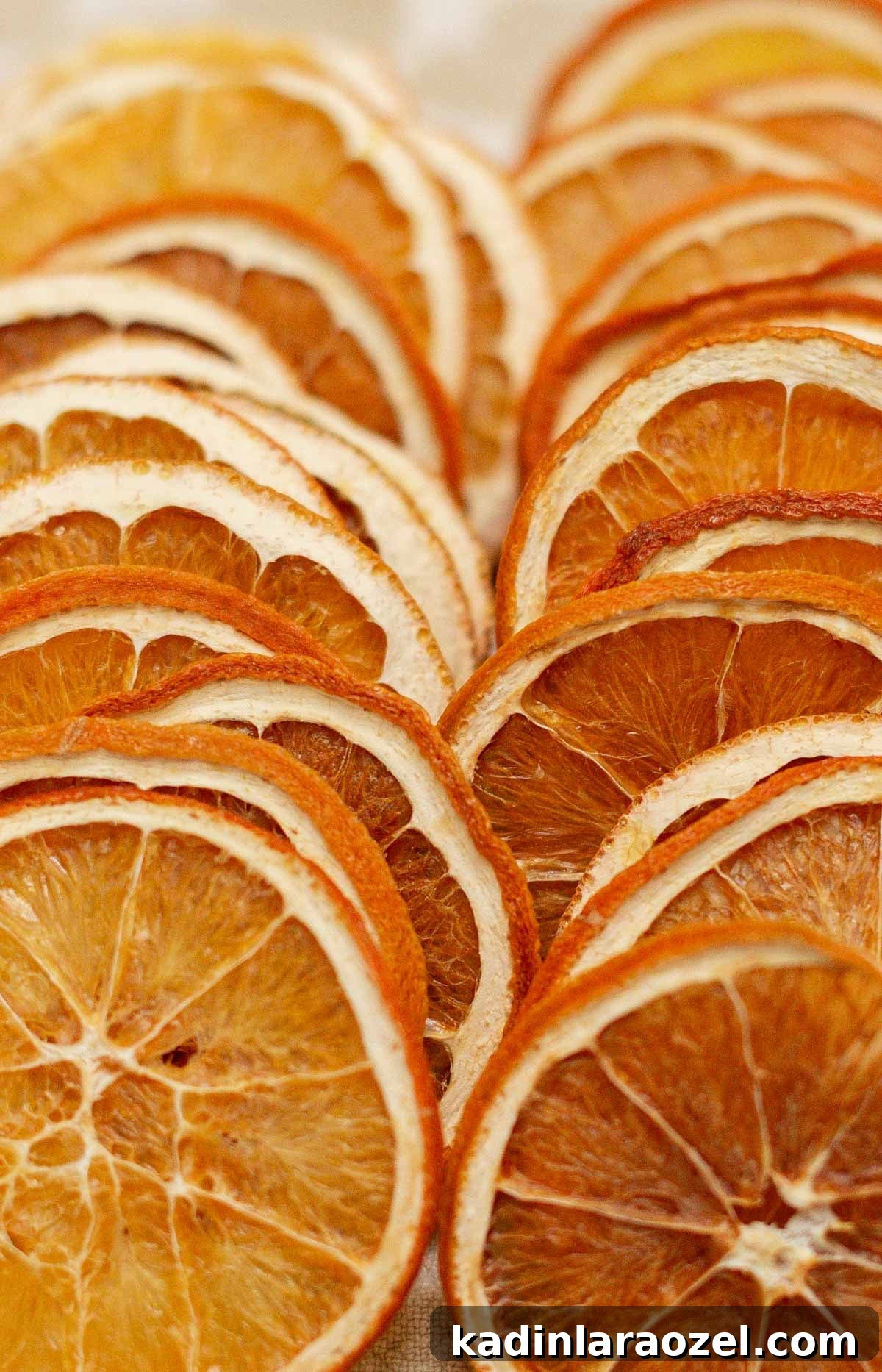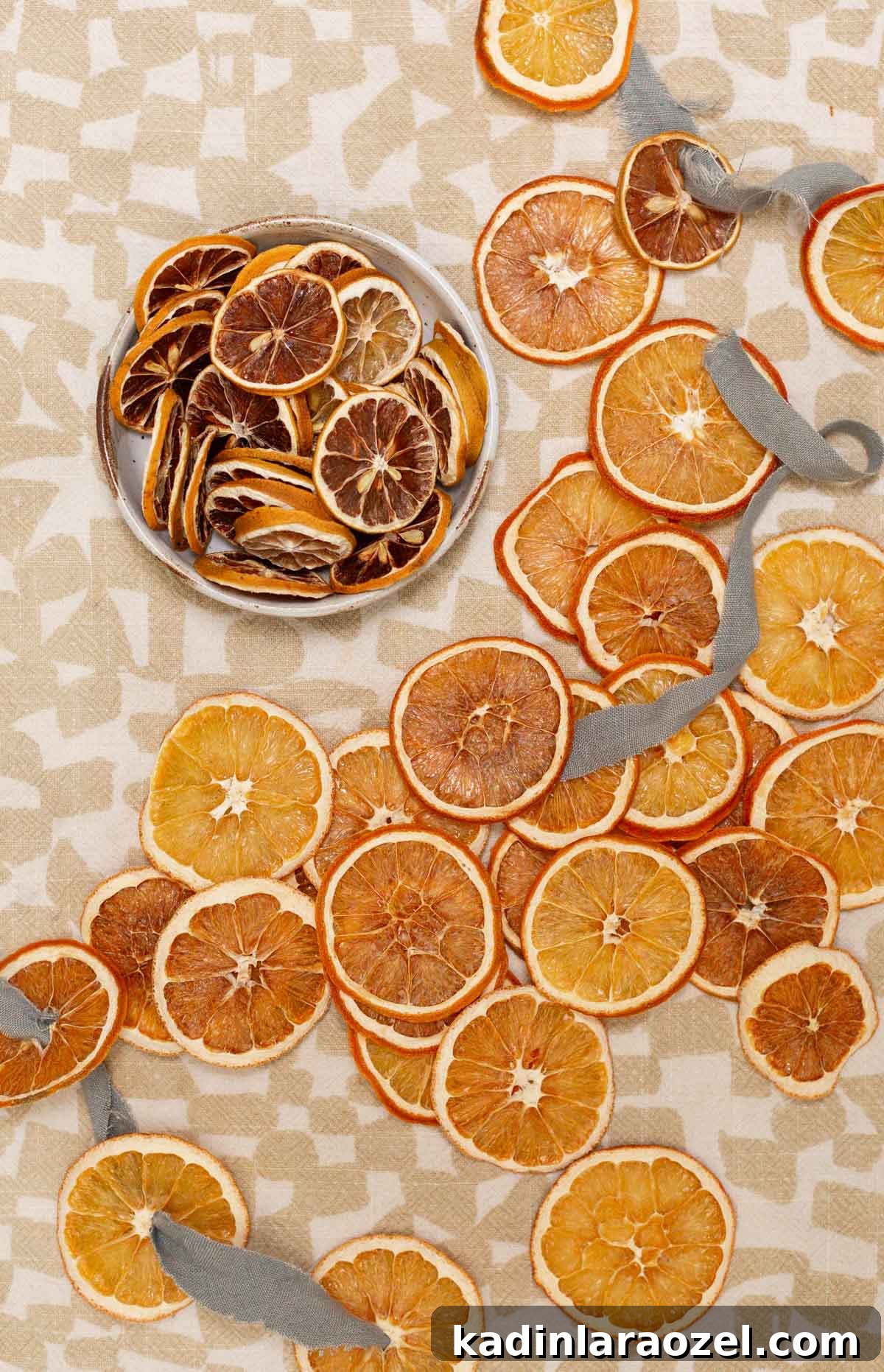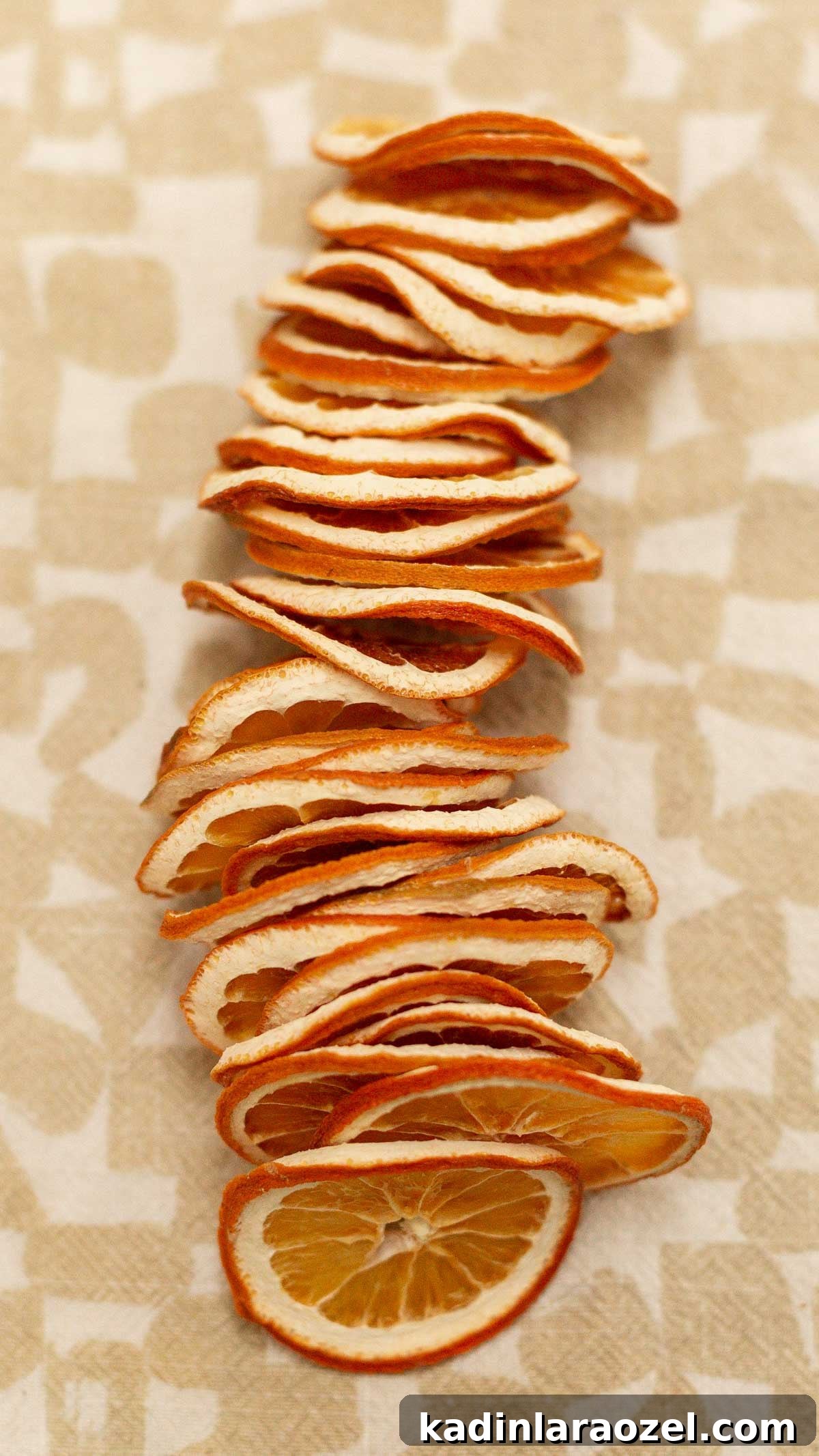
Dried orange garlands are everywhere this year. After a failed first attempt (and five successful batches afterward), I’ve refined an easy method for making citrus garlands that works reliably. Prep time is just 10–15 minutes, and most of the time is hands-off while the oven does the work.

Why write this tutorial after a bad first batch? Because I learned from my mistakes, researched tips from other makers, tried different approaches, and ultimately made five good batches over two weeks. That repeated practice taught me what works—and what doesn’t—when drying oranges, lemons, and grapefruits for garlands.
In the past, the idea of drying citrus for hours felt daunting. But once you get the slicing and prep done—about 10–15 minutes—you simply pop the fruit in the oven and check periodically. It’s surprisingly easy.
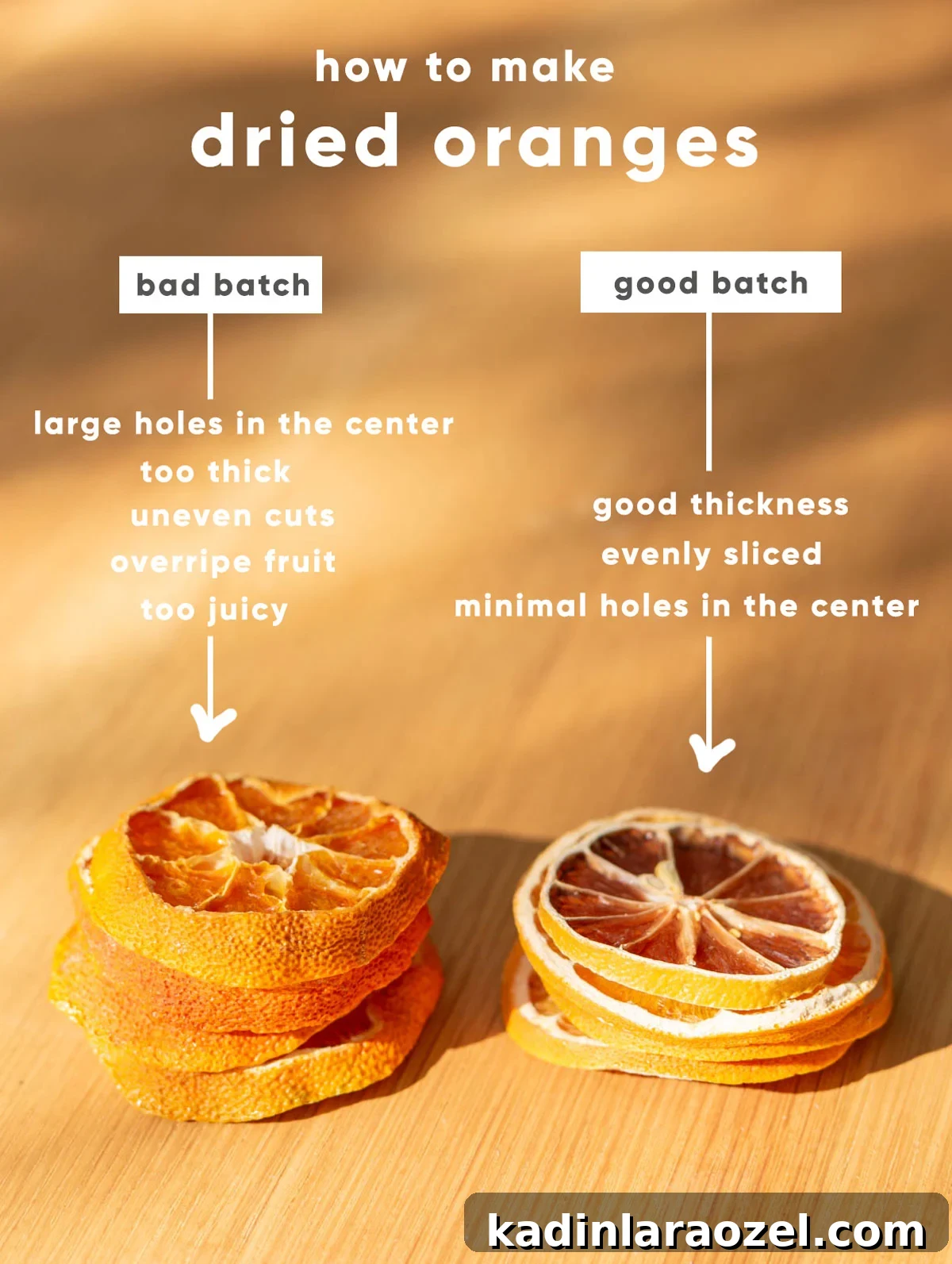

Mistakes I Made the First Time Around
My first batch of dried oranges was uneven and unattractive. The main problems were:
- Slices were too thick.
- They were irregular in shape.
- Many had large holes in the center.
After asking others for advice, the consensus was clear: slice thinner. I discovered that slightly underripe citrus is easier to slice thinly because it’s firmer and less juicy, reducing the chance of holes and soggy slices.
What I Changed for Better Results
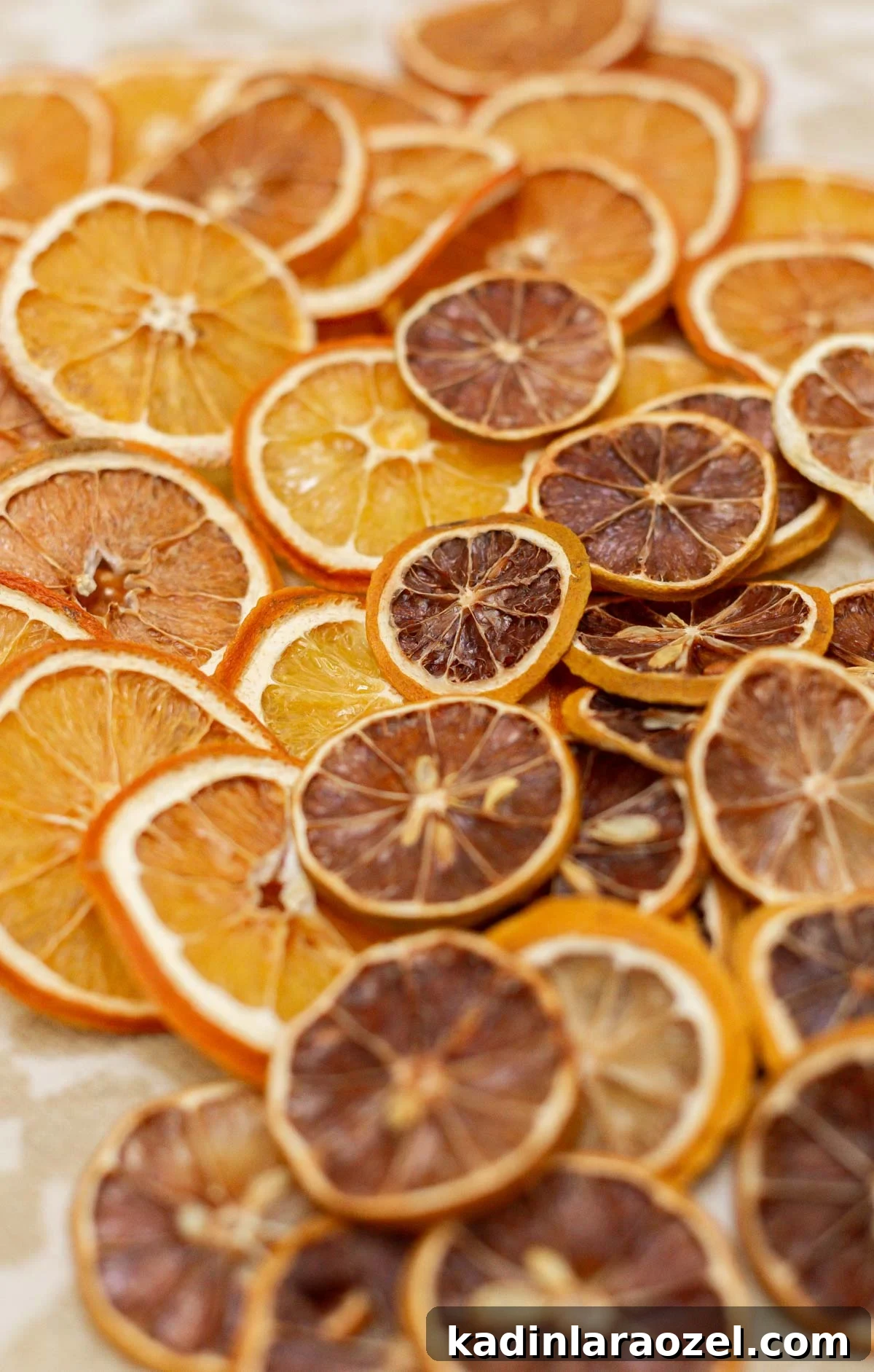
For the next rounds I chose firmer, less ripe citrus. Key steps that improved results:
- Slice about 1/8 inch thick—or thinner if possible—and keep slices as consistent as you can.
- Lay slices on a tea towel, place a second towel on top, and press gently to remove excess juice. I repeated this twice; it helped them dry faster and more evenly.
- If you prefer disposable options, paper towels work, but I used cloth tea towels.
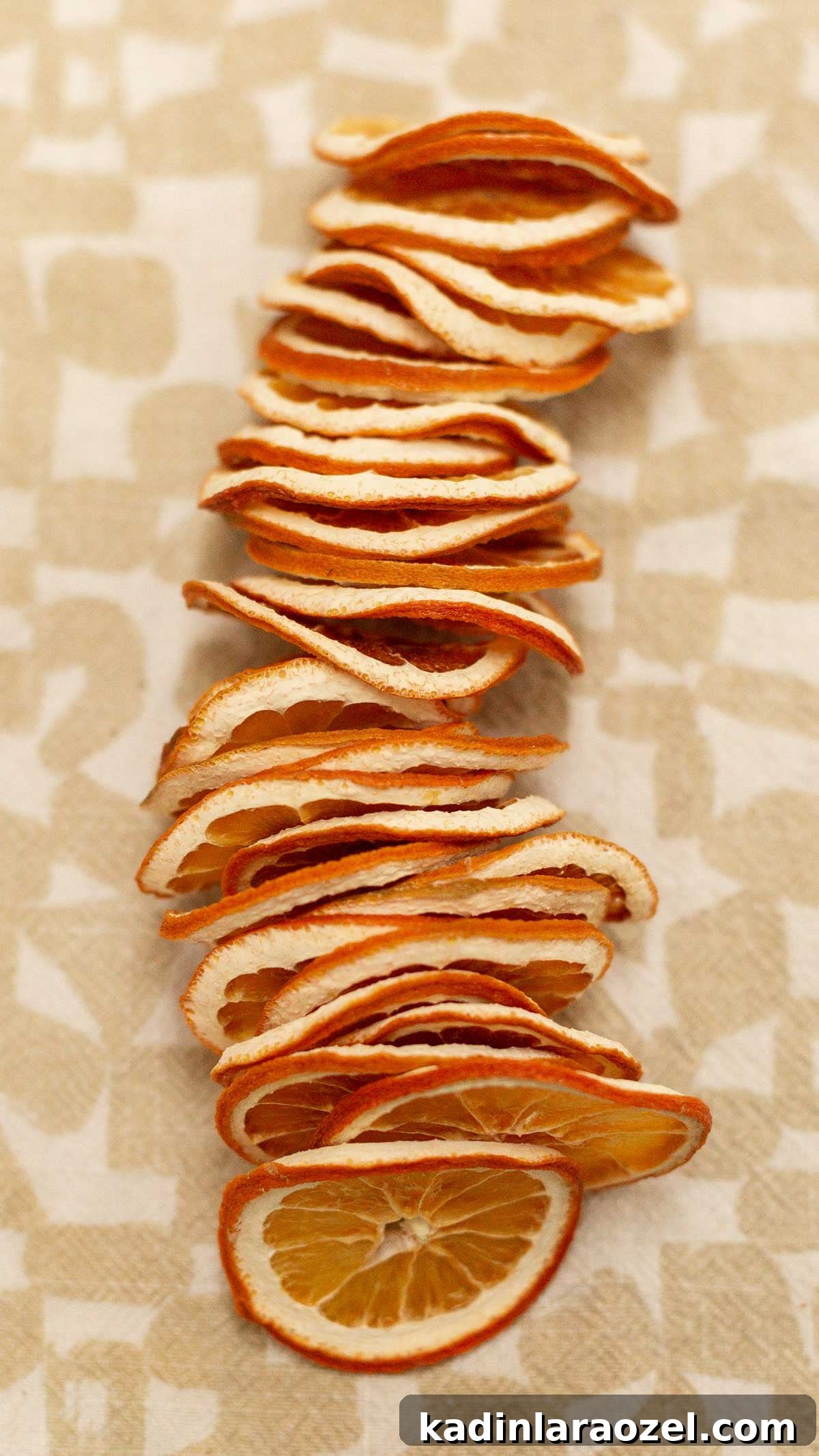
How to Make Dried Orange Garland
Oven temperature
Preheat the oven to 200°F (about 93°C) while you slice the fruit. Once the slices are on baking sheets, bake for 2 hours, then flip every slice and bake another 2 hours. I used the middle rack for larger orange slices and the top rack for smaller lemon slices; mixing sizes adds visual interest to the garland.
How long to dehydrate
Total oven time is roughly 4 hours for thin slices, but this varies with thickness and fruit type. After the first two hours, flip slices to ensure even drying and prevent burning. When you reach the 4-hour mark, check each piece: they should not feel sticky but should be crisp to the touch.
Oven time ranges by thickness and fruit
- 1/8 inch slices: about 4–5 hours. I consistently achieved good results at 4 hours, but some ovens or slightly thicker slices may need longer.
- 1/4 inch slices: expect 4–6 hours. Flip slices after 4 hours, then every 30 minutes until fully dry.
- Grapefruit: because of their size, count on 4–6 hours regardless of thickness. Flip regularly after the first two hours.
- Lemons: typically finish sooner on the top rack; 4 hours often works for thin lemon slices.
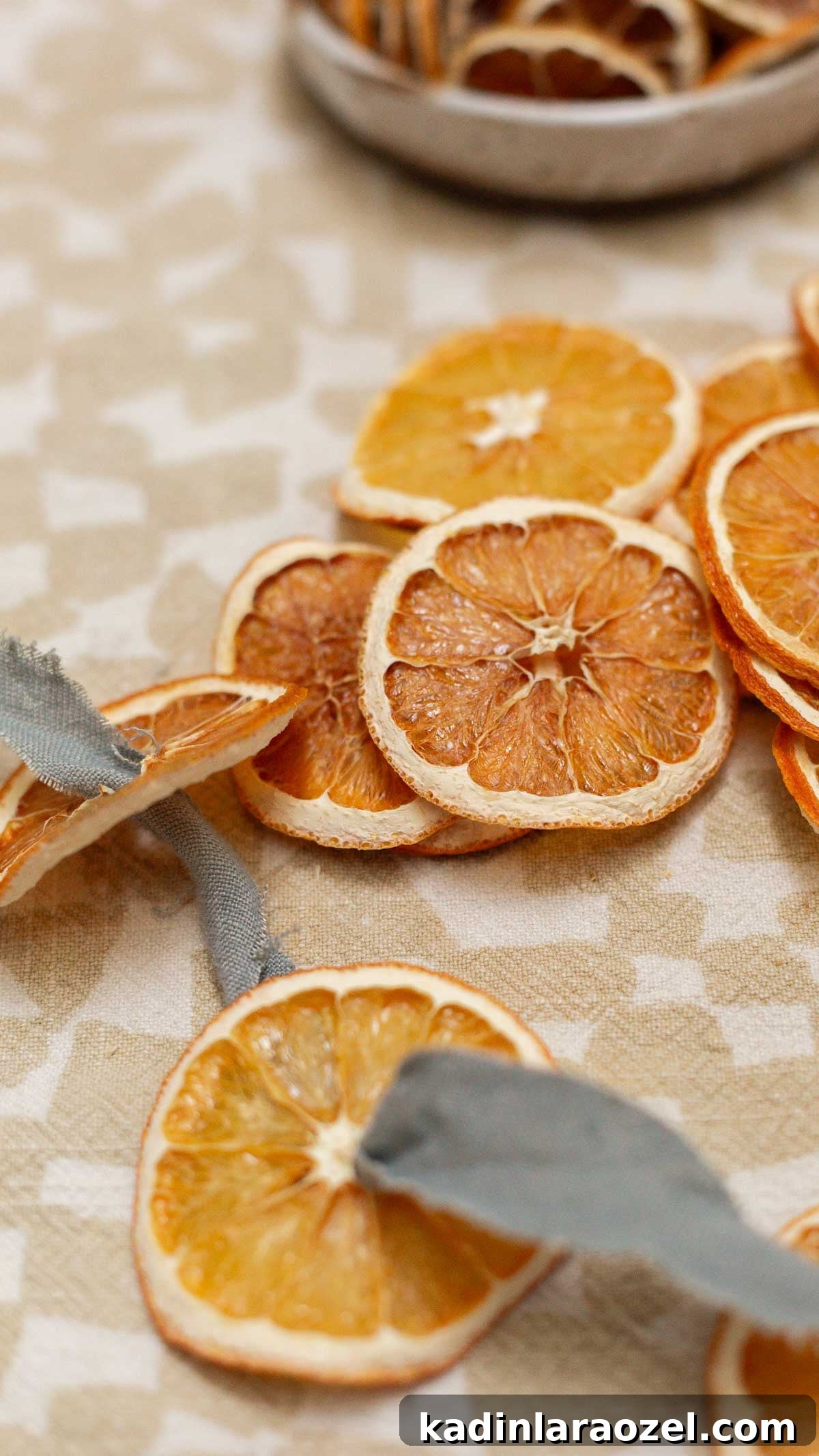
How to tell when slices are done
Allow slices to cool after removing them from the oven. They’re finished when they are no longer soft or sticky and instead feel crisp. If a slice is slightly soft, let it rest for 15 minutes—sometimes they crisp as they cool. Return overly soft pieces to the oven and continue drying in short intervals.
Stringing the garland
To create the garland, use ribbon, twine, yarn, or strips of scrap fabric. Options for threading:
- Carefully cut a small slit in each dried slice with a knife or scissors, then slide the string through.
- Use a large-eye sewing or upholstery needle: thread your string and poke the needle through each slice. This method makes it easy to space the slices before finishing the garland.
Leave extra string at each end so you can tie the garland to a mantle, tree, wreath, or other display.
Other uses for dried citrus
- Simple ornaments—add a wire hook to each slice.
- Decorative gift embellishments—attach dried slices to wrapped presents for a natural accent.
- Wreath decorations—add dried citrus to a door wreath for an effortless, festive look.
That’s the process for making citrus garlands: choose slightly underripe fruit, slice thin and even, press to remove excess juice, bake low and slow while flipping at intervals, and string once fully crisp. They’re easy to make and lovely for holiday decorating.
If you have any questions about slicing, drying times, or stringing techniques, feel free to ask.